
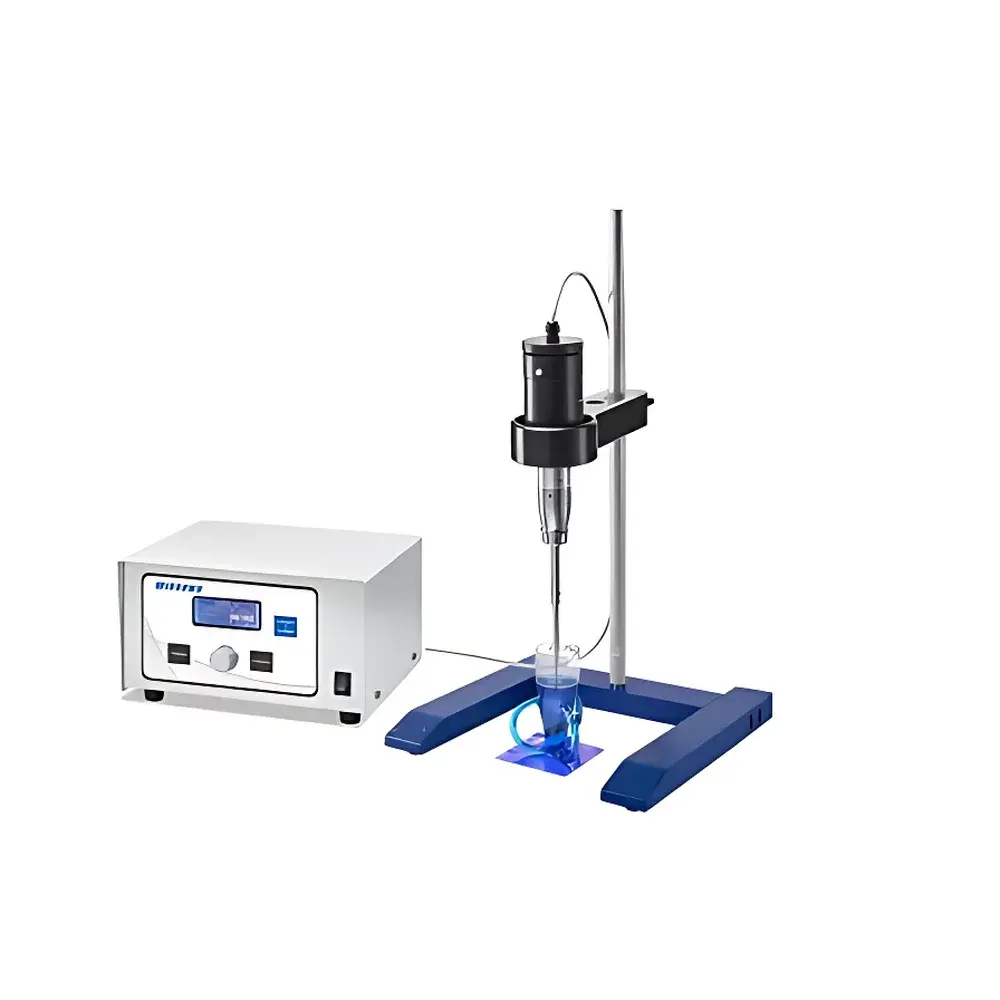
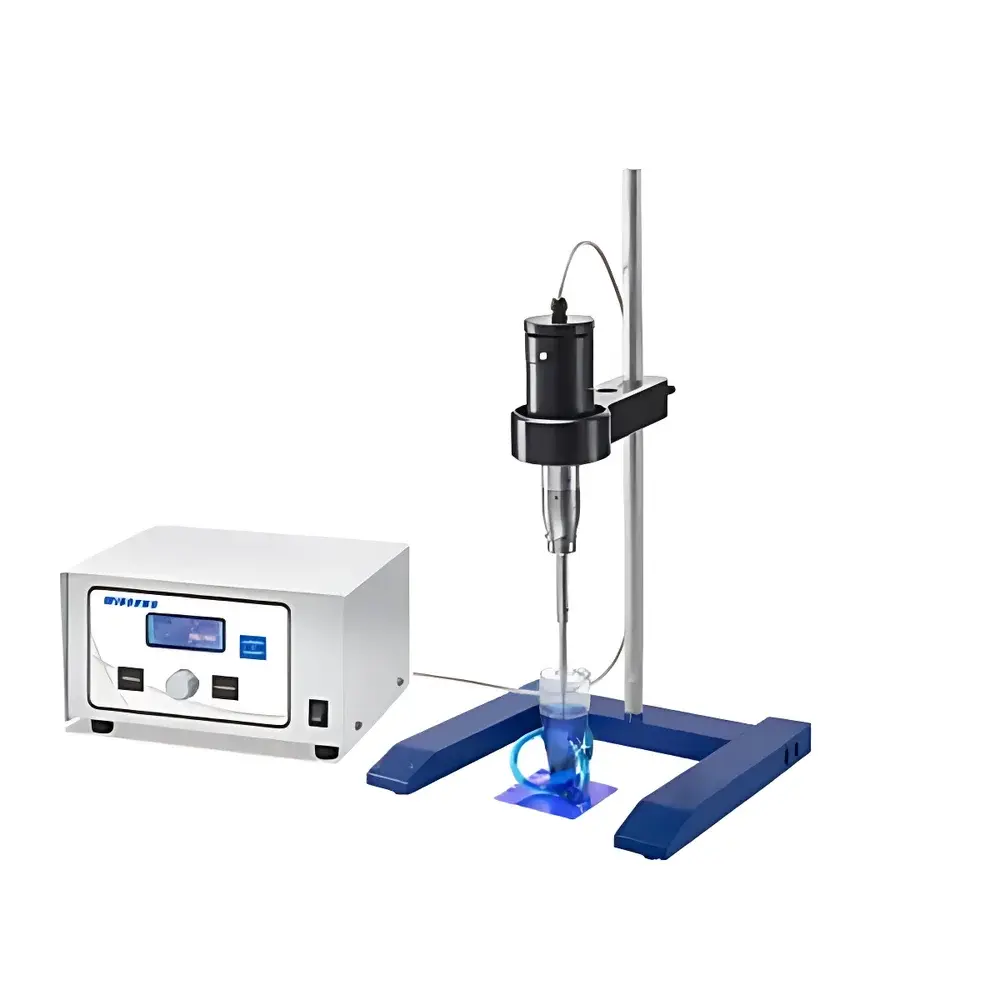
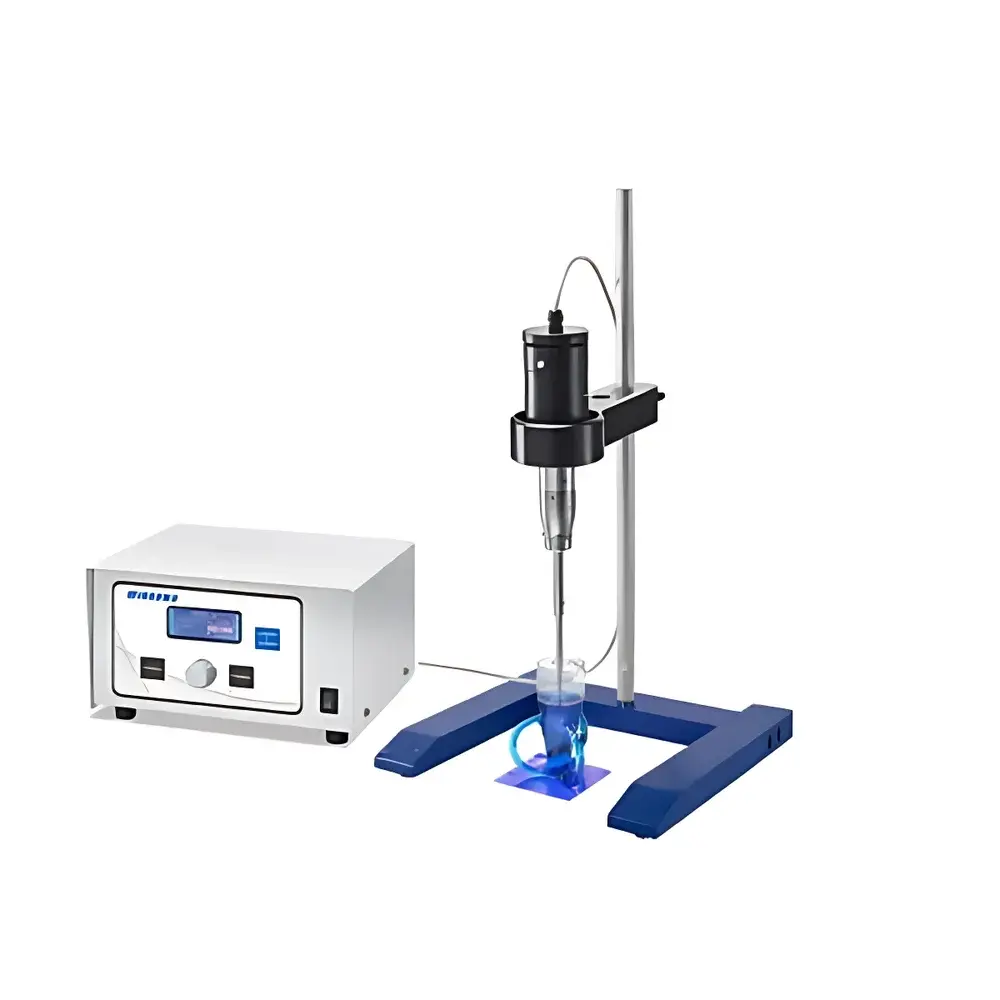
WIGGENS HD 2070.2 Ultrasonic Homogenizer
| Brand | WIGGENS |
|---|---|
| Origin | Germany |
| Model | HD 2070.2 |
| Ultrasonic Power Output | ≤100 W |
| Frequency Range | 20–25 kHz |
| Compatible Vessel Volume | 0.5–500 mL |
| Transducer Diameter × Length | 70 × 150 mm |
| Optional Probe Diameters | 2, 3, 6, and 13 mm |
Overview
The WIGGENS HD 2070.2 Ultrasonic Homogenizer is a precision-engineered benchtop system designed for controlled cell disruption, particle size reduction, emulsification, and extraction in research and quality control laboratories. Operating on the principle of high-intensity ultrasonic cavitation—where rapid pressure fluctuations generate transient microbubbles that collapse violently near sample interfaces—the HD 2070.2 delivers reproducible mechanical energy transfer to liquid-phase samples. Its fixed-frequency generator (20–25 kHz) ensures stable acoustic output across variable load conditions, while the modular transducer–probe architecture enables precise adaptation to diverse sample volumes and viscosities. Unlike continuous-flow or bath-type systems, this probe-based homogenizer provides direct energy coupling, minimizing thermal dispersion and maximizing localized shear stress—critical for preserving labile biomolecules during lysis or nanoparticle dispersion.
Key Features
- Modular design with interchangeable titanium alloy probes (2 mm, 3 mm, 6 mm, and 13 mm diameters) to optimize energy density for low-volume microsamples (≥0.5 mL) or larger batch processing (up to 500 mL)
- Digital ultrasonic generator (GM 2070.2) featuring adjustable amplitude control, pulse mode operation (on/off intervals programmable from 0.1–9.9 s), and real-time power monitoring
- Robust piezoelectric transducer (UW 2070) with integrated cooling fins and IP54-rated housing for long-term stability under intermittent or extended duty cycles
- Compact footprint (240 × 210 × 140 mm) suitable for fume hoods, biosafety cabinets, or shared instrumentation benches
- Compliance-ready architecture supporting audit trails and user-access logging when integrated with validated LIMS or ELN platforms
Sample Compatibility & Compliance
The HD 2070.2 accommodates a broad range of sample matrices—including aqueous suspensions, organic solvents, viscous polymer solutions, and heterogeneous tissue homogenates—without requiring solvent exchange or pre-filtration. Its probe geometry and frequency band meet standard requirements for ASTM E2810-11 (standard guide for ultrasonic cleaning validation) and align with ISO 13320:2020 recommendations for particle size analysis sample preparation. For regulated environments, the system supports GLP-compliant workflows through external timestamped data capture; although not natively 21 CFR Part 11-certified, its analog/digital I/O interface allows integration with compliant data acquisition software meeting FDA-defined electronic record integrity criteria.
Software & Data Management
While the HD 2070.2 operates via intuitive front-panel controls without mandatory software dependency, its RS-232 interface enables bidirectional communication with third-party laboratory automation suites. Users may log operational parameters—including actual delivered power (W), cumulative run time (s), amplitude setting (%), and pulse cycle configuration—into CSV or XML formats for traceability. When paired with WIGGENS’ optional PC-based control module (sold separately), the system supports automated method recall, multi-step protocol sequencing, and export of metadata-tagged datasets compatible with JMP, MATLAB, or Python-based analysis pipelines.
Applications
- Cell lysis for protein extraction (E. coli, yeast, mammalian suspension cultures)
- Chromatin shearing in ChIP-seq library preparation
- Nanomaterial dispersion (carbon nanotubes, metal oxides, liposomes)
- Accelerated solid–liquid extraction of phytochemicals from plant matrices
- Homogenization of forensic tissue samples prior to DNA isolation
- Preparation of stable oil-in-water emulsions for food science or pharmaceutical formulation studies
FAQ
What is the maximum recommended continuous operating time per cycle?
For optimal transducer longevity and thermal management, continuous operation should not exceed 5 minutes per cycle. A minimum 1-minute cooling interval is advised between successive cycles when using probes ≥6 mm diameter.
Can the HD 2070.2 be used in cold rooms or refrigerated environments?
Yes—the unit is rated for ambient operation between 5 °C and 40 °C and relative humidity ≤80% non-condensing. Condensation on probe surfaces must be avoided; pre-chilling samples externally is preferred over sub-ambient chamber operation.
Is sterilization of the probe possible between runs?
Titanium alloy probes are autoclavable at 121 °C for 20 minutes (gravity displacement cycle). Ethanol immersion (70–100%) and UV exposure are also validated alternatives for routine decontamination.
Does the system include calibration documentation?
Each unit ships with a factory-verified performance certificate indicating nominal power output, frequency deviation, and probe resonance characteristics. NIST-traceable recalibration services are available through authorized WIGGENS service centers in Europe and North America.



