
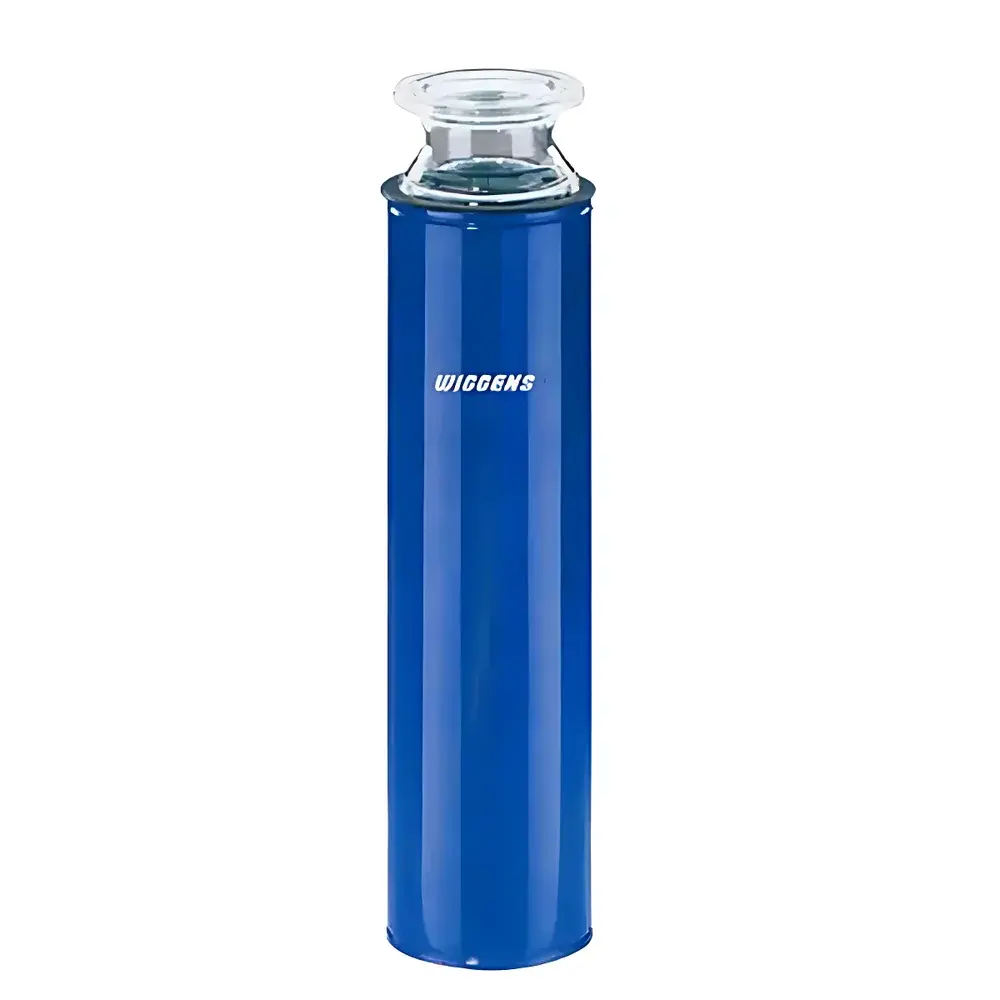
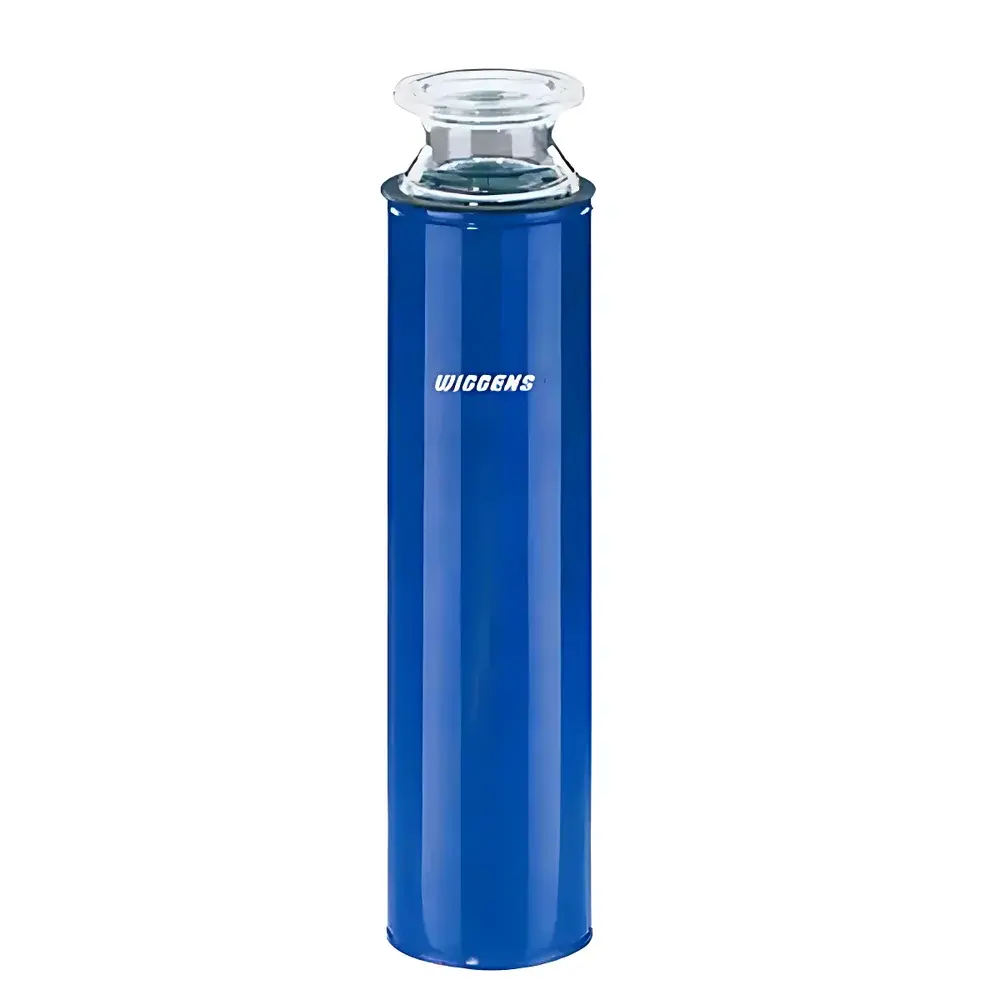
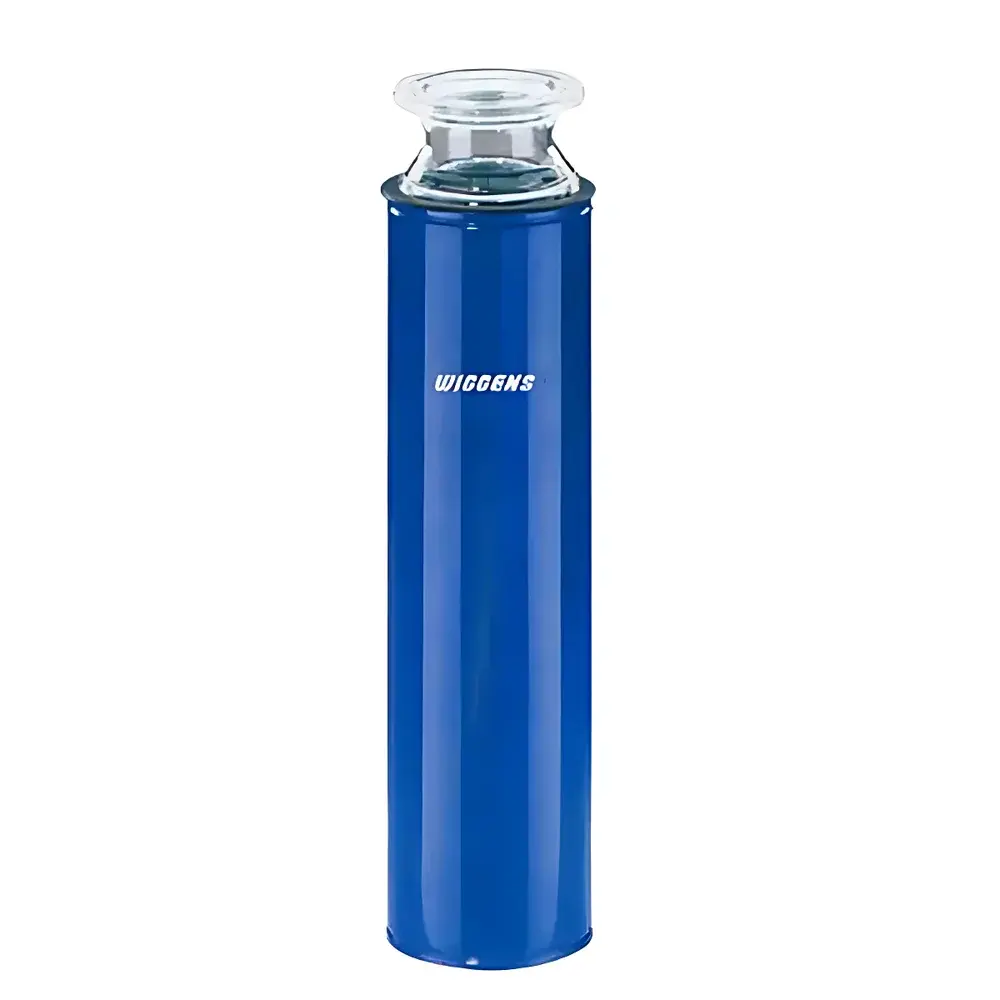
WIGGENS NF7C Flanged Dewar Flask (Borosilicate Glass, Schott DIN 28179 Standard)
| Brand | WIGGENS |
|---|---|
| Origin | Germany |
| Model | NF7C |
| Material | Borosilicate Glass 3.3 (DIN ISO 3585) |
| Flange Type | Schott DIN 28179 Standard (NF Series) |
| Max Operating Pressure | ≤0.1 bar (gauge) for volatile cryogens |
| Compliance | Designed for cryogenic storage of LN₂, dry ice, and low-temperature sample preservation |
| Optional | Customizable with fused quartz observation window |
| Accessory Note | Flange cover not included |
Overview
The WIGGENS NF7C Flanged Dewar Flask is a precision-engineered cryogenic storage vessel constructed from high-purity borosilicate glass 3.3 (compliant with DIN ISO 3585), offering exceptional thermal shock resistance, chemical inertness, and optical clarity. Designed in strict accordance with Schott DIN 28179 flange geometry standards, the NF7C enables secure, vacuum-tight connections to cryostats, cold traps, condensation systems, and custom manifold assemblies. Its double-walled, evacuated construction minimizes conductive and convective heat transfer, enabling stable long-term storage of liquid nitrogen (LN₂), solid carbon dioxide (dry ice slurry), and other low-boiling-point media. The flask operates under controlled overpressure conditions—maximum allowable gauge pressure is strictly limited to 0.1 bar when handling volatile cryogens—to ensure mechanical integrity and personnel safety. Unlike standard open-neck dewars, the NF7C’s integrated flange interface supports reproducible, leak-tight integration into regulated laboratory workflows, including those governed by GLP or GMP frameworks where traceable component specifications and material certifications are required.
Key Features
- Borosilicate glass 3.3 body with coefficient of thermal expansion α ≈ 3.3 × 10⁻⁶ K⁻¹, ensuring dimensional stability across –196 °C to +500 °C operating range
- Schott DIN 28179-compliant NF-series flange (not flat F-type), enabling interchangeability with standardized cryogenic accessories from Schott, Chemglass, and other DIN-certified manufacturers
- Double-walled, high-vacuum insulated design with silvered inner surface for reduced radiative heat load
- Pressure-rated for ≤0.1 bar (gauge) service with volatile cryogens—requires compatible pressure-relief instrumentation in closed-loop systems
- Optional fused quartz observation window available upon request (specify diameter, thickness, and AR coating requirements)
- No internal coatings or metallic components—ideal for ultra-high-purity applications, including semiconductor wafer chilling and isotopic tracer studies
Sample Compatibility & Compliance
The NF7C is validated for direct contact with liquid nitrogen (bp –196 °C), dry ice–acetone baths (–78 °C), and chilled ethanol/methanol mixtures. It is unsuitable for use with liquid oxygen or fluorinated cryogens without prior material compatibility assessment. All glass components meet DIN EN 15552:2015 (laboratory glassware—requirements and test methods) and are supplied with material certification per ISO 1042. The flange geometry conforms to DIN 28179:2015 for vacuum-tight metal-to-glass sealing interfaces. When integrated into automated cryo-handling systems, the NF7C supports compliance with FDA 21 CFR Part 11 when paired with audit-trail-capable controllers and electronic logbook software.
Software & Data Management
While the NF7C itself is a passive vessel, its integration into digitally monitored cryogenic systems is facilitated via standardized flange-mounted sensors (e.g., PT100 RTDs, capacitive level transmitters, and piezoresistive pressure transducers). WIGGENS recommends pairing the NF7C with third-party data acquisition platforms supporting Modbus TCP or EtherCAT protocols. Full traceability—including batch-specific glass certification, flange torque logs, and thermal cycle history—is achievable when deployed within LIMS or ELN environments compliant with ISO/IEC 17025.
Applications
- Cryogenic sample storage for biobanking, cryopreservation of cell lines, and tissue banking
- Condensation trap in rotary evaporation and vacuum distillation setups
- Low-temperature reaction bath for organometallic synthesis and Grignard chemistry
- Calibration reference vessel for infrared thermography and bolometric sensor validation
- Substrate cooling stage in thin-film deposition and low-temperature spectroscopy
- Primary containment for transport and temporary holding of LN₂-cooled instrumentation (e.g., superconducting magnets, cryo-EM pre-cooling modules)
FAQ
Is the flange cover included with the NF7C?
No. The flange cover is an optional accessory and must be ordered separately. Per safety regulation, all covers require a centrally located vent aperture (minimum Ø3 mm) to prevent pressure buildup during cooldown or warming cycles.
Can the NF7C be used under vacuum or positive pressure?
It is rated for static vacuum insulation only. Internal pressurization beyond 0.1 bar gauge is prohibited. External vacuum jacket integrity must be verified before each use using helium leak testing per ASTM E499.
What is the maximum thermal cycling frequency recommended?
To preserve long-term structural reliability, limit full thermal cycles (–196 °C ↔ +25 °C) to no more than once per 48 hours. Rapid quenching or asymmetric heating is strongly discouraged.
Does WIGGENS provide installation or torque specifications for the flange?
Yes—flange tightening torque is specified as 12–15 N·m for M6 stainless steel bolts (grade A4-70), applied in crisscross sequence per DIN 28179 Annex B. A calibrated torque wrench and PTFE-impregnated thread lubricant are mandatory.
Is the NF7C suitable for GLP-regulated laboratories?
Yes, provided that the unit is assigned a unique asset ID, included in the lab’s equipment qualification protocol (IQ/OQ/PQ), and maintained with documented calibration of associated temperature/pressure sensors per ISO/IEC 17025 Clause 6.5.



