
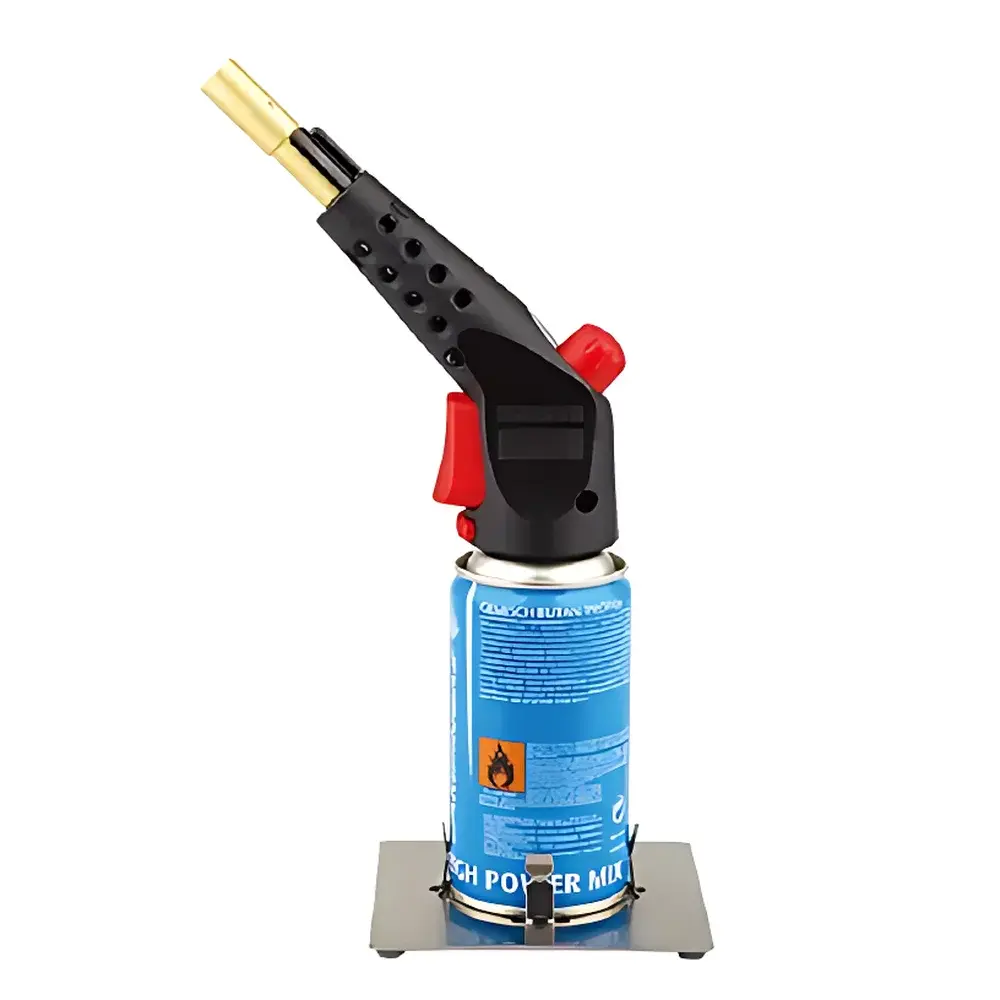
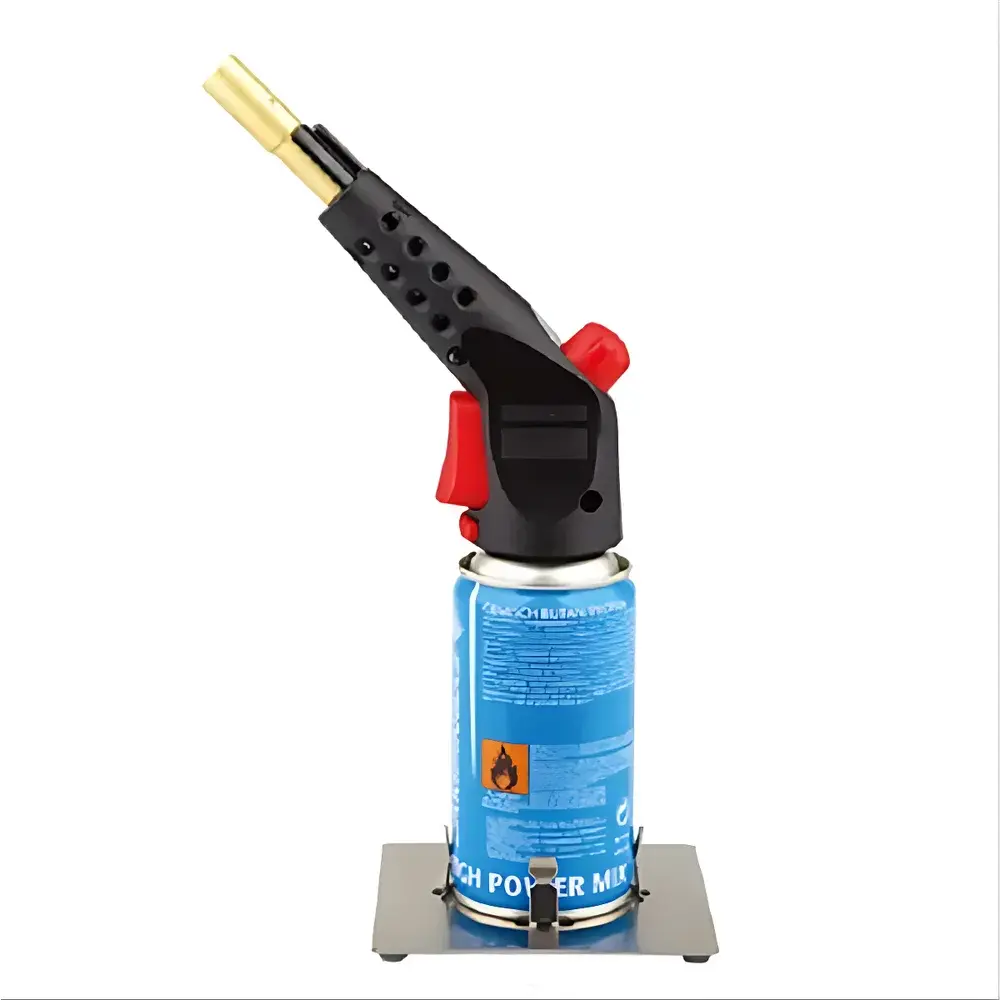
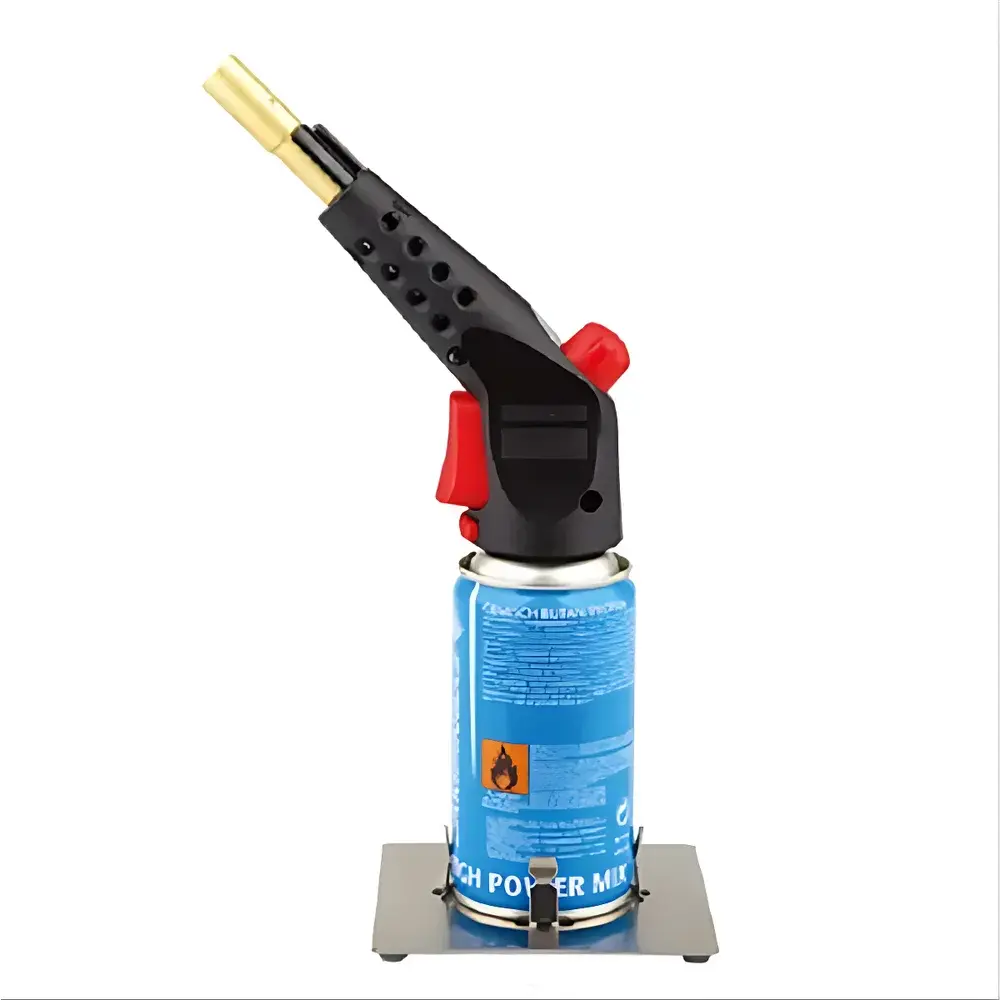
WIGGENS Powerjet Handheld Bunsen Burner
| Brand | WIGGENS |
|---|---|
| Origin | Germany |
| Model | Powerjet |
| Fuel Types | Liquefied Petroleum Gas (LPG), Natural Gas |
| Gas Consumption | 0.13 kg/h (LPG) |
| Maximum Flame Temperature | 1350 °C (LPG), 1300 °C (Natural Gas) |
| Power Output | 1.54 kW |
| Dimensions (W × H) | 150 × 180 mm |
| Weight | 300 g |
| Gas Inlet Thread | 7/16″×28 UNEF for Campingaz CG1750 cylinders |
Overview
The WIGGENS Powerjet Handheld Bunsen Burner is a precision-engineered, portable combustion device designed for controlled high-temperature flame applications in research laboratories, microbiology suites, and teaching facilities. Unlike conventional bench-mounted burners, the Powerjet operates on the principle of premixed gas-air combustion—where fuel and oxidant are thoroughly mixed prior to ignition—enabling stable, laminar blue flames with minimal soot formation and high thermal efficiency. Its optimized air intake geometry and calibrated gas flow path ensure consistent stoichiometric ratios across operating ranges, delivering reproducible flame temperatures up to 1350 °C when fueled with LPG. This makes it particularly suitable for critical thermal processes where flame stability, rapid thermal response, and operator safety are non-negotiable requirements.
Key Features
- Integrated piezoelectric ignition system: One-touch button actuation initiates simultaneous gas release and spark generation—no external igniters or matches required.
- Continuously adjustable flame control: Precision-machined rotary valve enables fine-tuned regulation of gas flow rate, supporting stable blue flame profiles from low-intensity sterilization to high-heat localized heating.
- Automatic gas shutoff mechanism: Release of the activation button immediately terminates fuel supply, eliminating residual flame hazards and ensuring compliance with laboratory safety protocols.
- Lockable flame control knob: Mechanical detent lock allows hands-free operation during extended procedures—ideal for repetitive sterilization tasks or continuous heating cycles.
- Compact, ergonomic handheld design: Weighing only 300 g with balanced weight distribution, the Powerjet minimizes operator fatigue during prolonged use while maintaining full tactile feedback.
- Dedicated gas interface: Equipped with a 7/16″×28 UNEF threaded adapter compatible with standard Campingaz CG1750 disposable LPG cylinders—ensuring secure, leak-resistant connection without additional regulators.
Sample Compatibility & Compliance
The Powerjet is routinely deployed in biosafety level 1 and 2 (BSL-1/2) laboratories for flame-based sterilization of inoculation loops, spreaders, forceps, and glassware necks. Its rapid heat-up time (1000 °C) and precise thermal localization reduce thermal stress on adjacent materials. The burner complies with EN 13861:2011 (Laboratory equipment — Safety requirements for gas appliances) and meets CE marking requirements under the EU Gas Appliances Regulation (EU) 2016/426. When used in GxP environments, its manual operation and absence of electronic data logging necessitate documented procedural controls per ISO/IEC 17025:2017 clause 7.2.2 (Method validation and verification). For sterile technique workflows, it supports USP and EU GMP Annex 1 alignment when integrated into validated aseptic processing SOPs.
Software & Data Management
The Powerjet is a fully mechanical, analog-operated device with no embedded electronics, firmware, or digital interfaces. Consequently, it does not require software installation, calibration certificates with digital signatures, or audit trail functionality. This architecture eliminates cybersecurity risks, firmware update dependencies, and compatibility constraints associated with networked instruments. All operational parameters—including gas type selection, flow adjustment, and ignition sequence—are executed manually and recorded within laboratory notebooks as part of standard operating procedure documentation. While not compliant with FDA 21 CFR Part 11 for electronic records, its simplicity ensures unambiguous traceability through handwritten log entries and visual verification of flame state (lit/extinguished).
Applications
- Microbiological loop and instrument sterilization prior to streaking, subculturing, or transfer operations.
- Flame-polishing of glass capillaries and Pasteur pipettes in cell culture and microinjection workflows.
- Localized thermal treatment of metal tools in histology and pathology labs.
- Ignition source for combustion-based analytical methods requiring calibrated open-flame excitation.
- Educational demonstrations of stoichiometric combustion, flame structure, and thermal convection in undergraduate chemistry and physics laboratories.
- Rapid decontamination of work surfaces and equipment edges in containment hoods during emergency response protocols.
FAQ
What gas types are compatible with the Powerjet burner?
The Powerjet is certified for use with liquefied petroleum gas (LPG), including Campingaz CG1750 cylinders, and natural gas (methane). A dedicated pressure-reducing adapter is included for LPG; natural gas requires an external line regulator set to 20–25 mbar outlet pressure.
Is the Powerjet suitable for use inside a laminar flow hood?
Yes—its compact size, directional flame profile, and immediate gas cutoff allow safe operation within Class II biological safety cabinets, provided local ventilation guidelines and hood face velocity specifications are maintained.
Does the Powerjet require periodic calibration?
No calibration is required, as flame temperature and gas flow are determined solely by fuel composition, ambient pressure, and mechanical valve position—parameters governed by physical laws rather than sensor drift.
Can the Powerjet be used with refillable propane tanks?
It is not recommended for direct use with high-pressure refillable propane tanks without an appropriate stage-1 regulator and compatible thread adapter; only CG1750-type disposable cylinders are validated for use with the supplied 7/16″×28 UNEF interface.
What maintenance is required for long-term reliability?
Routine cleaning of the nozzle aperture with a stainless-steel needle and periodic inspection of the piezoelectric crystal housing for moisture ingress or physical damage are sufficient to maintain optimal performance over 10,000+ ignition cycles.
Related Products



