
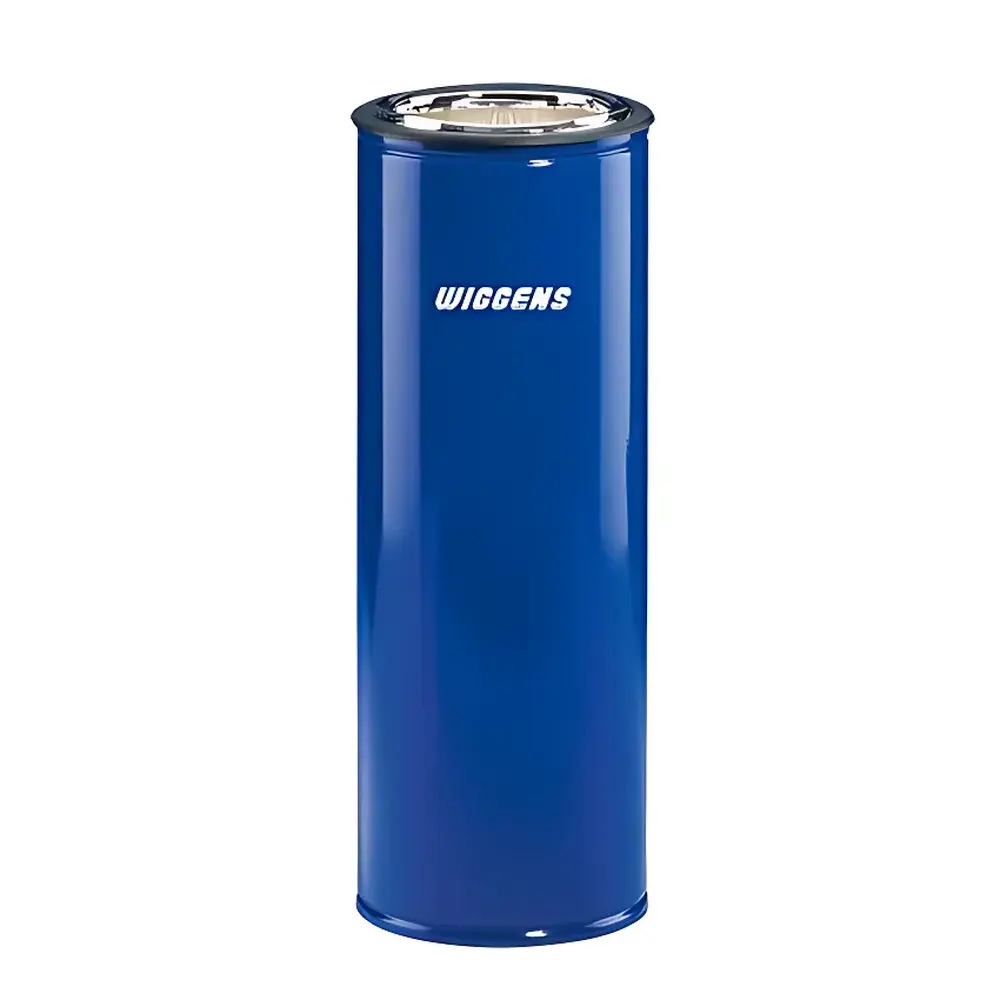
WIGGENS C/G-C Series Universal Cylindrical Dewar Flasks
| Brand | WIGGENS |
|---|---|
| Origin | Germany |
| Manufacturer Type | Authorized Distributor |
| Origin Category | Imported |
| Model | C/G-C |
| Price Range | USD 140 – 1,400 (FOB) |
Overview
The WIGGENS C/G-C Series Universal Cylindrical Dewar Flasks are precision-engineered cryogenic storage vessels designed for reliable, low-evaporation containment of liquid nitrogen (LN₂), dry ice, and other cryogens in life science laboratories. Constructed with a double-walled vacuum-insulated design and an inner liner made of high-purity 3.3 borosilicate glass—known for its exceptional thermal shock resistance and chemical inertness—the flasks operate on the fundamental principle of vacuum insulation to minimize conductive and convective heat transfer. This architecture ensures extended hold times (up to 136 hours for the C1700 model) and ultra-low evaporation rates (as low as 0.2 L/day), critical for preserving temperature-sensitive biological samples—including cell lines, embryos, sperm, and tissue specimens—during short- to medium-term storage or transport. Unlike pressurized cryogenic tanks, these passive Dewars require no external power or pressure regulation, making them ideal for benchtop use, cold room integration, and mobile applications where simplicity, safety, and regulatory compliance are paramount.
Key Features
- Vacuum-insulated cylindrical geometry optimized for structural stability and uniform thermal performance across all orientations
- Inner vessel fabricated from ASTM E438 Type I, Class A 3.3 borosilicate glass—resistant to thermal cycling between −196 °C and +100 °C
- Robust stainless steel or aluminum outer shell (model-dependent) providing mechanical protection and electromagnetic shielding
- G-C series models incorporate ergonomic, cryo-rated stainless steel handles rated for continuous operation at −196 °C; C-series models omit handles for compact stacking or fixed-mount configurations
- Optional anti-evaporation insulating lids (sold separately) featuring multi-layer reflective foil and closed-cell elastomeric seals, reducing vapor loss by up to 40% versus open-top operation
- Customizable variants available with fused quartz observation windows (with AR coating) for real-time visual monitoring without thermal breach
- CE-marked per Directive 2014/68/EU (PED) and compliant with EN 13445-3 for unfired pressure equipment design principles, even though operating at ambient pressure
Sample Compatibility & Compliance
These Dewars accommodate a broad range of cryopreserved biospecimens stored in standard cryovials (1.0–2.0 mL), straws (0.25–0.5 mL), cryoboxes (e.g., Nunc™, Thermo Scientific™ formats), and microtubes. Their non-magnetic, non-outgassing construction meets ISO 13485:2016 requirements for medical device storage environments and supports GLP-compliant workflows under 21 CFR Part 58. While not classified as active medical devices, their dimensional consistency and traceable manufacturing (batch-number etched on base ring) enable full auditability in biobanking SOPs aligned with ISBER Best Practices and CAP accreditation standards. All models are compatible with standard LN₂ delivery carts and automated sample retrieval systems via third-party adapters.
Software & Data Management
As passive hardware components, the C/G-C Dewars do not integrate firmware or onboard sensors. However, they are fully interoperable with laboratory infrastructure management platforms including Thermo Fisher SampleManager LIMS, LabVantage, and Brooks Automation GENE-UP® via manual or barcode-scanned inventory logging. Optional RFID-enabled lid inserts (compatible with ISO/IEC 18000-6C protocol) can be retrofitted to support automated fill-level estimation and location tracking within smart cold rooms. Temperature mapping validation reports (per ISO/IEC 17025) are routinely performed during IQ/OQ protocols using calibrated Pt100 probes placed at defined axial/radial positions—data archived alongside dewar serial numbers for FDA 21 CFR Part 11–compliant electronic records.
Applications
- Short-term cryostorage of primary human cells and induced pluripotent stem cells (iPSCs) prior to banking or assay
- Transport of LN₂-cooled reagents (e.g., cryoprotectants, restriction enzymes) between core facilities
- Backup storage for ultra-low temperature freezers during maintenance or power failure
- Controlled-rate freezing setups when integrated with programmable coolers (e.g., Planer Kryo 360)
- Calibration reference vessels for cryogenic thermometry and volumetric verification (traceable to PTB/NIST standards)
- Teaching labs requiring safe, hands-on demonstration of phase-change thermodynamics and latent heat measurement
FAQ
Are these Dewars suitable for long-term archival storage of biological samples?
No—they are engineered for intermediate-term storage (hours to days) and transport. For archival biobanking (>1 year), actively monitored liquid nitrogen tanks with vapor-phase monitoring and alarm systems (e.g., CryoSafe™ or MVE Variocool™) are required per AABB and FACT-Net standards.
Can I autoclave the borosilicate inner vessel?
No. Autoclaving exceeds the thermal tolerance of the vacuum seal and compromises insulation integrity. Sterilization must be performed via 70% ethanol wipe-down or VHP (vaporized hydrogen peroxide) exposure—validated per ISO 14937.
Do G-C series handles affect thermal performance?
Handles are thermally isolated via low-conductivity polymer bushings and contribute <0.8% additional daily evaporation relative to equivalent C-series units—within measurement uncertainty of standard gravimetric testing per ASTM F2657.
Is custom engraving or labeling available for institutional traceability?
Yes. Permanent laser etching (depth ≥15 µm) of lab IDs, barcodes, or QR codes is offered at no additional cost for orders ≥10 units, compliant with ANSI/AAMI ST72:2022 labeling requirements.
What is the maximum allowable fill level for safe handling?
Fill to 85% of internal volume only. Overfilling increases risk of rapid phase transition (RPT) events during thermal shock and violates EN 13445-3 Annex C safety margins for static cryogen loading.





