
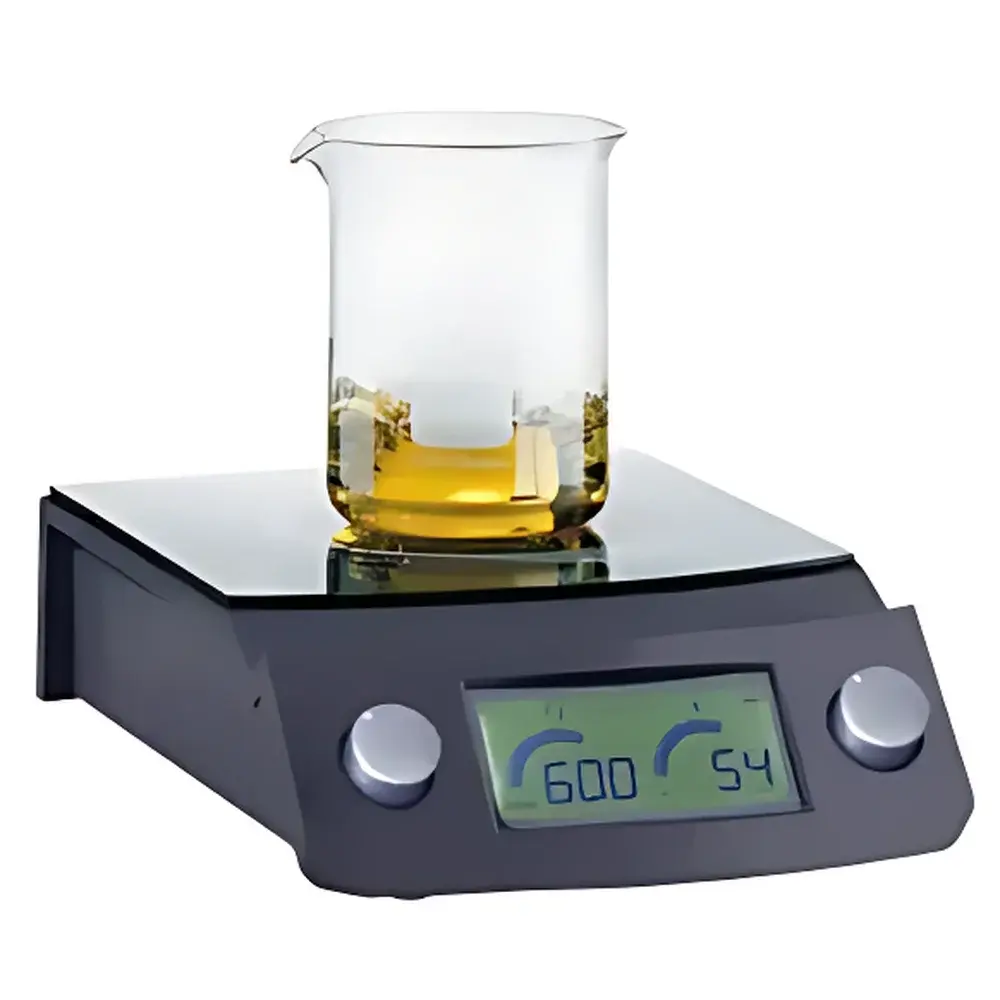
WIGGENS SLK 2-T Infrared Heating Plate with External Temperature Probe Control
| Brand | WIGGENS |
|---|---|
| Origin | Germany |
| Model | SLK 2-T |
| Heating Power | 1.2 kW (230 V) / 0.9 kW (110 V) |
| Max Surface Temperature | 550 °C |
| Control Range (with external probe) | +40 to +300 °C |
| Temperature Stability | ±2 °C to ±5 °C |
| Heating Area Diameter | Ø155 mm |
| Plate Dimensions | 285 × 285 mm |
| Overall Dimensions | 395 × 295 × 110 mm |
| Max Load Capacity | 25 kg |
| Protection Class | IP20 |
| Panel Material | Glass Ceramic |
| Housing Material | High-strength heat-resistant flame-retardant plastic with corrosion-resistant coating |
| Interface | RS-232 |
| Weight | 4.0 kg |
| Power Supply | 230 V / 50 Hz |
| Order Code (220 V/50 Hz) | 285416616-22 |
Overview
The WIGGENS SLK 2-T Infrared Heating Plate is a precision-engineered thermal platform designed for controlled, uniform, and chemically inert heating in analytical, preparatory, and digestion workflows. Unlike conventional resistive hotplates, the SLK 2-T utilizes high-emissivity infrared radiation emitted from beneath a seamless glass ceramic surface—enabling rapid thermal response, minimal thermal lag, and highly reproducible energy transfer to reaction vessels. Its robust microcrystalline glass panel withstands thermal shock up to 700 °C and resists aggressive reagents including concentrated acids, alkalis, and organic solvents—making it suitable for open-vessel sample digestion, solvent evaporation, reflux preheating, and temperature-critical synthesis steps. The unit operates as a stand-alone heating station or integrates into automated sample preparation lines via its RS-232 interface, supporting traceable, repeatable thermal protocols under GLP-compliant laboratory environments.
Key Features
- Glass ceramic top plate with zero porosity, chemical resistance, and high thermal conductivity—ensuring fast warm-up, excellent temperature uniformity (±3 °C across heating zone), and effortless cleaning.
- 24-step programmable temperature setpoint control with rotary encoder and dual-line LCD display showing both setpoint and real-time surface temperature.
- Timer function with adjustable duration from 0 to 1800 seconds (30 minutes); elapsed time and remaining time displayed simultaneously.
- SLK 2-T variant supports external Pt100 or thermocouple probe input for closed-loop liquid-phase temperature control—critical for viscosity-sensitive reactions, enzymatic assays, or digestion kinetics where bath temperature—not surface temperature—must be regulated.
- Front-panel integrated drip channel prevents accidental liquid ingress into control electronics, enhancing operational safety during high-volume or multi-step digestions.
- IP20-rated enclosure with flame-retardant, corrosion-coated housing meets IEC 61010-1 requirements for laboratory electrical equipment safety.
Sample Compatibility & Compliance
The SLK 2-T accommodates standard borosilicate glassware (e.g., Erlenmeyer flasks, round-bottom flasks, digestion tubes) and PTFE/PFA vessels up to 25 kg total load. Its Ø155 mm active heating zone ensures optimal coupling with vessels ranging from 50 mL to 2 L capacity. When used with external temperature probes, the system complies with temperature monitoring requirements outlined in ASTM D5292 (lubricant oxidation stability), ISO 11047 (soil organic carbon determination), and EPA Method 3050B (acid digestion of sediments and soils). The RS-232 interface enables data logging and audit trail generation compatible with FDA 21 CFR Part 11–configured LIMS or ELN platforms when paired with compliant software.
Software & Data Management
While the SLK 2-T operates autonomously via front-panel controls, its RS-232 port allows bidirectional communication with host PCs running custom LabVIEW, Python (PySerial), or vendor-neutral SCADA applications. Users can remotely initiate heating cycles, log real-time surface and probe temperatures at user-defined intervals (e.g., every 5 s), and export timestamped CSV files for post-run analysis. Firmware supports command-based parameter recall, error code reporting (e.g., overtemperature, sensor disconnect), and firmware version query—facilitating instrument qualification (IQ/OQ) documentation and routine preventive maintenance scheduling.
Applications
- Open-vessel acid digestion (HNO₃, HCl, HF mixtures) prior to ICP-OES/MS analysis.
- Controlled evaporation of solvent extracts in environmental and pharmaceutical QC labs.
- Pretreatment of polymer melts and resin samples before rheological or DSC characterization.
- Standardized heating of calibration standards in metrology laboratories requiring stable thermal gradients.
- Preheating of GC injection ports, dissolution apparatus baths, or viscometer thermostats.
- Teaching labs requiring safe, observable, and repeatable thermal demonstrations for physical chemistry courses.
FAQ
Can the SLK 2-T maintain precise temperature control inside a reaction flask?
Yes—when connected to an optional external Pt100 probe immersed in the liquid phase, the unit regulates power output to hold the measured liquid temperature within ±2 °C to ±5 °C, depending on vessel geometry, stirring efficiency, and thermal mass.
Is the glass ceramic surface resistant to hydrofluoric acid (HF)?
The microcrystalline glass ceramic exhibits high resistance to most mineral acids, but prolonged direct exposure to concentrated HF is not recommended; use PTFE-coated stir bars and secondary containment for HF-based digestions.
Does the unit support continuous operation at maximum temperature?
Yes—the SLK 2-T is rated for indefinite operation at 550 °C surface temperature under proper ventilation and load conditions; thermal cut-off protection activates only above 600 °C.
What is the minimum vessel size compatible with the Ø155 mm heating zone?
Vessels with base diameters ≥40 mm achieve efficient coupling; smaller formats (e.g., 10–25 mL vials) require careful centering and may benefit from aluminum heat-diffusion blocks.
How is calibration verified for regulatory compliance?
Users perform periodic verification using NIST-traceable contact thermometers or infrared calibrators; factory calibration certificates and adjustment procedures are provided in the technical manual per ISO/IEC 17025 guidelines.
Related Products



