
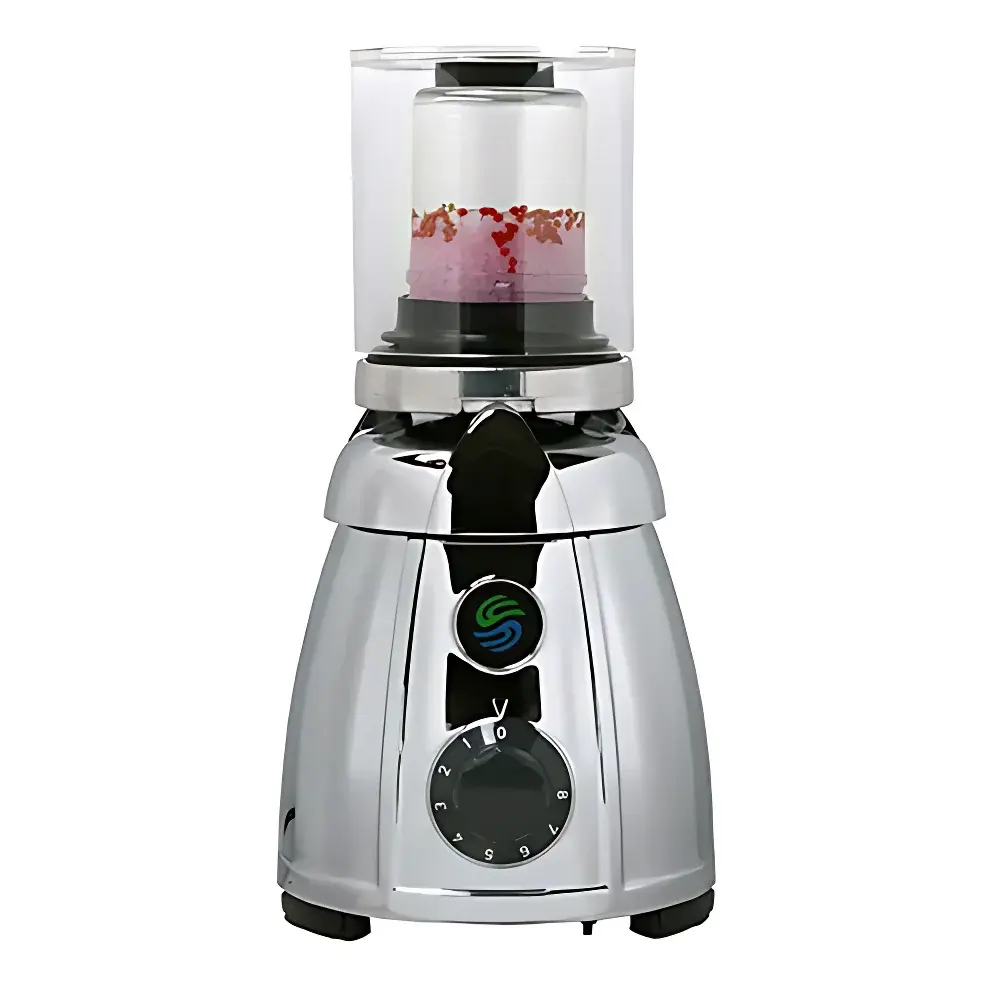
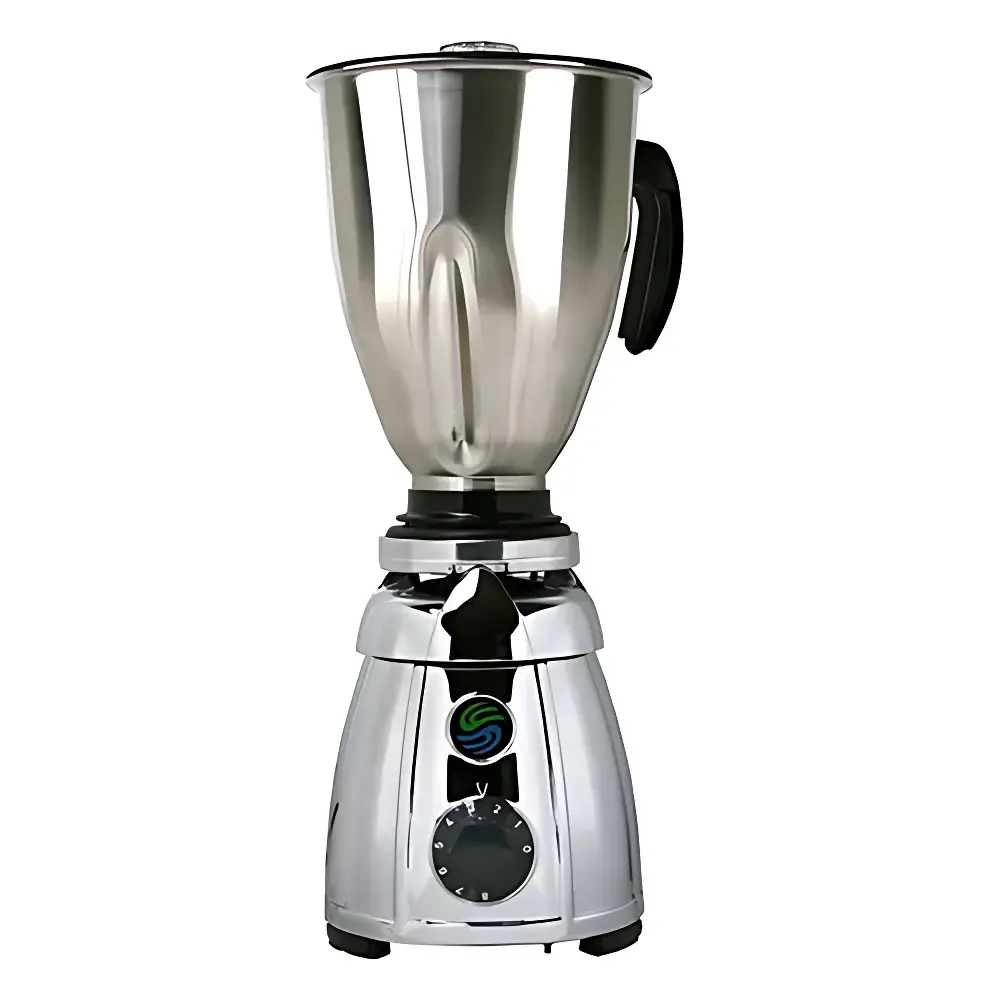
WIGGENS WMA800 High-Capacity Bead Mill Homogenizer
| Brand | WIGGENS |
|---|---|
| Origin | Switzerland |
| Model | WMA800 |
| Instrument Type | Bead Mill Homogenizer |
| Processing Volume | 2000–4000 mL |
| Motor Power | 800 W |
| Speed Range | 1000–17,000 rpm |
| Voltage | 230 V / 50 Hz or 100–120 V / 60 Hz |
| Noise Level | ≤79 dB(A) at 17,000 rpm |
| Operating Environment | 0–40 °C, ≤95% RH |
| Safety Compliance | EN 60335-1, EN 60335-2-64, EN 55014, EN 55104, EN 61000-3-2, EN 61000-3-3 |
| Protection Class | IPX0 (Class I) |
| Dimensions (H × Ø) | 245 mm × 190 mm |
| Weight | 5.3 kg |
| Order Code | W3053111 |
Overview
The WIGGENS WMA800 is a high-capacity, benchtop bead mill homogenizer engineered for reproducible mechanical disruption of biological, pharmaceutical, and industrial samples requiring robust cell lysis, particle size reduction, or nano-emulsion formation. Operating on the principle of high-shear wet grinding, the system utilizes rotating agitation of grinding media (e.g., zirconia or stainless steel beads) within a sealed stainless-steel processing chamber to transfer kinetic energy directly to suspended particles or cells. This mechanism enables efficient, scalable, and temperature-controlled homogenization without significant thermal degradation—critical for preserving labile biomolecules such as enzymes, nucleic acids, and membrane proteins. Designed for routine use in QC laboratories, bioprocessing development, and materials R&D, the WMA800 delivers consistent energy input across its full 2–4 L working volume range, supporting both batch and semi-continuous operation under controlled ambient conditions.
Key Features
- High-power 800 W brushless motor with load-compensated speed regulation ensures stable rotational output across variable viscosities and bead loads—from low-viscosity suspensions to highly concentrated pastes.
- Wide adjustable speed range (1000–17,000 rpm) enables precise optimization of shear intensity for diverse sample matrices, including mammalian tissues, yeast cultures, polymer dispersions, and ceramic slurries.
- Dual-safety interlock system: Homogenization initiates only after the stainless-steel lid is fully engaged and locked; immediate motor shutdown occurs upon lid removal during operation—compliant with EN 60335-2-64 requirements for motor-driven laboratory equipment.
- Double-insulated housing with integrated RF shielding minimizes electromagnetic interference and enhances operator safety in shared instrumentation environments.
- Compact footprint (245 mm H × 190 mm Ø) and lightweight construction (5.3 kg) facilitate integration into laminar flow hoods, cold rooms, or multi-user lab benches without dedicated floor space.
- Universal voltage compatibility (100–120 V / 60 Hz or 230 V / 50 Hz) supports global deployment without transformer dependency.
Sample Compatibility & Compliance
The WMA800 accommodates a broad spectrum of sample types—including soft and fibrous tissues, microbial pellets, plant biomass, colloidal suspensions, and viscous polymer solutions—when processed in compatible stainless-steel vessels rated for 2000 mL and 4000 mL nominal volumes. All wetted parts are electropolished 316L stainless steel, ensuring corrosion resistance and ease of cleaning between runs. The system conforms to key international safety and EMC standards: EN 60335-1 (general safety), EN 60335-2-64 (particular requirements for commercial and industrial kitchen appliances—adapted for lab-scale mechanical homogenizers), EN 55014 (EMI emissions), EN 55104 (immunity), and EN 61000-3-2/3-3 (harmonic current and voltage fluctuation limits). While not intrinsically GLP/GMP-certified, its mechanical reliability, audit-ready operational logs (via optional analog/digital interface), and traceable safety interlocks support integration into regulated workflows compliant with ISO/IEC 17025 and FDA 21 CFR Part 11 when paired with validated SOPs.
Software & Data Management
The WMA800 operates via an analog front-panel control interface with rotary speed dial and LED status indicators—designed for simplicity, durability, and minimal maintenance in high-throughput settings. No embedded firmware or proprietary software is required for basic operation. For laboratories requiring documentation traceability, the unit supports external analog signal output (0–10 V DC) proportional to real-time RPM, enabling connection to data loggers or SCADA systems for time-stamped speed profiling and process validation. Optional accessories include calibrated tachometers and vibration-dampening mounting plates to enhance measurement fidelity during long-duration runs. Though lacking native USB or Ethernet connectivity, its deterministic mechanical behavior and repeatable setpoint response make it suitable for inclusion in IQ/OQ protocols where parameter stability—not digital telemetry—is the primary validation criterion.
Applications
- Cell disruption for subcellular fractionation and protein extraction from bacterial, fungal, and animal cell cultures.
- Preparation of uniform nanoparticle suspensions for drug delivery vehicle development and material science characterization.
- Routine homogenization of food-grade emulsions, cosmetic formulations, and ink dispersions prior to rheological or particle size analysis.
- Grinding of freeze-dried tissue samples prior to genomic DNA isolation or metabolite profiling.
- Dispersion stabilization of carbon nanotubes, graphene oxide, and metal-organic frameworks (MOFs) in aqueous or organic media.
- QC testing of batch-to-batch consistency in suspension-based pharmaceutical products per USP and EP 2.9.30 guidelines.
FAQ
What grinding media sizes are recommended for the WMA800?
Typical bead diameters range from 0.1 mm to 2.0 mm, depending on target particle size and sample viscosity. Zirconia beads (0.3–0.5 mm) are preferred for high-efficiency biological lysis; stainless steel (1.0–2.0 mm) suits abrasive industrial slurries.
Can the WMA800 be operated under refrigerated conditions?
Yes—the unit is rated for operation between 0–40 °C ambient temperature. When placed inside a chilled enclosure or cold room, ensure adequate ventilation around the motor housing to prevent condensation-induced insulation degradation.
Is the stainless-steel vessel autoclavable?
The vessel is constructed from autoclave-compatible 316L stainless steel; however, repeated sterilization cycles may affect gasket integrity. Use only FDA-compliant silicone or EPDM sealing rings rated for ≥121 °C saturated steam.
Does the WMA800 meet CE marking requirements for laboratory equipment?
Yes—its compliance with EN 60335-1, EN 60335-2-64, and relevant EMC directives fulfills essential CE marking criteria for electrical safety and electromagnetic compatibility in the European Economic Area.
How is maintenance performed on the motor assembly?
The brushless motor requires no scheduled lubrication or brush replacement. Routine inspection includes verifying tightness of drive coupling bolts, checking for abnormal vibration at maximum speed, and cleaning external heat sinks with dry compressed air every 200 operating hours.



