
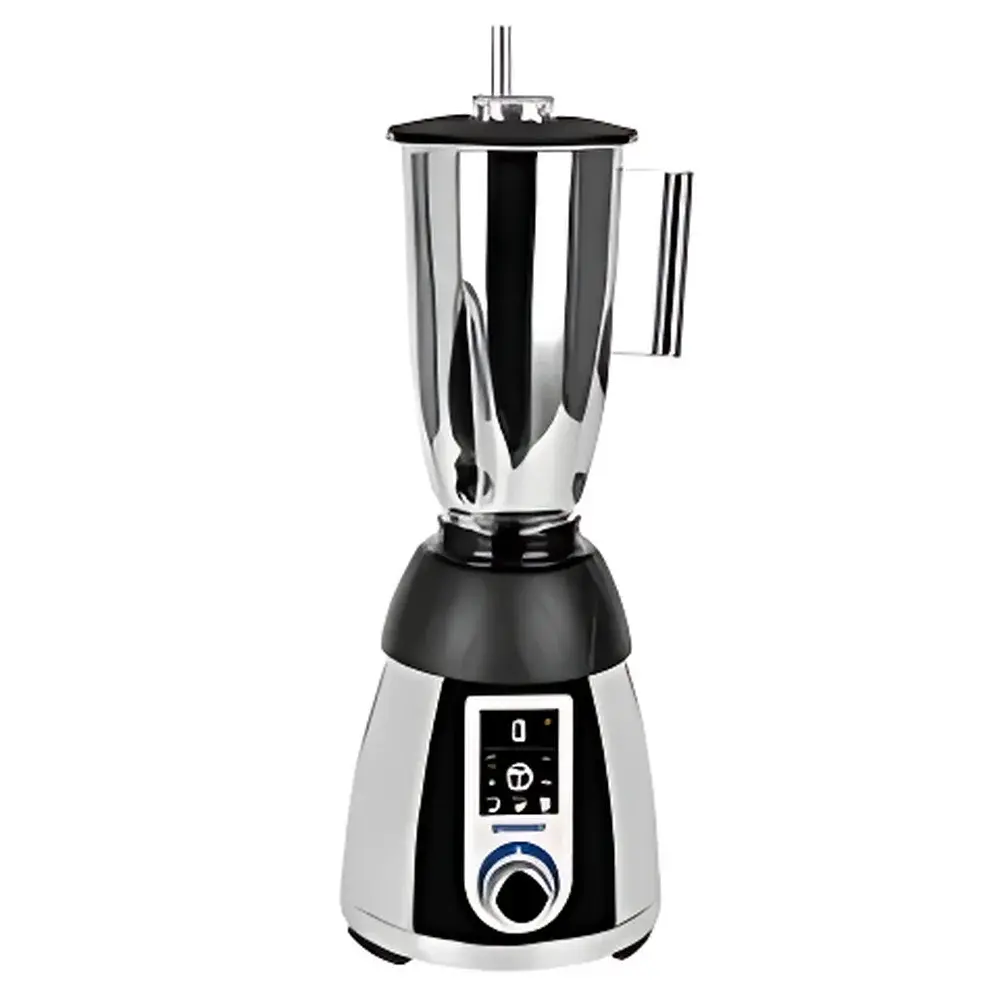
WIGGENS WMD950 High-Performance Rotating Blade Homogenizer
| Brand | WIGGENS |
|---|---|
| Origin | Germany |
| Model | WMD950 |
| Instrument Type | Probe-type rotating blade homogenizer |
| Display | TFT high-brightness LCD |
| Control | Rotary knob + touch interface |
| Speed Range | 1,000–17,000 rpm (10-step adjustment) |
| Timer | 1 s–60 min |
| Operating Modes | Continuous, Pulse, Momentary, Programmable |
| Safety Interlock | Lid-closed activation & automatic shutdown upon lid removal |
| Noise Level | 76 dB(A) at 17,000 rpm |
| Operating Temperature | 10–40 °C |
| Input Voltage | 230 V AC, 50 Hz |
| Power Rating | 950 W |
| Dimensions (Ø × H) | 194 × 516 mm |
Overview
The WIGGENS WMD950 is a high-torque, probe-type rotating blade homogenizer engineered for reproducible, high-shear disruption of biological, chemical, botanical, and nutritional samples in research, clinical diagnostics, pharmaceutical development, and food science laboratories. It operates on the principle of mechanical shear generated by a rapidly rotating stainless-steel cutting head immersed directly into the sample vessel—enabling efficient cell lysis, tissue homogenization, emulsification, and particle size reduction. Unlike rotor-stator systems relying on fixed chamber geometry, the WMD950’s probe-based architecture allows direct insertion into diverse container formats (glass, stainless steel, or polymer), minimizing cross-contamination risk and maximizing process flexibility. Its robust 950 W universal motor delivers stable rotational energy across the full speed range (1,000–17,000 rpm), with electronic load compensation ensuring consistent torque output even under variable viscosity or particulate load conditions.
Key Features
- High-efficiency six-blade stainless-steel cutting head—precision-engineered for uniform shear distribution and minimal heat generation during extended operation.
- TFT high-brightness LCD display with intuitive rotary knob and capacitive touch controls for precise parameter entry and real-time monitoring of speed, time, and active mode.
- Four operational modes: continuous (for steady-state homogenization), momentary (for brief manual activation), pulse (programmable on/off intervals to manage thermal load), and programmable (user-defined multi-step protocols stored in non-volatile memory).
- Integrated safety interlock system compliant with EN 60335-1 and EN 60335-2-64: motor only engages when the transparent polycarbonate safety lid is fully seated; immediate shutdown occurs if lid is lifted mid-cycle.
- Soft-start electronics eliminate mechanical shock and reduce bearing wear—critical for maintaining long-term rotational accuracy and minimizing sample foaming or aerosol generation.
- Zinc die-cast gear housing and dual-sealed stainless-steel ball bearings ensure structural rigidity, vibration damping, and extended service life under repeated high-load duty cycles.
- CE-marked and compliant with electromagnetic compatibility standards EN 55014, EN 55104, EN 61000-3-2, and EN 61000-3-3.
Sample Compatibility & Compliance
The WMD950 accommodates a broad range of sample matrices—including soft animal tissues, plant material, microbial pellets, viscous suspensions, and semi-solid foodstuffs—across volume ranges from 1 mL to 4 L, depending on selected accessories. Compatible vessels include borosilicate glass jars (125–1000 mL), electropolished stainless-steel containers (2000–4000 mL), and autoclavable stainless-steel probes (MBA series). All wetted parts are constructed from AISI 316 stainless steel, supporting ISO 13485-aligned cleaning validation and repeated sterilization via autoclaving (121 °C, 20 min) or chemical disinfection. The device meets essential requirements for GLP-compliant environments, including traceable parameter logging (via optional RS232/USB interface), audit-ready operation records, and physical safeguards against unauthorized or uncontrolled actuation.
Software & Data Management
While the WMD950 operates as a standalone instrument, its embedded firmware supports external data capture through standard serial (RS232) or USB-C interfaces. When connected to laboratory information management systems (LIMS) or validated PC-based control software, users can export timestamped logs containing speed setpoint, actual RPM, elapsed time, mode selection, and safety event flags (e.g., lid-open interruption). Firmware adheres to principles aligned with FDA 21 CFR Part 11 for electronic records—supporting user authentication, operator-defined password protection, and immutable audit trails where integrated software solutions are deployed. No cloud connectivity or proprietary drivers are required for basic functionality.
Applications
- Pre-analytical sample preparation for molecular biology workflows—including RNA/DNA extraction, protein solubilization, and organelle isolation.
- Routine homogenization of clinical specimens (e.g., biopsy tissues, blood clots, stool suspensions) prior to immunoassay or PCR analysis.
- Formulation development in pharmaceutical R&D: nanoparticle dispersion, lipid emulsion stabilization, and active pharmaceutical ingredient (API) micronization.
- Quality control testing in food manufacturing: fat globule size distribution in dairy products, fiber dispersion in plant-based alternatives, and microbial suspension homogeneity assessment.
- Materials science applications involving nanocomposite dispersion in polymer precursors or ceramic slurries.
FAQ
What types of vessels are compatible with the WMD950?
Standard accessories include borosilicate glass jars (125–1000 mL) and electropolished stainless-steel containers (2000–4000 mL), all equipped with integrated safety lids and O-ring seals rated for vacuum and pressure-assisted homogenization.
Is the cutting head autoclavable?
Yes—the stainless-steel probe assembly (including blades, shaft, and coupling) is fully autoclavable at 121 °C for 20 minutes. Bearings and seals are designed for repeated steam sterilization without performance degradation.
Does the WMD950 support regulatory compliance for GMP environments?
The instrument satisfies core hardware requirements for GMP Annex 11 and EU GMP Chapter 4: it provides deterministic control logic, mechanical safety interlocks, and interface capability for integration into validated electronic batch records—subject to site-specific qualification (IQ/OQ/PQ).
Can speed be maintained under high-viscosity loads?
Yes—electronic speed regulation with active load compensation ensures ±2% deviation from setpoint across the full 1,000–17,000 rpm range, even when processing glycerol-water mixtures or cell paste suspensions.
What maintenance is required?
Routine maintenance consists of visual inspection of blade sharpness, lubrication-free bearing operation verification, and periodic torque calibration of the lid interlock mechanism—no scheduled oiling or internal servicing is specified within the first 5,000 operating hours.



