
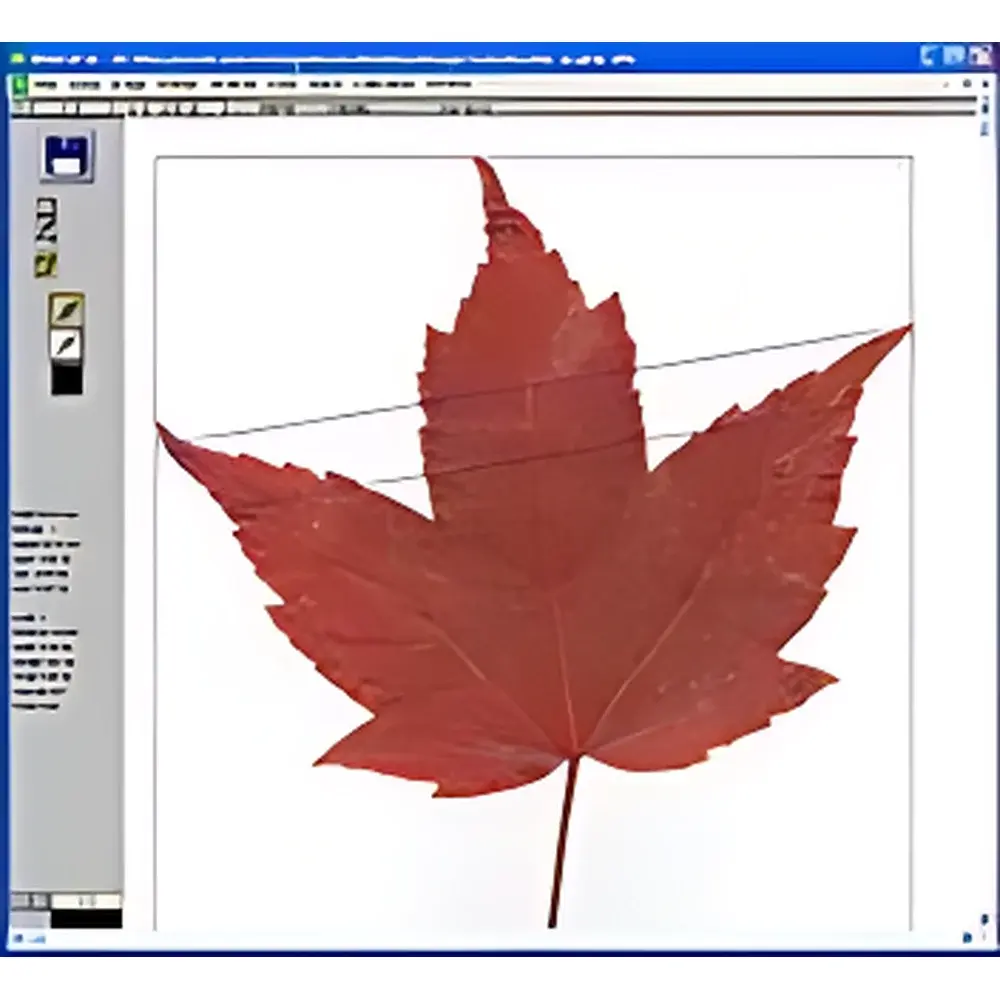
WinFOLIA Leaf Area Analysis System
| Origin | Canada |
|---|---|
| Manufacturer Type | Authorized Distributor |
| Origin Category | Imported |
| Model | WinFOLIA |
| Pricing | Available Upon Request |
Overview
The WinFOLIA Leaf Area Analysis System is a modular, image-based morphometric platform engineered for high-accuracy quantification of leaf structural parameters in plant physiology, agronomy, forestry, and plant pathology research. Built on an open-architecture framework, the system integrates standardized digital imaging hardware with rigorously validated analytical software to deliver reproducible, traceable, and scalable leaf phenotyping data. Its core measurement principle relies on pixel-based segmentation and geometric algorithmic analysis of digitized leaf images—acquired via calibrated scanners, USB cameras, or DSLR systems—followed by precise computation of morphological descriptors grounded in botanical geometry and Euclidean topology. Unlike single-purpose leaf area meters, WinFOLIA supports both field-deployable workflows (e.g., portable scanner + rugged tablet) and laboratory-grade configurations (e.g., flatbed scanner + controlled lighting), ensuring consistency across experimental scales while maintaining compliance with ISO 5725 (accuracy and precision of measurement methods) and GLP-aligned documentation practices.
Key Features
- Modular hardware compatibility: Supports factory-calibrated desktop scanners, battery-powered portable scanners (USB-powered), industrial USB cameras, and scientific-grade digital cameras—each validated for optical uniformity and gamma correction.
- Three-tiered software licensing: WinFOLIA Basic, Standard, and Professional editions—differing in analytical depth, automation capacity, and compliance functionality.
- Precision morphometric engine: Computes area (cumulative and individual), perimeter (hole-insensitive), length, maximum width, aspect ratio, shape factor, and user-defined angular/linear measurements with sub-pixel interpolation.
- Pathology-integrated analysis: Professional edition enables true-color spectral decomposition (RGB → HSV/Lab space) for lesion detection, chlorosis quantification, necrotic area mapping, and disease severity indexing per IPM protocols.
- Robust image preprocessing: Includes noise filtering, adaptive thresholding, hole-filling, fragment removal, and edge smoothing—optimized for heterogeneous leaf textures, venation patterns, and partial occlusion.
- Batch processing & metadata embedding: Supports automated folder-based analysis, CSV/Excel export with timestamped audit trails, and TIFF header annotation for long-term FAIR (Findable, Accessible, Interoperable, Reusable) data management.
Sample Compatibility & Compliance
WinFOLIA accommodates fresh, pressed, dried, or laminated leaves—including compound, lobed, pinnate, and irregularly dissected specimens—without requiring physical contact or destructive sampling. The system accepts standard TIFF (uncompressed or LZW-compressed), JPEG, PNG, and BMP formats, enabling integration with existing imaging pipelines (e.g., stereo microscopy, macro photography, drone-derived orthomosaics). All measurement algorithms are deterministic and version-locked; software updates include full changelogs and regression test reports. For regulated environments, the Professional edition supports FDA 21 CFR Part 11–compliant electronic signatures, audit trail logging, and role-based access control—validated for use in GLP and GMP-adjacent plant breeding trials and phytosanitary certification studies.
Software & Data Management
WinFOLIA software operates on Windows 10/11 (64-bit) and requires no internet connection during analysis—ensuring data sovereignty and offline operation in remote field stations. Each measurement session generates a structured project file (.wfp) containing raw image references, parameter definitions, operator ID, acquisition date/time, and calibration metadata. Export options include tab-delimited text, Excel (.xlsx), and database-ready SQL dumps. The Professional edition includes scripting support (via embedded Python API) for custom workflow automation, integration with LIMS platforms, and batch recalibration against NIST-traceable leaf area standards. All versions maintain backward compatibility with legacy .wfp files dating to v2.0 (2008).
Applications
- Agronomic trait screening: High-throughput leaf area index (LAI) estimation, specific leaf area (SLA) calculation, and growth rate modeling under abiotic stress (drought, salinity, heat).
- Forest ecology: Canopy architecture reconstruction, shade-tolerance classification, and allometric scaling of leaf traits across ontogenetic gradients.
- Plant pathology: Quantitative assessment of fungal lesion expansion kinetics, viral mottle progression, and herbicide phytotoxicity scoring per EPPO PM 7/98 guidelines.
- Ecophysiology: Correlation of stomatal density proxies (via vein network analysis add-ons), leaf dissection index (LDI), and carbon assimilation potential.
- Educational laboratories: Interactive teaching modules for botanical morphology, image analysis fundamentals, and experimental design validation.
FAQ
What image resolution is recommended for optimal accuracy?
A minimum of 300 dpi (scanned) or 2400 × 1800 pixels (photographed) is advised; higher resolutions improve edge detection fidelity for serrated or deeply lobed species.
Can WinFOLIA analyze overlapping or touching leaves?
Yes—the Professional edition includes watershed segmentation and manual split tools to resolve adjacency artifacts without compromising measurement integrity.
Is calibration required before each session?
A one-time spatial calibration (using included reference grid) ensures pixel-to-mm conversion; subsequent sessions retain calibration unless hardware configuration changes.
Does WinFOLIA support multi-language interfaces?
The interface is English-only, but data exports and metadata fields accept Unicode (UTF-8), enabling localized species names and experimental annotations.
How is software validation documented for regulatory submissions?
Regent provides a comprehensive Validation Package (VP) upon request, including IQ/OQ protocols, performance verification reports, and algorithmic accuracy benchmarks against gravimetric and planimeter reference methods.




