
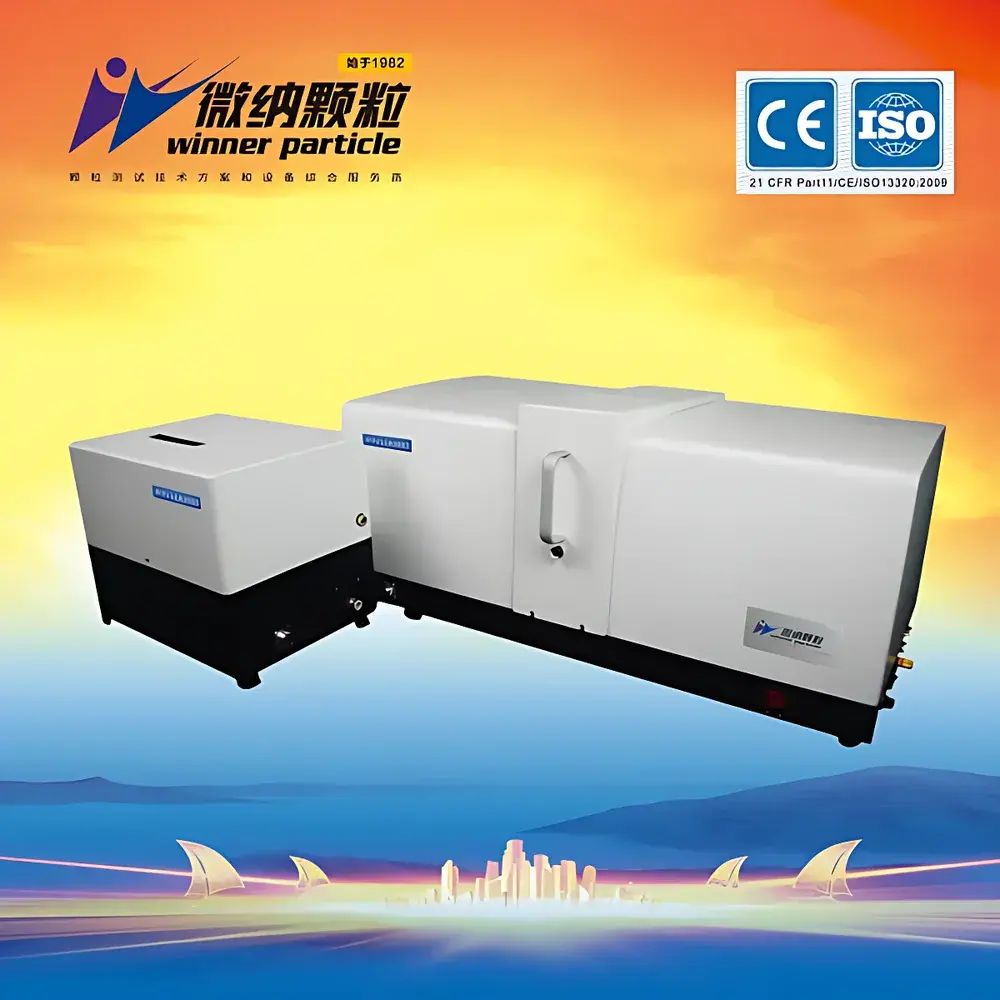
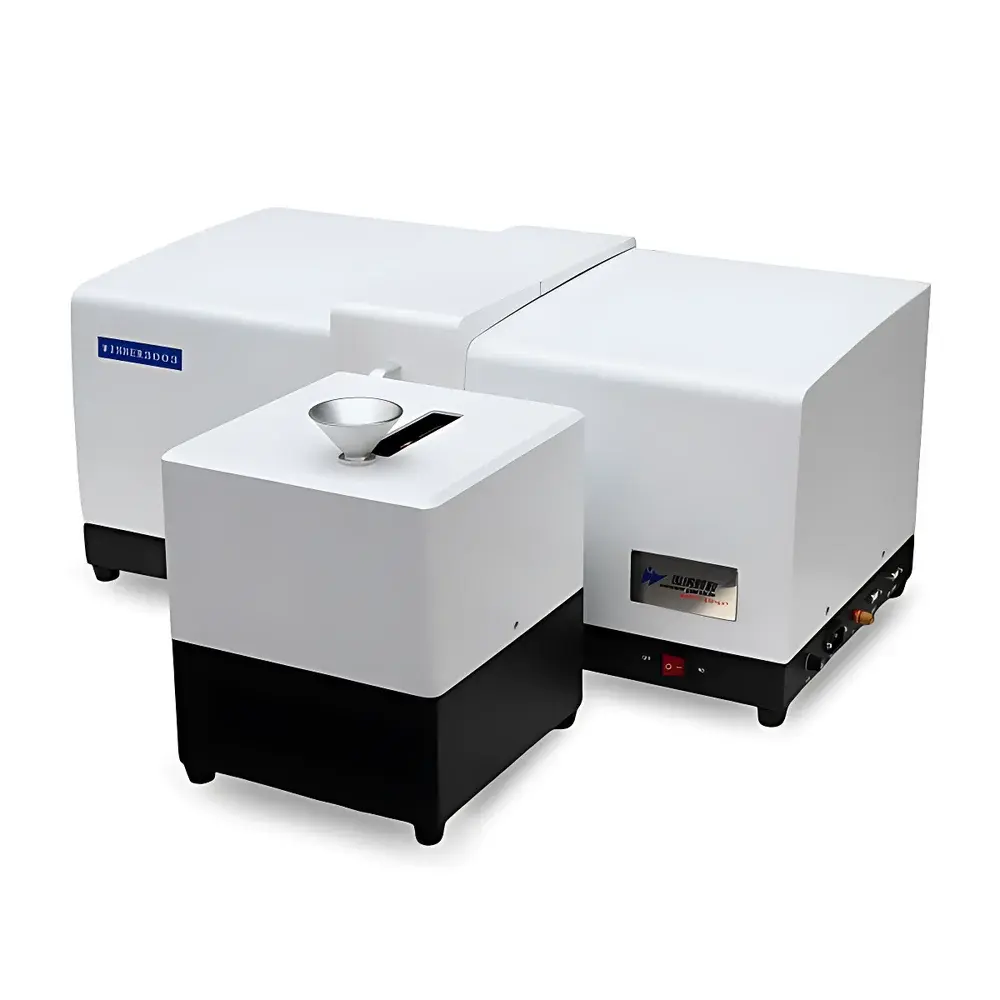
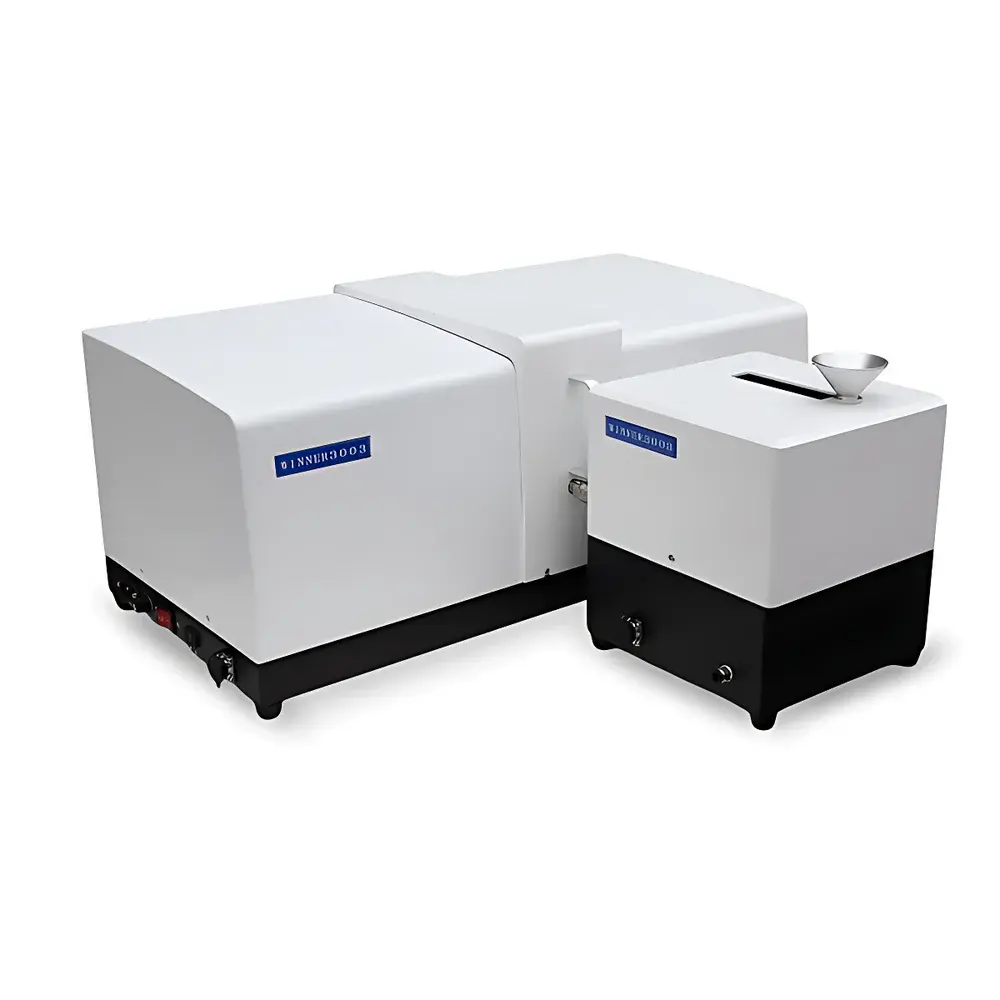
WinNano Winner3003 PRO Dry-Method Laser Particle Size Analyzer
| Brand | WinNano |
|---|---|
| Origin | Shandong, China |
| Manufacturer Type | Direct Manufacturer |
| Instrument Type | Laboratory Laser Particle Size Analyzer |
| Measurement Range | 0.1–300 µm |
| Repeatability | ≥99% |
| Measurement Time | 10–120 s |
| Dispersing Medium | Compressed Air |
| Optical Design | Convergent Beam Fourier Transform |
| Laser Wavelength | 639 nm |
| Laser Power | >2 mW |
| Compliance Standards | GB/T 19077–2016, ISO 13320:2020, Q/0100JWN001–2024 |
| Accuracy (D50) | ≤1% (NIST-traceable reference standards) |
| Channel Count | 40 |
| SOP Support | Yes |
| Auto-Alignment | Yes |
| Dimensions (Host) | 765 × 450 × 325 mm |
| Weight (Host) | 26 kg |
Overview
The WinNano Winner3003 PRO is a high-performance dry-method laser particle size analyzer engineered for precision measurement of dry powder materials in laboratory environments. It operates on the principle of laser diffraction—specifically, convergent beam Fourier transform optical design—which enhances angular resolution and signal-to-noise ratio for sub-micron particles (down to 0.1 µm). Unlike wet-dispersion systems, this instrument uses compressed air as the sole dispersing medium, eliminating risks associated with aqueous dispersion—including hydrolysis, agglomeration, surface oxidation, or phase transformation. This makes it particularly suitable for moisture-sensitive, reactive, or hygroscopic powders such as active pharmaceutical ingredients (APIs), metal alloys, magnetic ferrites, cement clinker, and food-grade starches. The system complies with international metrological standards including ISO 13320:2020 and GB/T 19077–2016, ensuring traceability, inter-laboratory comparability, and regulatory acceptability in quality-controlled workflows.
Key Features
- Integrated dry dispersion module featuring patented turbulent flow dispersion technology (ZL.2007 2 0018648.7) and normal shockwave shear mechanism—designed to break weak agglomerates without mechanical attrition.
- Ceramic wear-resistant components in the dispersion chamber and feed nozzle, extending service life under high-throughput operation with abrasive powders (e.g., silicon carbide, alumina, tungsten carbide).
- Unconstrained free-fitting particle size distribution algorithm—eliminates reliance on pre-assumed distribution models (e.g., Rosin-Rammler or log-normal), enabling unbiased reconstruction of multimodal or skewed distributions.
- Convergent beam Fourier transform optical path with high-stability 639 nm diode laser (>2 mW output), optimized for improved sensitivity in the 0.1–1.0 µm range where conventional parallel-beam systems exhibit reduced Mie scattering contrast.
- Automated SOP-driven operation: programmable dispersion pressure, feed rate, measurement duration, and auto-alignment sequence; all parameters stored with timestamped metadata.
Sample Compatibility & Compliance
The Winner3003 PRO accommodates a broad spectrum of industrially relevant dry powders, including but not limited to: pharmaceutical excipients and APIs, spray-dried dairy powders, catalyst supports (e.g., γ-Al2O3), battery cathode precursors (LiCoO2, NMC), cementitious materials, ceramic raw materials, and metallurgical powders (Fe, Cu, Ni, Ti alloys). Its dry-mode architecture avoids sample preparation artifacts common in liquid-based methods—such as solvent-induced swelling, dissolution, or electrostatic stabilization effects. From a compliance perspective, the instrument supports audit-ready data integrity through time-stamped test logs, user-access controls, and electronic signature-capable software (aligned with FDA 21 CFR Part 11 principles). Calibration verification is performed using NIST-traceable standard reference materials (e.g., SRM 1963, SRM 2800), and routine performance qualification follows ISO 21501-4 protocols.
Software & Data Management
The proprietary WinNano Particle Analysis Software (v5.3+) provides full control over acquisition, real-time visualization, and post-processing. It supports batch analysis of up to 100 measurements per session, with automatic generation of D10/D50/D90, span, specific surface area (via volume-surface conversion), and histogram overlays. Raw scattering intensity data is saved in open-format binary files (.wps) compatible with third-party statistical packages. All reports include embedded instrument configuration, environmental conditions (temperature, humidity, barometric pressure), and calibration status—enabling GLP/GMP-compliant documentation. Data export options include CSV, PDF, and XML formats, with configurable templates for internal QA/QC reporting or regulatory submissions.
Applications
This analyzer serves critical roles across R&D, process development, and release testing. In pharmaceutical manufacturing, it verifies granule uniformity prior to tableting and monitors milling endpoint during micronization of APIs. In advanced ceramics, it characterizes green-body homogeneity and sintering feedstock consistency. Cement producers apply it to assess fineness of ground clinker and blended pozzolans—directly correlating with hydration kinetics and compressive strength. Powder metallurgy labs use it to validate atomized metal powder morphology before hot isostatic pressing (HIP). Additionally, it supports ASTM C117 and ISO 9276 series analyses for industrial classification and specification conformance.
FAQ
What types of samples are incompatible with the Winner3003 PRO?
Samples that generate excessive static charge (e.g., ultrafine polymeric powders below 5 µm without antistatic treatment) or exhibit extreme cohesion (e.g., fumed silica without surface modification) may require auxiliary fluidization aids or pre-treatment.
Can the system be integrated into automated production lines?
While designed primarily for lab-based offline analysis, the instrument supports RS-232 and Ethernet communication protocols for integration with MES/SCADA systems via custom API scripting.
Is external vacuum required for operation?
No—the built-in high-efficiency air pump and cyclonic separator enable self-contained dry dispersion without external vacuum sources or exhaust ducting.
How often must the optical bench be recalibrated?
Optical alignment is fully automated before each measurement; physical recalibration using certified reference standards is recommended every 6 months or after instrument relocation or mechanical impact.
Does the software support multi-language interfaces?
Yes—English, German, French, Spanish, Japanese, and Simplified Chinese interfaces are available, with locale-specific unit formatting and report templates.



