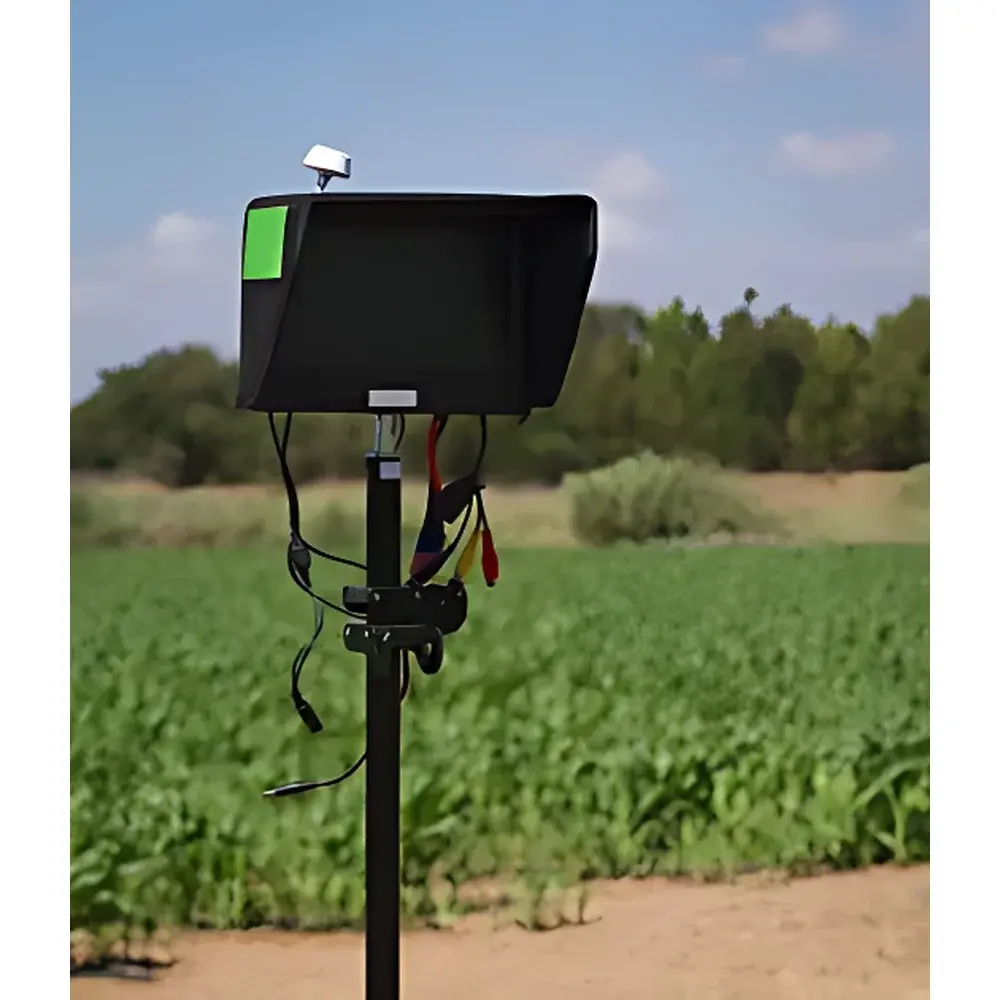
Workswell WIC Infrared Thermography Solution for Plant Science
| Brand | Workswell |
|---|---|
| Origin | Czech Republic |
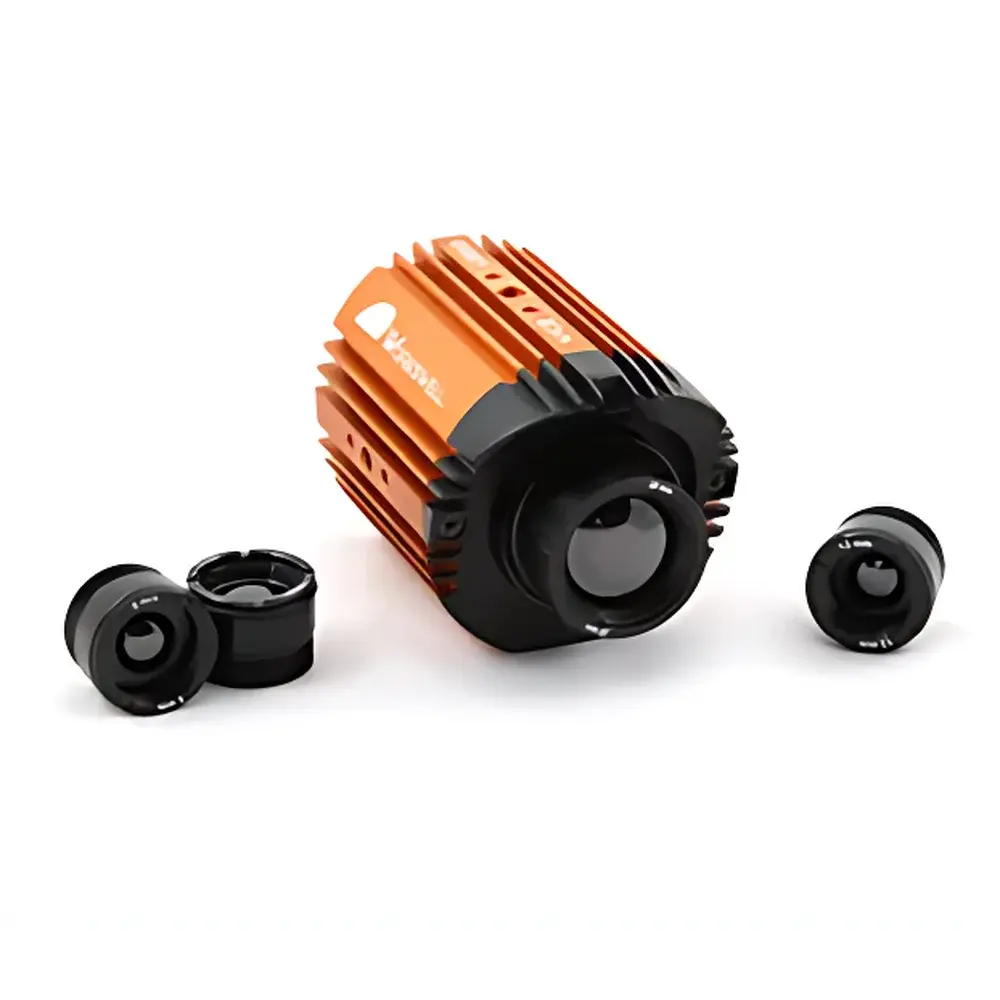
| Model | WIC Infrared Thermography Solution for Plant Science |
| Resolution | 640 × 512 pixels |
| Thermal Sensitivity | 0.03 °C (30 mK) |
| Temperature Range | −25 °C to +150 °C / −40 °C to +550 °C / up to +1500 °C with filter |
| Accuracy | ±2 °C or ±2% of reading |
| Frame Rate | 9 Hz |
| Spectral Band | 7.5–13.5 µm |
| Optional Lenses | 7.5 mm to 100 mm |
| Power Supply | USB 3.0 or PoE (GigE variant) |
| Interface | USB 3.0 or Gigabit Ethernet |
| Analog Video Output | PAL/NTSC (USB 3.0 variant) |
| SDK Support | Windows, Linux x86, Linux ARM, LabVIEW, MATLAB Simulink, Dewesoft |
| Calibration | NIST-traceable factory calibration available |
Overview
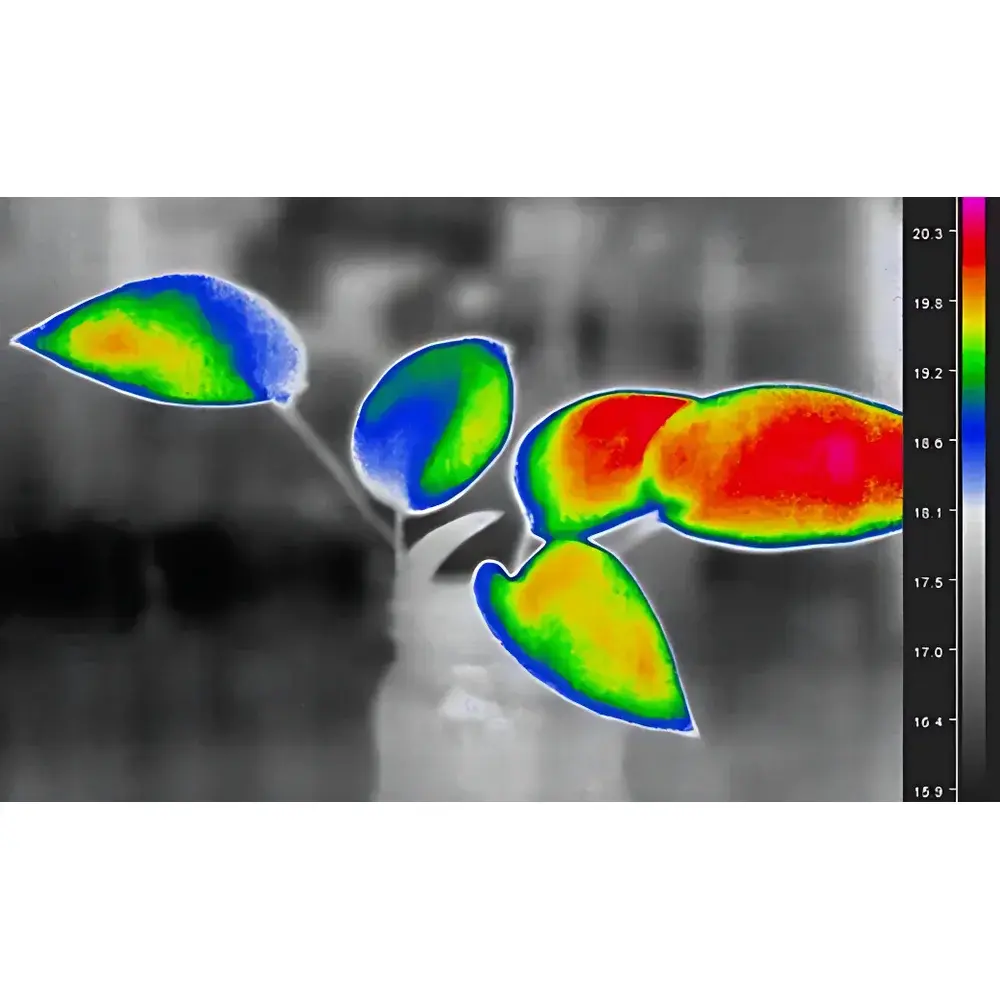
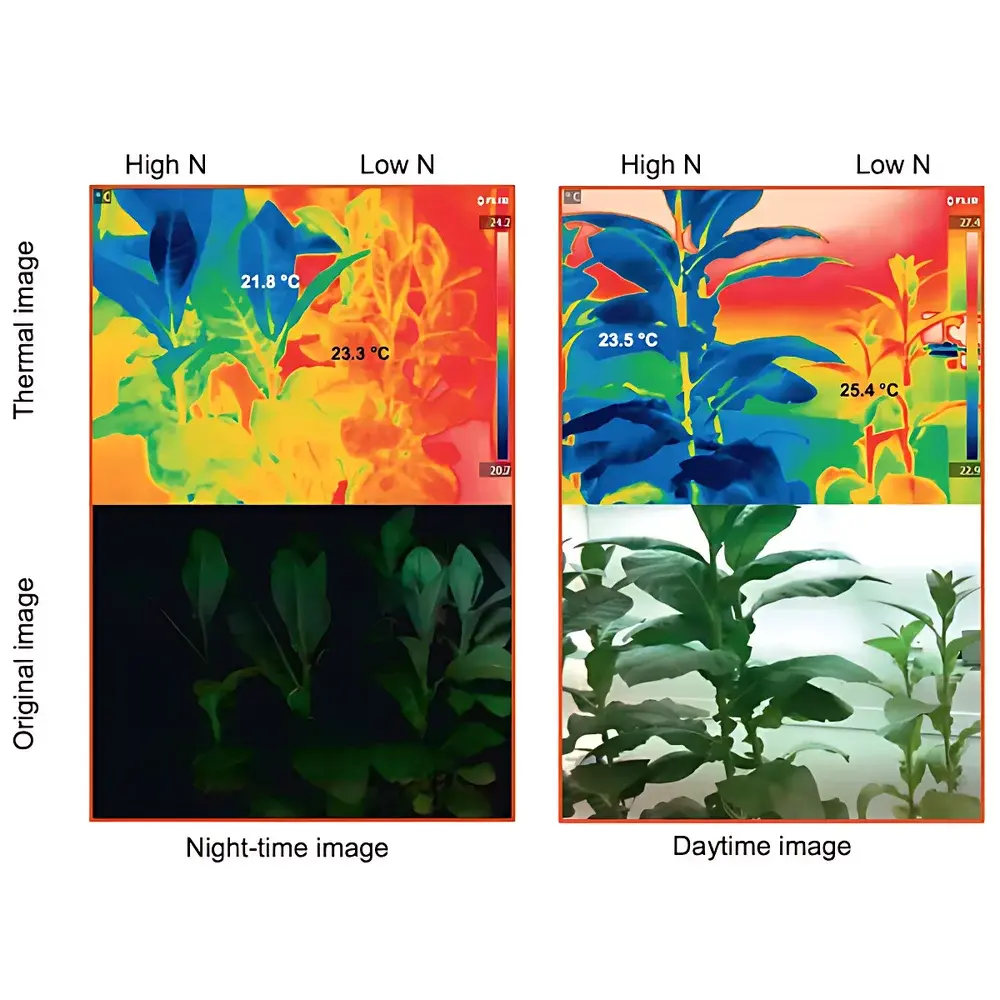
The Workswell WIC Infrared Thermography Solution for Plant Science is a high-fidelity, research-grade thermal imaging platform engineered for non-invasive, quantitative assessment of plant surface temperature dynamics across spatial and temporal scales. Grounded in the physical principle of mid-wave to long-wave infrared radiation detection (7.5–13.5 µm), the system captures emitted thermal energy from plant tissues—primarily leaves and canopies—and converts it into calibrated, pixel-level temperature matrices. This capability directly links to stomatal conductance, transpiration rate, and water use efficiency (WUE), as leaf temperature serves as an integrative physiological proxy: under drought or heat stress, reduced stomatal aperture decreases evaporative cooling, resulting in measurable canopy warming. Unlike contact-based sensors, the WIC system enables rapid, spatially resolved thermographic mapping without perturbing plant microclimate or physiology—making it indispensable for phenotyping under controlled environments, field trials, and UAV-based remote sensing applications.
Key Features
- High-resolution thermal imaging at 640 × 512 pixels with thermal sensitivity of 30 mK, enabling detection of sub-degree temperature gradients across heterogeneous leaf surfaces and canopy layers.
- Multi-scale deployment architecture: supports ground-based tripod mounting, portable handheld operation, fixed-field station integration, and UAV-integrated payload configurations (including gimbal-stabilized mounts and georeferenced thermal orthomosaics).
- Pixel-level data export: full radiometric data cubes—including spatial coordinates (x, y), timestamp, and absolute temperature (°C)—are exportable to CSV or Excel for downstream statistical modeling, time-series analysis, or GIS integration.
- Region-of-interest (ROI) analytics: real-time calculation and display of min/max/mean temperature, standard deviation, histogram distribution, and thermal gradient vectors over user-defined points, lines, or polygons.
- Dual-interface flexibility: USB 3.0 for lab-based high-bandwidth acquisition and Gigabit Ethernet (PoE-enabled) for distributed outdoor deployments with centralized data aggregation and remote monitoring.
- Comprehensive software development kit (SDK): native support for Windows, Linux (x86 and ARM), LabVIEW, MATLAB Simulink, and Dewesoft environments—facilitating custom automation, closed-loop environmental control integration, and real-time feedback protocols.
Sample Compatibility & Compliance
The WIC system is validated for use across diverse plant systems—from single detached leaves and potted seedlings to intact field-grown crops and natural vegetation stands. Its spectral response (7.5–13.5 µm) aligns with atmospheric transmission windows and minimizes solar reflectance interference, ensuring robust performance under variable ambient lighting and weather conditions. All units undergo factory calibration traceable to NIST standards; optional on-site recalibration services are available per ISO/IEC 17025-accredited procedures. The platform complies with CE, RoHS, and FCC regulatory requirements. When deployed in GLP- or GMP-aligned phenotyping pipelines—such as those supporting drought-tolerance trait validation or breeding program selection—the system supports audit-ready metadata logging (including operator ID, protocol version, environmental sensor timestamps, and instrument firmware revision), satisfying documentation requirements under FDA 21 CFR Part 11 for electronic records and signatures.
Software & Data Management
Bundled Workswell ThermoViewer software provides intuitive acquisition, visualization, and batch processing workflows—including thermal drift correction, emissivity adjustment (configurable per species or tissue type), background subtraction, and spatiotemporal normalization. Raw thermal sequences (.wic or .raw formats) are stored with embedded EXIF-like metadata (GPS, IMU, exposure settings). For high-throughput phenotyping facilities, the system integrates natively with common LIMS and phenotyping databases via RESTful API or OPC UA protocols. Export modules support FAIR-compliant data packaging: temperature matrices accompany MIAPPE (Minimum Information About a Plant Phenotyping Experiment)-aligned JSON-LD descriptors, enabling cross-platform interoperability with platforms such as BrAPI, PhenoFront, or Crop Ontology.
Applications
- Stomatal conductance estimation and drought-response phenotyping in cereal, legume, and horticultural crops.
- High-throughput screening of genetic variants for improved water use efficiency (WUE) and heat tolerance traits.
- Spatiotemporal analysis of canopy temperature depression (CTD) as a surrogate for transpirational cooling capacity in field trials.
- Integration with FluorCam chlorophyll fluorescence imaging to co-map photosynthetic quantum yield (ΦPSII) and stomatal limitation indices (e.g., ΔT vs. NPQ relationships).
- Validation of land-surface models (LSMs) and satellite-derived land surface temperature (LST) products using ground-truthed thermal mosaics.
- Ecophysiological studies of plant–microclimate interactions in agroforestry systems and natural grasslands.
FAQ
Can the WIC system be used for real-time irrigation scheduling in precision agriculture?
Yes—when integrated with edge computing units and soil moisture sensor networks, the WIC enables dynamic irrigation triggers based on thermal time thresholds (e.g., cumulative degree-minutes above critical canopy temperature), validated against sap flow and lysimeter data.
Is emissivity correction required for accurate leaf temperature measurement?
Yes—leaf emissivity typically ranges between 0.95–0.98 depending on species, wax load, and hydration state. ThermoViewer includes species-specific emissivity presets and supports user-defined spectral emissivity profiles.
Does the system support synchronized multi-sensor acquisition (e.g., with PAR, CO₂, or humidity sensors)?
Yes—via hardware trigger input (TTL) and software timestamp alignment, enabling millisecond-precision synchronization with environmental loggers, gas exchange analyzers, or fluorescence imaging systems.
What is the minimum detectable temperature difference between adjacent pixels under field conditions?
Under typical daylight conditions with moderate wind (40%, the system reliably resolves spatial gradients ≥0.05 °C over 3×3 pixel neighborhoods, consistent with published stomatal patchiness detection limits.
Are lens options compatible with both USB 3.0 and GigE variants?
Yes—all Workswell-certified lenses (7.5 mm to 100 mm focal lengths) are mechanically and optically compatible across interface variants; field-of-view and spatial resolution calculations are automatically updated in ThermoViewer upon lens selection.