
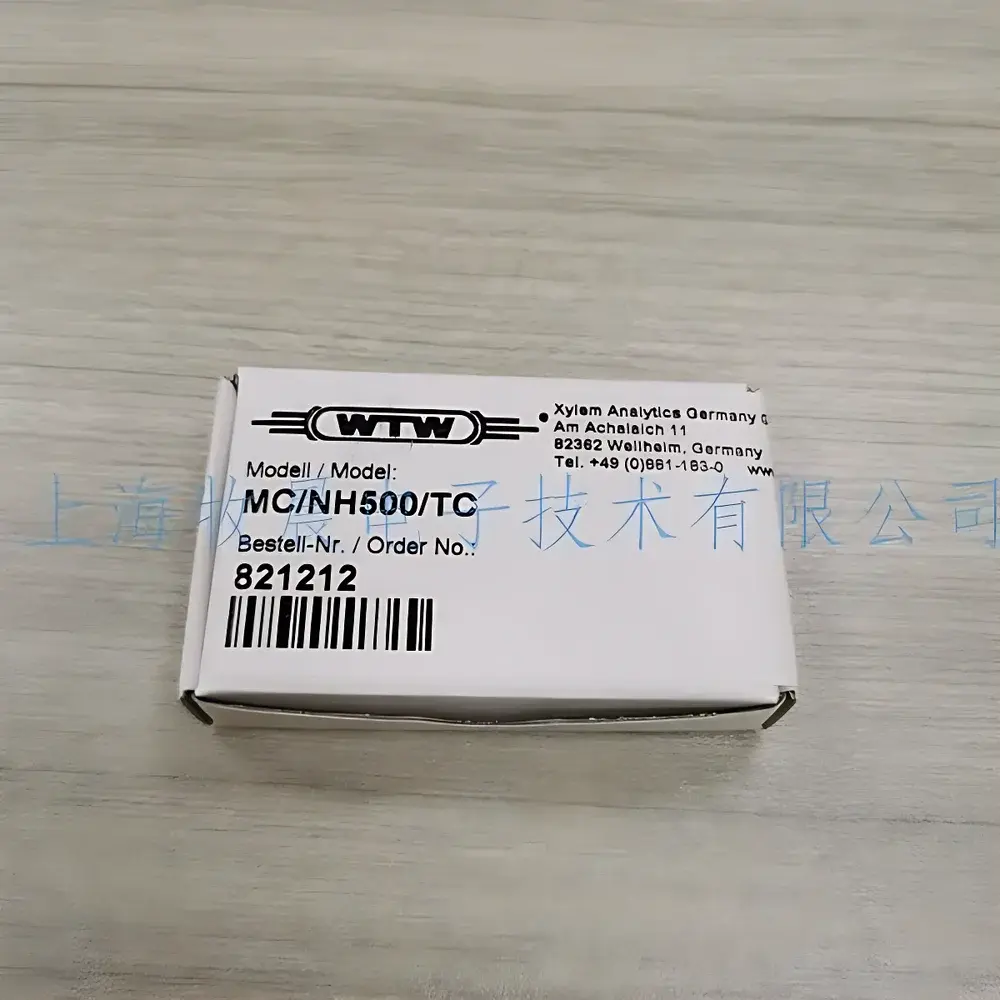
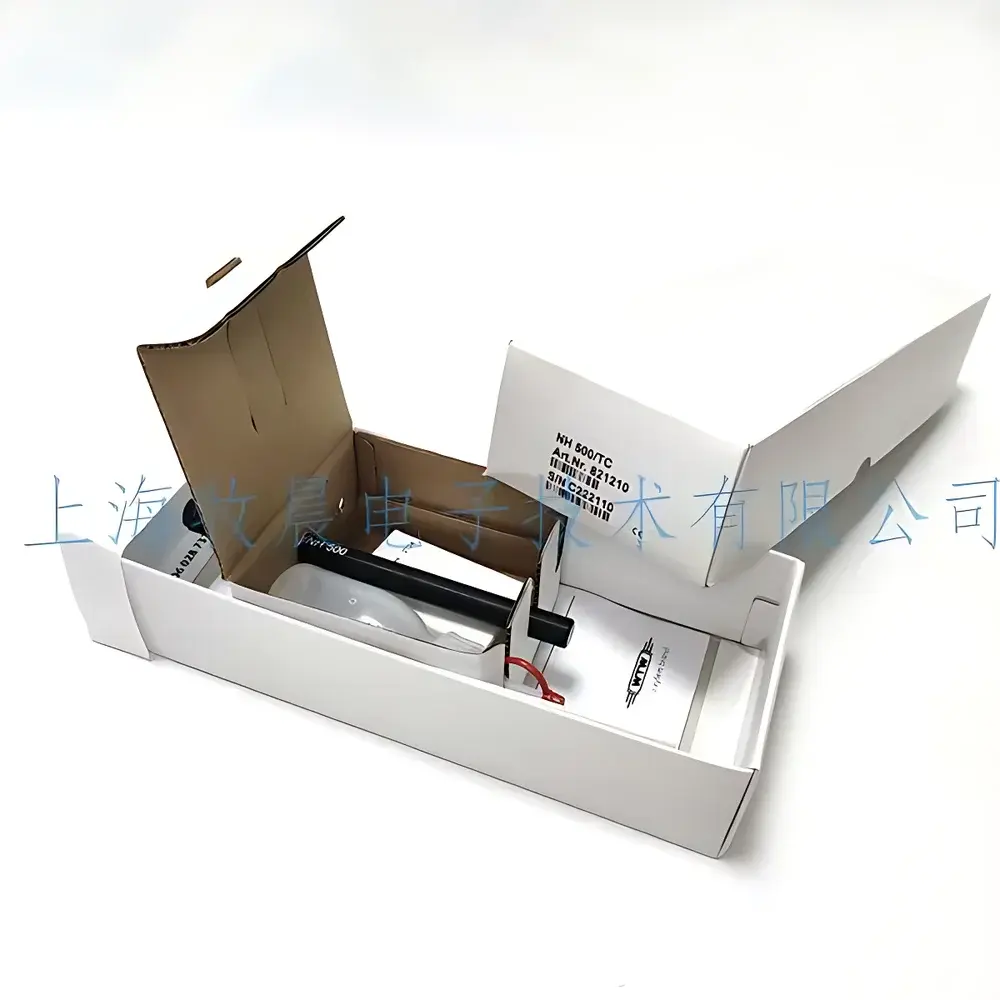
WTW MC/NH500/TC Ammonia-Selective Gas-Permeable Membrane
| Brand | WTW |
|---|---|
| Origin | Germany |
| Model | MC/NH500/TC |
| Type | Replacement Gas-Permeable Membrane for Ammonia Ion-Selective Electrodes |
| Material | PTFE (Teflon®) |
| Compatibility | WTW NH4+/NH3 electrode systems (e.g., IQ Sensor Net, SenTix 900 series, and legacy Multi 3410/3420 analyzers) |
| Recommended Replacement Interval | Every 7 days under typical wastewater or surface water monitoring conditions |
| Regenerable | Yes, via standardized citric acid and deionized water reconditioning protocol |
Overview
The WTW MC/NH500/TC is a precision-engineered gas-permeable membrane designed exclusively for use with WTW ammonia-selective ion-sensitive electrodes in continuous or batch-mode water quality monitoring. It operates on the principle of selective gas diffusion: dissolved ammonium ions (NH₄⁺) in sample water are converted to gaseous ammonia (NH₃) under alkaline conditions (typically pH ≥ 11.5, achieved via addition of sodium hydroxide buffer), after which only NH₃ diffuses across the hydrophobic polytetrafluoroethylene (PTFE) membrane. This selective permeation enables potentiometric detection by an internal pH-sensitive glass electrode or solid-state sensor, yielding a stable, Nernstian response proportional to the logarithm of free ammonia concentration. The membrane’s performance is defined not by arbitrary thickness or porosity, but by rigorously validated diffusion kinetics — including consistent NH₃ permeation rate, lag time, and long-term chemical stability — all established through WTW’s ISO/IEC 17025-accredited validation protocols. As a critical consumable component, its integrity directly governs measurement accuracy, repeatability, and drift characteristics in compliance-critical applications such as municipal wastewater effluent reporting, drinking water source surveillance, and environmental impact assessments.
Key Features
- Material-certified PTFE (Teflon®) membrane with precisely controlled hydrophobicity and molecular cut-off, ensuring exclusive NH₃ selectivity over CO₂, H₂S, Cl₂, and other interfering volatile species
- Factory-calibrated diffusion coefficient and response time profile, traceable to WTW’s primary reference standards
- Designed for seamless integration with WTW’s proprietary electrode housings (e.g., NH500/TC sensor body), maintaining optimal membrane tension and electrolyte contact geometry
- Regeneration-compatible architecture: validated recovery of baseline sensitivity and response slope following citric acid (pH ~2.5) cleaning and DI water equilibration
- No third-party substitutes meet WTW’s functional equivalence criteria per DIN EN ISO 15839 and ASTM D1426 – non-WTW membranes exhibit statistically significant deviations in zero-point stability and temperature compensation behavior
Sample Compatibility & Compliance
The MC/NH500/TC membrane supports reliable ammonia quantification across diverse aqueous matrices, including activated sludge supernatant, secondary effluent, river and lake water, groundwater, and industrial process streams — provided samples are pretreated to achieve pH ≥ 11.5 and free of particulates > 5 µm (via inline filtration). It complies with method requirements for EPA Method 350.1 (Ammonia—Ion Selective Electrode), ISO 7150-1:1984 (Water quality — Determination of ammonia nitrogen — Part 1: Manual spectrometric method), and DIN 38406-5 (German standard for NH₃-N determination). When deployed within WTW’s IQ Sensor Net platform, data acquisition adheres to GLP/GMP audit trails and FDA 21 CFR Part 11-compliant electronic record integrity (when paired with certified software versions ≥ 4.2).
Software & Data Management
While the membrane itself is a passive component, its performance is intrinsically linked to WTW’s sensor firmware and calibration logic. Modern WTW instruments (e.g., IQ SENSOR NET controllers, MultiLine IDS) automatically log membrane installation dates, track cumulative operational hours, and flag potential drift via built-in diagnostic algorithms that monitor slope deviation (>5% from initial calibration), zero-point shift (>15 mV), and response time degradation (>120 s to 95% signal stabilization). Calibration verification routines include two-point bracketing (0.1 mg/L and 10 mg/L NH₃-N standards) with automatic temperature compensation (0–40 °C range) and real-time ionic strength correction. All calibration events, maintenance logs, and raw sensor outputs are exportable in CSV or XML formats compatible with LIMS integration.
Applications
- Real-time ammonia monitoring in biological nutrient removal (BNR) basins and nitrification/denitrification control loops
- Compliance reporting for discharge permits (e.g., NPDES, EU Urban Wastewater Treatment Directive)
- Early-warning detection of ammonia breakthrough in drinking water treatment plant filter beds
- Research-grade kinetic studies of ammonium oxidation rates in activated sludge respirometry
- Field-deployable spot-checking of agricultural runoff and aquaculture pond water quality
FAQ
What is the recommended replacement interval for the MC/NH500/TC membrane?
Under typical municipal wastewater monitoring conditions, replace every 7 days. In low-conductivity surface water applications, intervals may extend to 10–14 days; however, daily slope verification is mandatory.
Can I use non-WTW membranes with WTW ammonia electrodes?
No. Independent interlaboratory testing (per ISO 5725-2) confirms non-WTW membranes introduce systematic bias (>12% relative error at 2 mg/L NH₃-N) and accelerated baseline drift due to inconsistent PTFE crystallinity and additive leaching.
How does the regeneration protocol restore membrane performance?
Citric acid immersion removes metal hydroxide precipitates (e.g., Ca(OH)₂, Mg(OH)₂) that occlude PTFE micropores; subsequent DI water equilibration restores hydration equilibrium and eliminates residual acid, preventing pH electrode poisoning.
Is this membrane compatible with portable handheld meters?
Yes — when used with WTW’s SenTix 900-NH or InoLab® Multi 9310 IDS ammonia probe assemblies, provided the instrument firmware supports NH₃-N gas-sensing mode and automatic temperature compensation.
Does membrane replacement require recalibration?
Yes. A full two-point calibration using traceable NH₃-N standards is required after each membrane change to re-establish the Nernst slope and zero offset.







