
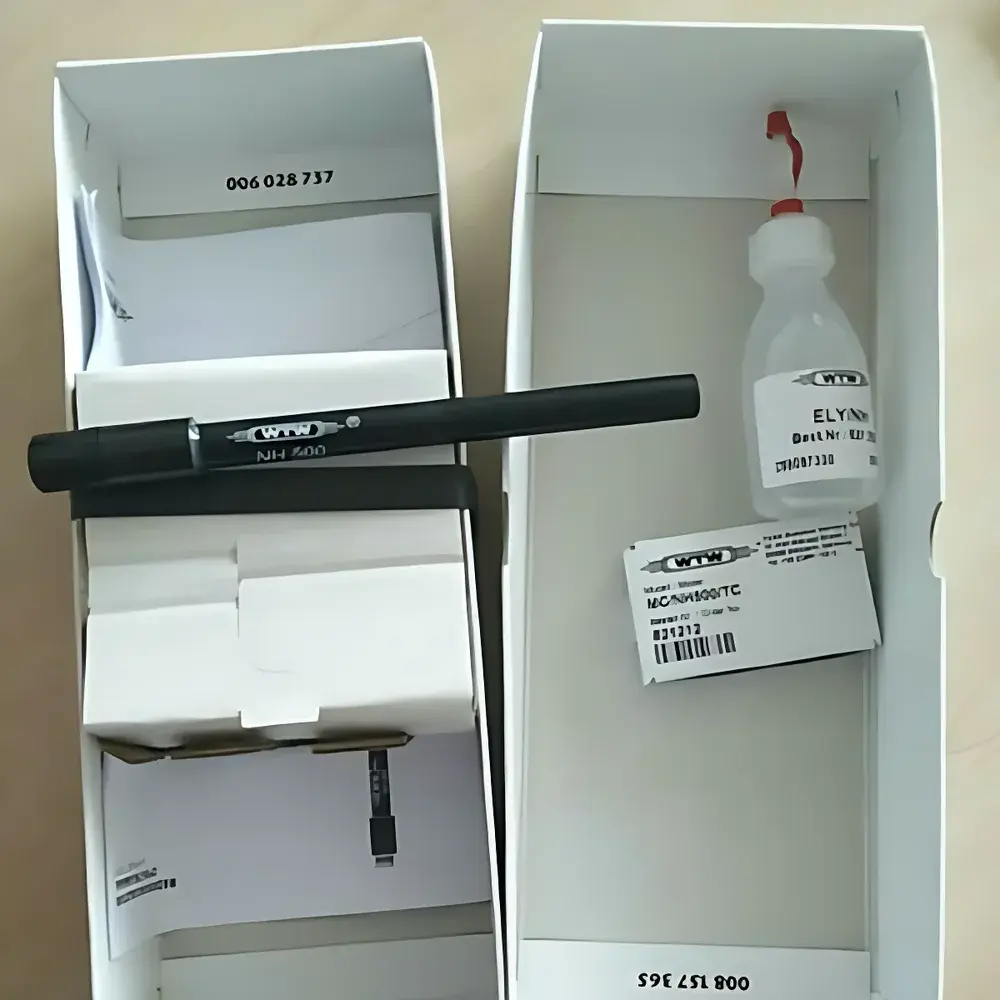
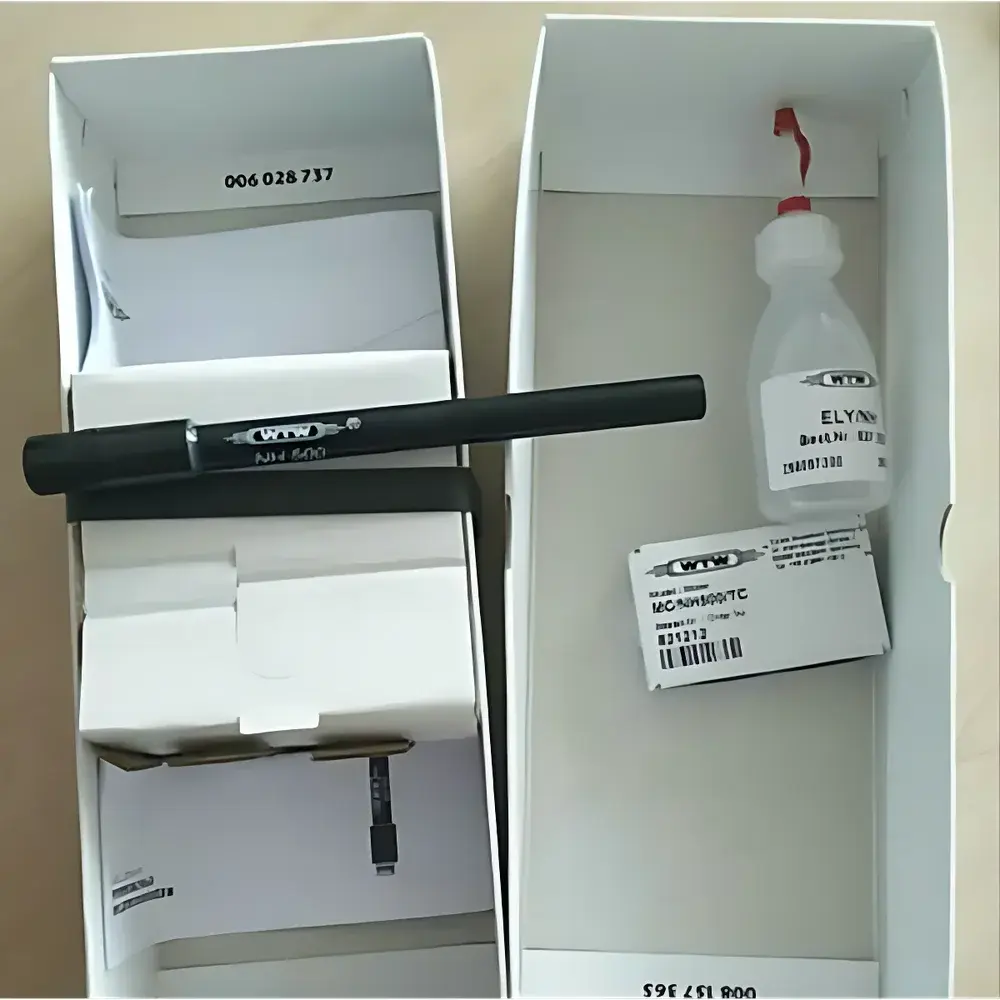
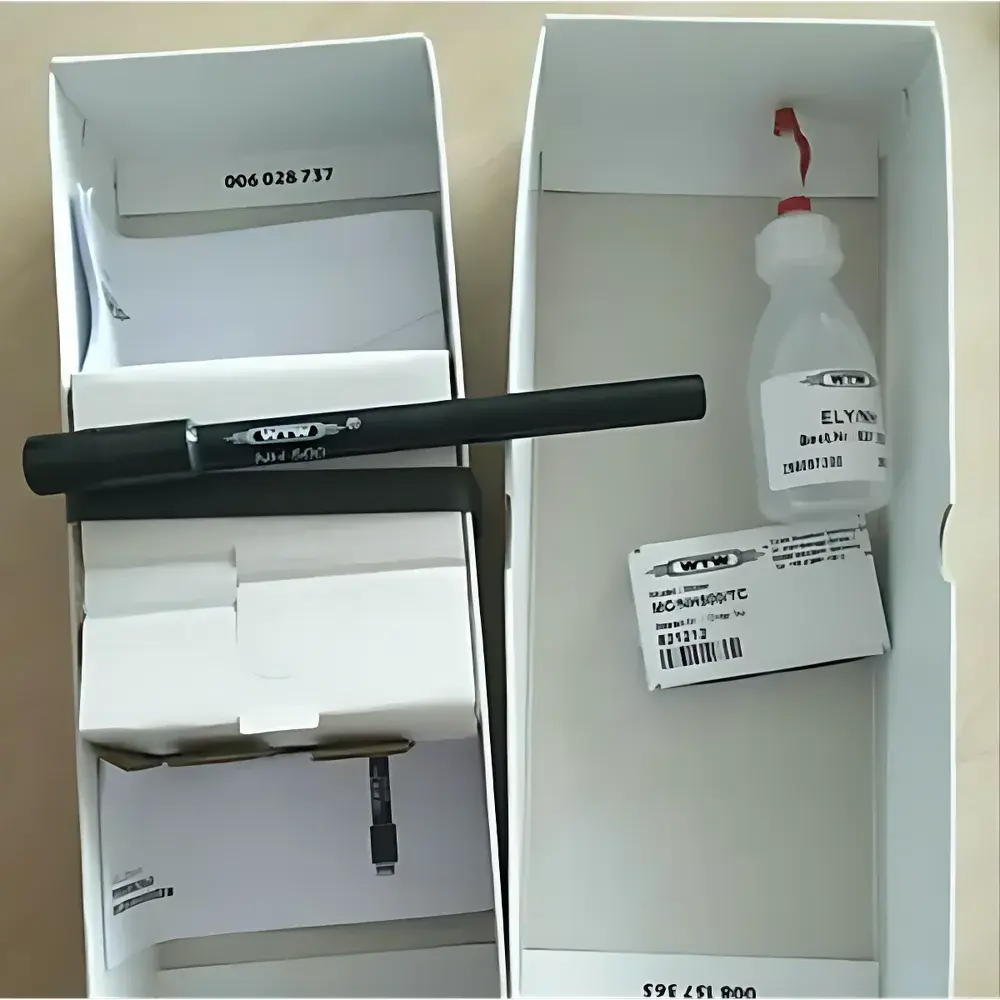
WTW NH500/TC Ammonia-Nitrogen Ion-Selective Electrode (Order No. 821210)
| Brand | WTW |
|---|---|
| Origin | Germany |
| Model | 821210 |
| Instrument Type | Online Sensor Module |
| Measurement Principle | Gas-Sensing Ammonia Electrode (NH₃-selective membrane with pH detection) |
| Range | 0.02–1000 mg/L NH₄⁺-N |
| Accuracy | ±2% of reading or ±0.02 mg/L (whichever is greater) |
| Detection Limit | 0.02 mg/L NH₄⁺-N |
| Response Time | ≤2 minutes |
| Compliance | Designed for integration with WTW TresCon and TresCon UNO online analyzers |
Overview
The WTW NH500/TC Ammonia-Nitrogen Ion-Selective Electrode (Order No. 821210) is a high-stability, gas-sensing electrochemical sensor engineered for continuous, real-time monitoring of ammonium nitrogen (NH₄⁺-N) in aqueous matrices. It operates on the well-established ammonia gas-diffusion principle: under alkaline conditions (pH > 12), ammonium ions (NH₄⁺) in the sample are converted to gaseous ammonia (NH₃) via hydroxide addition. The NH₃ diffuses selectively through a hydrophobic gas-permeable membrane into an internal electrolyte chamber, where it alters the pH of a buffered chloride-containing reference solution. This pH shift is detected by a built-in pH-sensitive glass electrode, generating a Nernstian response proportional to the logarithm of NH₃ partial pressure—and thus to the original NH₄⁺-N concentration. The NH500/TC is not a standalone analyzer but a critical sensing module designed exclusively for seamless integration with WTW’s TresCon and TresCon UNO online ammonia analyzers (e.g., OA110 measurement modules), supporting robust operation in municipal wastewater treatment plants, industrial effluent streams, and surface water monitoring stations.
Key Features
- Optimized for long-term stability in continuous online applications: integrated temperature compensation (TC) ensures accurate readings across operational temperature ranges (typically 0–40 °C).
- Gas-permeable membrane architecture eliminates interference from common ions (e.g., Ca²⁺, Mg²⁺, Na⁺, Cl⁻), turbidity, and colored organics—critical for complex wastewater matrices.
- Low detection limit of 0.02 mg/L NH₄⁺-N supports compliance monitoring at regulatory thresholds (e.g., EU Urban Wastewater Treatment Directive discharge limits).
- Fast response time (≤2 minutes to 90% of final value) enables dynamic process control feedback in biological nutrient removal (BNR) systems.
- Modular design allows field replacement without recalibration; compatible with WTW’s standardized sensor housing and flow cell interfaces (e.g., TresCon Flow Cell FC-110).
- Robust construction with chemical-resistant PEEK housing and platinum reference element ensures durability in aggressive environments containing sulfides or chlorinated residuals.
Sample Compatibility & Compliance
The NH500/TC electrode is validated for use in raw sewage, activated sludge supernatant, secondary effluent, and treated surface water. It requires sample pretreatment via automatic alkalinization (using NaOH reagent dosing) and pH adjustment to ≥12.5 to ensure quantitative NH₄⁺ → NH₃ conversion. Interference testing per ISO 11732:2005 confirms minimal cross-sensitivity to volatile amines (e.g., methylamine) when operated within specified pH and ionic strength ranges. As a component of WTW TresCon systems, the NH500/TC contributes to overall system compliance with EN 14181 (QAL1/QAL2 certification), US EPA Method 350.1 (ammonia selective electrode), and ISO/IEC 17025-accredited laboratory validation protocols. Its performance documentation supports GLP/GMP audit trails when deployed in regulated wastewater utilities.
Software & Data Management
When installed in TresCon or TresCon UNO platforms, the NH500/TC sensor communicates digitally via RS-485 Modbus RTU or analog 4–20 mA output. All calibration events, membrane integrity checks, electrolyte level diagnostics, and drift correction logs are stored in the analyzer’s embedded memory with timestamped audit trails compliant with FDA 21 CFR Part 11 requirements (when paired with WTW’s optional secure firmware). Data export is supported via SD card or Ethernet (Modbus TCP), enabling integration into SCADA, LIMS, or cloud-based asset management platforms (e.g., Siemens Desigo CC, ABB Ability™). Firmware updates maintain alignment with evolving IEC 61508 functional safety standards for continuous emission monitoring systems.
Applications
- Real-time monitoring of nitrification/denitrification efficiency in activated sludge basins and MBR systems.
- Effluent compliance verification prior to discharge—meeting local limits such as <2 mg/L NH₄⁺-N for sensitive receiving waters.
- Process optimization in anaerobic digesters, where free ammonia (NH₃) inhibition must be tracked alongside total ammoniacal nitrogen (TAN).
- Early warning detection of upsets in tertiary treatment trains, including breakpoint chlorination and ion exchange units.
- Long-term trend analysis in river basin management programs requiring sub-daily resolution of ammonia fluxes.
FAQ
What maintenance intervals are recommended for the NH500/TC electrode?
Membrane replacement every 3–6 months (depending on suspended solids load); electrolyte refill every 4–8 weeks; full calibration using certified NH₄⁺-N standards (e.g., 1 mg/L and 50 mg/L) at least weekly.
Can the NH500/TC be used in seawater or high-salinity brines?
No—high ionic strength (>10 g/L TDS) causes significant activity coefficient deviation and membrane fouling; use only in freshwater or low-salinity wastewater (<5 g/L Cl⁻).
Is the NH500/TC compatible with third-party analyzers?
It is electrically and mechanically designed for WTW TresCon platforms only; non-WTW integration is unsupported and voids warranty and compliance certification.
How does temperature compensation function in the NH500/TC?
An integrated Pt1000 RTD measures sample temperature in real time; the analyzer applies the thermodynamic correction factor to the Nernst slope and baseline offset per ISO 7888:1993 Annex B.
What indicates membrane failure during operation?
Gradual signal drift (>5% over 24 h), prolonged response time (>5 min), or inability to achieve stable zero after blank calibration—typically caused by membrane clogging or micro-tears.
Related Products







