
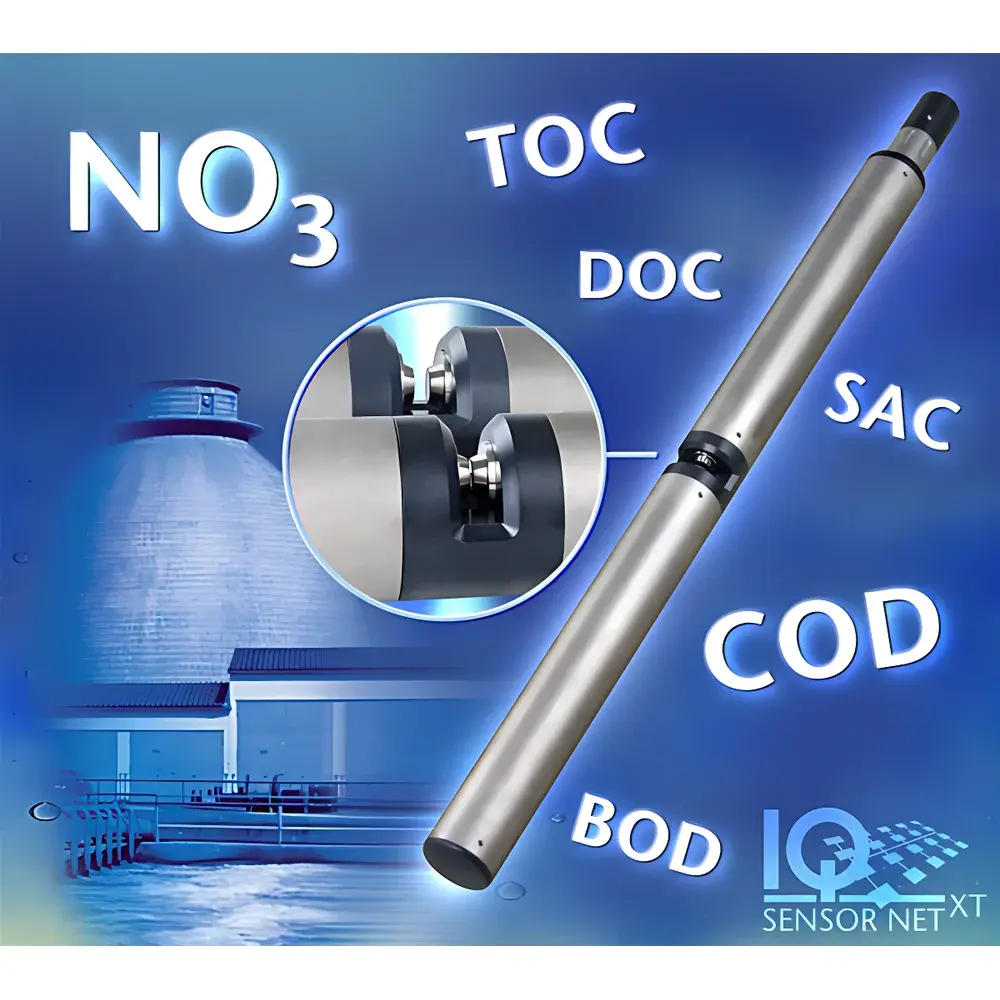
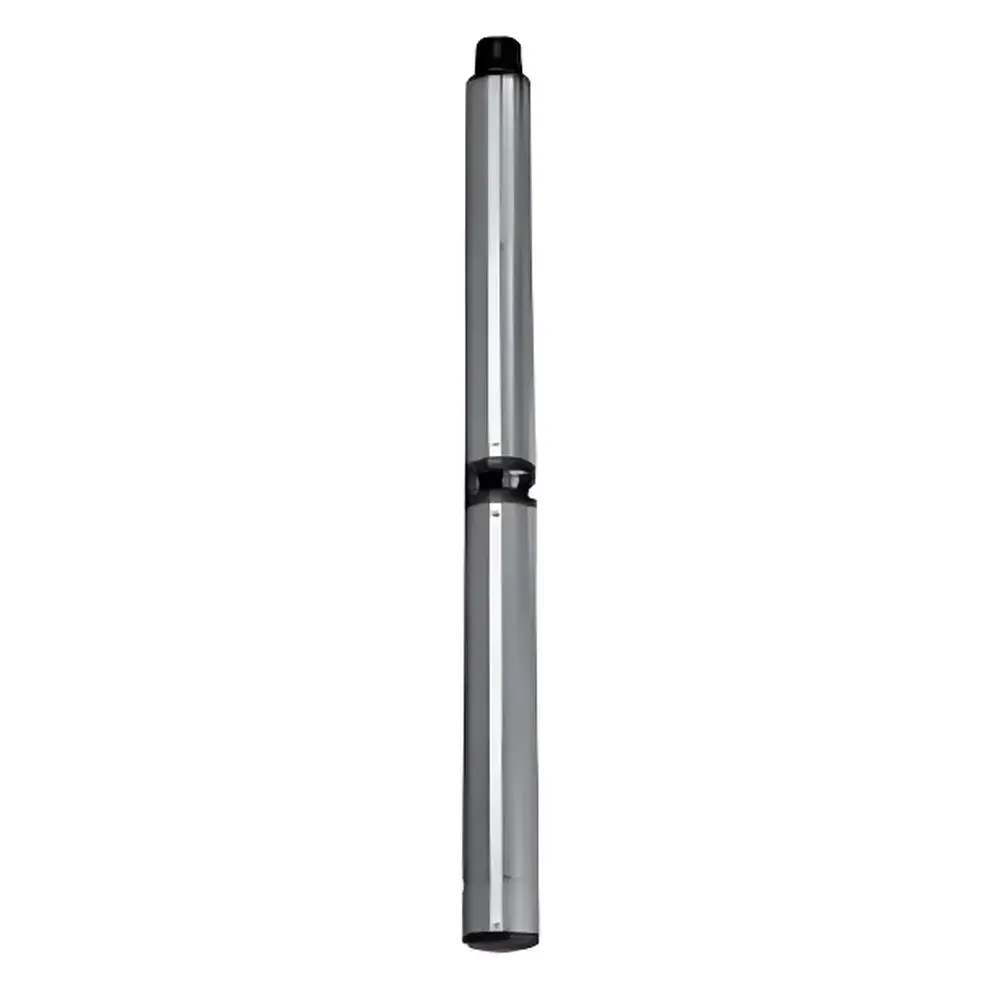
WTW NiCaVis UV-VIS Spectral Water Quality Analyzer for Online COD/BOD/TOC/DOC/TSS/Nitrate/Nitrite Monitoring
| Brand | WTW |
|---|---|
| Origin | Germany |
| Model | NiCaVis |
| Instrument Type | Online Water Quality Analyzer |
| Measured Parameters | COD, BOD, TOC, DOC, SAC, TSS, UVT, Nitrate-N, Nitrite-N |
| Spectral Range | 200–720 nm (UV-VIS) or 200–390 nm (UV-only) |
| Detector | 256-channel photodiode array |
| Optical Path | Dual-beam symmetric design with matched optical components and path length |
| Cleaning System | Integrated ultrasonic cleaning (sapphire window), optional compressed air assist |
| Housing Material | Titanium + PEEK |
| Sealing | Triple-sealed monolithic probe body |
| Maintenance | Reagent-free, no moving parts, zero routine calibration |
Overview
The WTW NiCaVis is a high-performance, in-situ UV-VIS spectral water quality analyzer engineered for continuous, reagent-free monitoring of critical carbon- and nitrogen-based parameters in municipal and industrial wastewater streams. Unlike conventional single-wavelength or broadband absorbance sensors, the NiCaVis employs a 256-channel photodiode array to acquire full spectral profiles across either 200–720 nm (UV-VIS configuration) or 200–390 nm (UV-only configuration). This hyperspectral capability enables robust multivariate calibration models—developed using partial least squares (PLS) or principal component regression (PCR)—to resolve overlapping absorbance signatures of nitrate (NO₃⁻), nitrite (NO₂⁻), chemical oxygen demand (COD), total organic carbon (TOC), dissolved organic carbon (DOC), suspended solids (TSS), specific UV absorbance (SAC), and ultraviolet transmittance (UVT). The instrument operates on the principle of dual-beam spectrophotometry: identical optical paths, matched light source intensity, and symmetrical detector geometry ensure long-term photometric stability and eliminate drift-induced bias. Its measurement architecture inherently compensates for turbidity effects via real-time spectral deconvolution—leveraging the full 256-wavelength dataset to distinguish particulate scattering from true molecular absorption.
Key Features
- 256-channel UV-VIS photodiode array delivering high-resolution spectral acquisition for chemometric modeling
- Integrated ultrasonic cleaning system acting directly on the sapphire optical window to prevent biofouling, scaling, and particulate adhesion—enabling uninterrupted operation in raw influent and activated sludge environments
- Optional compressed-air purge accessory for extreme fouling conditions (e.g., grease-laden or high-fiber influents)
- Monolithic probe construction from corrosion-resistant titanium and PEEK polymer; certified for immersion in aggressive wastewater matrices (pH 2–12, chloride-rich, sulfide-containing)
- Triple-sealed housing with no O-rings, moving parts, or internal fluidic pathways—eliminating leakage risk and service downtime
- Automatic spectral baseline correction across full wavelength range; no manual zeroing or periodic recalibration required
- Dynamic optical path optimization: number of active light beams adapts automatically to sample absorbance, preventing signal saturation or low-SNR conditions
- Real-time onboard processing with configurable output protocols (Modbus TCP/RTU, Profibus DP, 4–20 mA)
Sample Compatibility & Compliance
The NiCaVis is validated for direct immersion in untreated influent, aerated bioreactors, secondary clarifier effluent, and tertiary discharge points. It meets ISO 7027 for turbidity-related interference mitigation and complies with EN ISO 15238 for UV-based organic carbon estimation. While not a primary reference method per ASTM D1252 (COD) or ISO 10523 (nitrate), its performance is traceable to certified reference materials (CRMs) and validated against laboratory benchtop methods under GLP conditions. Data integrity adheres to FDA 21 CFR Part 11 requirements when integrated with compliant SCADA platforms—supporting electronic signatures, audit trails, and secure user access control. The device carries CE marking per Directive 2014/30/EU (EMC) and 2014/35/EU (LVD), and conforms to IEC 60529 IP68 submersion rating (up to 10 m depth, indefinite duration).
Software & Data Management
The NiCaVis interfaces with WTW’s multi-parameter platform, including the IQ Sensor Net controller and the cloud-based WTW Connect suite. Calibration models are developed offline using WTW’s proprietary Chemometric Modeling Studio (CMS), which supports cross-validation, outlier detection, and model transferability across similar plant hydraulics. Each deployed model includes uncertainty quantification (±% RSD at 95% confidence) and automatic flagging of spectral anomalies (e.g., oil film interference, severe biofilm growth). Raw spectra and processed results are timestamped and stored locally (8 GB internal memory) with configurable retention policies. Export formats include CSV, XML, and OPC UA—enabling seamless integration into LIMS, MES, and digital twin environments for predictive process control.
Applications
- Real-time influent load forecasting at WWTP headworks using combined COD + NO₃⁻ + TSS trends
- Dynamic aeration control in activated sludge systems via continuous nitrate/nitrite ratio monitoring
- Effluent compliance assurance for TOC and TSS prior to discharge—reducing reliance on grab sampling and lab turnaround
- Process optimization in membrane bioreactors (MBRs) and denitrification filters through high-frequency SAC/UVT tracking
- Early warning detection of shock loads (e.g., industrial spills) via rapid deviation analysis in full-spectrum residuals
- Long-term trend analysis of DOC removal efficiency across tertiary treatment trains
FAQ
Does the NiCaVis require daily maintenance or chemical reagents?
No. It operates reagent-free and contains no consumables, pumps, valves, or wetted moving parts. Ultrasonic cleaning is fully automated and requires no operator intervention.
Can the same probe measure both nitrate and nitrite simultaneously?
Yes. Multivariate spectral deconvolution resolves their distinct UV absorbance peaks (NO₃⁻: ~220 nm & ~302 nm; NO₂⁻: ~210 nm & ~355 nm), enabling independent quantification without cross-interference.
How is turbidity compensated in high-TSS applications?
Turbidity is modeled as a Mie scattering component across the entire 256-channel spectrum and subtracted mathematically—eliminating the need for separate turbidity sensors or empirical correction factors.
Is factory calibration transferable between installations?
Calibration models are site-specific and must be developed using local matrix-matched standards. However, WTW provides transfer learning tools to accelerate model deployment across similar plants.
What is the typical measurement cycle time?
Spectral acquisition and full parameter calculation complete within 60 seconds, with configurable reporting intervals from 1 minute to 1 hour.
Related Products







