
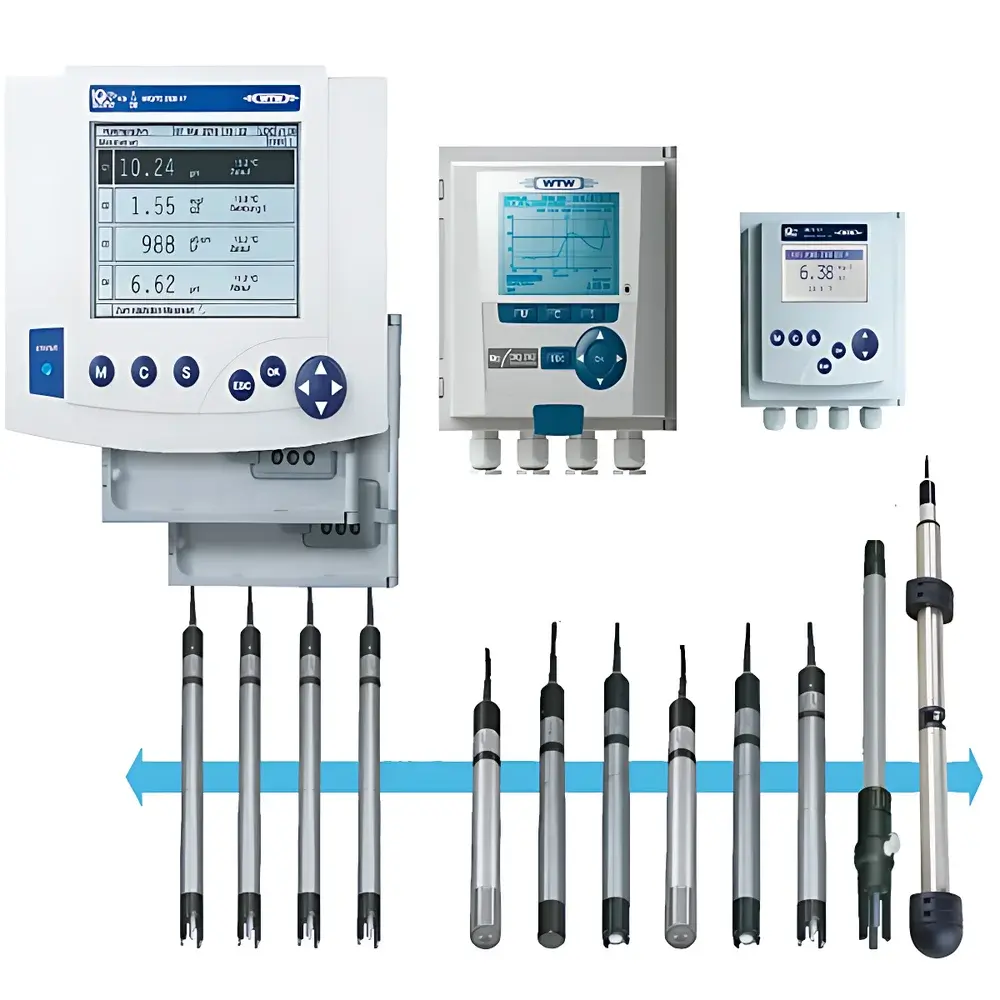
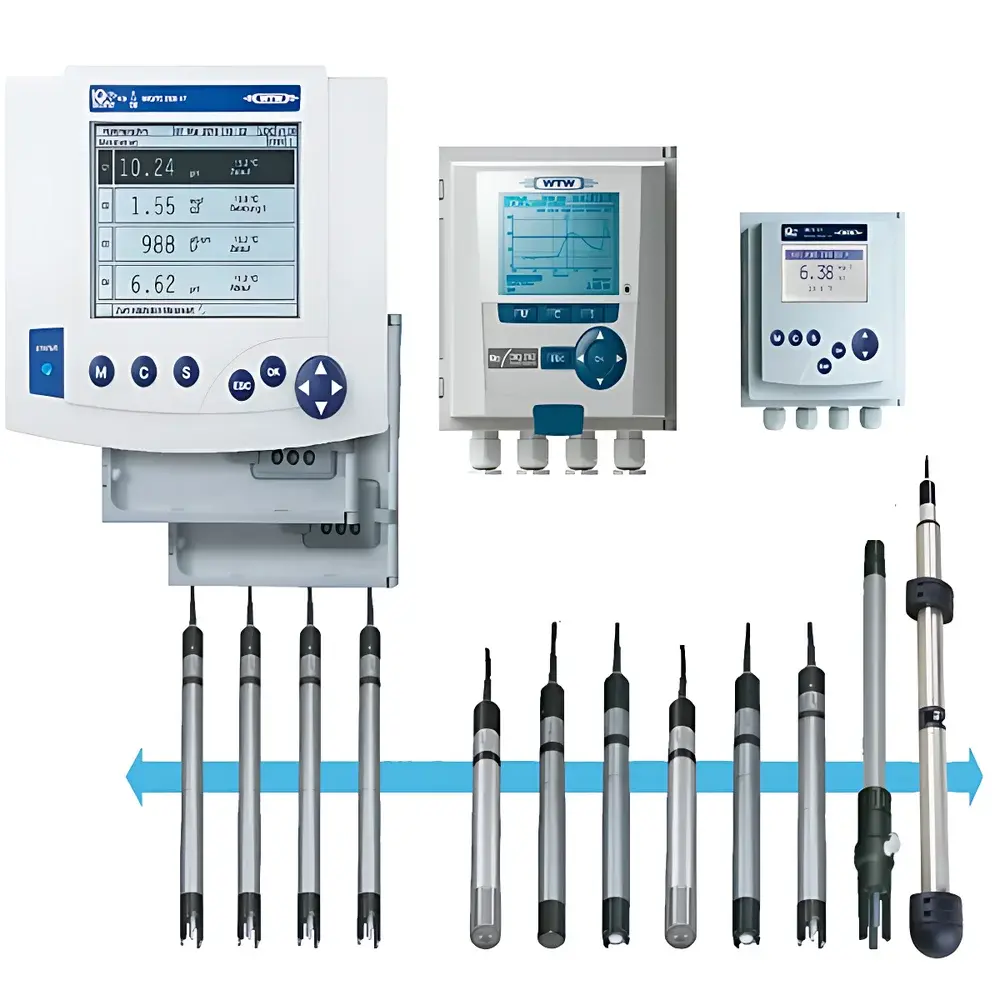
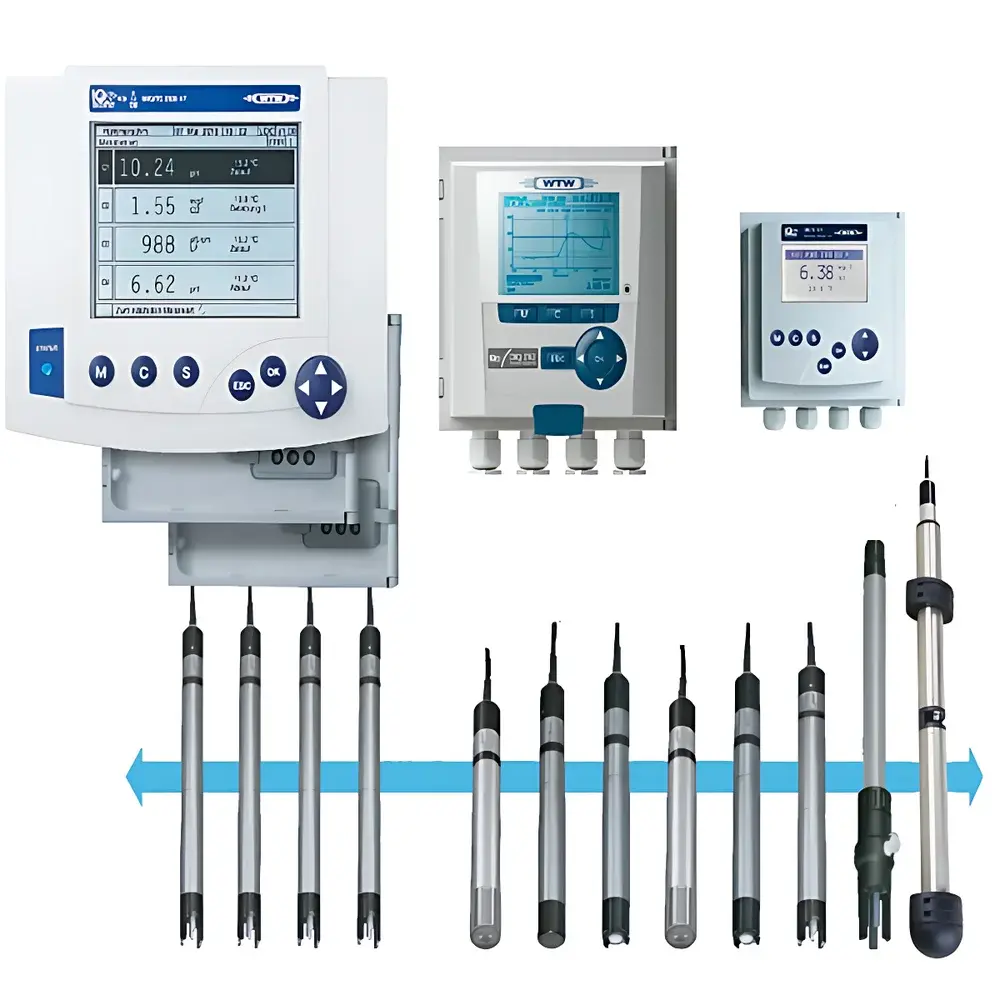
WTW SensoLyt 700IQ Digital pH/ORP Sensor with Integrated Signal Conditioning and NTC Temperature Sensor
| Brand | WTW |
|---|---|
| Origin | Germany |
| Model | SensoLyt 700IQ |
| Measuring Principle | Potentiometric pH/ORP with Built-in FET Pre-amplifier |
| Output | Digital IQ Interface (2-wire, power + data) |
| pH Range | 0.00–14.00 (electrode-dependent) |
| ORP Range | −2000 to +2000 mV |
| Temperature Measurement | NTC, −5 °C to +60 °C, ±0.5 K accuracy |
| Response Time (t₉₉) | <15 s |
| Pressure Rating | Up to 10 bar |
| IP Rating | IP68 |
| Materials | PVC sensor head, 316Ti stainless steel body |
| Cable Length Options | Via SACIQ-7.0 (order separately) |
| Compliance | EN 61326 Class B, FCC Class A, CE, cETLus |
| Lightning Protection | Integrated surge suppression |
| Calibration Modes | CAL TEC AUTO (auto-standard), CAL CON 2P, CAL CON 1P |
| Calibration Validation | Slope −50 to −62 mV/pH, Zero Offset −45 to +45 mV |
| Electrode Compatibility | SensoLyt SEA, SEA-HP, DWA, ECA, PtA |
Overview
The WTW SensoLyt 700IQ is a digitally intelligent, industrial-grade pH and ORP sensor system engineered for long-term stability and high signal integrity in demanding aqueous process environments. Unlike analog sensors susceptible to electromagnetic interference (EMI), grounding loops, or voltage drop over extended cable runs, the SensoLyt 700IQ integrates a field-effect transistor (FET) preamplifier directly within the sensor housing. This architecture converts the high-impedance, microvolt-level electrochemical signal from the glass or redox electrode into a robust, low-impedance digital output via WTW’s proprietary IQ interface — a two-wire bus carrying both power and bidirectional data. Coupled with an embedded NTC temperature sensor, the device delivers simultaneous, auto-compensated pH or ORP and temperature measurements without requiring external thermistors or separate cabling. Its pressure-rated (up to 10 bar), IP68-sealed construction — featuring PVC sensor head and 316Ti stainless steel body — ensures mechanical resilience against abrasion, impact, and chemical exposure in wastewater treatment plants, bioreactors, cooling towers, and municipal water distribution networks.
Key Features
- Digital IQ interface: Eliminates analog signal degradation over distances up to 100 m using standard twisted-pair cable (SACIQ-7.0)
- Integrated FET preamplifier: Converts high-impedance electrode signals (>10⁹ Ω) into noise-immune digital output
- Self-diagnostic capability: Real-time detection of glass membrane fracture or electrolyte depletion
- Tool-free electrode replacement: Modular design enables field exchange of SensoLyt glass or ORP elements (SEA, PtA, DWA, etc.) without disassembly
- Embedded NTC temperature sensor: Enables automatic temperature compensation across −5 °C to +60 °C with ±0.5 K accuracy
- Lightning and EMI protection: Compliant with EN 61326 Class B and FCC Class A; includes integrated transient voltage suppression
- Validated calibration traceability: Stores full calibration history (slope, zero, date/time, operator ID) with configurable audit trail
Sample Compatibility & Compliance
The SensoLyt 700IQ supports a range of application-specific composite electrodes optimized for diverse matrix challenges. The SensoLyt SEA electrode employs a solid-polymer electrolyte and dual-pin-hole junction, delivering stable performance in highly fouling media such as sewage, sludge, protein-rich effluents, and sulfide-containing industrial streams (pH 2–12). For pressurized pipeline applications, the SEA-HP variant withstands up to 10 bar at 20 °C. The DWA electrode is calibrated for low-conductivity potable water (pH 0–14), while the ECA offers cost-effective monitoring in moderate-strength wastewater. All variants comply with ISO 10523 (water quality — pH determination) and support GLP/GMP-aligned workflows through secure calibration validation thresholds (slope: −50 to −62 mV/pH; zero: −45 to +45 mV). Device firmware and configuration adhere to FDA 21 CFR Part 11 requirements when deployed with compatible WTW controllers (e.g., MultiLine IDS, inoLab series).
Software & Data Management
The SensoLyt 700IQ communicates exclusively via WTW’s IQ protocol, enabling plug-and-play integration with WTW’s IDS-enabled transmitters and data loggers. Configuration, diagnostics, and calibration are performed using WTW’s LabX® software or the intuitive web interface of IDS controllers. Each sensor stores its unique serial number, electrode type, calibration coefficients, and full calibration history — including timestamps, slope/zero values, and pass/fail status — accessible via Modbus TCP or WTW’s proprietary API. Audit trails meet ALCOA+ principles (Attributable, Legible, Contemporaneous, Original, Accurate, Complete, Consistent, Enduring, Available) for regulated environments. Firmware updates are delivered via signed binary packages to ensure integrity and version control.
Applications
- Municipal and industrial wastewater treatment: Continuous pH/ORP monitoring in primary clarifiers, activated sludge basins, and disinfection contact tanks
- Drinking water production: Low-conductivity pH verification in finished water lines and reservoirs (with DWA electrode)
- Chemical dosing control: Feedback loop for acid/base or oxidant/reductant injection systems
- Food & beverage processing: In-line monitoring of CIP rinse cycles, brine solutions, and fermentation broths
- Power plant cooling water: Corrosion potential (ORP) assessment and pH stabilization in closed-loop systems
- Environmental monitoring stations: Submersible deployment in rivers, canals, and stormwater outfalls (depth-rated to 100 m)
FAQ
What distinguishes the SensoLyt 700IQ from conventional analog pH sensors?
It replaces analog voltage/current output with a digital IQ interface, embedding signal conditioning and temperature compensation directly at the measurement point — eliminating susceptibility to noise, ground loops, and cable-induced drift.
Can the SensoLyt 700IQ be used in seawater applications?
Yes — the SensoLyt 700IQ/SW variant (Order No. 109171) features modified materials and sealing to resist chloride-induced corrosion and biofouling in marine environments.
Is calibration traceable to national standards?
Calibration uses NIST-traceable WTW buffer standards (e.g., SACIQ-7.0 certified buffers); slope and zero validation thresholds align with ISO 17025-compliant instrument qualification protocols.
Does the sensor require periodic maintenance beyond electrode replacement?
No routine internal servicing is required; the sealed, maintenance-free electronics and self-diagnostics reduce lifecycle operational overhead. Only electrode replacement and periodic calibration are necessary.
How is temperature compensation handled?
The integrated NTC sensor measures temperature at the electrode tip, enabling real-time, matrix-matched compensation per the Nernst equation — no external probe or manual input needed.





