
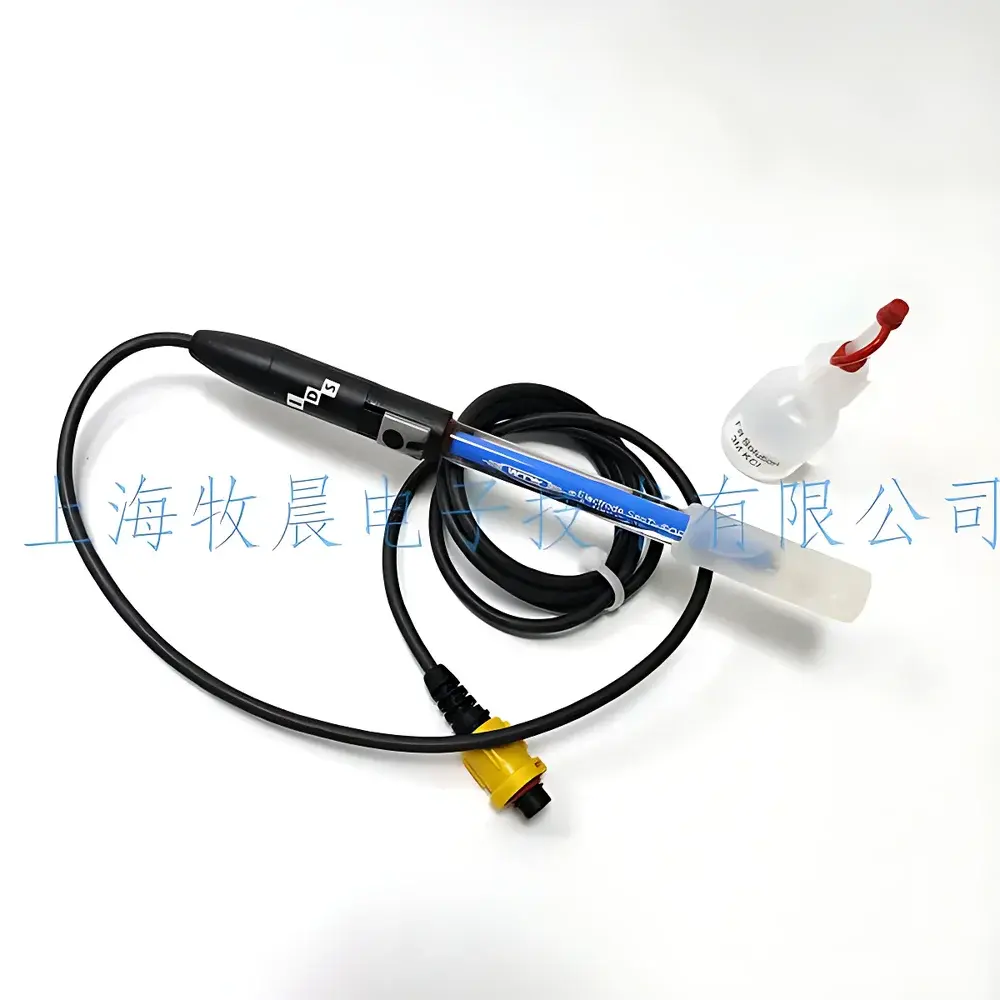
WTW SenTix ORP-T 900 Digital IDS Platinum ORP Electrode
| Brand | WTW |
|---|---|
| Origin | Germany |
| Model | SenTix ORP-T 900 |
| Catalog No. | 103791 |
| Measurement Range | –1250.0 to +1250.0 mV |
| Sample Temperature Range | 0 °C to 100 °C |
| mV Accuracy | ±0.2 mV |
| Temperature Accuracy | ±0.1 °C |
| Temperature Sensor | Integrated NTC30 |
| Electrolyte | 3 mol/L KCl |
| Junction | Ceramic |
| Cable Length | 1.5 m (integrated, IP67 waterproof digital connector) |
| Electrode Material | Platinum |
| Shaft Material | Glass |
| Shaft Diameter | 12 mm |
| Shaft Length | 120 mm |
| Compliance | Compatible with MultiLine, MonoLine, and inoLab IDS meters |
Overview
The WTW SenTix ORP-T 900 is a high-precision, digital Intelligent Digital Sensor (IDS) platinum redox electrode engineered for laboratory-grade oxidation-reduction potential (ORP) measurements in aqueous solutions. Designed according to electrochemical principles rooted in the Nernst equation, the sensor delivers stable, reproducible mV output relative to a reference potential—enabling accurate assessment of electron transfer capacity in water quality, wastewater treatment, electroplating baths, disinfection processes (e.g., chlorine/ozone monitoring), and pharmaceutical process control. Its integrated NTC30 temperature sensor enables automatic temperature compensation (ATC) during measurement, eliminating manual correction and improving thermodynamic consistency. The electrode operates on WTW’s proprietary IDS platform, which embeds sensor-specific calibration metadata—including serial number, calibration date, slope, offset, and diagnostic logs—directly into the probe’s memory chip. This architecture ensures traceability, simplifies instrument pairing, and supports audit-ready workflows compliant with GLP and ISO/IEC 17025 requirements.
Key Features
- Digital IDS interface with plug-and-play functionality: no manual sensor configuration required upon connection to compatible WTW meters (inoLab® IDS, MultiLine® IDS, MonoLine® IDS)
- Integrated platinum sensing element housed in chemically inert borosilicate glass shaft (12 mm diameter × 120 mm length), optimized for mechanical robustness and thermal stability
- Ceramic junction ensures consistent electrolyte outflow and minimizes clogging in turbid or particulate-laden samples
- Pre-filled with 3 mol/L KCl electrolyte; includes dedicated refill bottle (10 mL) for maintenance-free operation over extended service intervals
- IP67-rated, waterproof digital connector (1.5 m fixed cable) guarantees reliable signal transmission and resistance to moisture ingress in humid lab environments
- QSC (Quality Sensor Control) diagnostics continuously monitor electrode health—including junction resistance, asymmetry potential, and response time—providing real-time status feedback via meter display
Sample Compatibility & Compliance
The SenTix ORP-T 900 is validated for use across a broad spectrum of aqueous matrices, including potable water, surface water, activated sludge, industrial cooling water, cleaning-in-place (CIP) rinse solutions, and buffered chemical formulations. It exhibits minimal drift in pH-neutral to moderately acidic or alkaline media (pH 2–12) and maintains performance under continuous immersion up to 100 °C. The electrode complies with DIN EN ISO 5667-3 for water quality sampling and aligns with ASTM D1498 (Standard Test Method for Oxidation-Reduction Potential of Water) for methodological rigor. Its digital architecture supports full electronic record retention per FDA 21 CFR Part 11 when used with validated inoLab IDS software configurations featuring audit trails, user access controls, and electronic signatures.
Software & Data Management
When connected to WTW’s IDS-enabled instruments, the SenTix ORP-T 900 automatically transmits calibration history, sensor identity, and QSC diagnostics to the host device. All measurement data—including timestamped mV values, compensated temperature readings, and sensor health indicators—are stored internally and exportable via USB or Bluetooth to WTW LabX® software or third-party LIMS platforms. LabX provides automated report generation, statistical process control (SPC) charts, and compliance-ready documentation templates aligned with ISO 17025 clause 7.7 (Reporting of Results). Raw data files retain embedded metadata for full chain-of-custody integrity.
Applications
- Real-time monitoring of disinfectant efficacy (e.g., free chlorine, ozone, peracetic acid) in municipal water treatment and food processing facilities
- Redox control in biological nutrient removal (BNR) systems and anaerobic digesters
- Quality assurance of electrochemical plating baths (e.g., nickel, chromium, copper deposition)
- Validation of sterilization cycles in pharmaceutical clean steam and purified water systems
- Research-grade redox titrations and kinetic studies requiring high-resolution mV tracking
- Environmental monitoring of sediment pore water and landfill leachate redox gradients
FAQ
Is the SenTix ORP-T 900 compatible with non-IDS WTW meters such as the older pH/ORP 330i?
No. This electrode requires an IDS-capable instrument (e.g., inoLab Multi 9310 IDS, Multi 9620 IDS) to read embedded calibration data and activate QSC diagnostics.
Can the 1.5 m cable be extended using standard adapters?
No. IDS uses a proprietary digital protocol and shielded communication bus; extension cables are not supported. For longer reach, select the SenTix ORP-T 900-P variant and pair it with an approved WTW IDS extension cable (e.g., 3 m or 10 m options).
How often should the electrolyte be refilled?
Under normal laboratory use (≤4 hours/day immersion), refill every 6–12 months. Refill frequency increases with elevated temperature, low ionic strength, or aggressive oxidants.
Does the electrode require periodic calibration with standard redox buffers?
Yes. While no two-point calibration is needed, verification against certified Zobell’s solution (224 mV at 25 °C) or quinhydrone buffer (≈+470 mV) is recommended before critical measurements.
What is the expected service life under routine QC conditions?
With proper storage (in 3 mol/L KCl), regular cleaning (dilute HNO₃ for sulfide fouling; pepsin/HCl for protein films), and QSC-guided maintenance, typical operational lifespan exceeds 24 months.






