
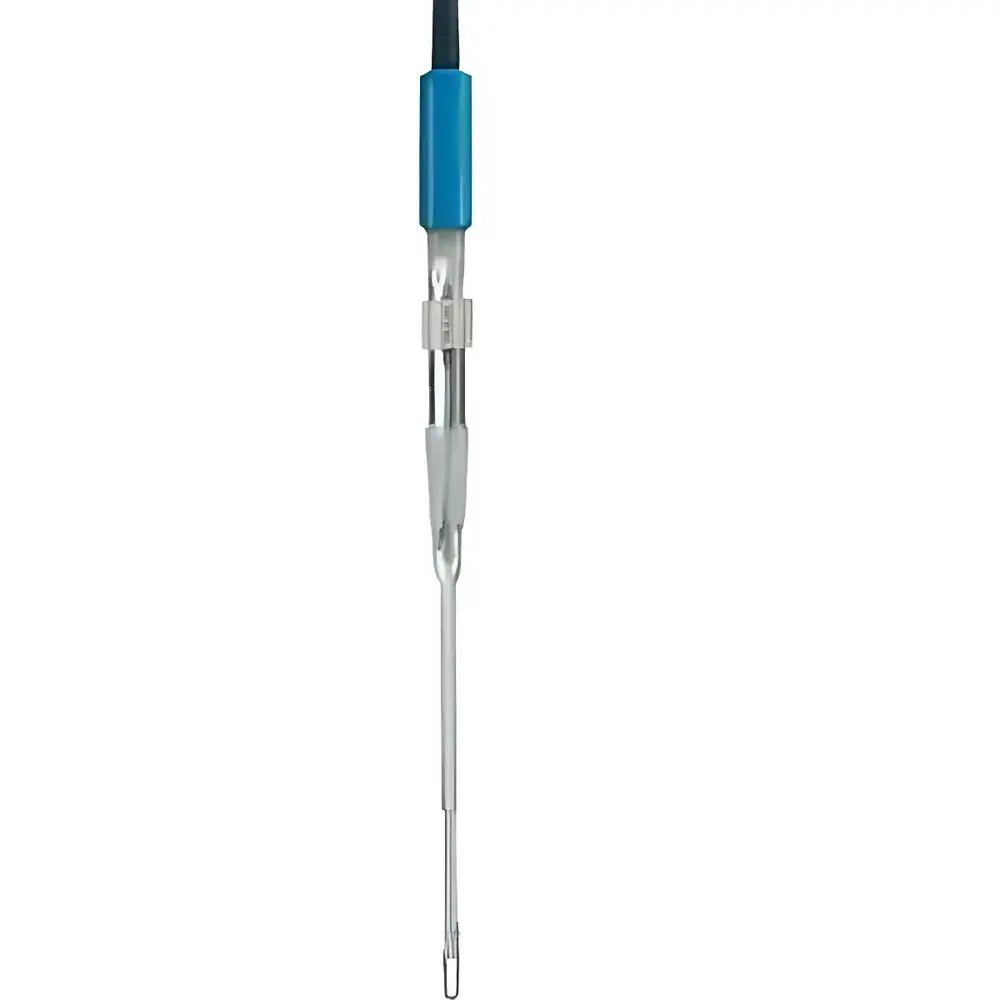
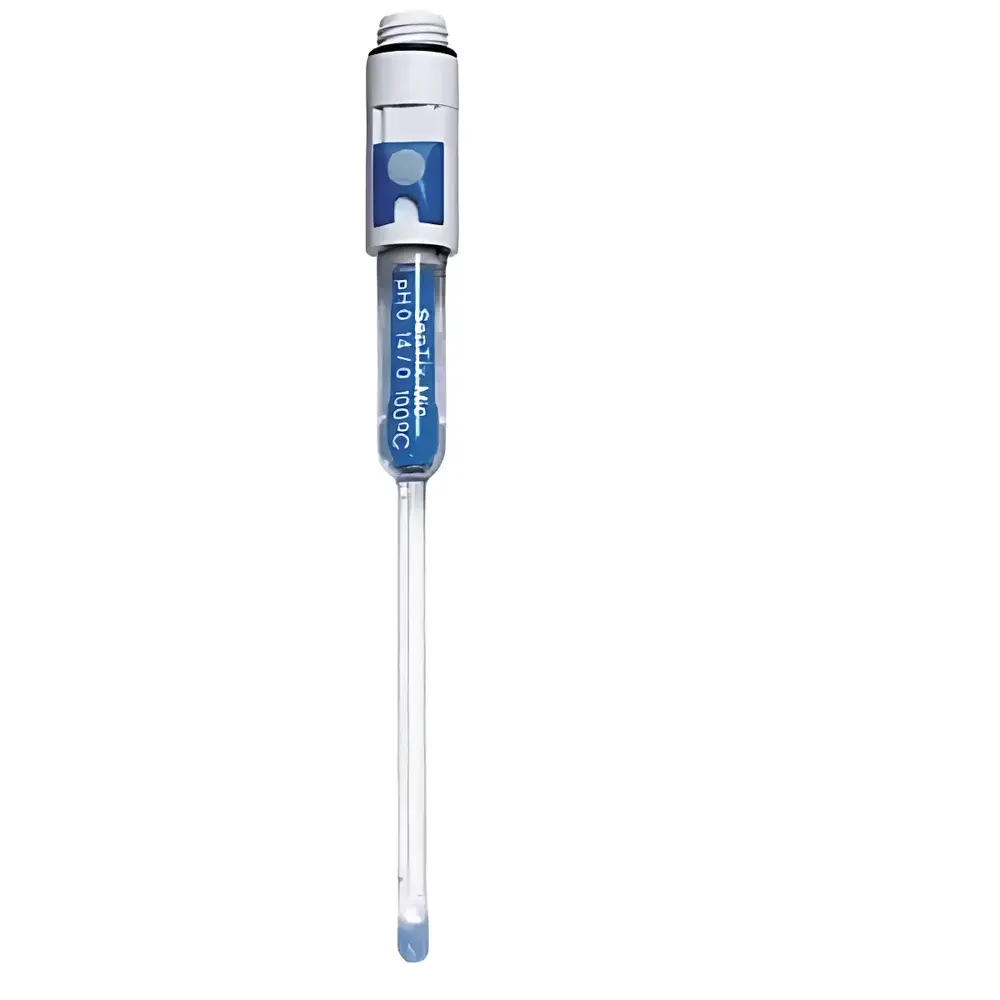
WTW SenTixMic Micro pH Electrode for Small-Volume Measurements
| Brand | WTW |
|---|---|
| Origin | Germany |
| Model | SenTixMic |
| Instrument Type | Portable |
| Parameter Type | Single-Parameter (pH) |
| Membrane Diameter | 3 mm or 5 mm |
| Reference System | 3 mol/L KCl aqueous electrolyte |
| Junction Type | Ceramic or Platinum Wire |
| Temperature Range | 0–100 °C (ceramic), –5–100 °C (Pt wire) |
| Shaft Dimensions | 40/80 mm length × 12/5 mm diameter (Model 103647) |
| Connector | S7 plug (no cable) |
| Re-fillable | Yes |
| Response Time | <15 s (typical, per ISO 9712) |
Overview
The WTW SenTixMic is a high-precision, refillable micro pH electrode engineered specifically for accurate potentiometric pH measurement in low-volume, sensitive, and space-constrained samples. Based on the Nernst principle, it employs a glass membrane sensing element coupled with a stable, liquid-filled Ag/AgCl reference system containing 3 mol/L KCl electrolyte. Its compact cylindrical membrane geometry—available in 3 mm or 5 mm diameters—minimizes sample disturbance while maximizing surface-to-volume ratio for rapid ion exchange kinetics. Designed and manufactured in Germany under strict quality control aligned with ISO 9001 and IEC 61326-1 (EMC for laboratory instrumentation), the SenTixMic delivers consistent performance across demanding applications where conventional macro-electrodes fail due to volume limitations or surface adsorption effects.
Key Features
- Micro-scale glass membrane (3 mm or 5 mm diameter) enables reliable pH measurement in volumes as low as 0.1 mL—ideal for vials, microplates, capillaries, and tissue homogenates.
- Refillable 3 mol/L KCl reference electrolyte ensures long-term stability, reproducible junction potential, and reduced drift over extended use cycles.
- Two junction options: porous ceramic frit (robust, low-clogging; suitable for routine lab use) or platinum wire (enhanced chemical resistance and faster response in protein-rich or viscous media).
- S7 connector (model 103647) provides secure, standardized mating with WTW portable meters (e.g., Multi 3630 IDS, pH 3310) and supports automatic electrode recognition when used with compatible IDS-enabled instruments.
- Temperature compensation support via manual input or external Pt1000 sensor (optional)—fully compliant with ASTM D1293 and ISO 10523 protocols for temperature-corrected pH reporting.
- Chemically resistant glass shaft (diameter 5 mm or 12 mm depending on configuration) with optimized mechanical rigidity for precise positioning in narrow containers such as serum vials, syringes, or microcentrifuge tubes.
Sample Compatibility & Compliance
The SenTixMic demonstrates exceptional compatibility with biologically and pharmaceutically relevant matrices—including serum, urine, saliva, Tris-HCl buffers, enzyme solutions, parenteral infusions, and gastric aspirates—without significant protein fouling or junction clogging. Its ceramic junction resists precipitation from Ca²⁺/PO₄³⁻-containing media, while the Pt-wire variant offers superior longevity in sulfide- or thiol-rich environments (e.g., cell lysates). All models comply with EU Directive 2014/30/EU (EMC), RoHS 2011/65/EU, and are validated for use in GLP and GMP-regulated workflows. When paired with WTW’s IDS-capable meters, full audit trail functionality—including timestamped calibration records, electrode ID logging, and user authentication—is supported per FDA 21 CFR Part 11 requirements.
Software & Data Management
When connected to WTW’s LabX® software (via USB or Bluetooth-enabled meter interfaces), the SenTixMic enables automated data capture, real-time trend visualization, and customizable report generation—including compliance-ready PDF exports with metadata (operator ID, location, ambient conditions, calibration history). The electrode’s integrated identification chip (in IDS-compatible configurations) auto-populates sensor parameters into LabX, eliminating manual entry errors and supporting IQ/OQ documentation. Raw mV and temperature values are logged at user-defined intervals (100 ms to 60 s), facilitating kinetic pH profiling during titrations or fermentation monitoring.
Applications
- Pharmaceutical QC/QA: pH verification of lyophilized product reconstitutes, small-batch buffer formulations, and container-closure integrity testing in Westar™ or Westarin™ vials.
- Clinical diagnostics: Direct pH assessment of microliter-volume biological fluids (e.g., capillary blood, tear film, cerebrospinal fluid aliquots) without dilution artifacts.
- Biotechnology R&D: Real-time monitoring of pH shifts in micro-bioreactors, single-cell suspensions, and enzymatic reaction mixtures.
- Academic research: High-fidelity pH mapping in gel electrophoresis wells, microfluidic channels, and plant tissue sections.
- Food & beverage: Rapid acidity checks in limited-sample artisanal ferments (e.g., kombucha scobys, sourdough starters) and infant formula concentrates.
FAQ
Is the SenTixMic compatible with non-WTW meters?
Yes—when equipped with a BNC or DIN connector (e.g., models 103661 or 103660), it functions with any standard pH meter supporting high-impedance input (≥10¹² Ω) and asymmetric potential compensation.
How often should the electrolyte be refilled?
Refill frequency depends on usage intensity and storage conditions; typically every 2–4 weeks under daily operation. A visible electrolyte level drop below the fill hole indicates immediate replenishment.
Can the SenTixMic be sterilized?
No—autoclaving or chemical sterilants will damage the glass membrane and reference junction. For aseptic applications, use sterile filtration of the sample prior to measurement or employ disposable sleeve adapters validated for ISO 13408.
What is the recommended storage solution?
Store vertically in 3 mol/L KCl solution at room temperature; avoid distilled water, which causes leaching of internal electrolyte and irreversible membrane dehydration.
Does the S7 plug version support temperature measurement?
No—the S7 plug (model 103647) is pH-only; integrated temperature sensing requires pairing with an external Pt1000 probe or using a combined pH/Temp electrode variant (e.g., SenTix® 980 series).





