
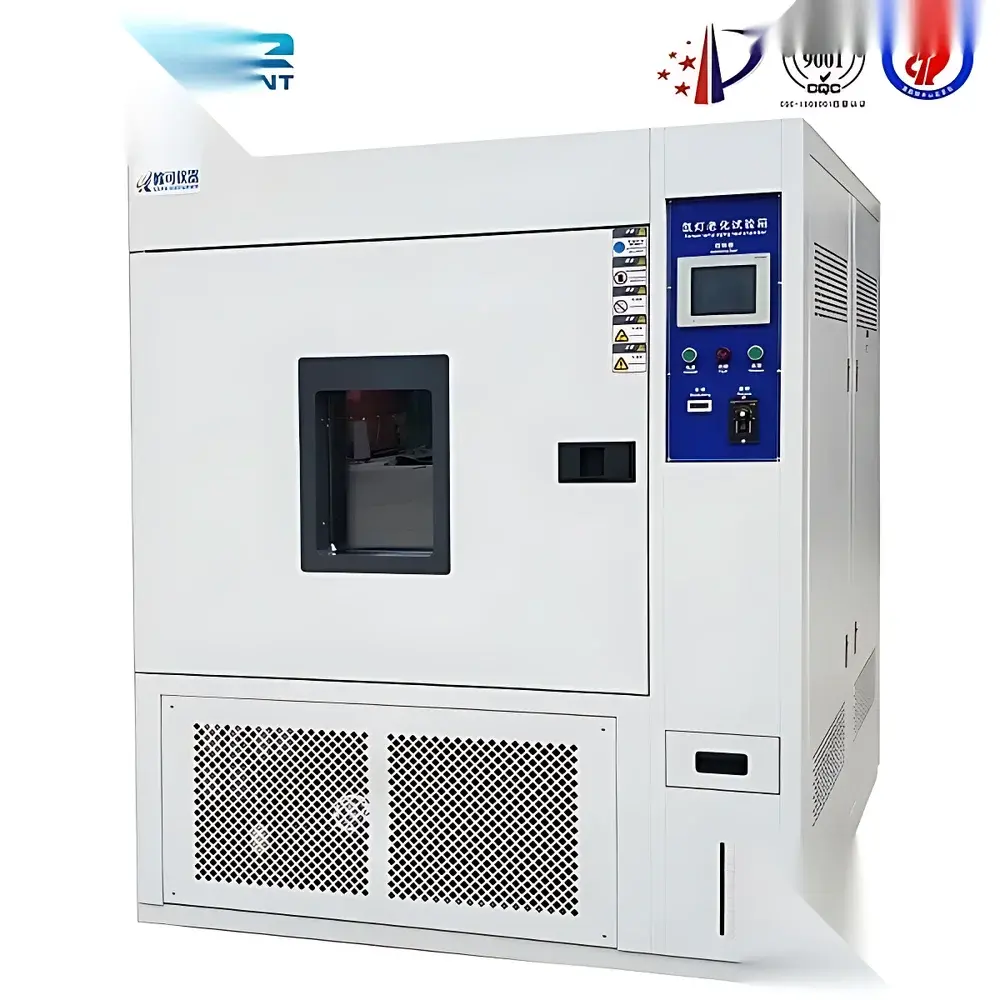
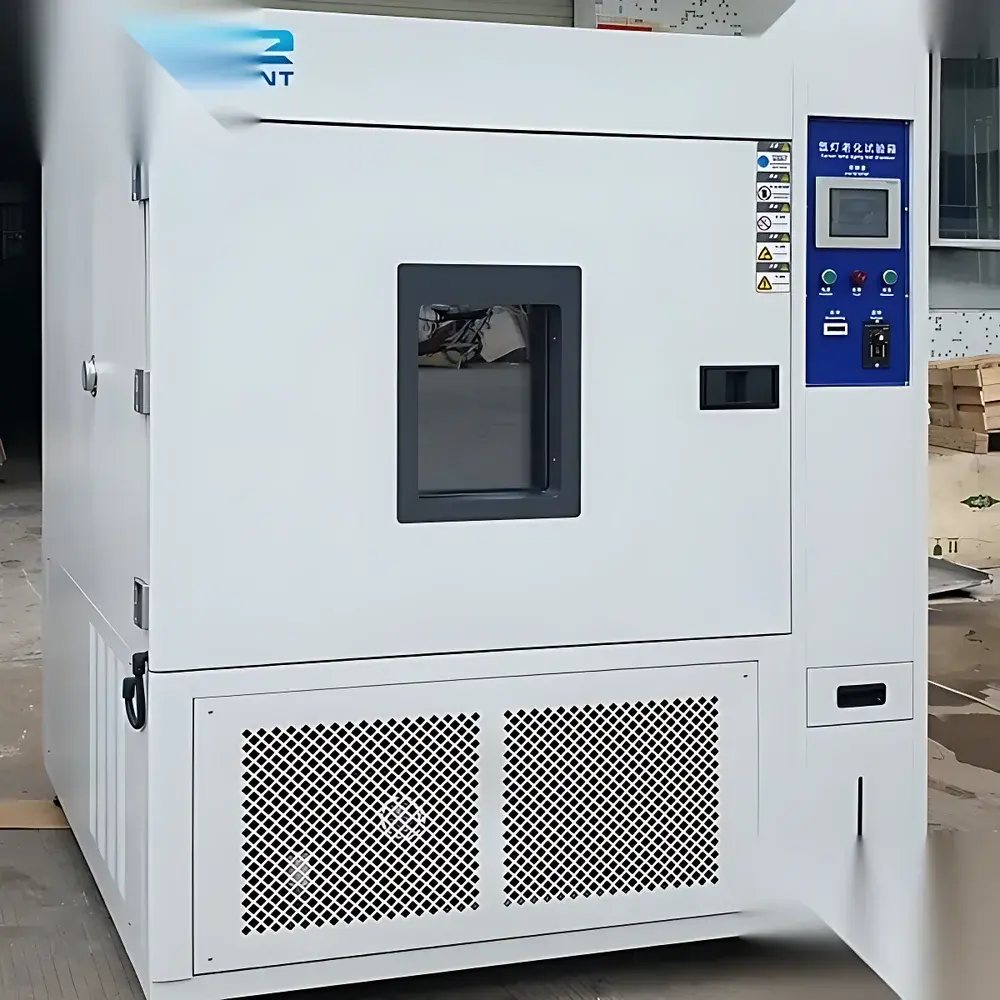
OK-XD-225 Wind-Cooled Xenon Arc Weathering Chamber
| Brand | Other Brands |
|---|---|
| Origin | Imported |
| Manufacturer Type | Authorized Distributor |
| Irradiance Range | 200–550 W/m² ±5% (adjustable) |
| Spectral Range | 290–800 nm |
| Temperature Range | RT+10°C to 70°C |
| Humidity Range | 50–98% RH |
| Black Panel Temperature | 63°C / 100°C ±3°C |
| Temperature Uniformity | ≤±2°C |
| Temperature Stability | ≤±0.5°C |
| Humidity Stability | +2 / −3% RH |
| Lamp Configuration | 4 × 8 kW air-cooled xenon lamps |
| Rainfall Duration | 0–9999 min (continuous) |
| Rainfall Interval | 0–240 min (cyclic) |
| Spray Cycle Options | 18/102 min or 12/48 min (spray/off) |
| Water Pressure | 0.12–0.15 MPa |
| Nozzle Orifice | Ø0.8 mm |
| Sample Tray Size | 450 × 720 mm |
| Lamp-to-Sample Distance | 230–280 mm |
| Light Exposure Timer | 0–999 h/min/sec (programmable) |
| Heating Power | 2 kW |
| Humidification Power | 5 kW |
| Total Lamp Power | 32 kW |
| Electrical Supply | AC 380 V ±10%, 50 Hz, 3-phase 5-wire |
Overview
The OK-XD-225 Wind-Cooled Xenon Arc Weathering Chamber is an engineered environmental simulation system designed to replicate full-spectrum solar radiation, thermal cycling, and moisture exposure under controlled laboratory conditions. It employs air-cooled xenon arc lamps emitting continuous spectral output from 290 nm to 800 nm—covering critical UV-B, UV-A, visible, and near-infrared regions—to accelerate material degradation mechanisms such as photolysis, oxidation, chalking, color fading, and polymer chain scission. Unlike UV fluorescent or metal halide sources, xenon arc technology provides the closest match to natural sunlight irradiance distribution, making it the reference method for ISO 4892-2, ASTM G155, SAE J2527, and AATCC TM16 standards. The chamber integrates precise black panel temperature control (63°C or 100°C ±3°C), programmable humidity regulation (50–98% RH), and synchronized water spray cycles to simulate realistic diurnal weathering stressors—including dew formation, rain erosion, and thermal shock—enabling reproducible, comparative aging data for R&D validation and quality assurance.
Key Features
- Four high-intensity 8 kW air-cooled xenon lamps delivering total irradiance of up to 550 W/m² within the 290–800 nm band, with ±5% uniformity across the sample plane
- Dual black panel temperature sensors calibrated per ASTM G147, supporting user-selectable setpoints at 63°C or 100°C with ±3°C accuracy
- Microprocessor-based PID control system ensuring temperature stability ≤±0.5°C and uniformity ≤±2°C; humidity maintained within +2 / −3% RH tolerance
- Programmable water cycle logic: continuous rainfall (0–9999 min), interval-based precipitation (0–240 min intervals), and configurable spray/no-spray ratios (e.g., 18/102 min)
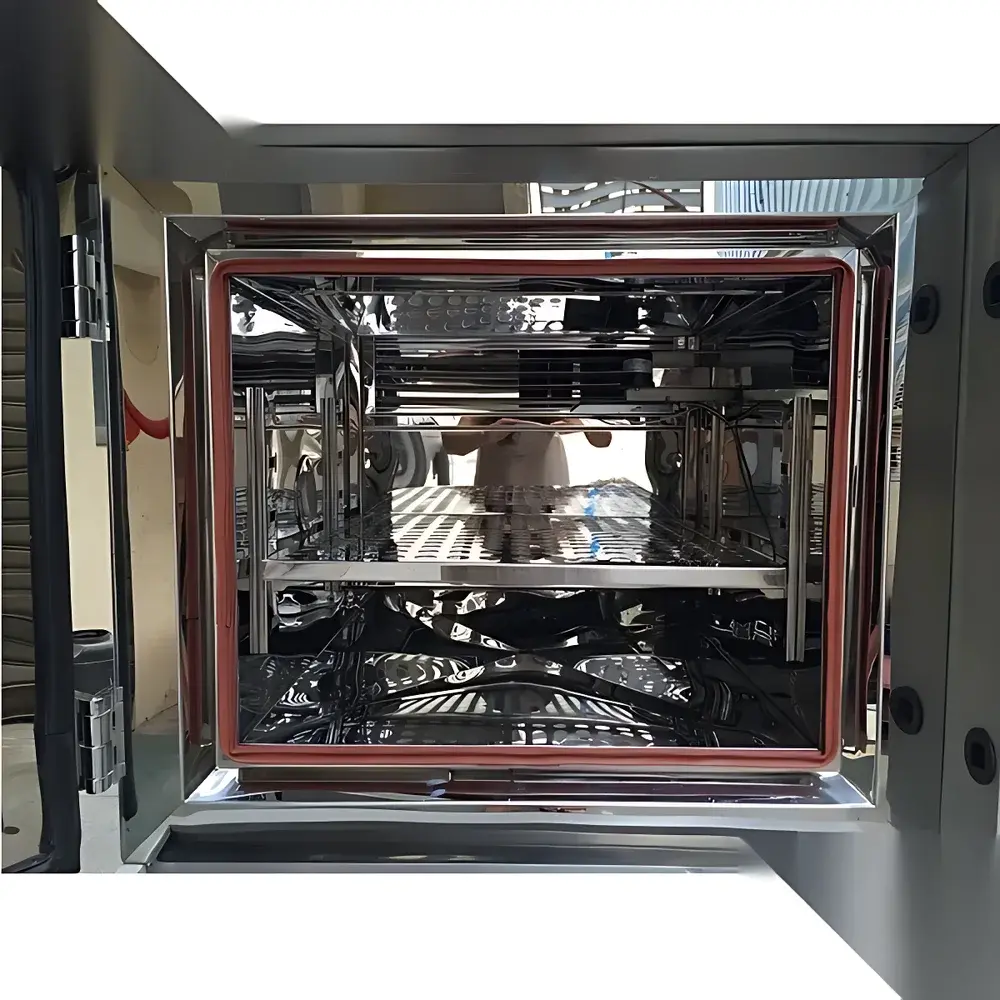
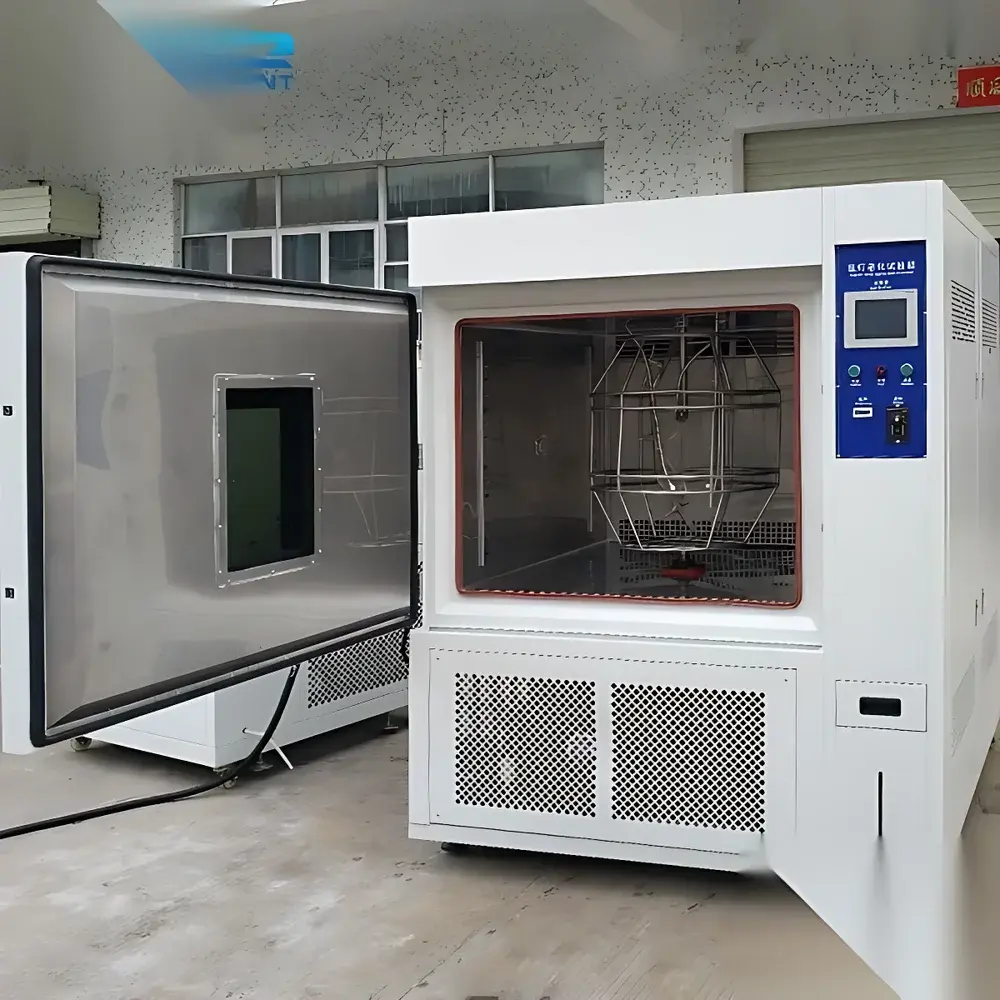
- Stainless steel interior chamber with quartz-filtered optical path, single borosilicate glass filter installed to meet ISO 4892-2 spectral filtering requirements
- Adjustable lamp-to-sample distance (230–280 mm) and standardized 450 × 720 mm sample tray accommodating industry-standard test specimens and multi-position holders
- Integrated safety interlocks including lamp overtemperature cutoff, water level monitoring, door-open irradiance shutoff, and electrical ground-fault protection
Sample Compatibility & Compliance
The OK-XD-225 accommodates rigid and flexible flat specimens up to 50 mm thickness, including automotive coatings, architectural sealants, textile fabrics, plastic enclosures, and outdoor signage laminates. Its operational envelope satisfies the physical constraints and exposure protocols defined in ISO 4892-2 (Methods A and B), ASTM D4329 (plastics), ASTM D4459 (interior plastics), SAE J2412/J2527 (automotive exterior), and GB/T 16422.2 (Chinese national standard). All control parameters—including irradiance, black panel temperature, relative humidity, and wet/dry timing—are logged with timestamped resolution for GLP-compliant audit trails. Optional I/O interfaces support integration into centralized lab management systems compliant with FDA 21 CFR Part 11 requirements when paired with validated electronic record software.
Software & Data Management
The chamber operates via a dedicated industrial-grade touchscreen HMI with embedded real-time logging. All exposure parameters—including elapsed time, cumulative radiant exposure (J/m²), black panel temperature history, humidity profile, and spray activation events—are stored internally for ≥30 days. Data export is supported via USB 2.0 to CSV format for post-processing in MATLAB, Excel, or LIMS platforms. Optional Ethernet connectivity enables remote monitoring and alarm notification via SNMP or Modbus TCP. Firmware supports firmware revision tracking, operator login authentication (with role-based access), and calibration certificate upload—facilitating internal QA documentation and external accreditation audits (e.g., ISO/IEC 17025).
Applications
- Accelerated weathering validation of OEM automotive trim components against SAE J2527 cycle specifications
- Colorfastness and gloss retention testing of architectural paints per ISO 11341 and ASTM D4587
- UV stability assessment of medical device polymer housings intended for outdoor storage (ISO 10993-12)
- Photostability qualification of packaging films used in pharmaceutical primary packaging (ICH Q1B)
- Corrosion resistance evaluation of coated metallic substrates under cyclic wet/dry UV exposure (ASTM D5894)
- Material screening for solar reflectance index (SRI) degradation in cool roof membranes (ASTM E1980)
FAQ
What spectral filters are compatible with this chamber?
The standard configuration includes one fused silica/borosilicate daylight filter meeting ISO 4892-2 Filter B requirements. Optional Daylight-Q and Extended UV filters are available upon request for specialized spectral tailoring.
Is irradiance calibration traceable to NIST or equivalent national metrology institutes?
Yes—calibration certificates issued by accredited third-party laboratories include traceability to NIST SRM 2242 or PTB-recognized reference detectors, with uncertainty budgets reported per ISO/IEC 17025 Annex A.
Can the chamber operate continuously for extended test durations (e.g., >1000 hours)?
Yes—designed for unattended operation up to 3000 hours per lamp set; recommended lamp replacement interval is 1500 hours for irradiance consistency within ±5% of initial output.
Does the system support automated pass/fail criteria based on colorimetric delta-E thresholds?
Not natively—the chamber outputs raw environmental data only. Integration with external spectrophotometers (e.g., Konica Minolta CM-700d) via RS-232 or Ethernet enables closed-loop decision logic when deployed with custom QA software.
What maintenance schedule is required for optimal performance?
Daily visual inspection of nozzles and filters; weekly cleaning of lamp envelopes and quartz filters; quarterly verification of humidity sensor drift and black panel thermocouple calibration; annual full-system metrological recalibration recommended.



