
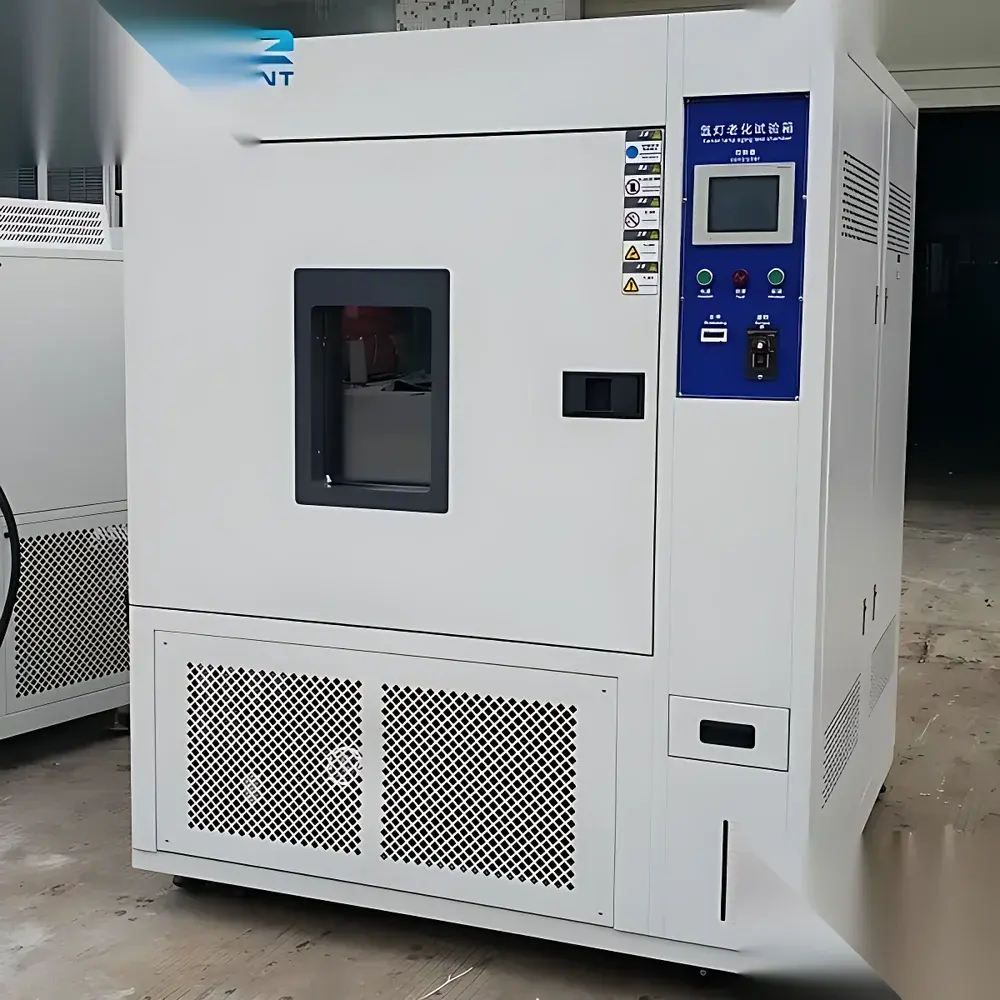
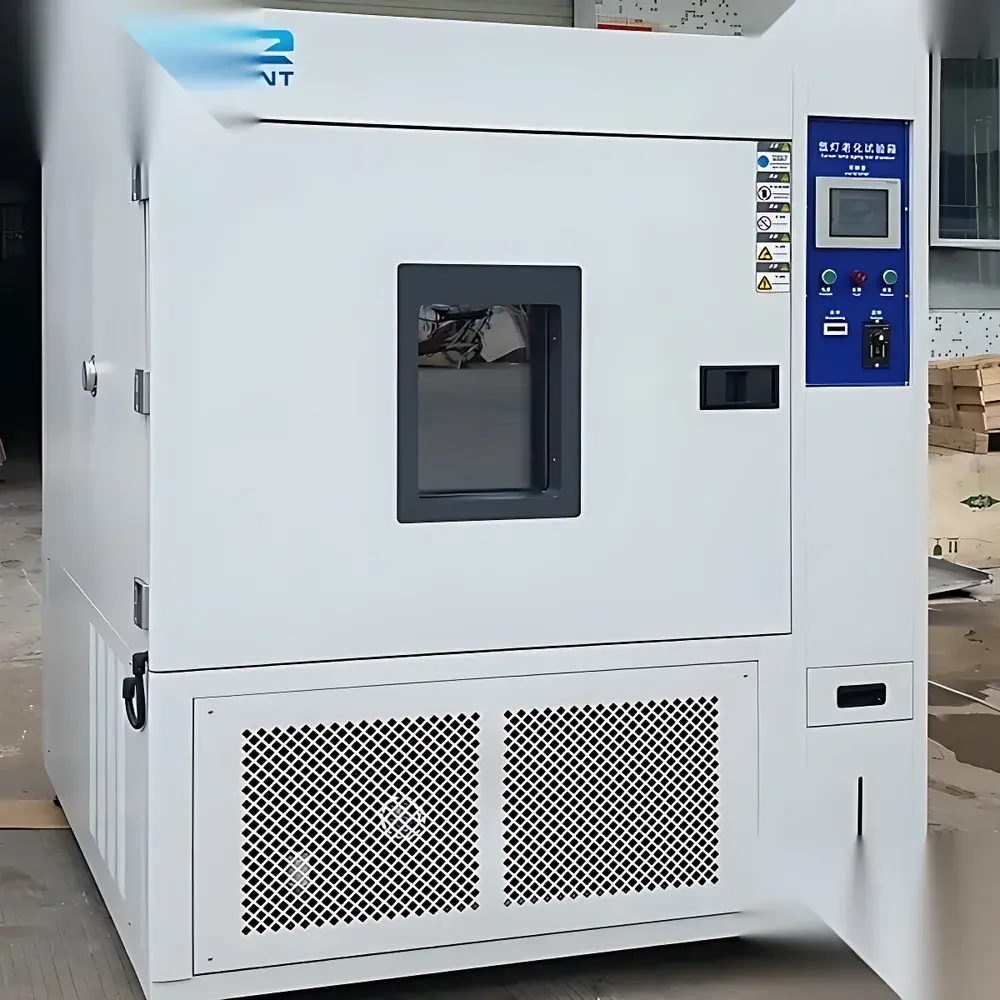
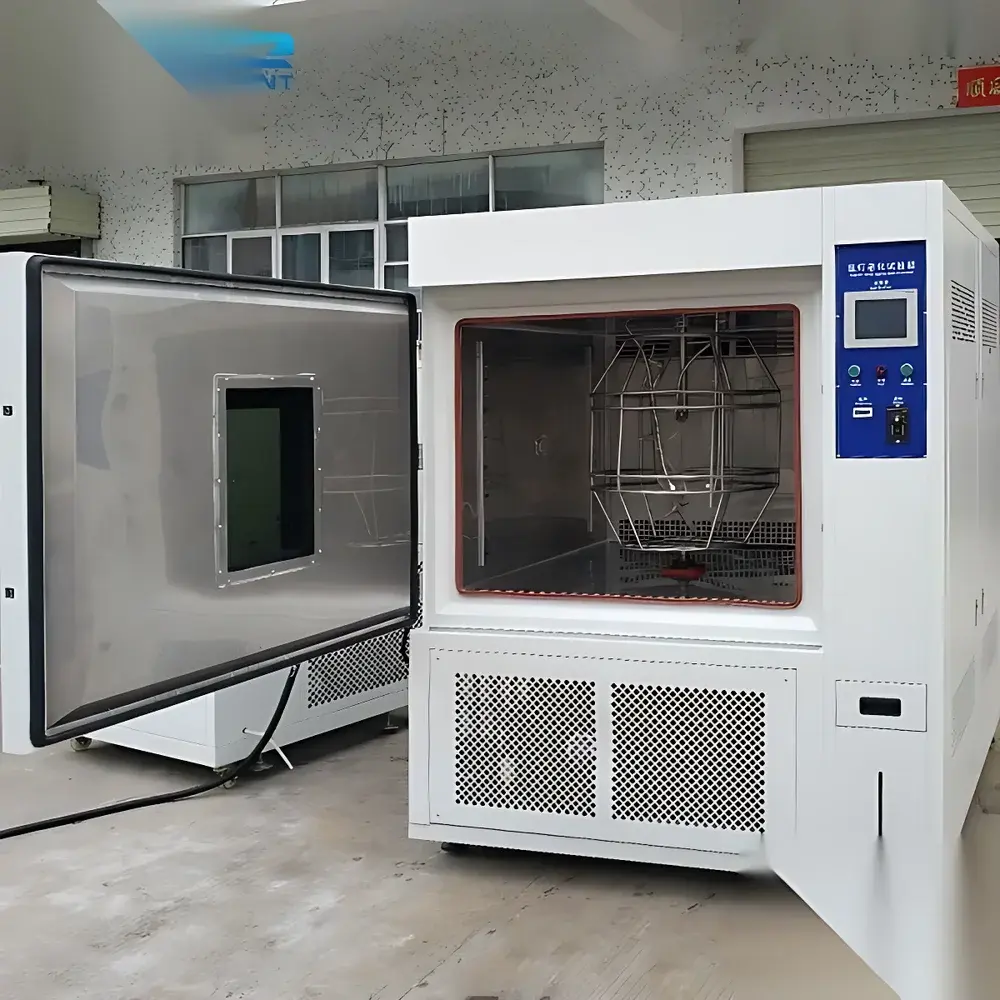
OK-XD-408 Xenon Arc Weathering Test Chamber for Sealing Components
| Brand | OK Instruments |
|---|---|
| Origin | Imported |
| Manufacturer Type | Authorized Distributor |
| Temperature Range | RT+10°C to 70°C |
| Humidity Range | 50–98% RH |
| Rainfall Duration | 0–9999 min (adjustable) |
| Rainfall Cycle | 1–240 min (adjustable interval) |
| Spectral Range | 290–800 nm |
| Xenon Lamp Total Power | 10.5 kW |
| Lamp Life | 1600 h |
| Internal Chamber Dimensions (W×H×D) | 50×76×50 cm |
| External Dimensions | 102×96×137 cm |
| Power Supply | AC 380 V ±10%, 50 ±0.5 Hz, 3-phase 5-wire |
| Operating Ambient | 5–30°C, ≤85% RH |
Overview
The OK-XD-408 Xenon Arc Weathering Test Chamber is a precision-engineered environmental simulation system designed specifically for accelerated aging evaluation of elastomeric sealing components—such as O-rings, gaskets, shaft seals, and molded rubber profiles—under controlled solar radiation, thermal cycling, and moisture exposure. It employs a full-spectrum xenon arc lamp source to replicate the critical UV, visible, and near-infrared irradiance distribution of natural sunlight (290–800 nm), enabling realistic photochemical degradation assessment in accordance with internationally recognized weathering standards. Unlike UV fluorescent lamp testers, this chamber delivers broadband spectral fidelity essential for evaluating polymer chain scission, antioxidant depletion, surface oxidation, and hydrolytic degradation mechanisms prevalent in dynamic sealing applications exposed to outdoor or automotive under-hood environments. The chamber integrates tightly coupled temperature, humidity, and spray control subsystems to simulate diurnal cycles—including condensation, rain, and dry-back phases—thereby reproducing field-relevant failure modes such as compression set loss, surface cracking, adhesion loss, and seal extrusion susceptibility.
Key Features
- Four high-output, U.S.-sourced xenon lamps (10.5 kW total) with calibrated spectral output and integrated quartz filter sets to meet ISO 4892-2, ASTM G155, and GB/T 16422.2 spectral requirements.
- Dual-mode humidity control: stainless-steel shallow-surface evaporative humidifier (external isolation design) + precision RH feedback via PT100 platinum resistance sensors (±1% RH accuracy).
- Programmable rainfall system with adjustable duration (0–9999 min) and cycle interval (1–240 min), utilizing corrosion-resistant S-6512 centrifugal pump and calibrated nozzles for uniform water distribution.
- Black panel temperature monitoring via dual-metal thermocouple sensor, compliant with ASTM D7869 and ISO 4892-2 black standard temperature (BST) measurement protocols.
- Robust chamber construction: SUS304 stainless steel interior with electropolished finish; exterior carbon steel with phosphating + electrostatic epoxy coating; high-temperature silicone door gasket ensuring long-term sealing integrity at thermal extremes.
- Intelligent control architecture featuring Moeller (Germany) programmable logic controller (PLC)-based time sequencing, real-time data logging, and auto-recovery from power interruption with memory retention.
- Safety-critical protection suite: over-temperature cutoff, phase-loss detection, ground-fault circuit interruption (GFCI), low-water-level shutoff, motor overcurrent/overheat sensing, and refrigeration compressor high-pressure lockout.
Sample Compatibility & Compliance
The OK-XD-408 accommodates irregularly shaped sealing components via its custom-configurable SUS304 sample rack—designed to maintain mechanical load state (e.g., compression or torsion) during exposure without interfering with irradiance uniformity. It supports test specimens up to 50 cm × 76 cm × 50 cm working volume, with optional fixtures for multi-angle mounting per ASTM D7869 Annex A2. The system complies with key international material weathering standards including ISO 4892-2 (Plastics – Methods of exposure to laboratory light sources – Part 2: Xenon-arc lamps), ASTM G155 (Standard Practice for Operating Xenon Arc Light Apparatus for Exposure of Non-Metallic Materials), GB/T 2423.24 (Environmental testing – Part 2: Tests – Test SA: Simulated solar radiation at ground level and guidance for solar radiation testing), and GB/T 1865 (Paints and varnishes – Artificial weathering and exposure to artificial radiation – Exposure to filtered xenon-arc radiation). All calibration and performance verification procedures follow ISO/IEC 17025 traceable metrology practices.
Software & Data Management
The integrated Moeller PLC-based controller provides intuitive touch-screen operation with preloaded test profiles for common sealing material specifications (e.g., SAE J2020, ASTM D1149, ISO 1431-1). Real-time parameter logging includes irradiance (W/m² @ 340 nm), chamber air temperature, black panel temperature, relative humidity, spray status, and elapsed exposure time. Data export is supported via USB interface in CSV format compatible with LIMS integration. Audit-trail functionality records all user actions, parameter changes, and alarm events—supporting GLP-compliant documentation requirements. Optional Ethernet connectivity enables remote monitoring and centralized fleet management across multiple chambers in QC laboratories.
Applications
This chamber is routinely deployed in R&D and quality assurance labs for predictive lifetime modeling of static and dynamic sealing systems used in automotive powertrain assemblies, aerospace hydraulic manifolds, medical device housings, HVAC duct seals, and industrial fluid handling equipment. Typical use cases include comparative ranking of EPDM, FKM, VMQ, and ACM compounds under simulated South Florida or Arizona desert exposures; validation of UV stabilizer packages in halogen-free cable jacketing; correlation studies between accelerated xenon exposure and real-world service life; and root-cause analysis of premature seal failure attributed to photothermal synergism. Its reproducible irradiance control and strict adherence to spectral filtering standards make it suitable for regulatory submissions requiring documented weathering protocol compliance.
FAQ
What spectral filters are included with the OK-XD-408, and how do they affect test validity?
The system ships with three U.S.-manufactured borosilicate glass filters optimized for Daylight-Q, Window-Glass, and Extended UV configurations—each certified per ASTM G155 spectral transmission curves. Filter selection directly determines UV cutoff and infrared heat load, thereby influencing degradation kinetics and enabling correlation to specific end-use environments.
Is the chamber capable of maintaining stable irradiance throughout lamp life?
Yes—the integrated GCK-11 radiometer (calibrated by Peking University Metrology Lab) continuously monitors irradiance at 340 nm and automatically adjusts lamp power to compensate for spectral drift, ensuring ±5% irradiance stability over the full 1600-hour lamp lifespan.
How is humidity control achieved without introducing mineral deposits on test samples?
The external stainless-steel evaporative humidifier uses deionized water only, eliminating scaling risk. Humidity is regulated via closed-loop feedback from dual PT100 sensors, with condensate drainage routed outside the chamber cavity to prevent cross-contamination.
Can the system be validated for ISO/IEC 17025-accredited testing?
Absolutely—the chamber’s temperature, humidity, and irradiance measurement subsystems are traceably calibrated using NIST-traceable references. Full validation documentation—including IQ/OQ/PQ protocols, uncertainty budgets, and inter-laboratory comparison reports—is available upon request for accreditation readiness.



