
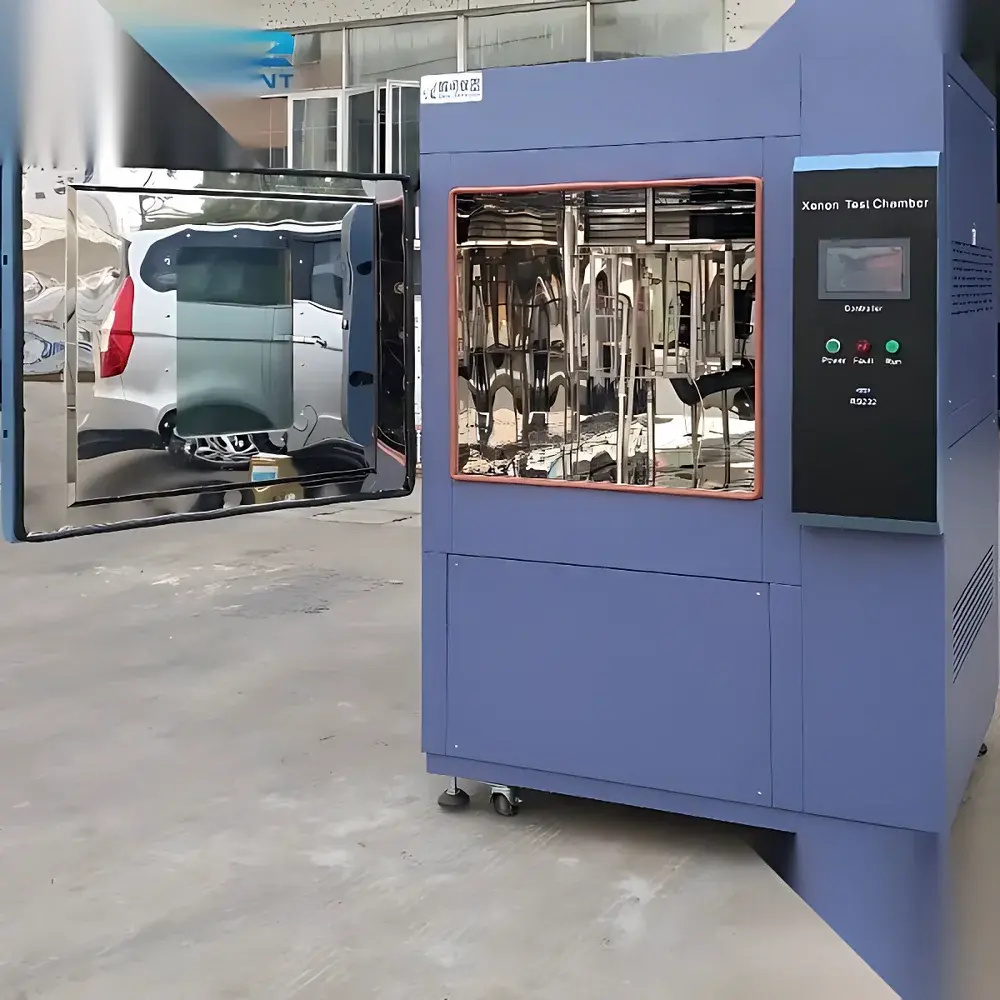
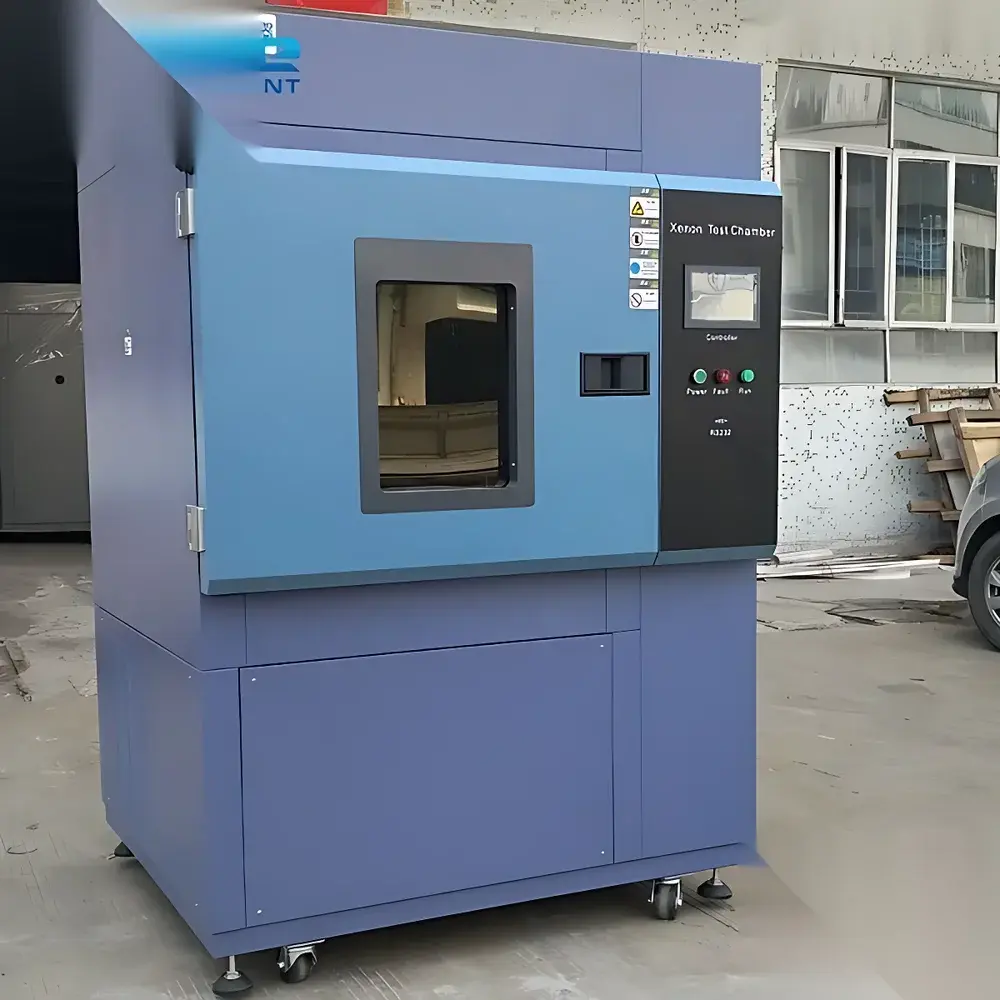
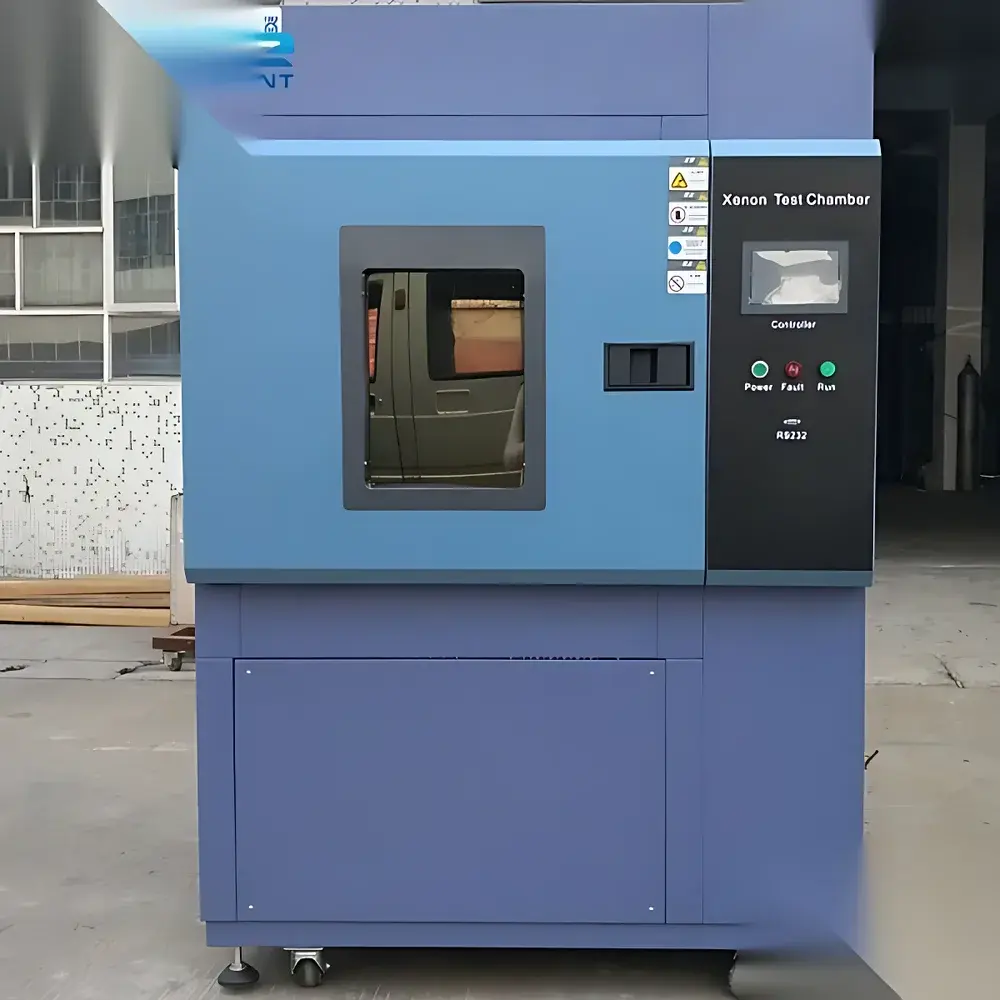
Xenon Arc Weathering Test Chamber
| Brand | OEM / Custom Brand |
|---|---|
| Origin | Imported |
| Manufacturer Type | Authorized Distributor |
| Irradiance Setting Range | 450 W/m² (average, adjustable) |
| Lamp Life | ~1,500–2,000 hours |
| Black Panel Temperature Control Range | 30–110°C |
| Humidity Control Range | 10–95% RH (non-condensing) |
| Cooling Medium | R404A refrigerant |
| Compressor | Tecumseh/Taikang hermetic scroll compressor |
| Noise Level | <60 dB(A) |
| Standard Compliance | ISO 4892-2, ASTM G155, SAE J2527, GB/T 16422.2 |
| Filter System | Daylight-Q/B, Extended UV-Q, Window Glass-Q filters |
| Maintenance Interval | Lamp replacement every 1,500 h |
Overview
The Xenon Arc Weathering Test Chamber is a precision-engineered environmental simulation system designed to replicate the combined degradative effects of sunlight (UV, visible, and near-infrared), heat, and moisture on materials—mimicking natural outdoor exposure in an accelerated, controlled laboratory setting. Based on the principles of xenon arc irradiation, the chamber employs a high-intensity xenon lamp whose spectral output closely matches terrestrial solar radiation (AM0 or AM1.5), filtered through calibrated optical systems to simulate specific daylight conditions (e.g., direct sunlight, through window glass). This enables quantitative assessment of photodegradation mechanisms—including polymer chain scission, pigment fading, surface chalking, gloss loss, embrittlement, and hydrolytic degradation—under reproducible and traceable test conditions.
Key Features
- High-fidelity xenon arc light source with spectral match to CIE standard illuminant D65 (±5% deviation in 290–800 nm range when equipped with Daylight-Q filter)
- Integrated black panel temperature (BPT) sensor with PID-controlled heating and forced-air circulation for precise thermal management (30–110°C range, ±0.5°C stability)
- Humidity control via steam generator and chilled mirror hygrometer (10–95% RH, ±3% RH accuracy), featuring distilled water recovery loop to minimize consumables usage
- R404A-based refrigeration system with Taikang hermetic compressor (<60 dB[A] operational noise), compliant with Montreal Protocol requirements and free of CFCs/HCFCs
- Programmable controller with 100+ user-defined test cycles, real-time irradiance monitoring, and automatic lamp power compensation to maintain setpoint irradiance over lamp lifetime
- Dual-safety architecture: grounded chassis with circuit breakers (overcurrent/short-circuit protection), independent overtemperature cutoff, and door interlock switch
- Auto-fill system with integrated reverse-osmosis prefilter—accepts municipal tap water without requiring external deionized or distilled water supply
Sample Compatibility & Compliance
The chamber accommodates flat-panel specimens up to 500 mm × 700 mm (standard turntable configuration) or custom fixtures for 3D parts, automotive trim, textiles, coatings, and architectural sealants. All test protocols align with internationally recognized standards including ISO 4892-2 (Plastics — Methods of exposure to laboratory light sources — Part 2: Xenon-arc lamps), ASTM G155 (Standard Practice for Operating Xenon Arc Light Apparatus for Exposure of Non-Metallic Materials), SAE J2527 (Surface Vehicle Recommended Practice for Accelerated Exposure of Automotive Exterior Materials Using a Controlled Irradiance Xenon-Arc Apparatus), and GB/T 16422.2 (Chinese national standard equivalent). Built-in audit trail functionality supports GLP/GMP environments, with optional 21 CFR Part 11-compliant software modules available for regulated industries.
Software & Data Management
Equipped with embedded industrial-grade controller (7-inch TFT touchscreen, IP65-rated front panel), the system logs time-stamped data for irradiance (W/m²), BPT, chamber air temperature, relative humidity, and runtime at configurable intervals (1 s to 60 min). Exportable CSV files include full test history, alarm logs, and calibration records. Optional PC-based software enables remote monitoring, multi-chamber fleet management, statistical trend analysis (e.g., ΔE*, gloss retention %, tensile strength decay), and automated report generation compliant with ISO/IEC 17025 documentation requirements.
Applications
- Automotive: Evaluation of dashboard polymers, exterior paint systems, headlamp lenses, and weatherstripping under cyclic UV/heat/humidity stress
- Coatings & Inks: Quantification of color shift (ΔL*a*b*), chalking resistance, and adhesion loss per ISO 2813 and ASTM D3359
- Textiles & Geotextiles: Assessment of UV-induced tensile strength reduction and dye migration in outdoor fabrics and civil engineering membranes
- Building Materials: Testing of PVC cladding, silicone sealants, roofing membranes, and fiber-cement boards per EN 1297, ASTM D4329
- Electronics Enclosures: Validation of housing material stability under tropical ambient conditions (85°C/85% RH + UV)
- Pharmaceutical Packaging: Photo-stability screening of HDPE/PP containers per ICH Q1B guidelines
FAQ
What is the recommended maintenance schedule for the xenon lamp and optical filters?
Lamp replacement is advised after 1,500 hours of operation; optical filters (Daylight-Q, Window Glass-Q, or Extended UV-Q) require replacement every 3–6 months depending on cumulative irradiance dose and ambient dust levels.
Does the chamber support calibration traceability to NIST or other national metrology institutes?
Yes—irradiance sensors are factory-calibrated against NIST-traceable reference detectors; black panel thermometers are supplied with UKAS-accredited calibration certificates upon request.
Can the system operate unattended for extended test durations (e.g., 1,000-hour cycles)?
Absolutely—the controller supports fully autonomous execution of multi-stage programs (up to 999 cycles), with email/SMS alerts triggered by alarms or cycle completion.
Is distilled water mandatory for the humidification system?
No—the integrated RO prefilter allows continuous operation using standard tap water; distilled water is only required if local water hardness exceeds 200 ppm CaCO₃.
How is irradiance uniformity ensured across the specimen plane?
The chamber utilizes a rotating sample tray (5 rpm standard) combined with elliptical reflector geometry and lamp-to-sample distance optimization to achieve ±15% irradiance uniformity over the 500 × 700 mm test area per ISO 4892-2 Annex B.



