
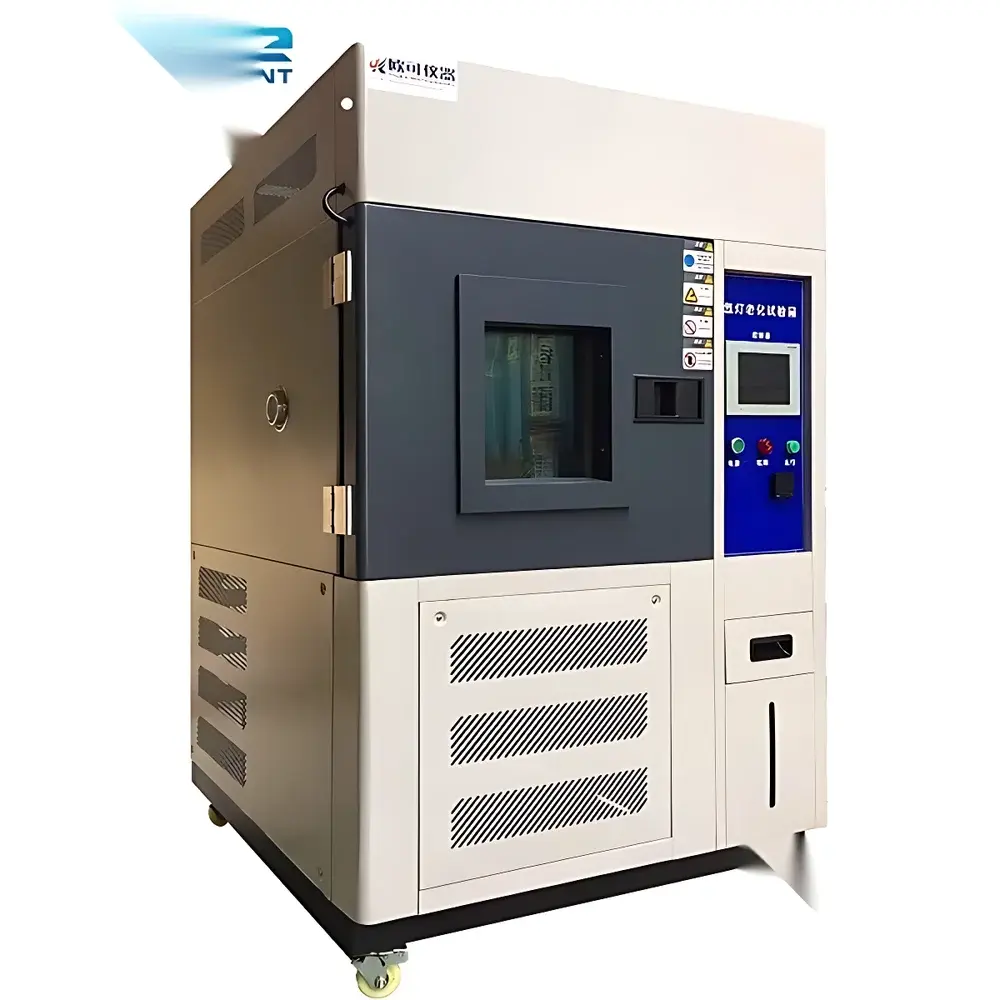
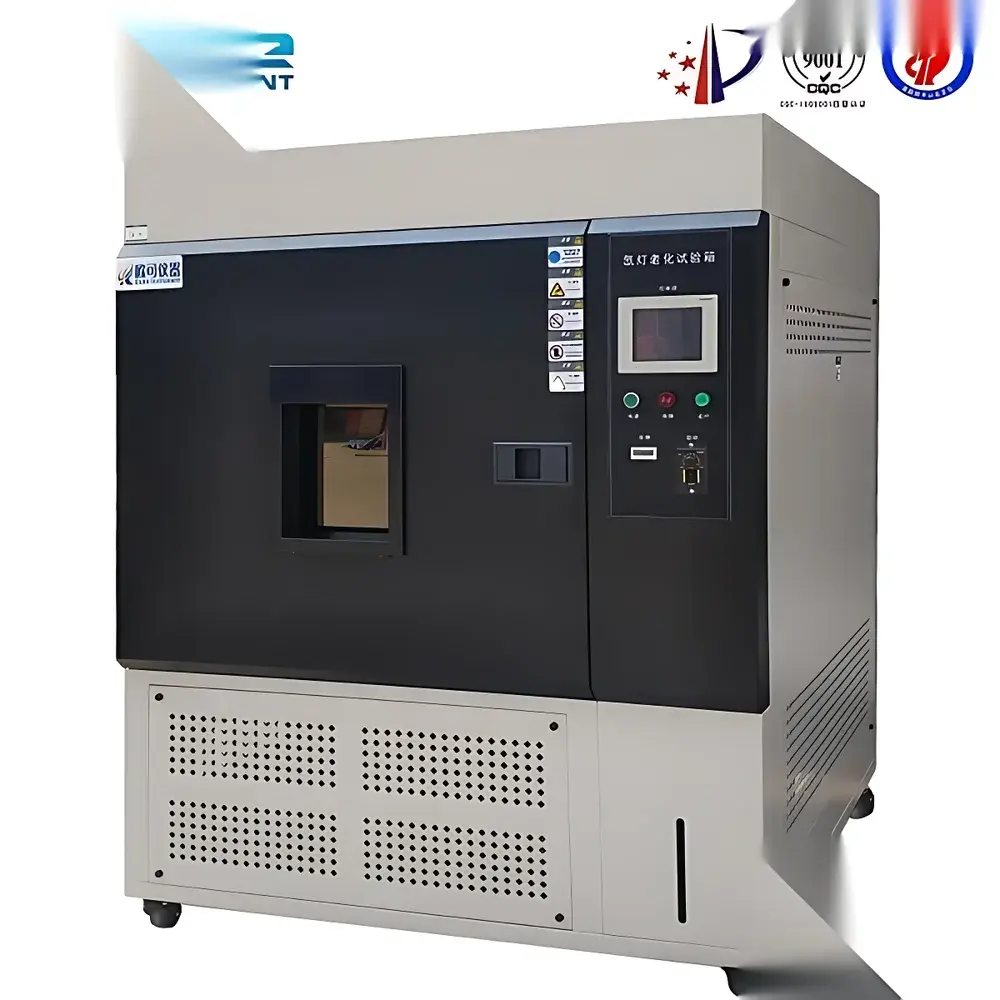
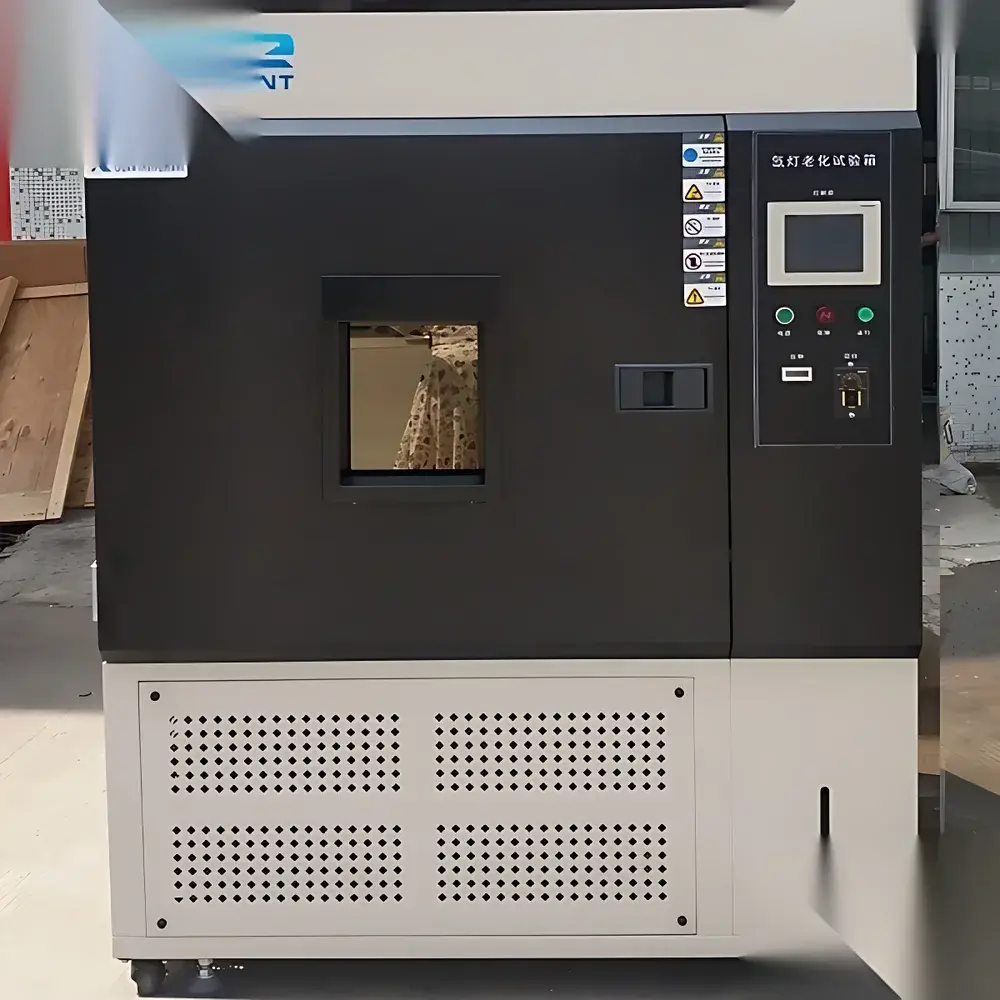
Xenon Arc Weathering Test Chamber – Air-Cooled Type
| Brand | OEM |
|---|---|
| Origin | Imported |
| Manufacturer Type | Authorized Distributor |
| Price | USD 5,300 (FOB) |
| Standards Compliance | ISO 4892-2, ASTM G155, GB/T 16422.2, GB/T 8427, GB/T 14576, USP <661>, FDA 21 CFR Part 11 (software optional) |
| Internal Dimensions (L×W×H, cm) | 50×50×40 / 50×75×60 / 80×80×80 / 100×100×100 |
| Temperature Range | Chamber 0–150°C, Black Panel 40–85°C |
| Humidity Range | 20–75% RH (light cycle), 20–98% RH (dark cycle) |
| Control Accuracy | ±0.5°C (temp), ±2.0% RH (humidity) |
| Uniformity | ±2.0°C (temp), ±3.0% RH (humidity) |
| Irradiance | 550 W/m² ±10% (300–800 nm), 1000 W/m² ±10% (300–1200 nm) |
| Xenon Lamp Power | 1.8 kW / 2.5 kW / 6 kW (lamp life: ≥1500 h) |
| Spray Cycle | 1–999 min (intermittent or continuous), pressure 70–127 kPa |
| Sample Mounting | Dual-layer stainless steel mesh tray or 500 mm diameter rotating drum (0–3 rpm) |
| Construction | Interior—SUS304 stainless steel |
| Power Supply | AC 380 V ±5%, 50 Hz ±0.5 Hz |
Overview
The Air-Cooled Xenon Arc Weathering Test Chamber is a precision-engineered environmental simulation system designed to replicate the complex synergistic effects of solar radiation, temperature, and humidity on polymeric, textile, coating, and automotive materials. Utilizing a high-intensity xenon arc lamp with spectral output closely matching natural sunlight (300–1200 nm), this chamber enables accelerated weathering evaluation under controlled irradiance, black panel temperature, relative humidity, and wetting cycles. Unlike water-cooled systems, its air-cooled architecture eliminates dependency on external chilled water infrastructure—making it ideal for laboratories with limited utility capacity while maintaining thermal stability and long-term irradiance consistency. The chamber operates in accordance with internationally recognized exposure protocols including ISO 4892-2, ASTM G155, and GB/T 16422.2, supporting both open-flame and flame-retardant material qualification workflows.
Key Features
- Triple-parameter environmental control: independent regulation of irradiance (550/1000 W/m²), black panel temperature (40–85°C), and relative humidity (20–98% RH) across light/dark cycles
- High-fidelity spectral filtering: quartz envelope + borosilicate outer filter combination ensures UV cutoff at 295 nm and visible/NIR transmission alignment per CIE No. 85 and ISO 4892-2 requirements
- Dual-mode sample exposure: configurable flat-bed mesh trays (2-tier) or motorized 500 mm diameter rotating drum (0–3 rpm) for uniform angular irradiation distribution
- Programmable spray system: adjustable intermittent/continuous water application (1–999 min) with calibrated pressure (70–127 kPa) and deionized water compatibility
- Robust thermal management: forced-air convection cooling with PID-controlled fan speed modulation to sustain stable lamp junction temperature and irradiance output over 1500-hour lamp service life
- Full-spectrum irradiance monitoring: integrated calibrated photodiode sensor with real-time feedback loop for automatic lamp power compensation
Sample Compatibility & Compliance
This chamber accommodates rigid and flexible specimens up to 100 × 100 × 100 cm (OK-XD-1000 model), including coated panels, fabric swatches, molded plastic components, LED housings, and automotive interior trim. All internal surfaces are fabricated from electropolished SUS304 stainless steel to prevent corrosion-induced contamination and ensure traceability in GLP-compliant testing environments. The system supports full audit trails for temperature, humidity, irradiance, and spray events when equipped with optional 21 CFR Part 11-compliant software. It meets material qualification requirements under ISO 4892-2 (xenon arc exposure), ASTM D529 (plastics), GB/T 8427 (textiles), and USP for pharmaceutical packaging stability assessment.
Software & Data Management
Standard operation includes a 7-inch capacitive touchscreen HMI with embedded controller running real-time Linux OS. Optional PC-based software (Windows 10/11 compatible) provides full test method scripting, multi-channel data logging (1-second resolution), trend analysis, alarm history, and PDF report generation. All digital records include time-stamped operator ID, parameter setpoints, deviations, and calibration metadata—fully compliant with ISO/IEC 17025 documentation requirements and FDA 21 CFR Part 11 electronic signature standards when configured with role-based access and audit trail encryption.
Applications
- Accelerated colorfastness evaluation of dyed textiles and leather under simulated daylight + rain conditions (GB/T 8427, ISO 105-B02)
- UV degradation kinetics of automotive clearcoats and headlamp polycarbonate lenses (SAE J2527)
- Photostability profiling of medical device polymers exposed to hospital lighting and sterilization cycles
- Outdoor durability validation of architectural coatings and façade composites per ISO 11341
- Light-induced hydrolysis resistance testing of biodegradable films used in agricultural mulch applications
- Correlation studies between xenon arc exposure and natural outdoor aging using Q-SUN reference datasets
FAQ
What is the difference between air-cooled and water-cooled xenon arc chambers?
Air-cooled systems use forced convection and optimized lamp housing geometry to dissipate heat without external chillers—reducing installation footprint and operational complexity. Water-cooled variants offer higher maximum irradiance but require dedicated plumbing and cooling tower integration.
Can this chamber perform cyclic tests with alternating light/dark and wet/dry phases?
Yes. The controller supports fully programmable multi-step profiles with independent setpoints for irradiance, black panel temperature, chamber humidity, and spray timing—enabling replication of ASTM G155 Cycle 1–10 and ISO 4892-2 Method A/B protocols.
Is lamp spectral output certified and traceable to NIST standards?
Each xenon lamp is supplied with individual spectral irradiance certification (300–1200 nm, ±2 nm resolution) traceable to NIST SRM 2241 and calibrated against a reference spectroradiometer prior to shipment.
How often does the xenon lamp require replacement?
Rated service life is ≥1500 hours at nominal irradiance. Actual replacement interval depends on operating intensity, duty cycle, and cooling efficiency—typically monitored via integrated irradiance decay compensation algorithm.
Does the chamber support remote monitoring and alarm notification?
Optional Ethernet/Wi-Fi module enables SNMP-based network integration, email/SMS alerts for out-of-spec conditions, and secure web-based access to live parameters and historical logs.



