
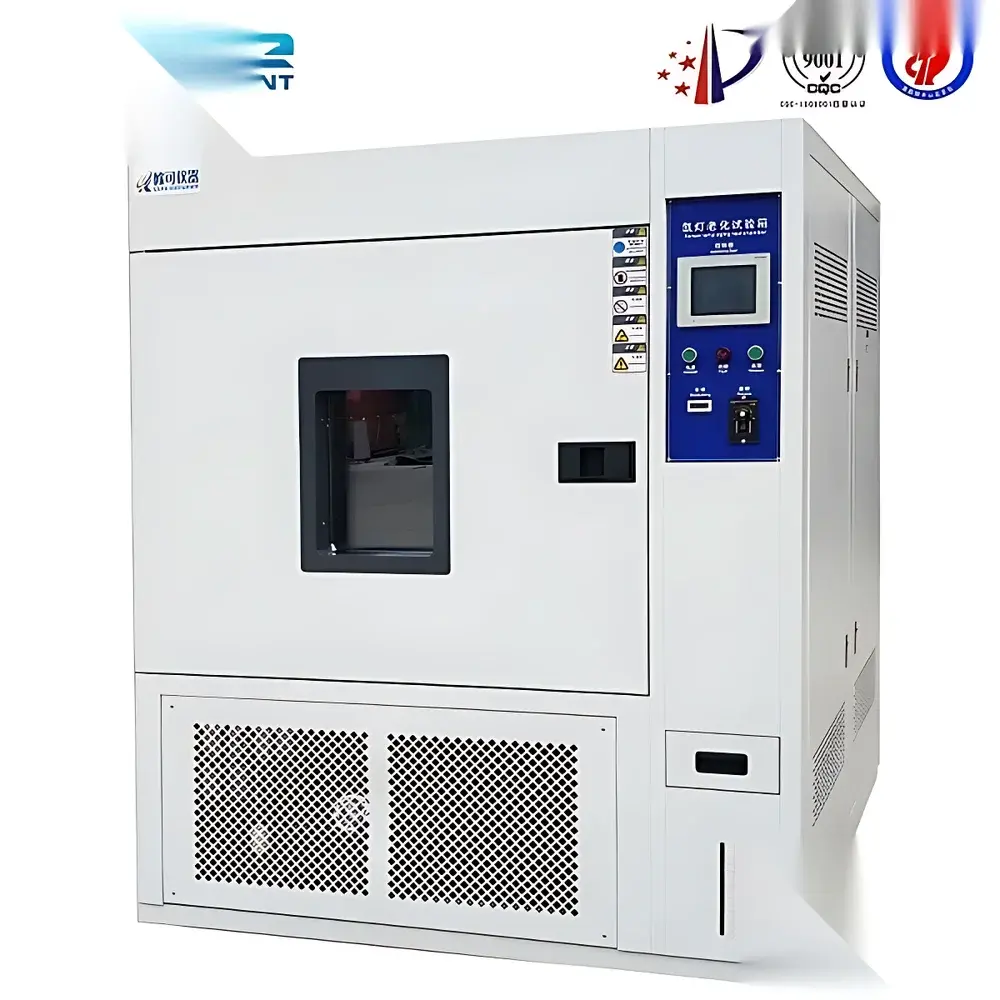
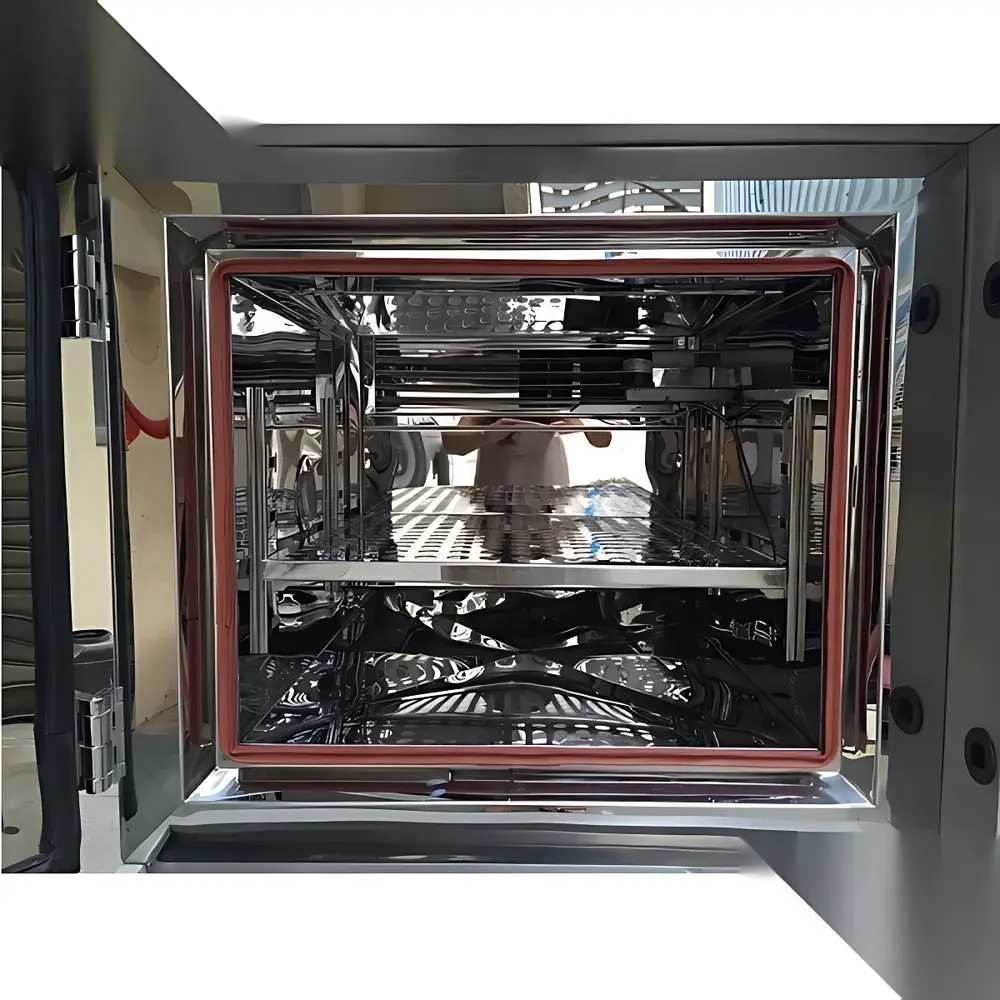
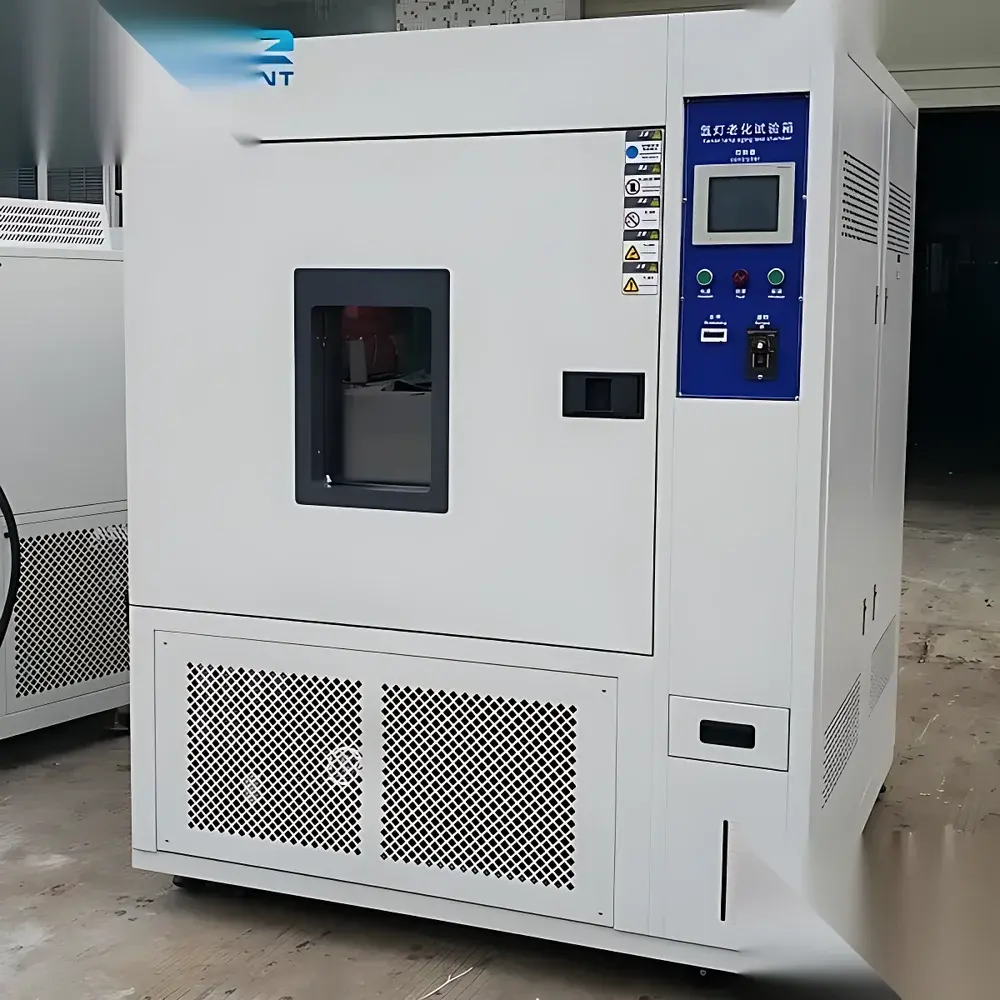
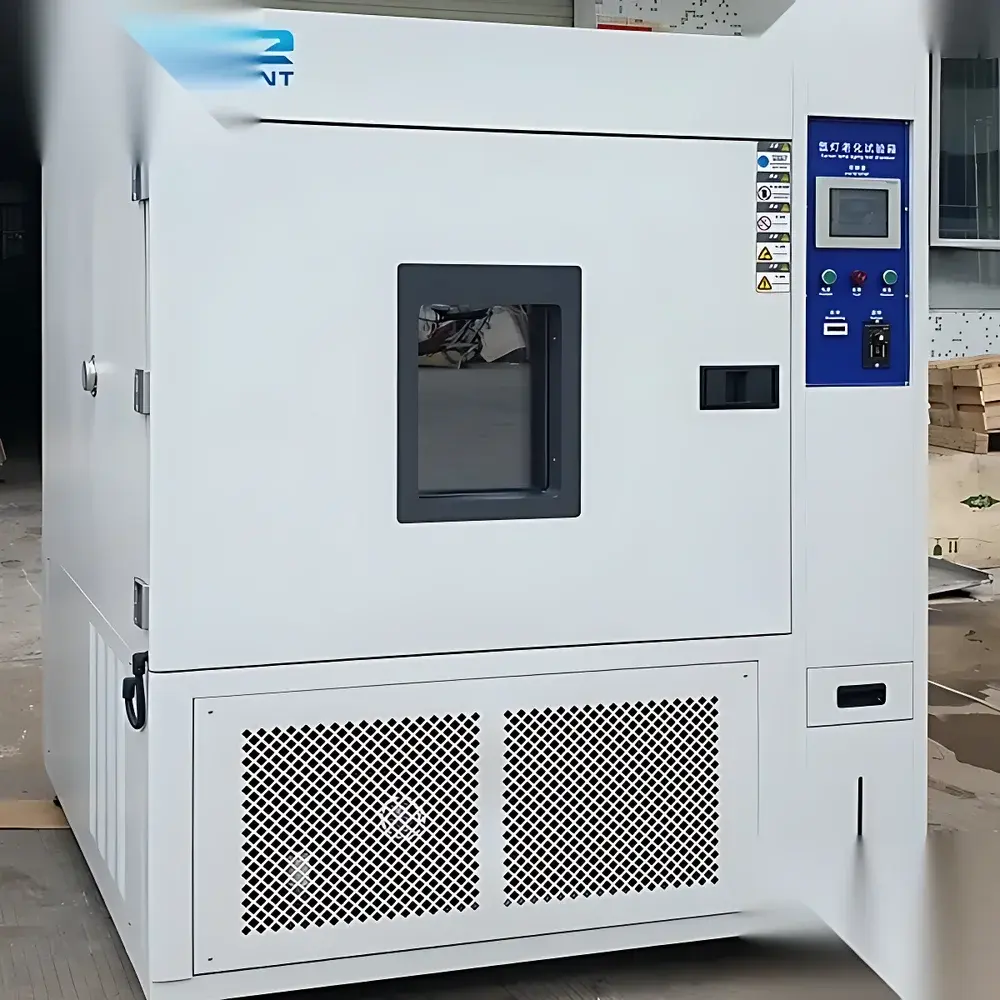
Xenon Arc Weathering Test Chamber – Custom-Engineered Environmental Test System
| Brand | OEM / Custom-Built |
|---|---|
| Origin | Imported |
| Manufacturer Type | Authorized Distributor |
| Price | USD 5,200 (FOB, indicative only |
Overview
The Xenon Arc Weathering Test Chamber is a precision-engineered environmental simulation system designed to replicate the full solar spectrum—including UV, visible, and near-infrared radiation—using high-intensity xenon arc lamps. Based on ASTM G155, ISO 4892-2, and SAE J2527 standards, this chamber accelerates material degradation processes such as photooxidation, chalking, fading, cracking, and gloss loss under controlled irradiance, temperature, humidity, and wet/dry cycling conditions. Unlike UV fluorescent lamp systems, xenon arc technology delivers spectral power distribution closely matching natural sunlight (CIE No. 85), enabling high-fidelity weathering assessment for polymers, coatings, textiles, automotive interiors, aerospace composites, and architectural façade materials. The system supports both air-cooled and water-cooled lamp configurations, ensuring thermal stability and long-term irradiance consistency across extended test cycles.
Key Features
- Customizable working chamber dimensions: standard internal volume 400 × 1250 × 700 mm (D × W × H), with external envelope 450 × 1350 × 1700 mm
- Temperature control range: ambient +10°C to 70°C (±0.5°C uniformity, ±0.1°C setpoint resolution)
- Relative humidity control: 65–98% RH (±2% RH uniformity, ±1% RH setpoint resolution) via stainless-steel shallow-surface evaporative humidifier
- Xenon lamp system: 6 kW air- or water-cooled lamp assembly with spectral output filtered to 295–330 nm (UV cutoff) and calibrated irradiance of 1000 W/m² (≈1000 µW/cm² at 340 nm)
- Sample-to-lamp distance: fixed at 240 mm to ensure reproducible radiant exposure per ISO 4892-2 Annex A
- Programmable irradiation/condensation cycles: independent timing for light exposure (1–9999 h 59 min), dark condensation (1–240 min interval), and spray phases
- Black panel temperature monitoring: dual thermocouple-equipped black panel sensor compliant with ASTM G147 requirements
- Control architecture: Siemens S7-1200 PLC integrated with Weintek cMT Series color touchscreen HMI; supports data logging, alarm history, and real-time parameter trending
- Cooling options: configurable for forced-air or deionized-water circulation cooling based on facility infrastructure and test duration requirements
Sample Compatibility & Compliance
This chamber accommodates flat-panel specimens up to 1200 mm wide and 700 mm high, with standardized mounting fixtures for ISO 11341, ASTM D4329, and GB/T 16422.2-compliant exposure arrays. All internal surfaces are electropolished stainless steel (AISI 316L) to resist corrosion from condensate and chemical off-gassing. The system meets electromagnetic compatibility (EMC) per IEC 61000-6-3 and safety requirements per IEC 61010-1. Optional validation packages include IQ/OQ documentation aligned with GLP and ISO/IEC 17025 laboratory accreditation frameworks. Full traceability of irradiance calibration is maintained through NIST-traceable spectroradiometer verification reports issued annually.
Software & Data Management
The embedded control firmware provides password-protected user levels (Operator, Technician, Administrator) and audit-trail functionality compliant with FDA 21 CFR Part 11 for electronic records and signatures. All process data—including chamber temperature, RH, irradiance, black panel temperature, and cycle stage—are timestamped and stored internally for ≥30 days. Export formats include CSV and PDF reports with embedded metadata (test ID, operator, start/end time, deviation flags). Optional Ethernet/IP or Modbus TCP interfaces enable integration into centralized MES or LIMS platforms. Remote monitoring via secure HTTPS web interface is available with optional industrial firewall configuration.
Applications
- Automotive: Accelerated aging of instrument panels, exterior trim, headlamp lenses, and sealants per GMW14124 and Ford CETP 00.00-L-467
- Aerospace: UV resistance evaluation of composite resins, cabin interior fabrics, and transparent polycarbonate glazing (ASTM D7869)
- Coatings & Inks: Correlation studies between accelerated xenon exposure and real-world service life in marine, desert, and subtropical climates
- Photovoltaics: Degradation analysis of encapsulant EVA, backsheet fluoropolymers, and anti-reflective coatings under UV-rich spectra
- Medical Devices: ISO 10993-12 biocompatibility testing of polymer housings exposed to simulated daylight conditions
- Building Materials: ASTM D4459 compliance testing for PVC siding, roofing membranes, and fiber-cement cladding
FAQ
What standards does this xenon chamber comply with?
It is engineered to meet ASTM G155, ISO 4892-2, SAE J2527, and GB/T 16422.2 for irradiance control, temperature uniformity, and spectral filtering requirements.
Can the chamber be configured for water-cooling if my lab lacks HVAC capacity?
Yes—dual cooling path design allows field-selectable air- or water-cooled operation; water-cooled mode reduces ambient heat load by ~70% versus air-cooled equivalents.
Is irradiance calibration traceable to national metrology institutes?
Each unit ships with a factory-issued irradiance calibration certificate traceable to NIST via accredited third-party spectroradiometry (calibration valid for 12 months).
How is condensation generated without pumps or nozzles?
The system uses gravity-fed, low-energy condensation trays heated to 40–60°C; surface condensation forms naturally on cooled specimen surfaces, replicating dew formation per ASTM G154 Cycle 4.
Do you provide installation qualification (IQ) and operational qualification (OQ) support?
Yes—custom IQ/OQ protocols, executed by certified field engineers, are available upon request and align with ISO/IEC 17025 and GLP documentation requirements.



