
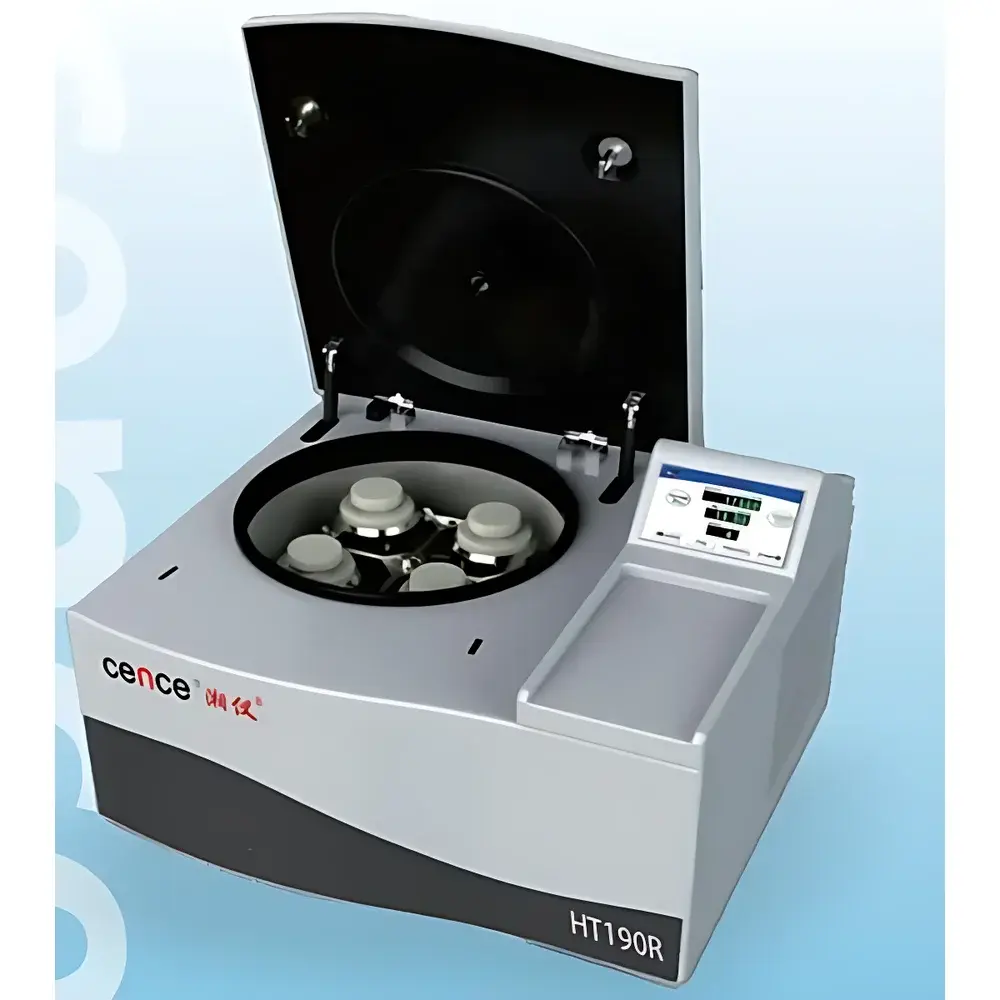
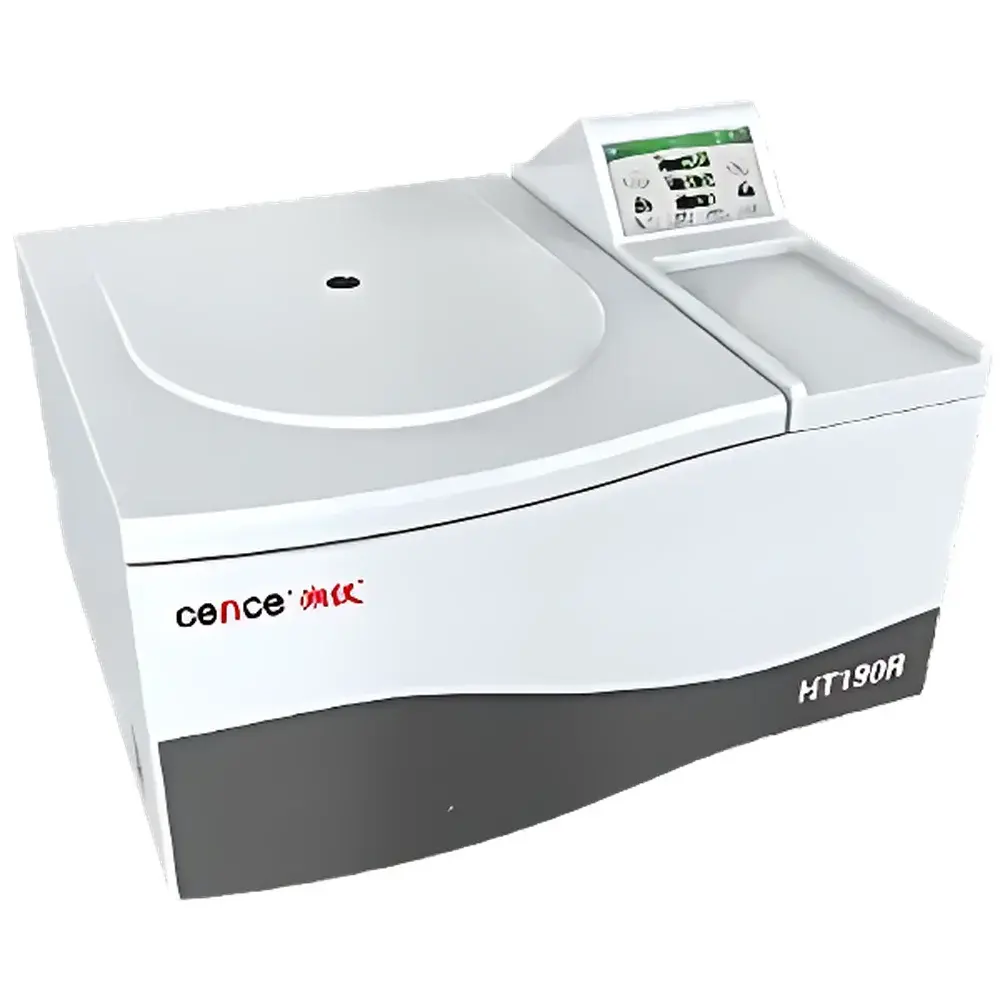
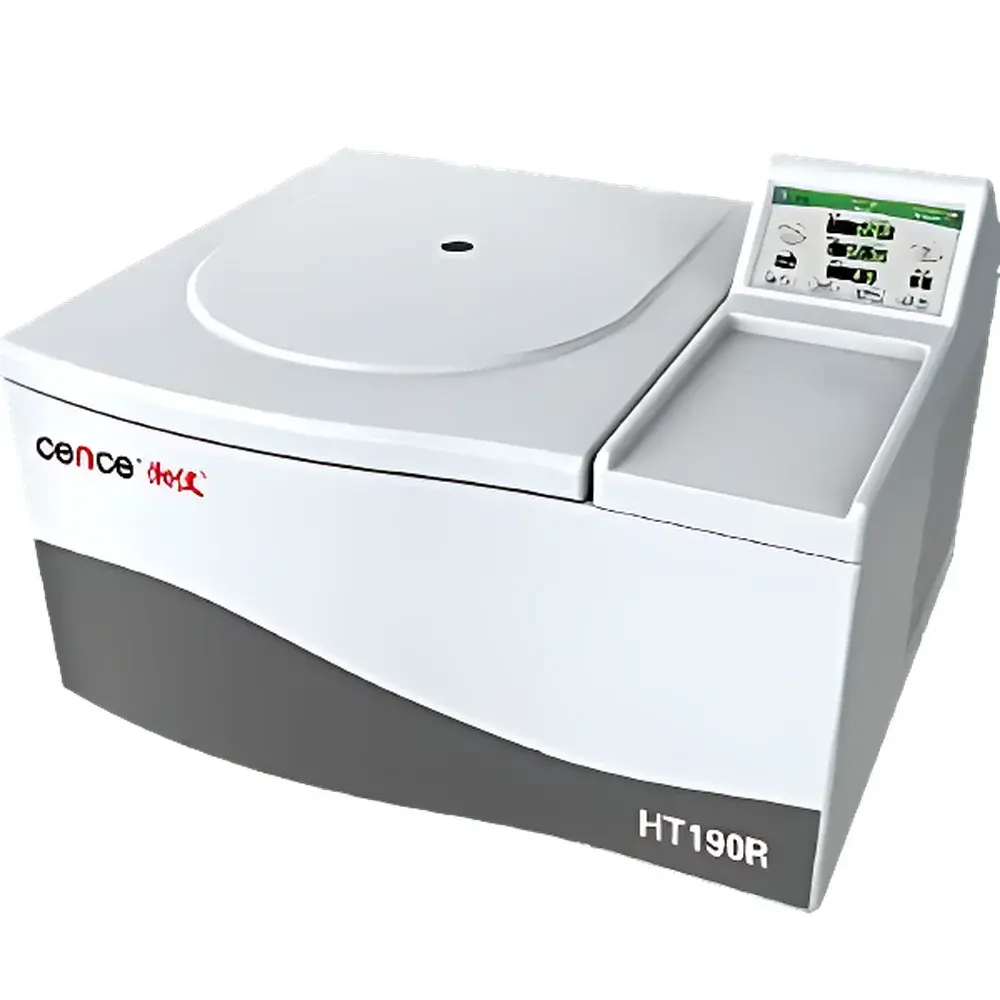
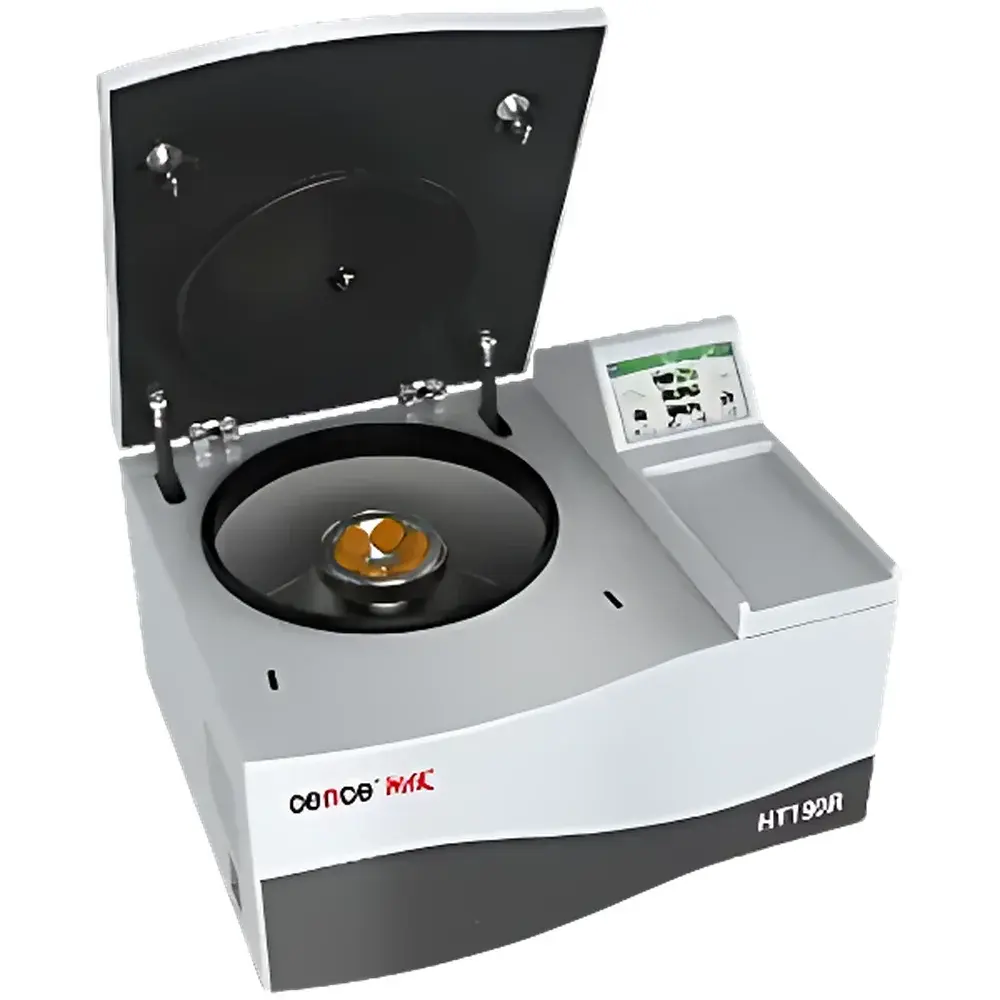
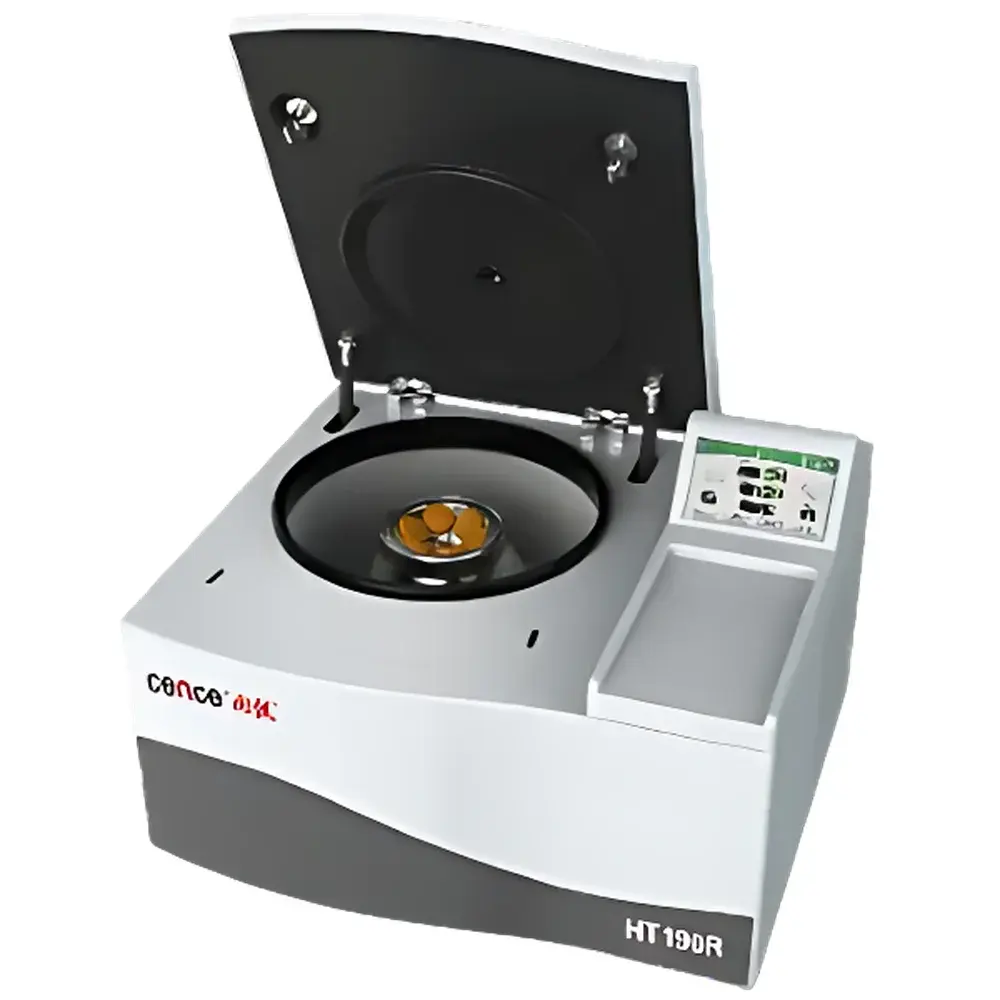
Xiangyi HT190R High-Speed Refrigerated Benchtop Centrifuge
| Brand | Xiangyi |
|---|---|
| Origin | Hunan, China |
| Manufacturer Type | Direct Manufacturer |
| Product Category | Domestic |
| Model | HT190R |
| Instrument Type | Benchtop Centrifuge |
| Speed Range | High-Speed (10,000–30,000 rpm) |
| Function | Refrigerated Centrifuge |
| Configuration | Fixed-Angle Rotor Centrifuge |
| Separation Level | Cellular & Bacterial |
| Maximum Capacity | 4 × 250 mL |
| Maximum Speed | 19,000 rpm |
| Maximum RCF | 31,006 × g |
| Dimensions (W×D×H) | 710 × 560 × 450 mm |
Overview
The Xiangyi HT190R is a high-performance refrigerated benchtop centrifuge engineered for precision separation of biological samples requiring both high relative centrifugal force (RCF) and precise temperature control. Utilizing a brushless frequency-controlled motor and closed-loop refrigeration system, the HT190R maintains sample integrity across extended runs by stabilizing rotor chamber temperatures between –20 °C and +40 °C (±1 °C accuracy at 4 °C). Its design conforms to core mechanical and thermal safety principles of ISO 13485-aligned laboratory equipment manufacturing, supporting routine applications in molecular biology, clinical diagnostics, microbiology, and biopharmaceutical QC labs where reproducible pelleting of cells, bacteria, subcellular organelles, and macromolecular complexes is critical.
Key Features
- Refrigerated operation with rapid cooling (≤15 min from ambient to –20 °C) and active heat dissipation during high-speed runs
- 7-inch capacitive touchscreen interface with real-time dual-display: set parameters (speed, time, temperature, acceleration/deceleration profiles) and live operational metrics (actual rpm, RCF, elapsed time, chamber temp, error codes) simultaneously
- Comprehensive program management: up to 999 user-defined protocols, each supporting descriptive metadata (sample type, operator ID, project code), multi-step sequences, and audit-ready timestamps
- Five-stage sequential centrifugation capability for density gradient or staged pelleting workflows
- Advanced rotor recognition via embedded RFID tags — automatically validates rotor model, maximum speed rating, and safety limits before run initiation
- Multi-layer safety architecture: automatic imbalance detection (≤1.5 g mass differential per bucket), lid interlock with mechanical and electronic redundancy, overspeed cutoff, and rotor lifetime tracking based on cumulative run hours and stress cycles
- Customizable deceleration profiles: 11 programmable brake curves to minimize resuspension of sensitive pellets; 10 acceleration profiles for controlled ramp-up in viscous or temperature-sensitive samples
Sample Compatibility & Compliance
The HT190R accommodates a broad range of primary labware without adapter modification: 0.2 mL PCR tubes, 1.5–2.0 mL microcentrifuge tubes, 15–50 mL conical tubes, 250 mL bottles, and standard-format microtiter plates (96-well, 384-well, deep-well). It supports fixed-angle rotors (12 models available) optimized for high-RCF pelleting and horizontal rotors (4 models) for rate-zonal separations. All rotors are certified to ISO 15528 and undergo static/dynamic balancing per ISO 21509. The system meets IEC 61010-1:2010 for electrical safety and includes documentation traceability required under GLP and GMP environments. Optional electronic logbook export complies with FDA 21 CFR Part 11 requirements when paired with validated software modules.
Software & Data Management
Internal non-volatile memory retains ≥6 months of full-cycle logs, including start/stop timestamps, parameter sets, thermal history, fault events, and rotor usage counters. Data export is supported via USB 2.0 port in CSV format for integration into LIMS or ELN systems. The firmware supports multilingual UI (English, German, French, Spanish, Japanese, Chinese) and enables role-based access control (administrator, technician, operator) with password protection for protocol editing and system configuration. Audit trail generation includes immutable records of user actions, parameter changes, and emergency stops — essential for regulatory review in clinical or pharmaceutical settings.
Applications
- Isolation of bacterial pellets (E. coli, Bacillus spp.) and yeast cells from culture broths
- Clarification of mammalian cell lysates prior to chromatography or electrophoresis
- Preparation of mitochondrial, nuclear, and membrane fractions using differential centrifugation
- Concentration of viral particles and exosomes from serum or conditioned media
- Routine blood fractionation (plasma, PBMCs, granulocytes) in diagnostic workflows
- High-throughput nucleic acid purification in automated extraction platforms
FAQ
What is the minimum operating temperature and how quickly does the chamber reach it?
The refrigeration system achieves –20 °C from ambient (25 °C) in ≤15 minutes under no-load conditions.
Does the HT190R support validation documentation for regulated laboratories?
Yes — factory calibration certificates, IQ/OQ templates, and traceable rotor certification documents are provided upon request.
Can the centrifuge be integrated into a networked lab environment?
While standalone operation is standard, optional RS-232 or Ethernet interfaces enable remote monitoring and command execution via SCADA-compatible protocols.
How is rotor lifetime monitored and enforced?
Each rotor contains an RFID chip storing manufacturing date, material batch, and rated cycle life; the system disables operation if usage exceeds defined thresholds or if mismatched rotors are installed.
Is there a service interval recommendation for preventive maintenance?
Xiangyi recommends annual calibration verification and bearing inspection; full service kits and OEM-certified technician dispatch are available globally through authorized partners.



