
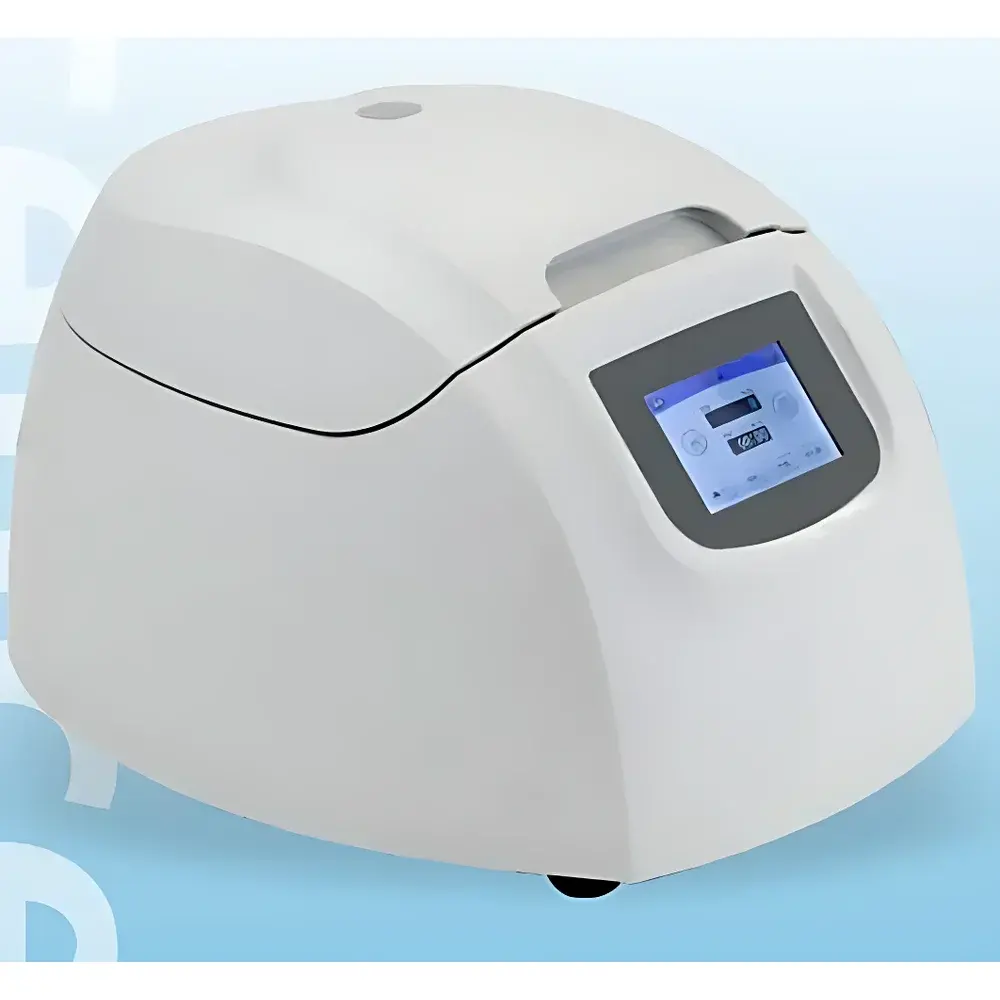
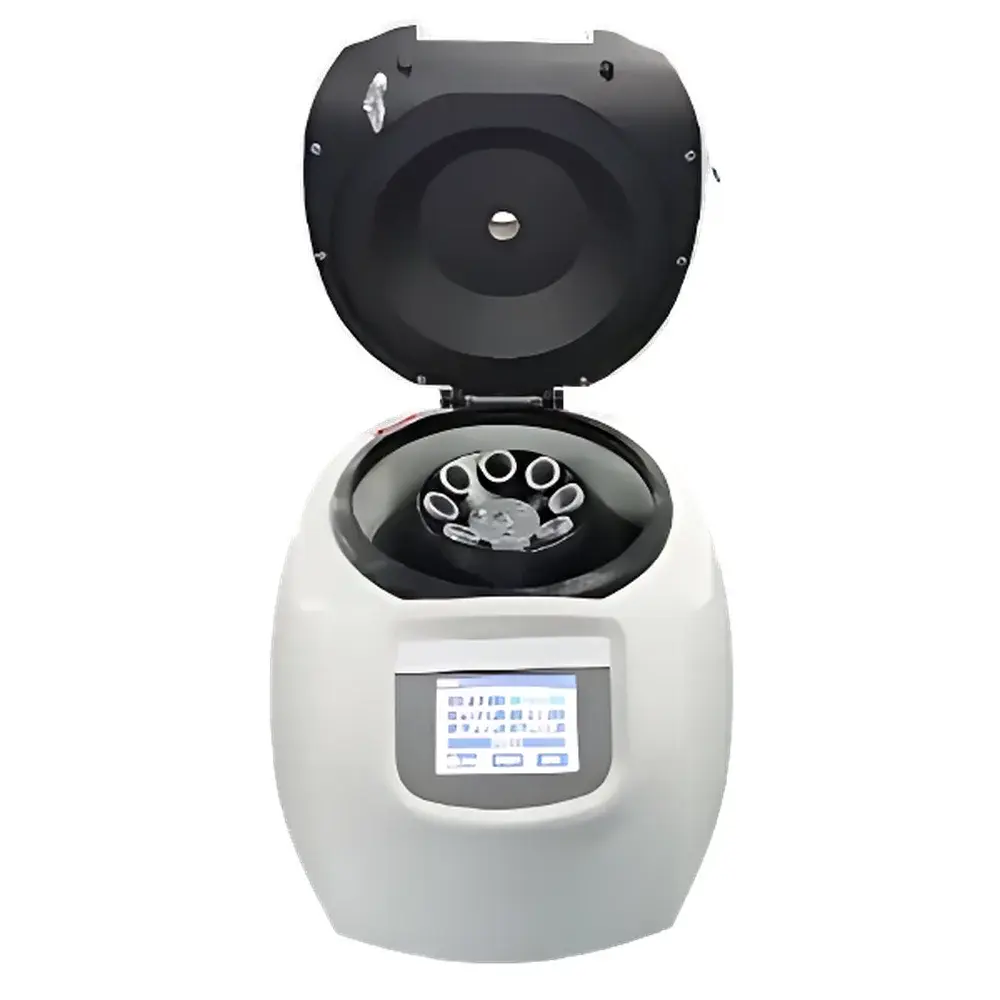
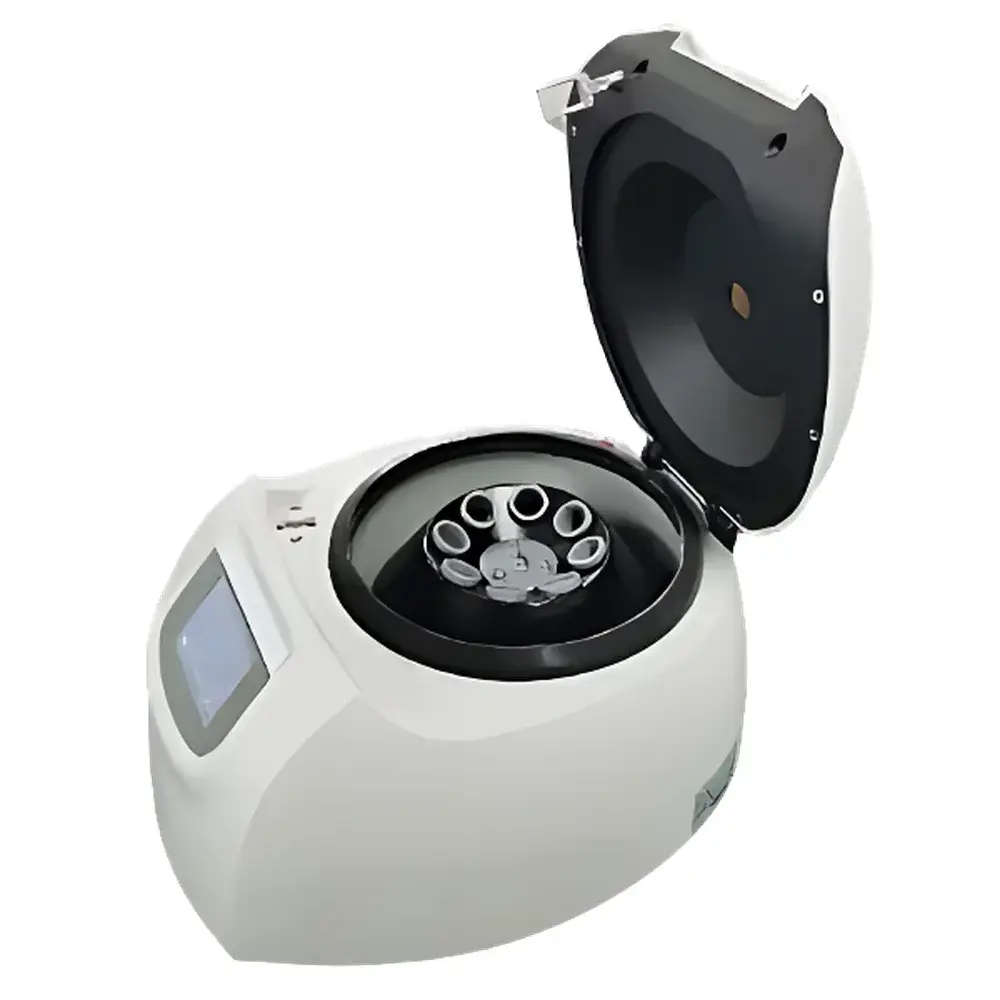
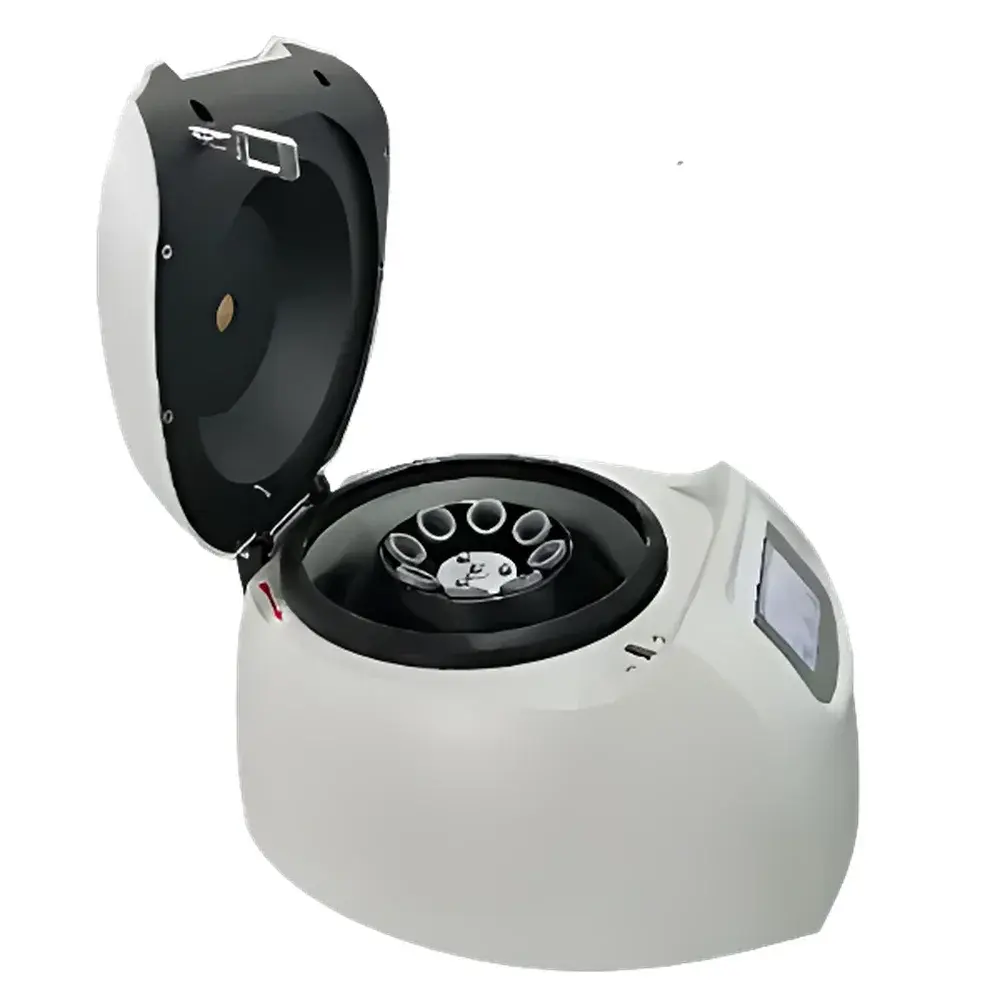
Xiangyi TD4 Benchtop Low-Speed Centrifuge
| Brand | Xiangyi |
|---|---|
| Origin | Hunan, China |
| Manufacturer Type | Manufacturer |
| Product Category | Domestic |
| Model | TD4 |
| Instrument Type | Benchtop Centrifuge |
| Speed Range | Up to 4000 rpm |
| Max RCF | 1980 × g |
| Max Capacity | 8 × 15 mL |
| Dimensions (W×D×H) | 320 × 370 × 235 mm |
| Noise Level | <62 dB(A) |
| Drive System | Microprocessor-Controlled DC Brushless Motor |
| Display | 5-inch HD Touchscreen |
| Safety Features | Lid Interlock, Overspeed Detection, Rotor Recognition (via parameter validation), Real-time Fault Diagnostics |
| Timer Resolution | 1 s for durations <60 s |
| Compliance | Designed per IEC 61010-1 (Safety Requirements for Electrical Equipment for Measurement, Control, and Laboratory Use) |
Overview
The Xiangyi TD4 Benchtop Low-Speed Centrifuge is a microprocessor-controlled, brushless DC motor-driven instrument engineered for routine sedimentation and separation tasks in clinical, biochemical, and cosmetic laboratory environments. Operating on the principle of centrifugal force generation through rotational acceleration, the TD4 delivers controlled relative centrifugal force (RCF) up to 1980 × g at its maximum speed of 4000 rpm—optimized for pelleting mammalian cells, bacterial cultures, blood components (e.g., serum/plasma separation), and suspended particulates in low-viscosity media. Its compact footprint (320 × 370 × 235 mm) and noise-dampened mechanical architecture (<62 dB(A)) enable seamless integration into shared lab spaces, biosafety cabinets, or point-of-care settings where spatial constraints and acoustic performance are critical operational considerations.
Key Features
- Brushless DC motor drive ensures extended service life, minimal maintenance, and consistent torque delivery across the full speed range (200–4000 rpm in 10 rpm increments).
- Real-time parameter adjustment during active runs—speed, time, and acceleration/deceleration profiles can be modified without rotor stoppage, supporting iterative protocol optimization.
- Integrated safety architecture includes electromagnetic lid interlock with mechanical redundancy, overspeed monitoring, and real-time rotor status verification via firmware-based validation—not physical RFID—but enforced through speed-capacity pairing logic aligned with ISO 21501-4 rotor classification conventions.
- High-resolution 5-inch HD capacitive touchscreen provides simultaneous display of setpoints and live operational parameters (current rpm, elapsed time, remaining time, RCF, and fault codes), with intuitive icon-based navigation and multi-language UI support (English, Spanish, French, Arabic).
- Intelligent timer system dynamically switches resolution: displays countdown in seconds when remaining time is under 60 s, improving precision for short-spin applications such as platelet-rich plasma (PRP) preparation or rapid cell washing steps.
- Acoustic enclosure design incorporates vibration-damping elastomeric mounts and aerodynamically profiled rotor chamber geometry to suppress broadband mechanical noise—validated per ISO 3744 acoustic emission testing methodology.
Sample Compatibility & Compliance
The TD4 accommodates standard conical-bottom polypropylene tubes (up to 15 mL) in an 8-place angular rotor configuration, supporting common tube formats including Falcon® 15 mL, Eppendorf® 15 mL, and equivalent certified sterile vessels. It is compatible with non-sterile and sterilizable rotors (autoclavable at 121 °C, 20 min), and meets essential electrical safety requirements under IEC 61010-1:2010 + A1:2019 for laboratory equipment. While not certified for GLP/GMP-regulated production environments, its firmware supports audit-ready operation logs (timestamped start/stop/fault events) suitable for internal quality documentation in CLIA-waived or ISO 15189-aligned clinical labs. No CE marking or FDA 510(k) clearance is claimed; users are responsible for local regulatory validation per national medical device or lab equipment directives.
Software & Data Management
The TD4 operates autonomously without external PC connectivity. All operational data—including run history (date/time, rotor ID, speed, duration, RCF), error logs, and calibration timestamps—are stored internally in non-volatile memory (retention >10 years). The touchscreen interface allows export of run records via USB flash drive in CSV format for traceability and record retention. No cloud synchronization or remote monitoring capability is provided. Firmware updates are performed manually via USB, with version control and checksum verification to ensure integrity—consistent with ISO/IEC 17025 clause 5.9.2 on software validation for measurement systems.
Applications
- Clinical diagnostics: Serum/plasma separation from whole blood (e.g., for ELISA, chemistry panels, coagulation assays).
- Cell culture workflows: Harvesting adherent or suspension cells (HEK293, CHO, Jurkat) prior to lysis or cryopreservation.
- Microbiology: Pelleting bacterial cultures (E. coli, S. aureus) for downstream DNA extraction or antibiotic susceptibility testing.
- Aesthetic medicine: Preparation of platelet-rich fibrin (PRF) and autologous conditioned plasma (ACP) in dermatology and regenerative practices.
- Quality control in biomanufacturing: Clarification of low-turbidity buffer solutions or excipient suspensions during formulation development.
FAQ
What is the maximum relative centrifugal force (RCF) achievable with the TD4?
The TD4 achieves a maximum RCF of 1980 × g when operated at 4000 rpm with the standard 8 × 15 mL angular rotor.
Can the TD4 accommodate swing-bucket rotors?
No—the TD4 is configured exclusively for fixed-angle rotors; swing-bucket compatibility is not supported by its mechanical design or firmware.
Is rotor imbalance detection built into the system?
Yes—vibration amplitude thresholds are continuously monitored; if imbalance exceeds ISO 21501-4 Class 2 limits during acceleration, the unit halts and displays “Err-03” with audible alert.
Does the TD4 comply with FDA 21 CFR Part 11 requirements?
No—electronic records generated by the TD4 lack digital signature, audit trail encryption, or role-based access controls required under Part 11; it is intended for non-GxP environments.
What is the warranty period and service coverage scope?
Xiangyi provides a 24-month limited warranty covering parts and labor for defects in materials and workmanship under normal laboratory use conditions; consumables (rotors, tubes) and damage from misuse are excluded.



