
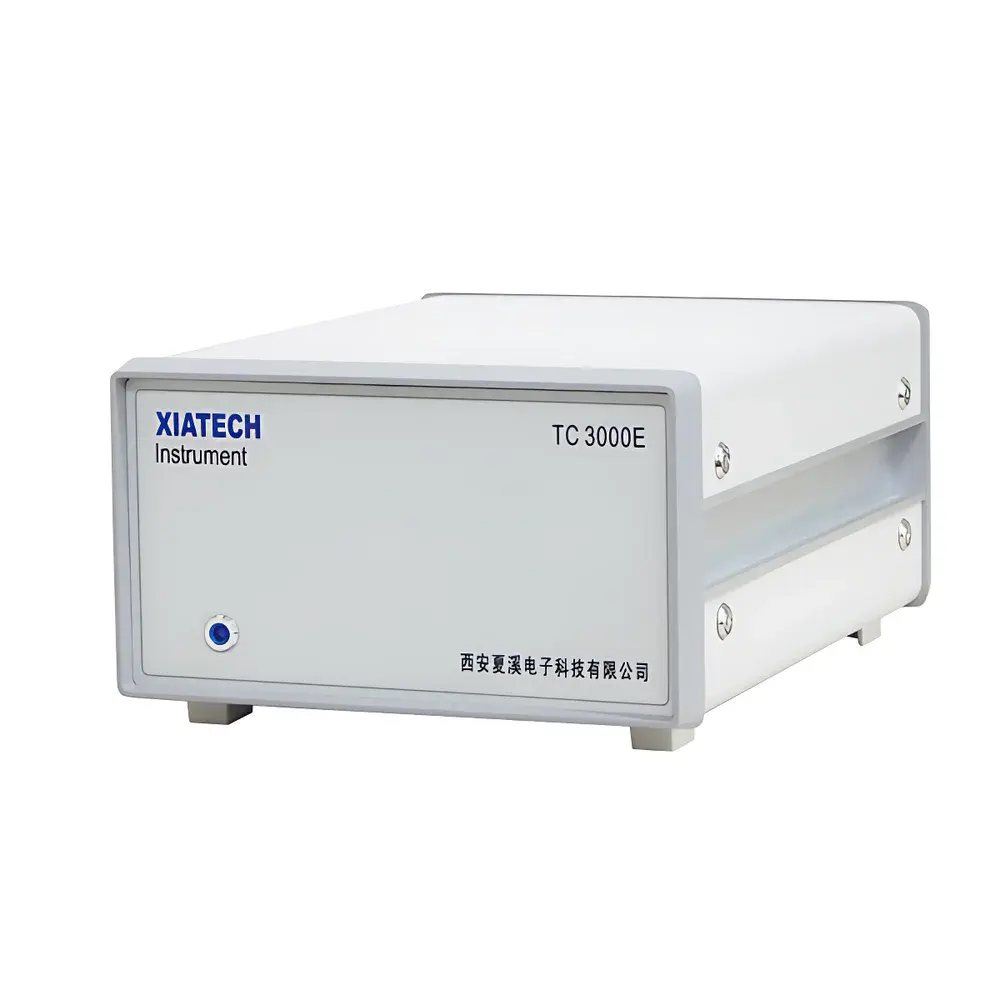
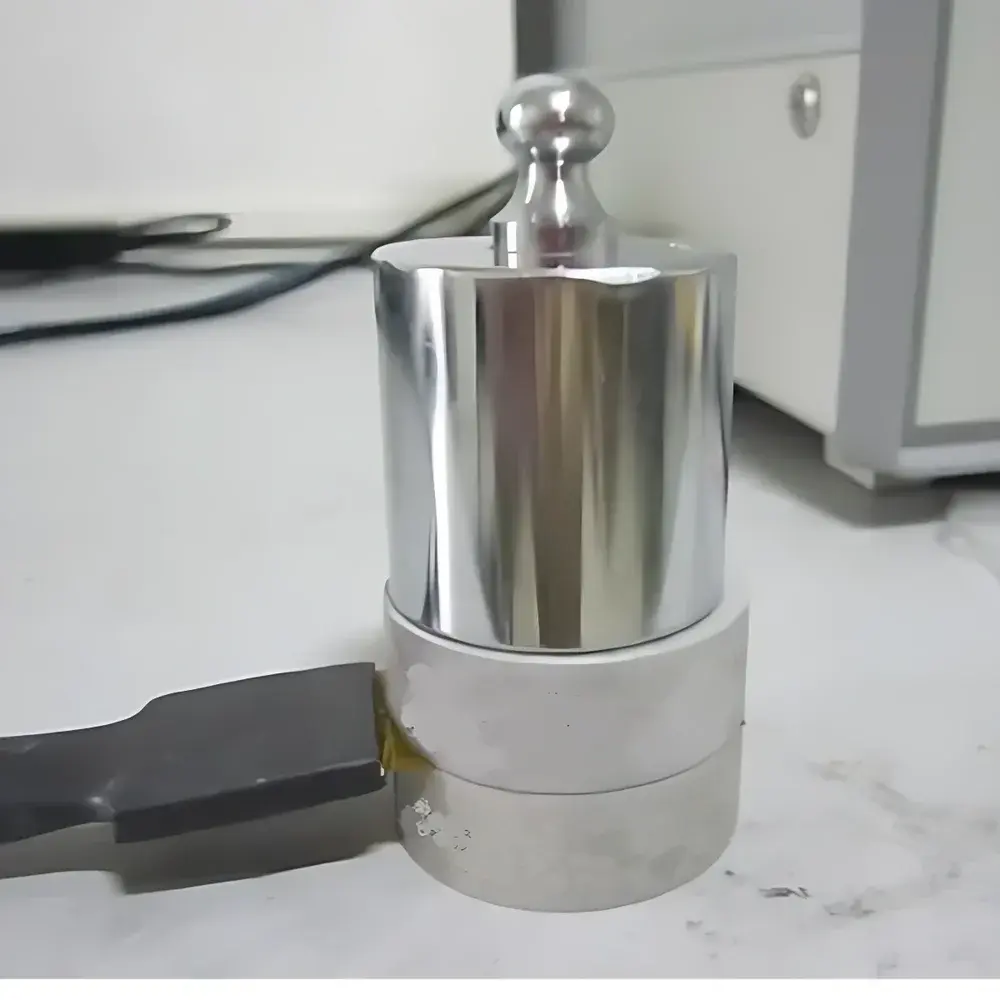
Xiatech TC3000E Transient Hot Wire Thermal Conductivity Analyzer (Educational Edition)
| Brand | Xiatech |
|---|---|
| Origin | Shaanxi, China |
| Model | TC3000E (Educational Edition) |
| Measurement Principle | Transient Hot Wire Method |
| Thermal Conductivity Range | 0.001–50 W/(m·K) (extendable to 100 W/(m·K)) |
| Accuracy | ±3% |
| Repeatability | ±3% |
| Sample Volume | ≥50 mL (liquids/gels/pastes) or ≥25 mm edge length (solids) |
| Dimensions (L×W×H) | 350×250×150 mm |
| Operating Environment | Ambient temperature (20–25 °C), ≤65% RH, air atmosphere |
| Sample Forms | Solids, powders, granules, gels, pastes, liquids |
| Data Interface | USB |
| OS Compatibility | Windows |
| Acquisition Time | 1–20 s |
| Resolution | 0.0005 W/(m·K) |
Overview
The Xiatech TC3000E Transient Hot Wire Thermal Conductivity Analyzer (Educational Edition) is a benchtop instrument engineered for pedagogical clarity and methodological fidelity in thermal property education and entry-level research. It implements the transient hot wire (THW) technique—a standardized, first-principles-based method defined in ISO 22007-2 and ASTM D5930—where a thin, electrically heated platinum wire serves simultaneously as heater and thermometer. During measurement, a constant current pulse heats the wire, and the resulting time-dependent temperature rise (ΔT vs. √t) is recorded. Thermal conductivity (λ) is derived directly from the slope of the linear region in the log(ΔT)–log(t) plot, independent of absolute temperature calibration. This principle eliminates dependence on sample geometry, contact resistance, or interfacial thermal resistance—making TC3000E uniquely suited for heterogeneous, irregular, or soft materials commonly encountered in undergraduate laboratories. Its design prioritizes transparency: students observe real-time voltage/temperature transients, manually verify linearity in raw data plots, and derive λ using fundamental heat conduction theory—reinforcing core concepts in transport phenomena and materials science.
Key Features
- True transient hot wire architecture compliant with ISO 22007-2 Annex A, enabling direct traceability to SI units without empirical calibration curves
- Single-wire probe configuration with integrated Pt100 temperature sensing and precision current sourcing (±0.05% stability)
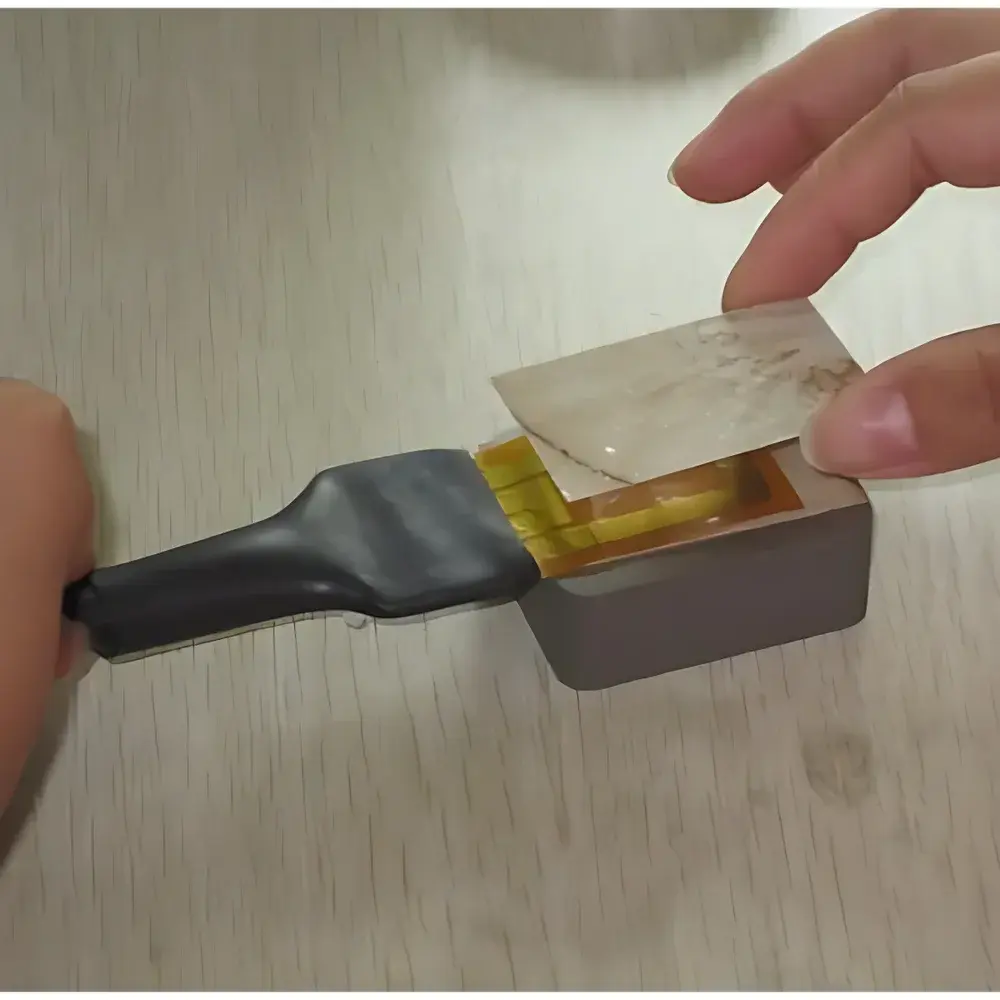
- Minimal sample requirements: solids ≥25 mm edge length; liquids/gels/pastes ≥50 mL—reducing material cost and preparation time for classroom use
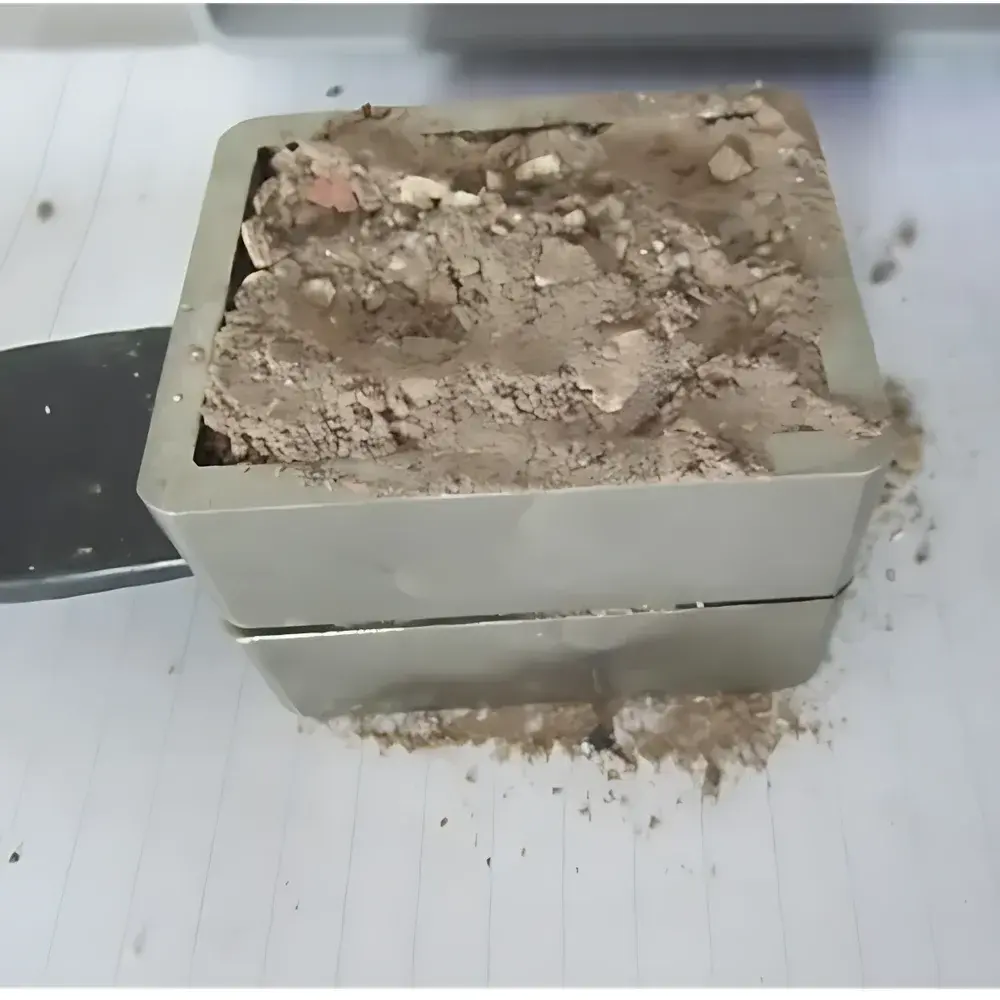
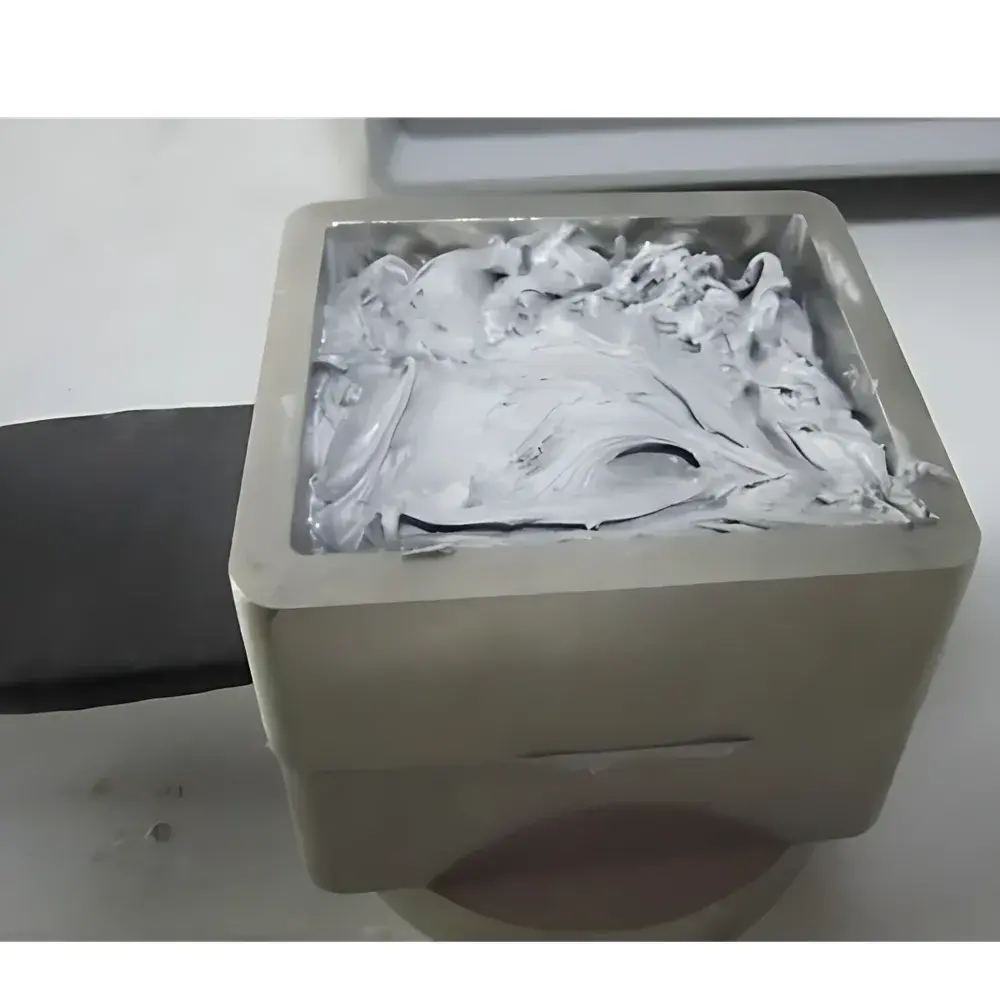
- Geometry-agnostic operation: no dimensional input required for isotropic samples; accommodates irregular shapes, powders, granular beds, and viscous fluids without mold or compression
- Real-time acquisition and visualization software with adjustable pulse duration (1–20 s), enabling optimization for low-λ insulators or high-λ metals
- Rugged aluminum chassis (350 × 250 × 150 mm) with ESD-safe enclosure, designed for repeated student handling in teaching labs
- Embedded USB 2.0 interface and native Windows driver support—no proprietary dongles or runtime dependencies
Sample Compatibility & Compliance
The TC3000E accepts diverse physical states without modification: rigid solids (ceramics, polymers, composites), compliant solids (foams, gels, biological tissues), granular media (metal oxides, catalysts, soils), and Newtonian/non-Newtonian liquids (nanofluids, lubricants, pharmaceutical suspensions). Sample anisotropy must be reported separately per ISO 22007-2 Section 7.2; isotropic assumption applies by default. All measurements are performed under ambient air atmosphere at stable room temperature (20–25 °C, ≤65% RH), eliminating need for vacuum chambers or gas purging—reducing infrastructure requirements for teaching labs. The system meets electromagnetic compatibility (EMC) requirements per IEC 61326-1 for laboratory equipment and adheres to electrical safety standards IEC 61010-1. While not certified for GLP/GMP production environments, its ±3% accuracy and repeatability align with ASTM E1225 validation thresholds for educational instrumentation.
Software & Data Management
Bundled Xiatech TC-Studio v4.x provides full experimental control, real-time signal monitoring, and post-acquisition analysis. Raw voltage vs. time datasets are exported in CSV format for third-party processing (MATLAB, Python, Origin). The software enforces audit-ready practices: each measurement file embeds timestamp, operator ID, sample ID, ambient conditions, and acquisition parameters. Version-controlled firmware updates ensure long-term compatibility. For institutional deployment, optional batch-reporting templates generate PDF lab reports compliant with ABET curriculum documentation standards—including uncertainty propagation per GUM (JCGM 100:2008) and student-submitted derivation worksheets.
Applications
- Undergraduate thermodynamics and materials science labs: validating Fourier’s law, comparing λ across polymer families, quantifying filler loading effects in composites
- Chemical engineering courses: characterizing thermal transport in phase-change materials (PCMs), nanofluids, and heat transfer fluids
- Food science curricula: measuring λ of gels, emulsions, and porous matrices (e.g., cheese, tofu, aerated desserts)
- Geotechnical education: assessing thermal properties of soil simulants and regolith analogs
- Introductory research projects: screening thermal interface materials (TIMs), validating computational models (e.g., effective medium theory), supporting senior design capstones
FAQ
Is the TC3000E suitable for accredited quality control testing?
No—it is designed for educational instruction and exploratory research. For ISO/IEC 17025-compliant QC, refer to Xiatech’s TC3100 series with full metrological traceability and 21 CFR Part 11–enabled software.
Can it measure anisotropic materials like graphite or wood?
Yes, but requires directional sample mounting and separate measurements along principal axes; interpretation follows ISO 22007-2 Annex B for orthotropic solids.
Does the system require calibration standards?
No primary calibration is needed—the THW method is absolute. However, verification using NIST-traceable reference materials (e.g., distilled water, glycerol) is recommended before course deployment.
What training resources accompany the instrument?
Xiatech provides a complete teaching package: instructor manual, student lab worksheets, PowerPoint lecture modules, pre-recorded demo videos, and remote onboarding sessions tailored to course syllabi.
How is data integrity maintained during multi-user lab sessions?
Each user logs in with unique credentials; all measurements are time-stamped, digitally signed, and archived in a tamper-evident folder structure—supporting academic integrity review protocols.
Related Products



