
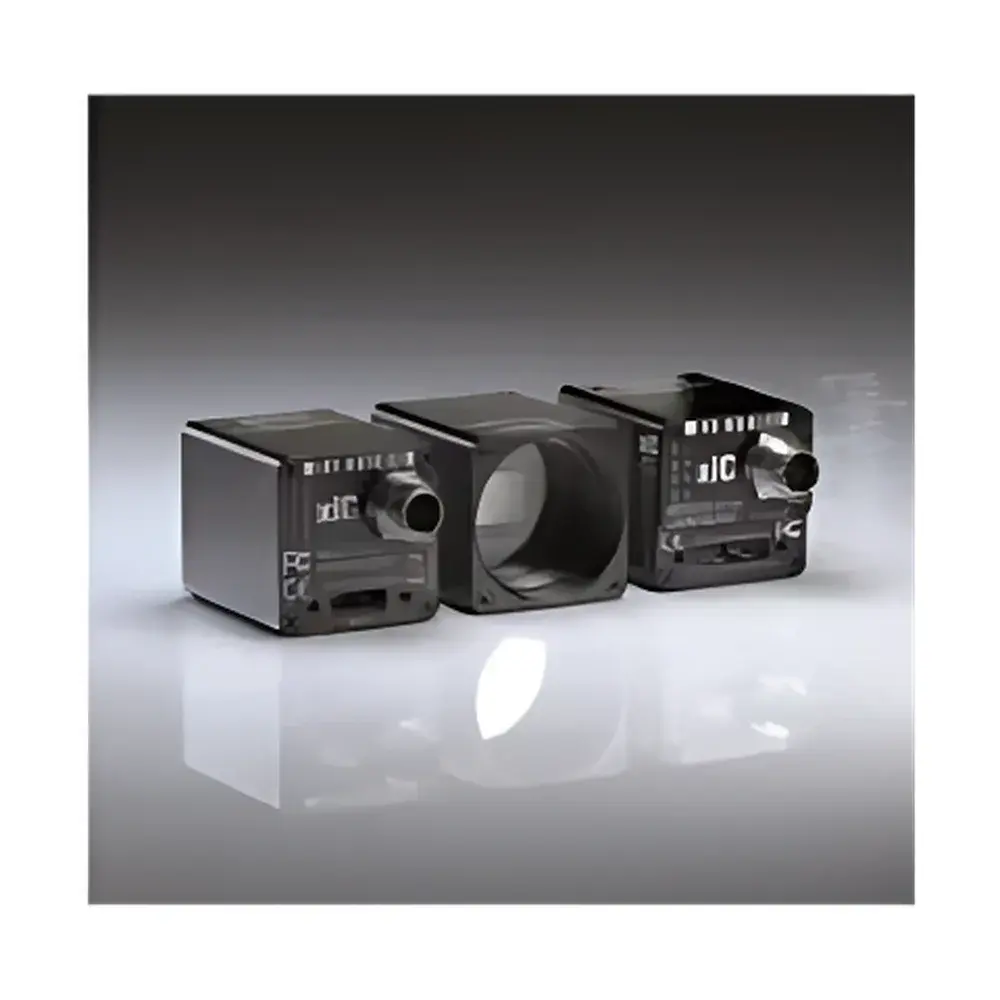
XIMEA xiC Series USB 3.1 Sony Pregius™ CMOS Camera
| Brand | XIMEA |
|---|---|
| Origin | Germany |
| Manufacturer Type | Authorized Distributor |
| Origin Category | Imported |
| Model Series | xiC (Scientific-Grade) |
| Image Resolution | 2.3 MP to 12 MP |
| Frame Rate | 165 fps @ 2.3 MP to 31 fps @ 12 MP |
| Power Consumption | <3 W |
| Interface | USB 3.1 Gen 1 (USB3 Vision compliant) |
| Operating Systems | Windows 7/10, macOS, Linux, ARM, Embedded Platforms |
| Sensor Options | Sony IMX249, IMX265, IMX264, IMX267, IMX304 |
| Form Factor | 26 × 26 × 33 mm, 38 g |
| Software Support | GenICam v3.x / GenTL, C/C++/Python SDK with optimized image acquisition and preprocessing APIs |
| I/O | Opto-isolated programmable trigger input/output, 4 status LEDs |
| Mounting | Board-level stack design with flexible flat cable (FFC) interface |
| Compliance | USB3 Vision v1.1, EMVA 1288 (per sensor variant), RoHS, CE |
Overview
The XIMEA xiC Series is a family of ultra-compact, scientific-grade USB 3.1 industrial cameras engineered for high-fidelity imaging in resource-constrained environments. Built around Sony’s globally recognized Pregius™ global-shutter CMOS sensors—including the IMX249 (2.3 MP), IMX265 (5.1 MP), IMX264 (5.1 MP), IMX267 (12 MP), and IMX304 (4.2 MP)—the xiC platform delivers precise photon capture with minimal motion artifact, essential for quantitative optical metrology and time-resolved analysis. Its measurement principle relies on pixel-level charge integration under synchronized exposure control, enabling sub-millisecond temporal resolution and consistent quantum efficiency across visible and near-infrared (NIR) spectra (up to 1000 nm for selected variants). Designed for integration into embedded vision systems, microscopy platforms, and automated inspection lines, the xiC operates without active cooling—leveraging low-power analog front-end circuitry and thermally stable PCB layout to maintain dark current stability below 0.5 e⁻/pixel/s at 25°C ambient.
Key Features
- Compact board-level architecture: 26 × 26 × 33 mm footprint, mass of only 38 g—enabling deployment in drones, endoscopic probes, and robotic end-effectors.
- USB 3.1 Gen 1 (5 Gbps) interface compliant with USB3 Vision v1.1 standard—ensuring interoperability with third-party machine vision software (e.g., HALCON, OpenCV, LabVIEW Vision) and deterministic packet delivery.
- Low thermal signature: Total power draw <3 W under full operation; no fan or heatsink required—critical for vacuum-compatible or vibration-sensitive setups.
- GenICam-compliant device description: Full support for GenTL transport layer and standardized feature naming (e.g., ExposureTime, Gain, Width, Height), simplifying cross-platform configuration and script portability.
- Programmable opto-isolated I/O: Two TTL-compatible inputs (trigger, strobe enable) and two outputs (exposure active, frame valid), each electrically isolated to ±2.5 kV—suitable for industrial PLC synchronization and laser gating.
- Multi-sensor flexibility: Drop-in replacement capability across five Sony Pregius generations—allowing optimization for speed (IMX249 @ 165 fps), resolution (IMX267 @ 12 MP), or NIR sensitivity (IMX304).
Sample Compatibility & Compliance
The xiC series supports monochrome, color, and NIR-enhanced sensor variants—making it suitable for fluorescence lifetime imaging (FLIM), particle image velocimetry (PIV), and semiconductor wafer inspection where spectral fidelity and linearity are critical. All models comply with EMVA 1288:2014 for standardized characterization of quantum efficiency, dark noise, and dynamic range—data sheets include measured values per sensor grade. Regulatory conformance includes CE marking (EN 61000-6-2/-6-4), RoHS 2011/65/EU, and REACH SVHC declarations. For regulated laboratory use, firmware logging and register-level access enable audit-ready traceability when integrated with GLP/GMP-aligned host applications.
Software & Data Management
XIMEA provides a vendor-neutral, open-source–friendly SDK supporting C/C++, Python (via ctypes and NumPy), MATLAB, and .NET. The API enables zero-copy memory mapping, region-of-interest (ROI) streaming, on-the-fly pixel binning, and hardware-accelerated Bayer demosaicing. Time-stamping accuracy is maintained within ±1 µs via internal free-running counter synchronized to USB SOF (Start of Frame) packets. For long-duration acquisitions, the SDK supports lossless compression (JPEG-XR) and ring-buffered acquisition with configurable metadata embedding (EXIF + custom XML headers). All firmware updates are delivered via signed binaries validated against XIMEA’s public key infrastructure.
Applications
- High-speed metrology: Capturing microsecond-scale deformation in MEMS actuators or shockwave propagation in transparent media.
- Confocal and light-sheet microscopy: Synchronized multi-camera acquisition for volumetric reconstruction with <50 µs inter-frame jitter.
- Ophthalmic imaging: Retinal angiography using IMX304’s extended NIR response (700–900 nm) and high full-well capacity (>15 ke⁻).
- Automated optical inspection (AOI): Real-time defect detection on PCBs or solar cells at >120 fps with 5 µm spatial resolution.
- Intelligent transportation systems (ITS): Vehicle classification and license plate recognition under variable lighting, leveraging HDR mode and auto-exposure convergence <10 ms.
- Field-deployable spectroscopy: Coupled with transmission gratings for portable Raman or LIBS systems requiring rugged, low-SWaP imaging backends.
FAQ
Is the xiC camera compatible with USB 3.0 hosts?
Yes—the xiC implements USB 3.1 Gen 1 (5 Gbps), which is electrically and protocol-compatible with all USB 3.0 SuperSpeed hosts.
Does the camera support external triggering with sub-millisecond latency?
Yes—opto-isolated trigger input achieves end-to-end latency of 12.8 µs ± 0.3 µs from signal edge to first photon integration.
Can multiple xiC cameras be synchronized over USB?
Yes—using hardware trigger daisy-chaining or USB SOF-based software synchronization; jitter between units is <200 ns in master-slave configurations.
What is the maximum sustained data throughput per camera?
At full bandwidth, the xiC delivers up to 380 MB/s (e.g., 12 MP @ 31 fps with 12-bit RAW), constrained only by host controller DMA efficiency and buffer allocation.
Are calibration files (flat-field, dark-frame) provided or supported?
Yes—the SDK includes routines for acquiring and applying per-sensor flat-field and dark-frame corrections, with persistent storage in non-volatile memory.




