
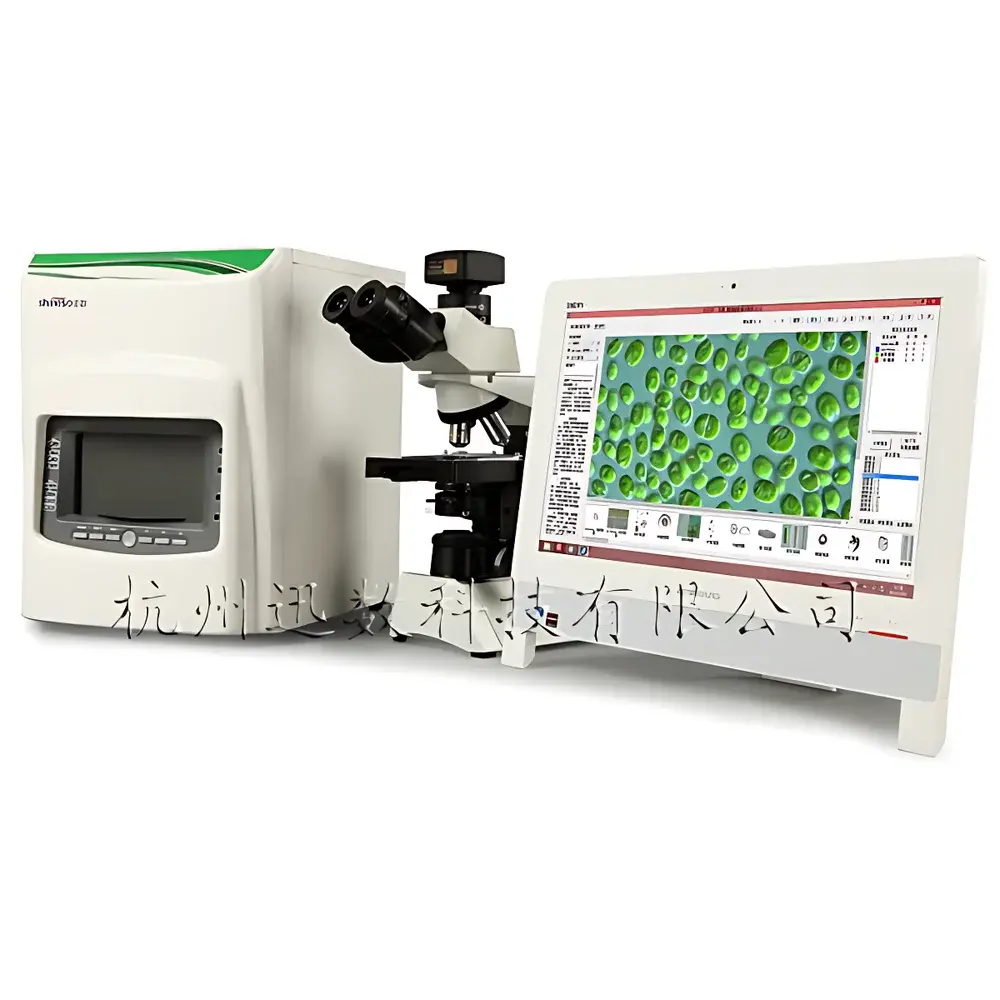
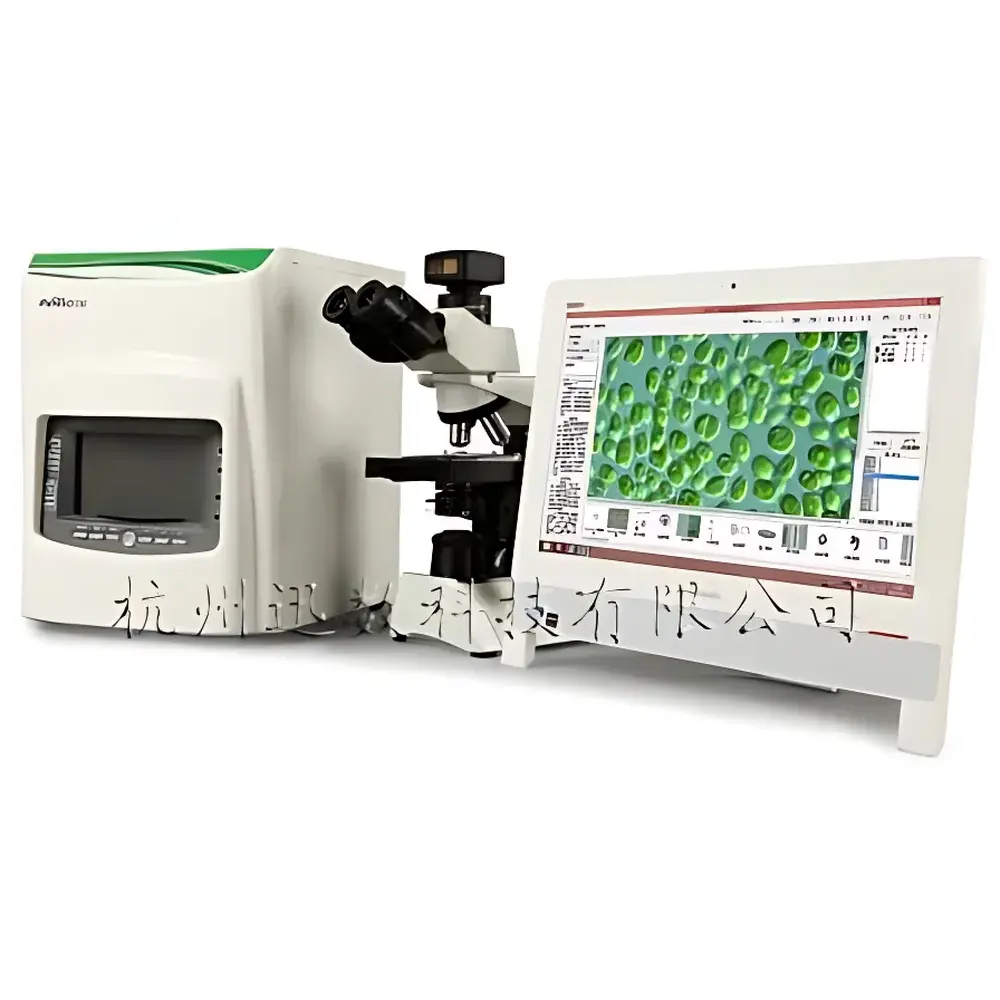
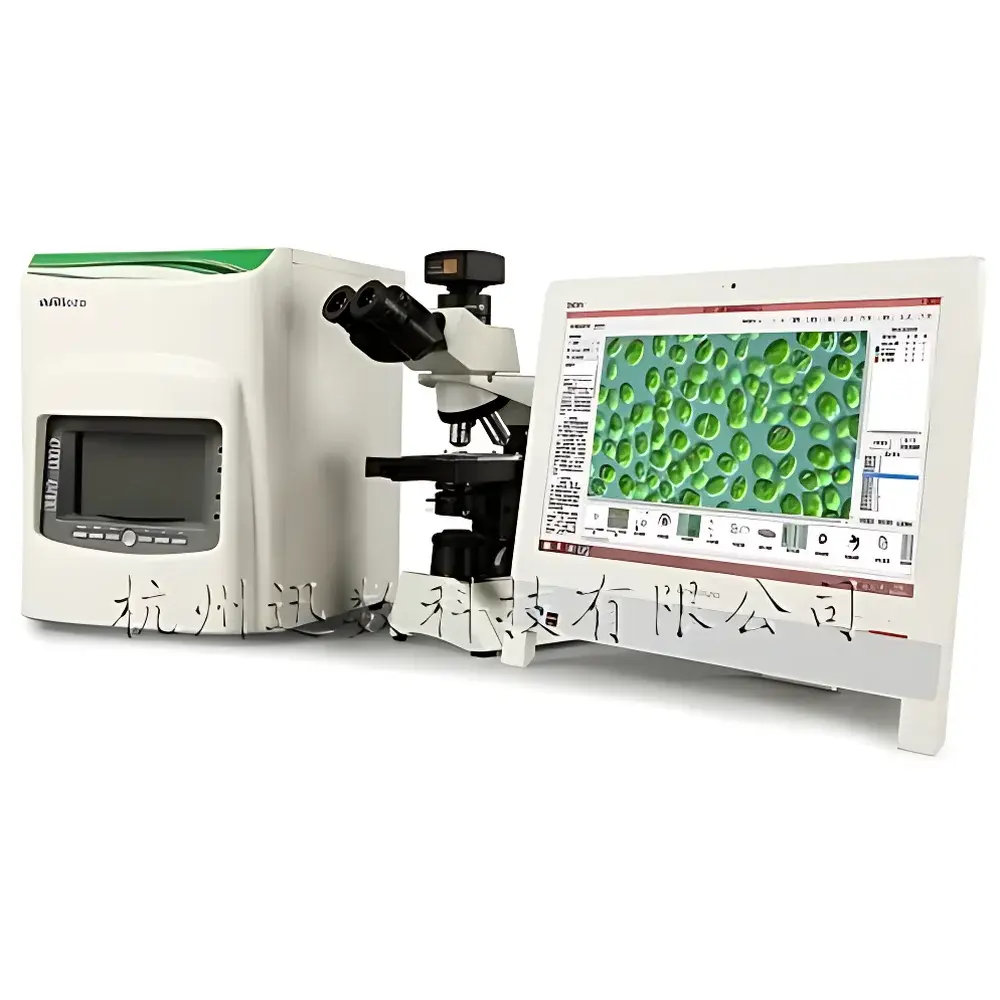
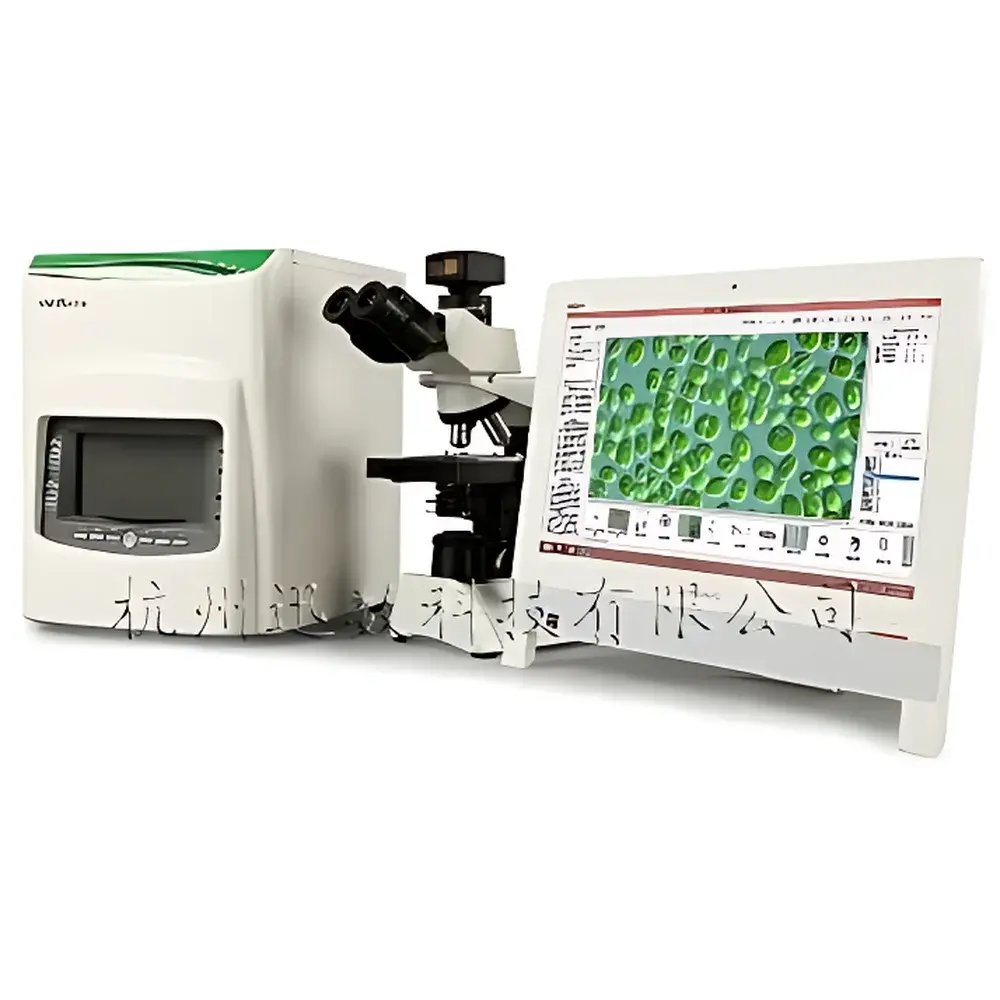
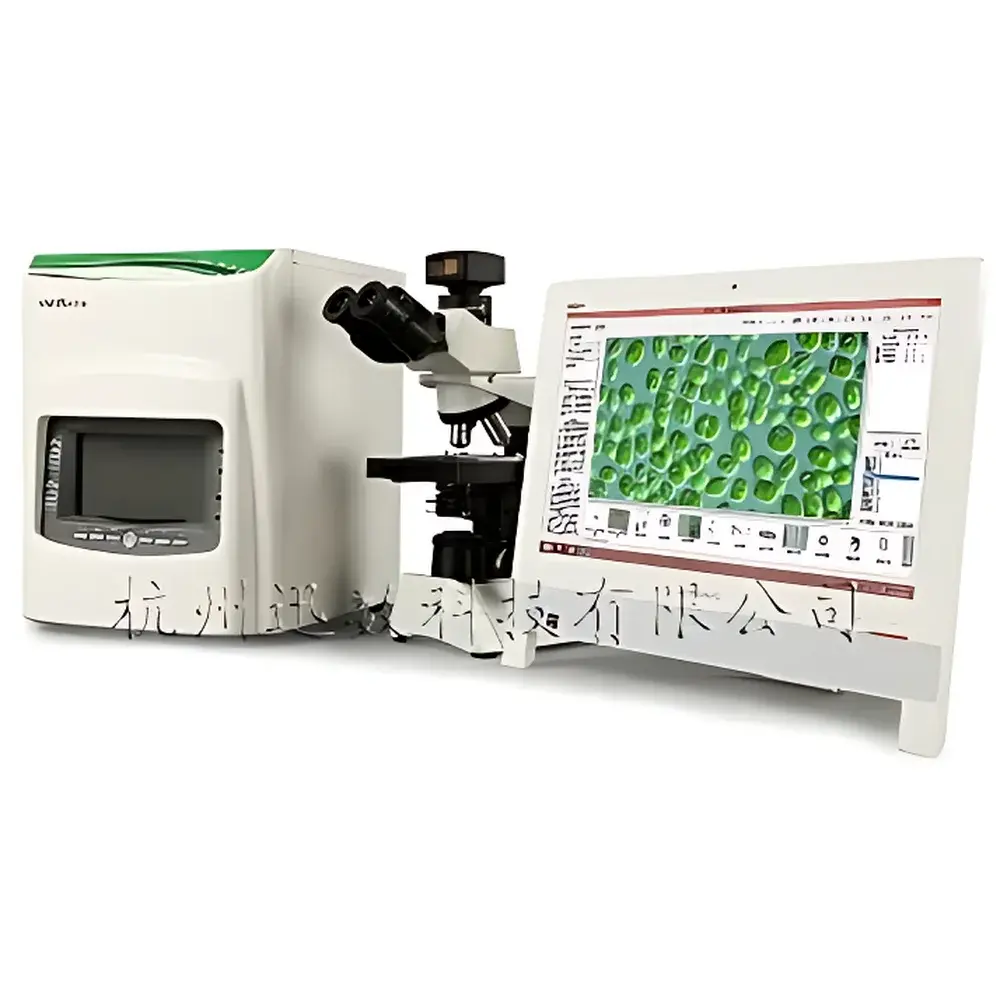
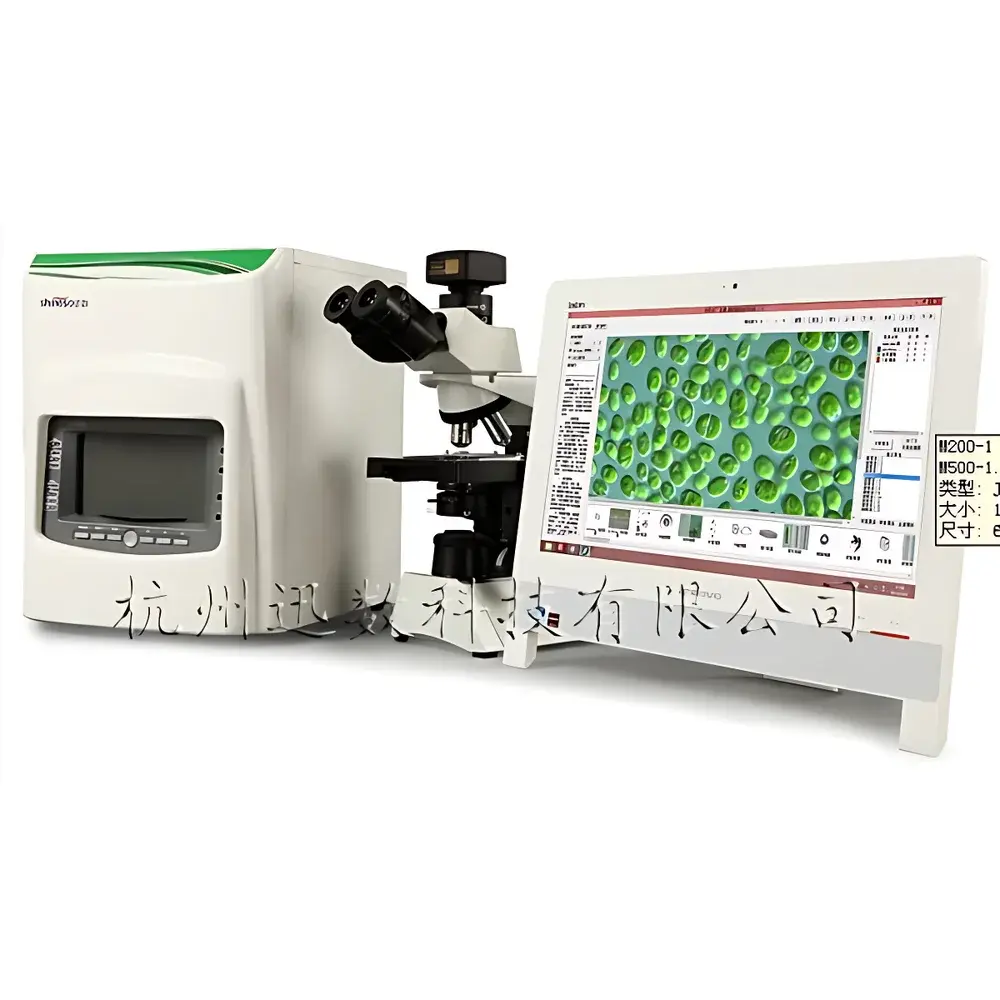
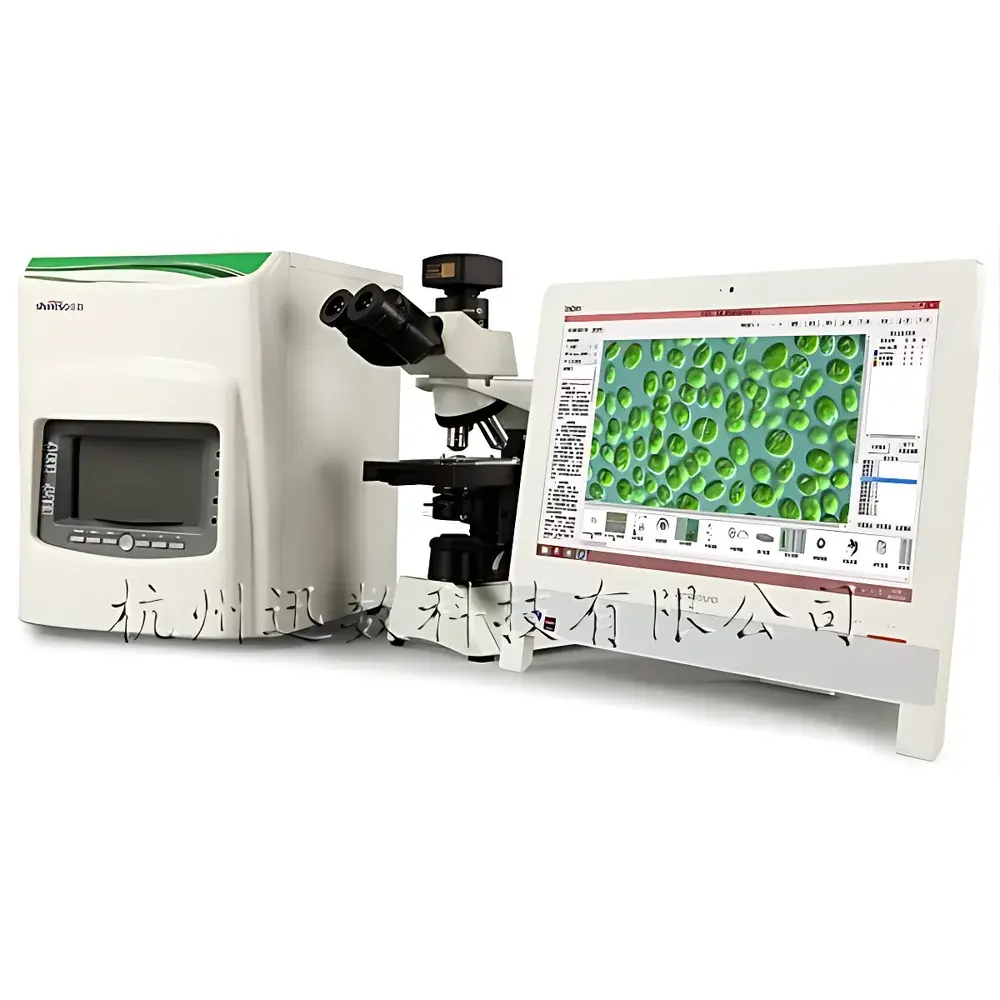
Xunshu Algacount M300 Integrated Colony Counter and Plankton Analysis System
| Brand | Xunshu |
|---|---|
| Origin | Zhejiang, China |
| Manufacturer Type | Direct Manufacturer |
| Product Category | Domestic |
| Model | M300 |
| Price Range | USD 7,000 – 14,000 (FOB) |
| Instrument Type | Algal and Plankton Counter with Colony Counting Capability |
Overview
The Xunshu Algacount M300 is a dual-function, image-based analytical platform engineered for high-precision biological monitoring in environmental water quality laboratories. It integrates two distinct but complementary workflows—microbial colony enumeration and quantitative plankton analysis—within a single hardware-software architecture. The system operates on digital microscopy imaging coupled with advanced computer vision algorithms, enabling standardized, traceable, and operator-independent quantification of heterotrophic bacteria, indicator organisms (e.g., total coliforms, fecal coliforms), phytoplankton (including cyanobacteria, diatoms, dinoflagellates), and zooplankton (rotifers, cladocerans, copepods, etc.). Its core measurement principle relies on high-fidelity optical capture under controlled illumination, followed by pixel-level segmentation, morphological feature extraction, and taxonomy-aware classification using supervised machine learning models trained on expert-validated reference datasets. Designed for freshwater, estuarine, and marine monitoring applications, the M300 supports regulatory compliance workflows aligned with ISO 9308-1 (water quality — detection and enumeration of Escherichia coli and coliform bacteria), ASTM D5465 (standard test method for enumeration of microorganisms in water), and national standards for algal bloom surveillance (e.g., China’s HJ 1081–2019).
Key Features
- Unified hardware platform supporting both colony counting and plankton analysis without mechanical reconfiguration
- Triple-illumination optical system: top-mounted 360° shadowless LED ring light, bottom-mounted dark-field suspension illumination, and integrated 254 nm UV source for chamber sterilization and mutagenesis studies
- High-resolution imaging chain: industrial-grade 8 MP CMOS sensor (1/2.5″ color), C-mount lens interface, and distortion-corrected 8 mm fixed-focus optics (F1.4–F32, <1% distortion)
- Advanced image segmentation engine based on Level Set Active Contour modeling for robust colony delineation across diverse agar media and colony morphologies
- Biological similarity–enhanced algal identification: hybrid feature vector combining colorimetric, textural, and geometric descriptors, classified via SVM-trained models
- Expanded taxonomic database: 8,093 algal species across 11 phyla (2,818 marine; 5,275 freshwater), plus 23 zooplankton functional groups with bilingual nomenclature (Chinese/Latin), validated micrographs, hand-drawn schematics, and descriptive morphology
- Automated single-cell microalgal enumeration using dual adaptive algorithms: “Ovoid Cell-Assisted Counting” for regular-shaped cells and “Complex Cell-Assisted Counting” for irregular or colonial morphologies
- Extended depth-of-field fusion and ultra-wide field stitching for filamentous and chain-forming algae visualization at high magnification
- Integrated biovolume calculation module applying geometric models (spheres, cylinders, ellipsoids, prisms) to user-measured dimensions for biomass estimation per taxon
Sample Compatibility & Compliance
The M300 accommodates standard microbiological culture formats—including pour plates, spread plates, membrane filters (black-grid type), and 3M Petrifilm™ assays—as well as wet-mounted plankton samples on standard microscope slides or Sedgwick-Rafter chambers. For phytoplankton and zooplankton analysis, it supports both preserved and live samples imaged under phase contrast or brightfield illumination. All software modules enforce audit-trail functionality compliant with GLP and GMP documentation requirements: user logins, timestamped operation records, parameter change history, and version-controlled analysis protocols. Data export adheres to ISO/IEC 17025 reporting conventions, with Excel-compatible output files containing raw counts, size-class distributions, dominance indices (e.g., Simpson’s diversity, Shannon-Wiener), and biovolume summaries. The system supports optional integration with LIMS environments via CSV/Excel interchange and meets FDA 21 CFR Part 11 criteria for electronic records when deployed with role-based access control and digital signature configuration.
Software & Data Management
The proprietary Algacount Suite comprises two tightly synchronized modules: ColonyCount Pro and PlanktonID Analytics. Both share a unified database schema built on SQLite with ACID-compliant transaction handling. ColonyCount Pro implements dynamic threshold adjustment, multi-model segmentation (Level Set, Otsu, adaptive thresholding), and context-aware impurity rejection (e.g., debris, air bubbles, filter mesh artifacts). PlanktonID Analytics enables hierarchical taxonomic navigation, similarity-driven search (by morphology, habitat, toxicity status), and batch-processing of time-series image stacks. All measurements—including linear dimensions, angular orientation, area, perimeter, and circularity—are stored with metadata (objective magnification, calibration factor, operator ID, date/time). Reporting templates are customizable for regional regulatory submissions (e.g., EPA Method 1623.1, EU WFD Annex V), and final reports include embedded annotated images, statistical summaries, and export-ready tables. Backup and restore functions support encrypted local storage or network-mapped drives.
Applications
The M300 serves laboratories engaged in routine water safety testing (drinking water, wastewater effluent, recreational waters), ecological assessment of lakes/reservoirs/coastal zones, harmful algal bloom (HAB) early warning systems, aquaculture feedstock QC (e.g., *Chlorella*, *Nannochloropsis* biomass monitoring), and academic research in microbial ecology and plankton community dynamics. Its dual capability streamlines cross-disciplinary workflows—for example, correlating bacterial load with phytoplankton succession patterns during eutrophication studies, or quantifying protozoan grazers alongside cyanobacterial toxins in reservoir management programs. In biotechnology settings, the microalgal counting module supports photobioreactor process control and strain stability verification under ISO 21348 and ASTM E2918 standards for cell density determination.
FAQ
Does the M300 require a dedicated microscope?
No—the system includes a scientific-grade color CCD camera (2580 × 1944 resolution) and universal C-mount adapter; users supply their own upright or inverted microscope with standard trinocular port.
Can the algal database be expanded with user-generated content?
Yes—administrators may import new species entries with associated images, morphological annotations, and taxonomic metadata via the built-in database editor.
Is calibration traceable to international standards?
Yes—calibration uses NIST-traceable stage micrometers; software supports dual-point and multi-point validation with automatic scale factor registration per objective lens.
How does the system handle overlapping or chain-forming algae?
It applies topology-aware segmentation: for chains, it estimates cell number based on length-to-width ratios and intercellular gaps; for mucilaginous colonies, it computes subunit count using convex hull decomposition and density-weighted thresholding.
What export formats are supported for regulatory submission?
Statistical outputs and annotated images export to Excel (.xlsx), PDF (print-ready reports), and CSV (LIMS ingestion); raw image data is saved in lossless TIFF format with embedded EXIF metadata.
Related Products







