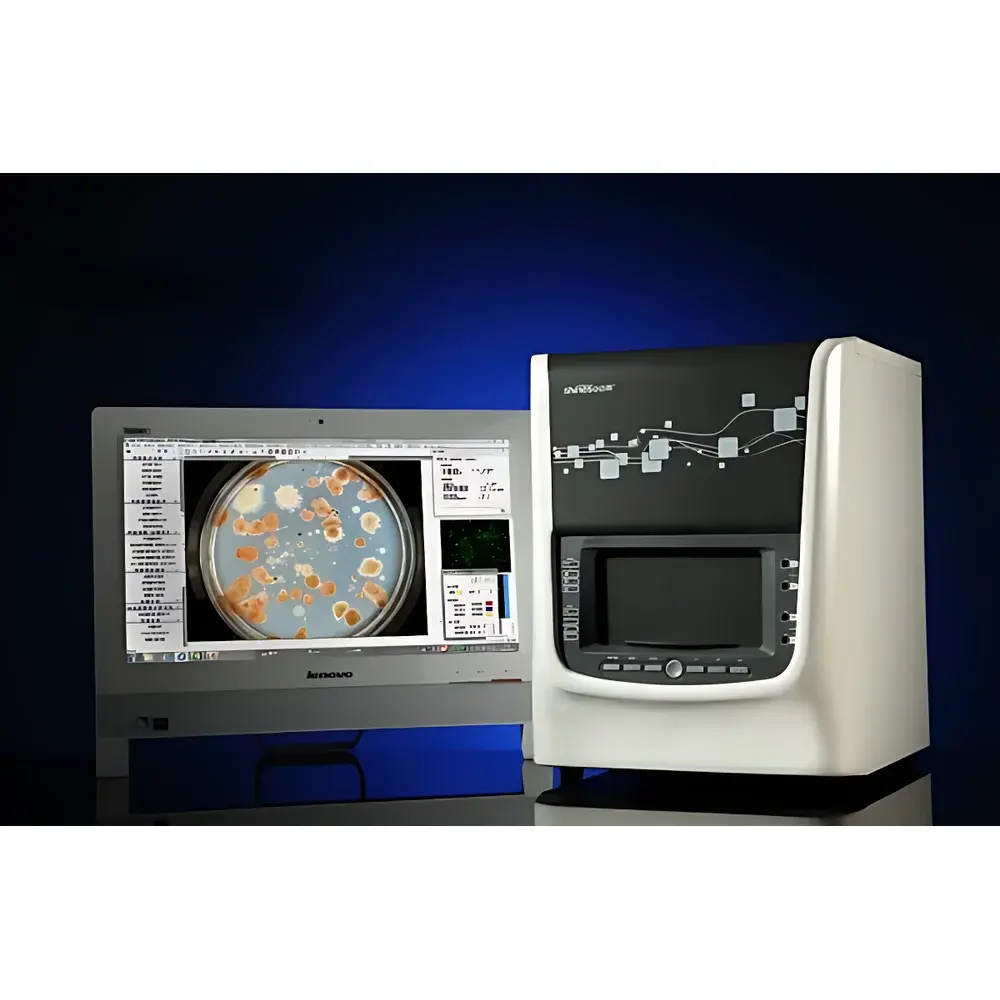
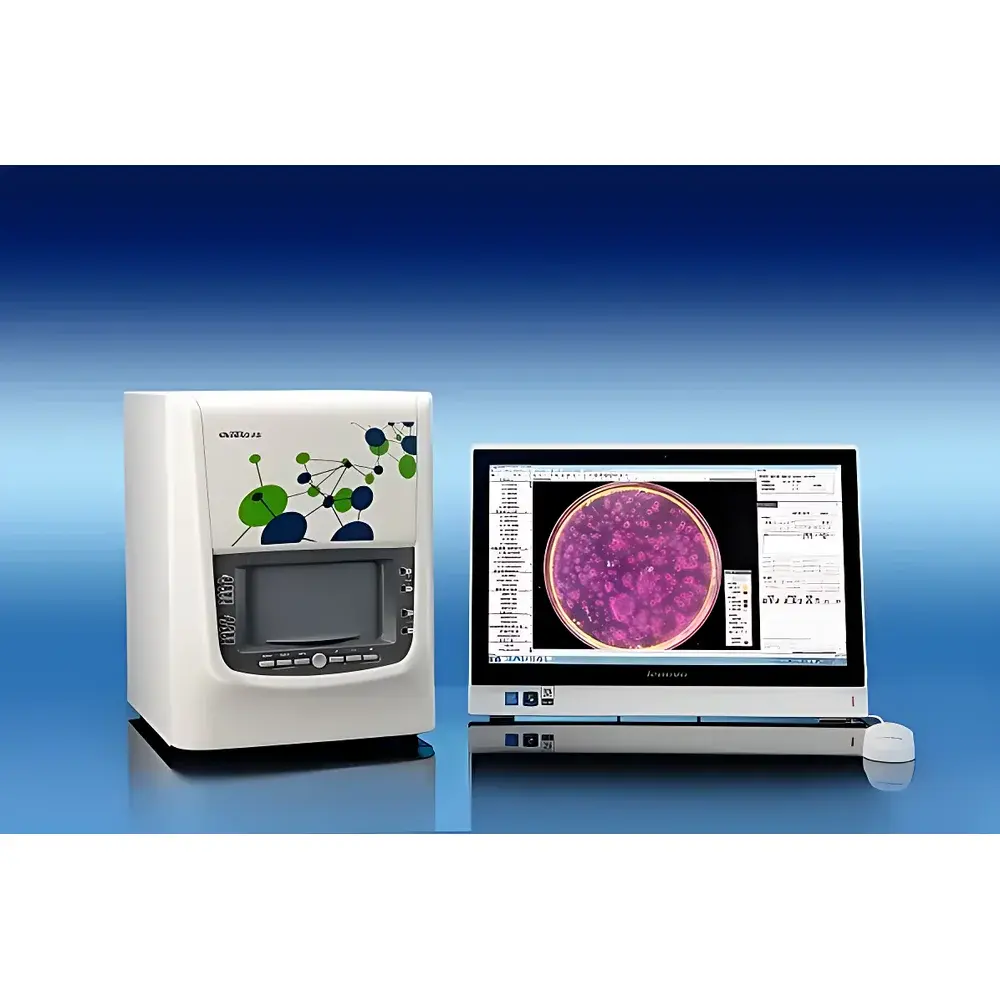
Xunshu SupcreG6R All-in-One Automated Colony Counter, Antibiotic Zone Analyzer & Microbial Strain Screening System
| Brand | Xunshu |
|---|---|
| Origin | Zhejiang, China |
| Manufacturer Type | Direct Manufacturer |
| Product Category | Domestic |
| Model | SupcreG6R |
| Price Range | USD 11,200–14,000 |
| Instrument Type | Fully Automated Colony Counter |
| Counting Speed | <1 second for up to 500 colonies |
Overview
The Xunshu SupcreG6R is a research-grade, integrated microbiological imaging and analysis platform engineered for precision colony enumeration, antibiotic zone-of-inhibition quantification, and phenotypic strain screening. It operates on a dual-optical-path digital imaging architecture—combining top-down diffuse trichromatic LED illumination with bottom-up suspended dark-field backlighting—to deliver high-fidelity, low-noise, color-accurate images of microbial growth on agar plates, filter membranes, multi-well plates, and immunodiffusion gels. Its core measurement principles include pixel-based morphometric segmentation (leveraging level-set active contour modeling), circular/elliptical boundary fitting for zone analysis, and multi-spectral feature extraction for colorimetric classification. Designed for GLP-compliant laboratories, the system supports traceable, auditable workflows required in pharmaceutical QC, academic microbiology, vaccine development, and antimicrobial resistance (AMR) surveillance programs.
Key Features
- Trichromatic LED illumination system with adjustable correlated color temperature (3500K–8500K), enabling natural-color reproduction of bacterial, yeast, mold, and actinomycete colonies—eliminating the blue bias inherent in standard white LEDs.
- Dual-wavelength UV subsystem: 254 nm for chamber sterilization and UV mutagenesis; dual-side 366 nm for fluorescence excitation of E. coli, coliforms, and GFP-expressing strains.
- Sealed light-tight imaging chamber with ergonomic viewport door—prevents ambient stray light interference and eliminates optical artifacts (e.g., halo rings, refractive glare) from Petri dish surfaces.
- Optimized optical train: F1.4 fixed-focus lens paired with a 14-megapixel industrial CMOS sensor—resolves sub-millimeter colonies, hyphal structures, microcolonies embedded in agar, and fine surface topography (e.g., wrinkling, margin serration).
- 28 embedded image processing algorithms—including level-set active contour segmentation, optimized watershed splitting for confluent phage plaques, and multi-region adaptive thresholding—ensuring robust detection across heterogeneous sample types.
- Modular software suite with validated modules for OPKA/SBA assays, clonal colony counting in multi-well plates, plaque assay quantification, single-radial immunodiffusion (SRID) ring measurement, and blue-white screening analysis.
Sample Compatibility & Compliance
The SupcreG6R accommodates standard microbiological sample formats: pour plates, spread plates, membrane filters (including 3M™ Petrifilm™), spiral plating plates, multi-well microtiter plates (6–96-well), and agar immunodiffusion plates. It complies with methodology standards referenced in USP /, ISO 4833-1:2013 (microbiological testing of food and animal feeding stuffs), CLSI M07-A11 (methods for dilution antimicrobial susceptibility tests), and EUCAST guidelines for zone diameter interpretation. All measurement operations support full audit trails, user authentication, electronic signatures, and data integrity controls aligned with FDA 21 CFR Part 11 requirements. Calibration verification reports, repeatability self-tests (±0.002 mm diameter precision), and inter-unit consistency checks (<0.2% inter-instrument variation) are programmatically generated and exportable.
Software & Data Management
The integrated software platform provides role-based access control, encrypted local database storage, and Excel-compatible export of raw counts, morphometric parameters (diameter, area, perimeter, circularity, aspect ratio), color descriptors (CIE L*a*b* values mapped to standardized nomenclature), and zone metrics (outer/inner diameter, area ratio, inhibition index). Image preprocessing includes grayscale inversion, RGB channel balancing, adaptive contrast enhancement, Sobel/Laplacian edge detection, and morphological filtering (erosion/dilation). Quantitative outputs are linked to metadata fields—plate ID, dilution factor, incubation time, medium type—enabling stratified statistical analysis. All user actions (image acquisition, parameter adjustment, manual corrections) are timestamped and logged for regulatory review. Backups adhere to ISO/IEC 27001-aligned encryption protocols.
Applications
- Antibiotic potency testing: Implements Kirby-Bauer disk diffusion, cup-plate, and well-diffusion assays with automated Szone multi-mode analysis—supporting USP monographs and Chinese Pharmacopoeia 2020 Edition dosage methods (single-, double-, and triple-dose).
- Strain selection & phenotyping: Enables dual-zone analysis (e.g., inhibition + clearance zones), morphotype clustering by size/color/contour, and targeted isolation of variants (e.g., riboflavin-overproducing Ashbya gossypii based on 8–10 mm yellow colony criteria).
- Virology & phage research: Accurately resolves coalesced phage plaques via optimized watershed segmentation—replacing manual counting with >98.7% concordance versus expert visual assessment.
- Immunology assays: Supports OPKA and SBA protocols through spatially resolved multi-region counting on single plates or across microtiter wells—automating bacterial load quantification per condition.
- Genetic screening: Performs blue-white colony discrimination using intelligent chromatic thresholding and α-complementation validation logic—quantifying recombinant vs. non-recombinant transformants without user bias.
- Mycology & filamentous fungi: “One-click mold measurement” extracts area, perimeter, major/minor axes, and growth rate indices directly from irregular, diffuse mycelial colonies—reducing intra-operator variability by >70% versus caliper-based methods.
FAQ
Does the SupcreG6R support regulatory submissions for pharmaceutical QC?
Yes—the system generates ALCOA+ compliant data (Attributable, Legible, Contemporaneous, Original, Accurate), including full audit trails, electronic signatures, and calibration documentation meeting FDA 21 CFR Part 11 and EU Annex 11 requirements.
Can it quantify fluorescent colonies under UV excitation?
Yes—dual 366 nm UV lamps provide uniform side-illumination for reliable fluorescence visualization and quantification of GFP-tagged strains, coliforms, and other UV-excitable isolates.
How does it handle overlapping or chain-forming colonies?
It applies level-set active contour modeling combined with user-configurable split logic (e.g., chain break thresholds, minimum separation distance) to achieve statistically validated separation accuracy exceeding 94% in ISO-certified test samples.
Is multi-user permission management available?
Yes—administrators can assign granular permissions (image acquisition, parameter editing, report generation, database export) by user role, ensuring segregation of duties and compliance with GxP data governance policies.
What validation documentation is provided?
Xunshu supplies IQ/OQ documentation templates, repeatability and linearity test reports, and software verification summaries—all pre-validated against ISO/IEC 17025 and CLSI EP17-A2 guidance.