
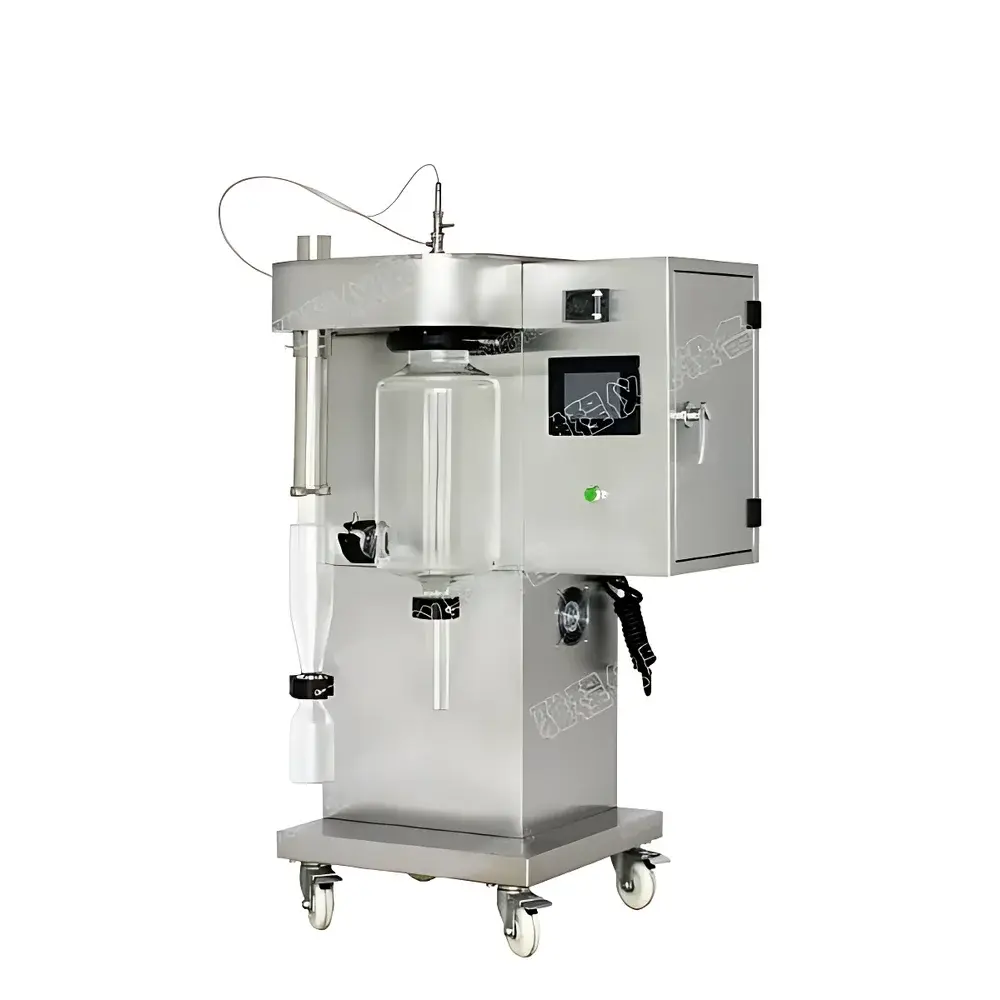
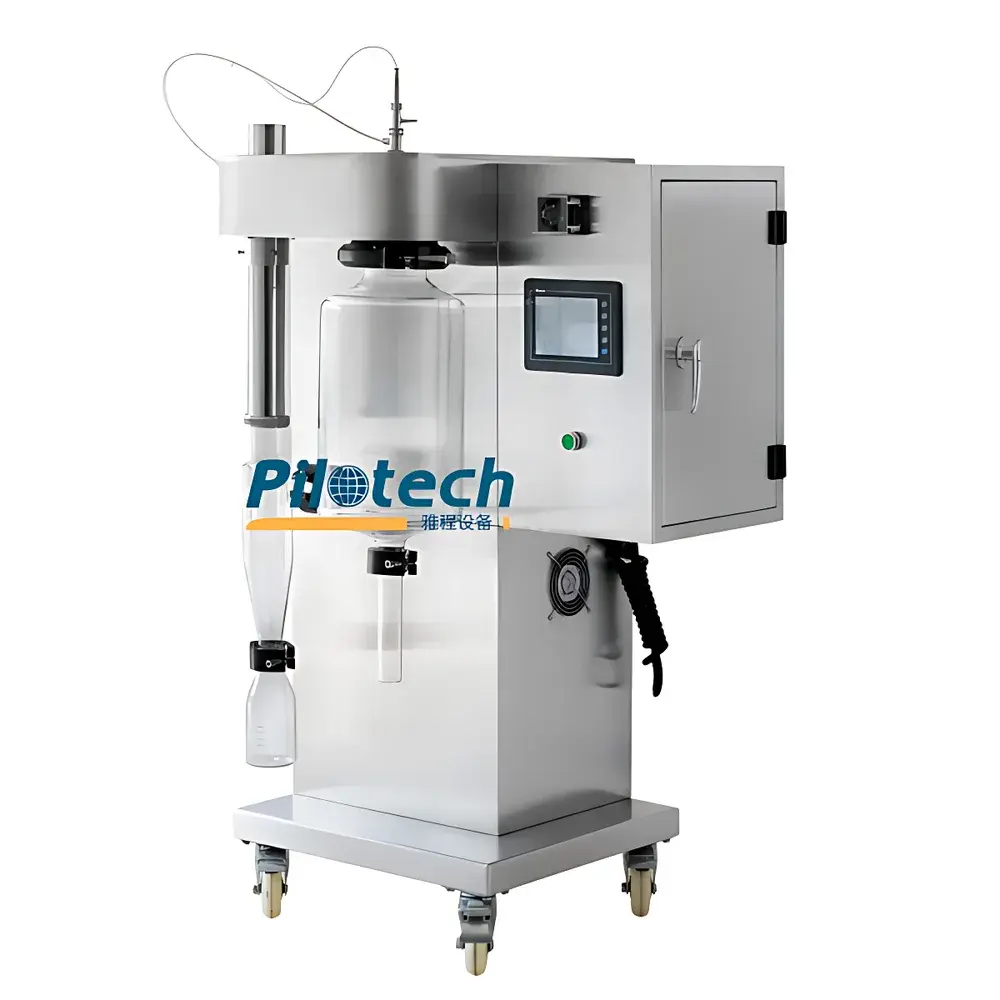
Yacheng PILOTECH YC-015 Benchtop Spray Dryer
| Brand | Yacheng / PILOTECH |
|---|---|
| Origin | Shanghai, China |
| Manufacturer Type | Direct Manufacturer |
| Country of Origin | China |
| Model | YC-015 |
| Maximum Feed Rate | 1500 mL/h |
| Particle Size Range | 1–25 µm |
| Inlet Air Temperature Range | Up to 250 °C |
| Drying Residence Time | 1.0–1.5 s |
| Temperature Control Accuracy | ±1 °C (PID-controlled) |
| Noise Level | <60 dB(A) |
| Standard Nozzle Orifice | 1.0 mm (optional: 0.5/0.8/1.5/2.0 mm) |
| Construction Material | 316 Stainless Steel + Borosilicate Glass |
| Power Supply | 3.5 kW, 220 V, Single-phase |
Overview
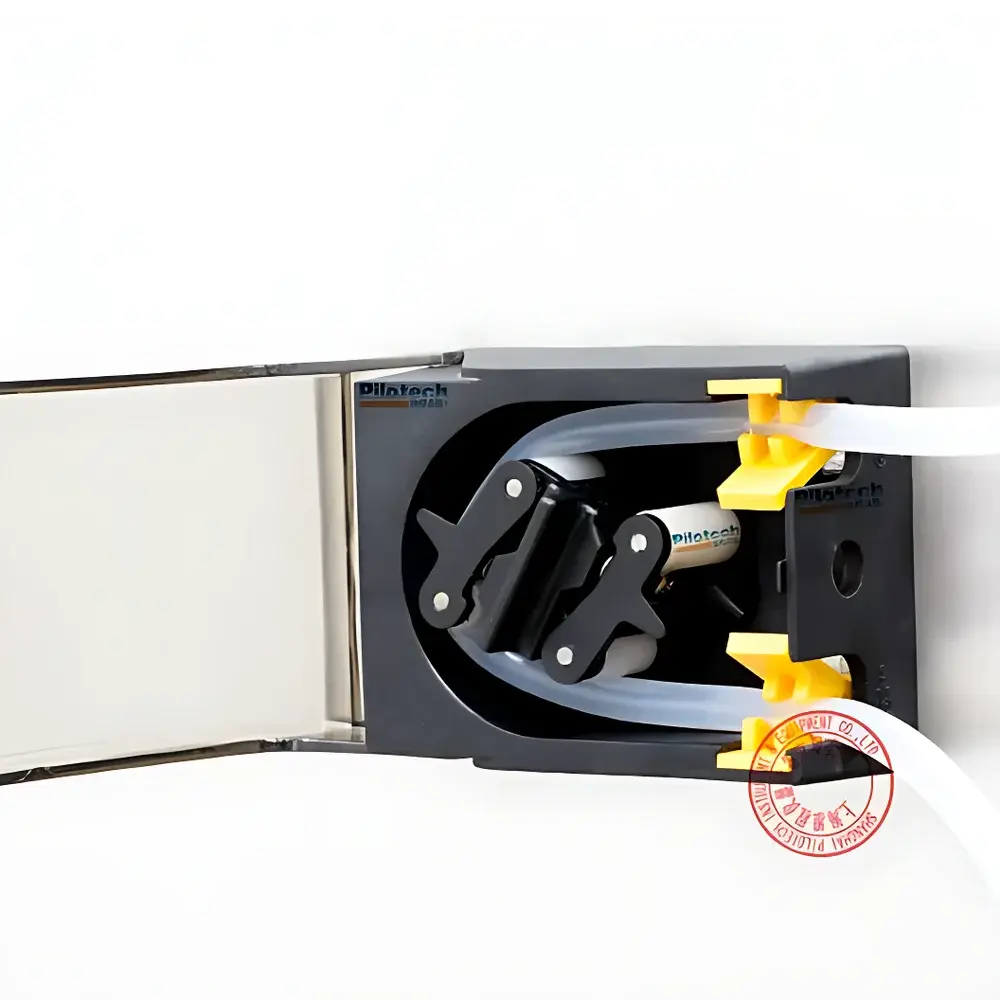
The Yacheng PILOTECH YC-015 Benchtop Spray Dryer is a compact, fully integrated laboratory-scale spray drying system engineered for precision, reproducibility, and operational safety in R&D environments. It operates on the principle of two-fluid (air-liquid) atomization: a peristaltic pump delivers liquid feed into a concentric nozzle, where compressed air shears the stream into fine droplets; concurrent downward-flowing heated air (up to 250 °C) rapidly evaporates solvent—predominantly water—within 1.0–1.5 seconds. This short thermal exposure preserves thermolabile compounds such as proteins, enzymes, probiotics, and polyphenols, making the YC-015 particularly suitable for pharmaceutical, nutraceutical, and biopolymer formulation studies. Its modular architecture enables seamless integration into ISO 17025-compliant laboratories and supports GLP-aligned documentation workflows when paired with optional audit-trail-capable software.
Key Features
- Full-color 7-inch LCD touchscreen interface with real-time animated process visualization—including inlet temperature, airflow frequency, peristaltic pump speed, and automatic needle-cleaning cycle status.
- PID-based digital temperature control ensures ±1 °C stability across the full 30–250 °C inlet air range, critical for method transfer and regulatory consistency.
- Integrated oil-free air compressor eliminates hydrocarbon contamination risk and maintains particle size distribution integrity; typical output exhibits Gaussian-distributed particles with >95% within ±20% of median diameter.
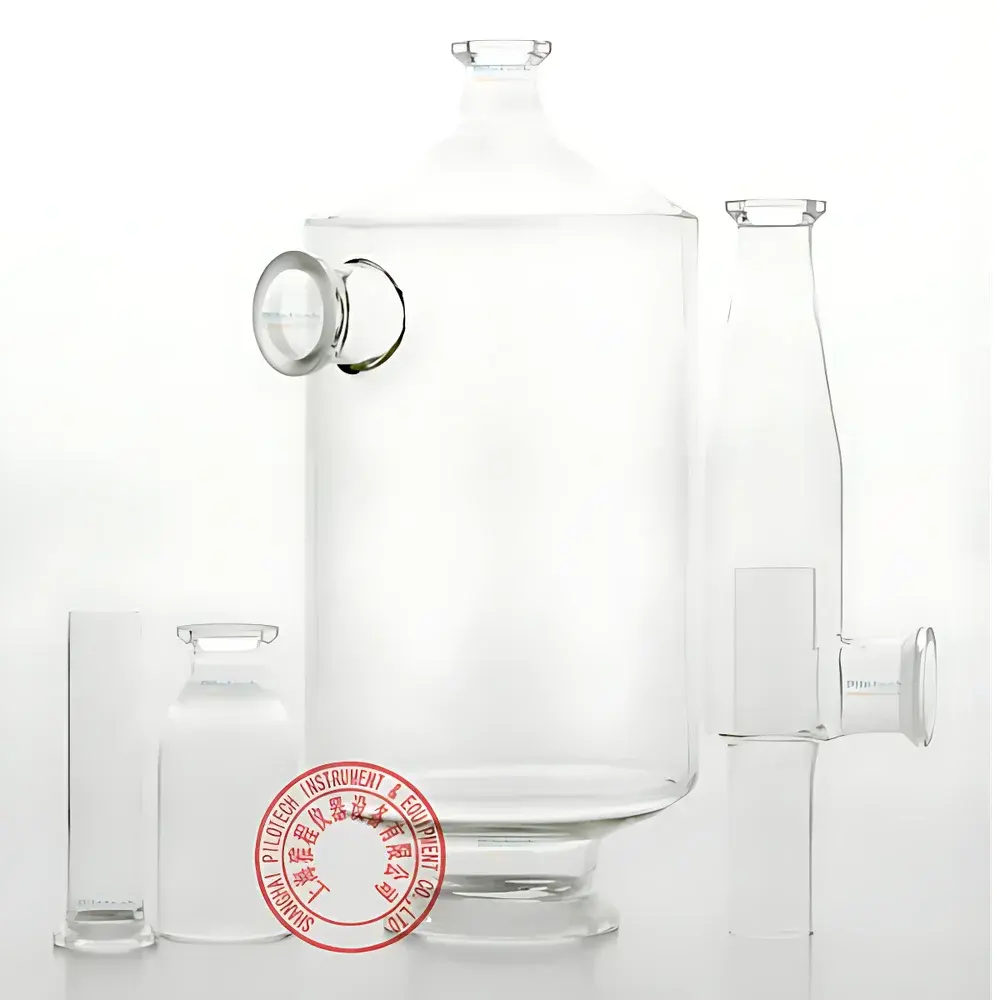
- Borosilicate glass drying chamber, cyclone separator, and collection vessel provide full optical access to atomization, drying trajectory, and powder deposition—enabling direct observation and immediate troubleshooting.
- Automatic needle-cleaning (‘pin-cleaning’) function with adjustable frequency prevents nozzle clogging during high-viscosity or particulate-laden feed processing.
- Tower-wall air-sweep system minimizes wall deposition and increases powder recovery efficiency by >15% compared to conventional benchtop designs.
- Stainless steel (316) structural frame and fluid-contact components ensure corrosion resistance and compliance with USP <661>, ASTM F899, and FDA-recommended material-of-construction guidelines.
Sample Compatibility & Compliance
The YC-015 accepts aqueous solutions, suspensions, and emulsions—including those containing heat-sensitive biomolecules (e.g., monoclonal antibodies, lactic acid bacteria, plant extracts), food-grade colloids (e.g., whey protein isolate, maltodextrin matrices), and ceramic precursors. It complies with IEC 61000-6-3 (EMC) and IEC 61000-6-2 (immunity) standards. Optional nitrogen recirculation retrofit allows safe drying of organic solvents (e.g., ethanol, acetone) under inert atmosphere—meeting OSHA 1910.106 and ATEX Zone 2 requirements when configured per user-specified hazard analysis. All glass components conform to DIN ISO 3585 specifications for hydrolytic resistance (Class HGB 1). The system supports traceability protocols aligned with 21 CFR Part 11 when operated with validated third-party data acquisition modules.
Software & Data Management
While the embedded controller provides local parameter logging (timestamped inlet/outlet temperatures, pump RPM, airflow Hz), the YC-015 supports RS-485/Modbus RTU communication for integration into centralized LIMS or ELN platforms. Raw process data exports in CSV format facilitate statistical analysis per ASTM E29, ISO 5725, or ICH Q5C guidelines. Optional firmware upgrade enables electronic signature capture, user-level access control (admin/operator), and automated PDF report generation—including batch ID, operator name, start/end timestamps, and deviation flags—supporting audit readiness for FDA inspections and ISO 9001:2015 certification.
Applications
- Formulation development of inhalable dry powders (DPIs) per USP <601> aerodynamic particle size distribution requirements.
- Rapid prototyping of encapsulated actives (e.g., curcumin in casein micelles, vitamin C in gum arabic) for stability screening under accelerated conditions (ICH Q1A).
- Production of catalyst supports (e.g., SiO₂, Al₂O₃ microspheres) with controlled porosity and surface area for heterogeneous reaction studies.
- Preparation of standardized reference materials for particle morphology metrology (SEM/TEM sample prep) and laser diffraction calibration.
- Scale-down modeling for industrial spray dryer process validation (QbD framework), including residence time distribution (RTD) mapping and thermal history profiling.
FAQ
What is the minimum sample volume required for a valid run?
Typical minimum feed volume is 30 mL, though successful drying has been demonstrated with as little as 15 mL for high-solids-content feeds (≥20% w/w); actual lower limit depends on suspension stability and nozzle orifice selection.
Can the YC-015 handle ethanol-based solutions?
Yes—via optional nitrogen recirculation retrofit (YC-015-N₂), which replaces ambient air with inert N₂, enabling closed-loop solvent recovery and eliminating explosion hazards per NFPA 30 and EU Directive 1999/92/EC.
Is GMP-compliant documentation support available?
The base unit meets mechanical design prerequisites for GMP Annex 15; full compliance requires integration with validated software (e.g., LabArchives ELN or DeltaV DCS) and IQ/OQ/PQ execution per ASTM E2500.
How is particle size distribution influenced by operating parameters?
Primary determinants are inlet temperature, feed rate, and atomizing air pressure—each independently adjustable via touchscreen. Empirical DOE templates are provided for Design Space establishment per ICH Q8(R2).
What maintenance intervals are recommended for sustained accuracy?
Daily: rinse glassware with deionized water; weekly: inspect nozzle orifice and clean with ultrasonic bath; annually: calibrate thermocouples per ISO/IEC 17025-accredited service provider.



