
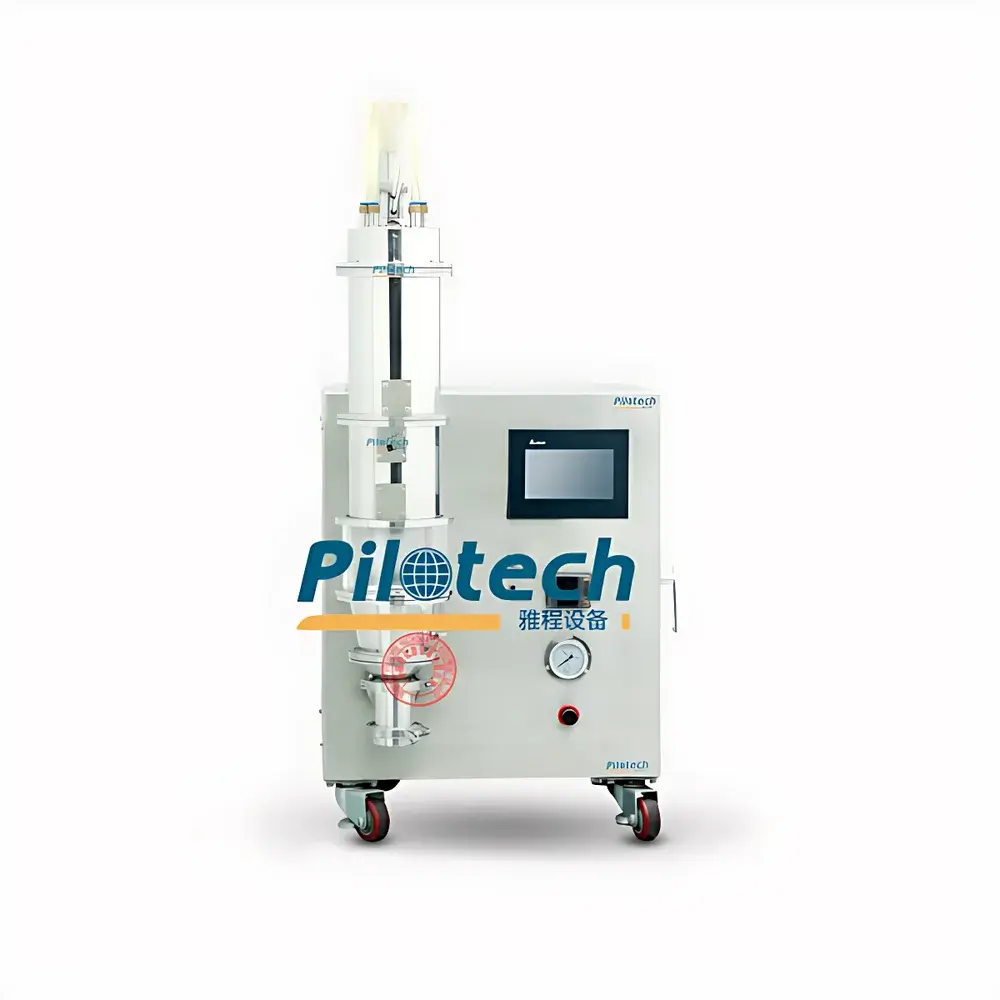
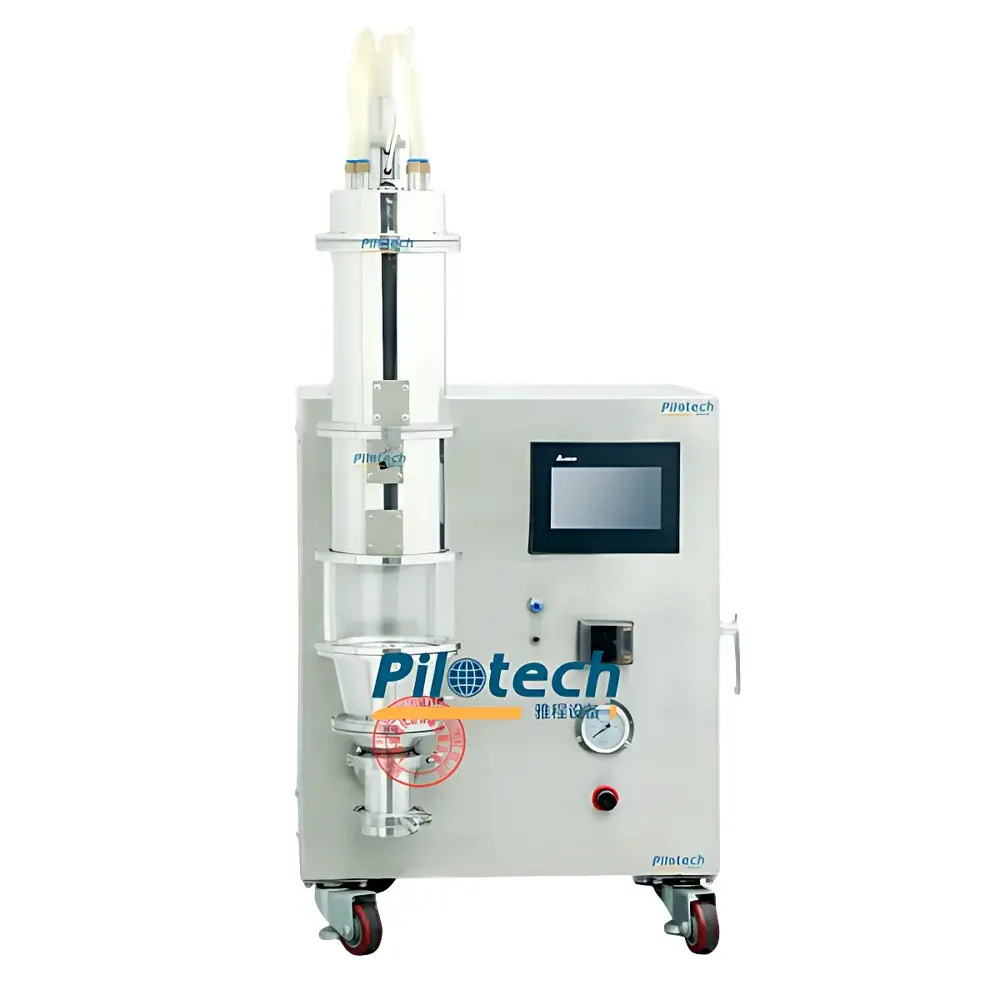
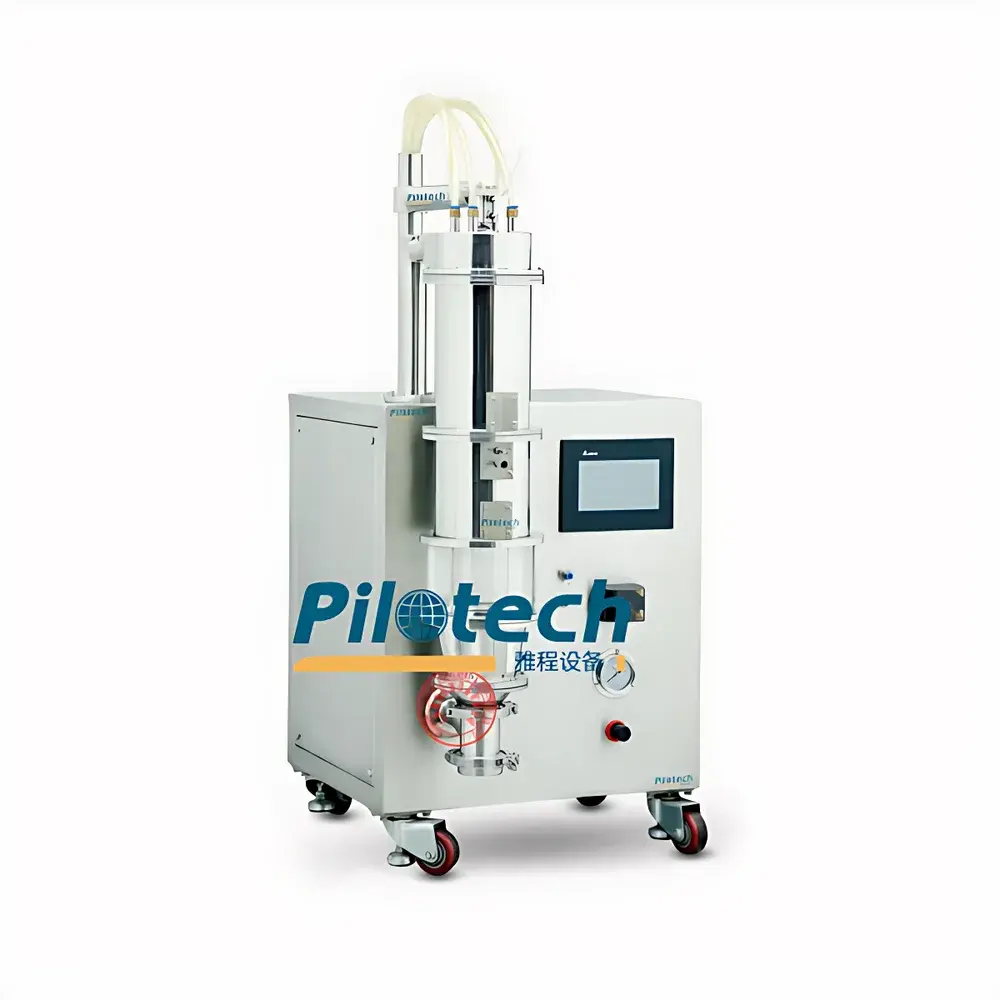
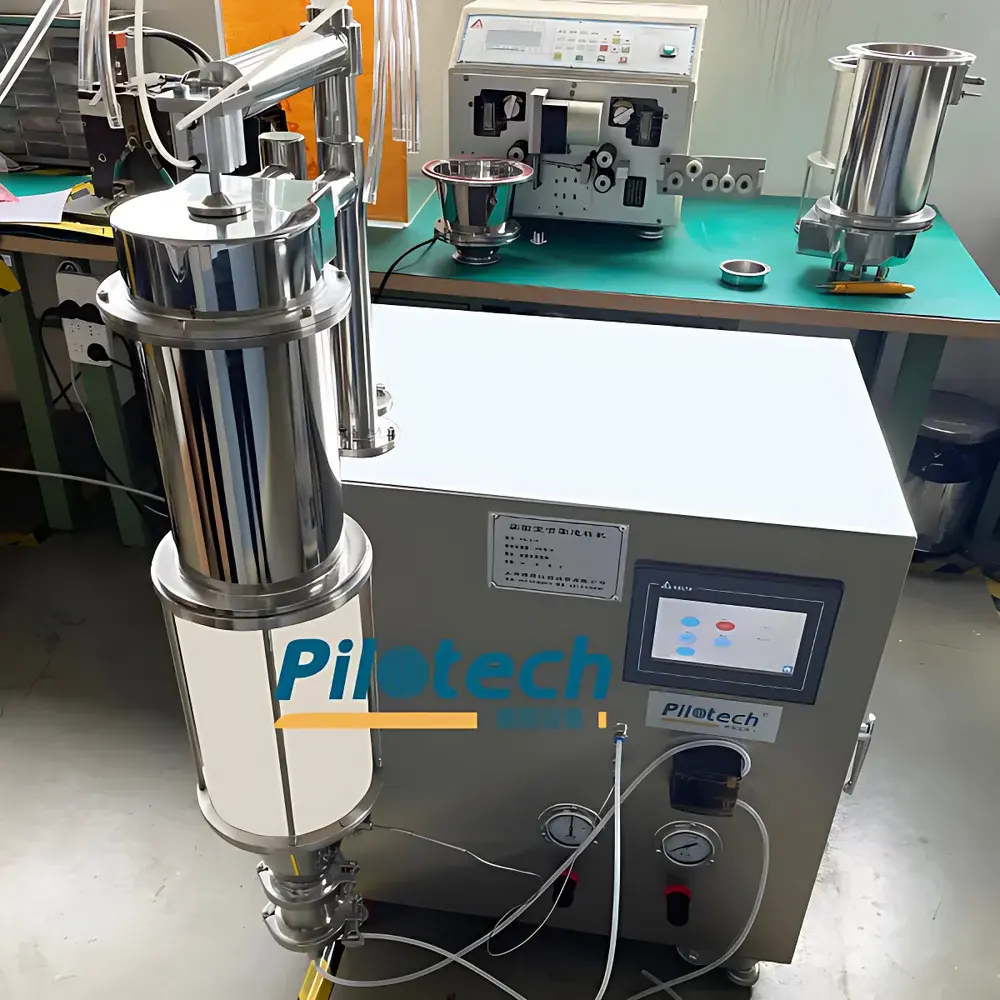
Yacheng YC-310 Laboratory-Scale Fluidized Bed Granulator, Coater & Dryer
| Brand | Yacheng / PILOTECH |
|---|---|
| Origin | Shanghai, China |
| Manufacturer Type | OEM Manufacturer |
| Country of Origin | China |
| Model | YC-310 |
| Pricing | Upon Request |
Overview
The Yacheng YC-310 is a compact, integrated laboratory-scale fluidized bed processor engineered for granulation, film coating, and controlled drying in a single unit. It operates on the principle of fluidization—where upward-flowing heated air suspends solid particles in a dynamic, pseudo-fluid state—enabling uniform heat and mass transfer critical for reproducible particle engineering. This system supports both top-spray and bottom-spray configurations, allowing users to select the optimal geometry for specific process objectives: top-spray for agglomeration granulation and taste-masking coatings; bottom-spray for functional enteric or sustained-release microsphere coatings. The YC-310 is designed for R&D laboratories in pharmaceutical, nutraceutical, and fine chemical sectors where scalability, process understanding, and regulatory traceability are essential early-stage development requirements.
Key Features
- Modular fluidized bed architecture with interchangeable conical product containers (standard 3–10 L working volume range) to accommodate varying batch sizes and material densities.
- Dual-spray capability: Top-spray manifold with multiple nozzle ports in the expansion chamber; bottom-spray configuration with central nozzle mounted inside a draft tube for precise core-coating alignment.
- PLC-based control system with color touchscreen HMI (Human-Machine Interface), supporting real-time parameter adjustment—including inlet air temperature (RT to 120 °C), blower frequency (0–50 Hz), peristaltic pump speed (0.1–100 rpm), product temperature feedback loop, and programmable pulse-jet filter cleaning cycles.
- PID-controlled thermal management across all heating zones ensures ±1.5 °C stability over full operating range, critical for thermally sensitive APIs and excipients.
- Imported core components—including EC centrifugal blower, stainless-steel tubular heaters, industrial-grade touch panel, and high-accuracy Pt100 RTD sensors—enhance long-term operational reliability and measurement repeatability.
- Integrated data logging with USB export functionality (CSV format) and optional RS485/Modbus RTU interface for lab network integration and audit-ready record retention.
Sample Compatibility & Compliance
The YC-310 accommodates a broad spectrum of particulate feedstocks: aqueous or organic solvent-based slurries, herbal extracts, amorphous dispersions, micronized APIs, and hydrophilic/hydrophobic excipients. Its design conforms to fundamental GMP-aligned engineering practices—fully welded 316L stainless-steel contact surfaces, FDA-compliant gasket materials (EPDM/FKM), and smooth internal finishes (Ra ≤ 0.8 µm). While not certified as 21 CFR Part 11 compliant out-of-the-box, the system’s data logging architecture supports validation protocols required for GLP/GMP environments when paired with qualified software and procedural controls. It meets mechanical safety standards per IEC 61000-6-2/6-4 and carries CE marking for electromagnetic compatibility.
Software & Data Management
The embedded control firmware records time-stamped values for all active process variables at user-defined intervals (1–60 s). Logged datasets include inlet/outlet air temperatures, relative humidity, differential pressure across the filter, product bed temperature, spray rate, and airflow velocity. Exported CSV files are compatible with common statistical analysis platforms (e.g., JMP, Minitab) and process analytical technology (PAT) frameworks. Optional add-ons include electronic signature modules and audit trail extensions to support FDA 21 CFR Part 11 compliance during formal process validation.
Applications
- Pharmaceutical formulation development: immediate-release granules from herbal extracts; sustained-release pellets via polymer film coating; moisture-sensitive API stabilization through low-temperature fluidized drying.
- Nutraceutical processing: agglomeration of vitamin C or probiotic powders into free-flowing, dispersible granules; protective coating of omega-3 oils using ethylcellulose or shellac.
- Chemical catalyst support preparation: immobilization of metal nanoparticles onto porous carriers under inert gas fluidization.
- Method transfer studies: bridging small-scale lab data to pilot-scale (e.g., Glatt GPCG-1) and production-scale (e.g., Freund Vector VFC) equipment using dimensionless scaling parameters (e.g., Geldart classification, minimum fluidization velocity).
- Excipient functionality screening: evaluating binder efficacy (e.g., PVP K30 vs. HPMC E5), plasticizer impact on film integrity, and anti-tacking agent performance under dynamic fluidization.
FAQ
What is the typical particle size range achievable with top-spray granulation on the YC-310?
Granule diameters generally fall between 100 µm and 3 mm, depending on feed powder morphology, binder concentration, atomization pressure, and fluidization velocity.
Can the YC-310 be used for solvent-based coating processes?
Yes—provided appropriate explosion-proof modifications (e.g., nitrogen inerting, ATEX-rated motor, spark-resistant construction) are implemented and validated per local hazardous area regulations.
Is the system suitable for continuous operation?
The YC-310 is configured for batch processing; however, its modular design and open communication protocols enable integration into semi-continuous workflows when coupled with upstream feeding and downstream conveying systems.
How does the PID temperature coupling between inlet air and product bed improve process robustness?
It dynamically modulates heater output to maintain constant bed temperature despite fluctuations in ambient humidity or feed moisture content—minimizing surface hardening and ensuring uniform intraparticle drying kinetics.
What maintenance routines are recommended for long-term filter performance?
Daily inspection of the pleated polyester filter cartridge; weekly compressed-air back-pulse calibration; quarterly replacement of O-rings and periodic verification of pressure-drop hysteresis across the filter housing.





