
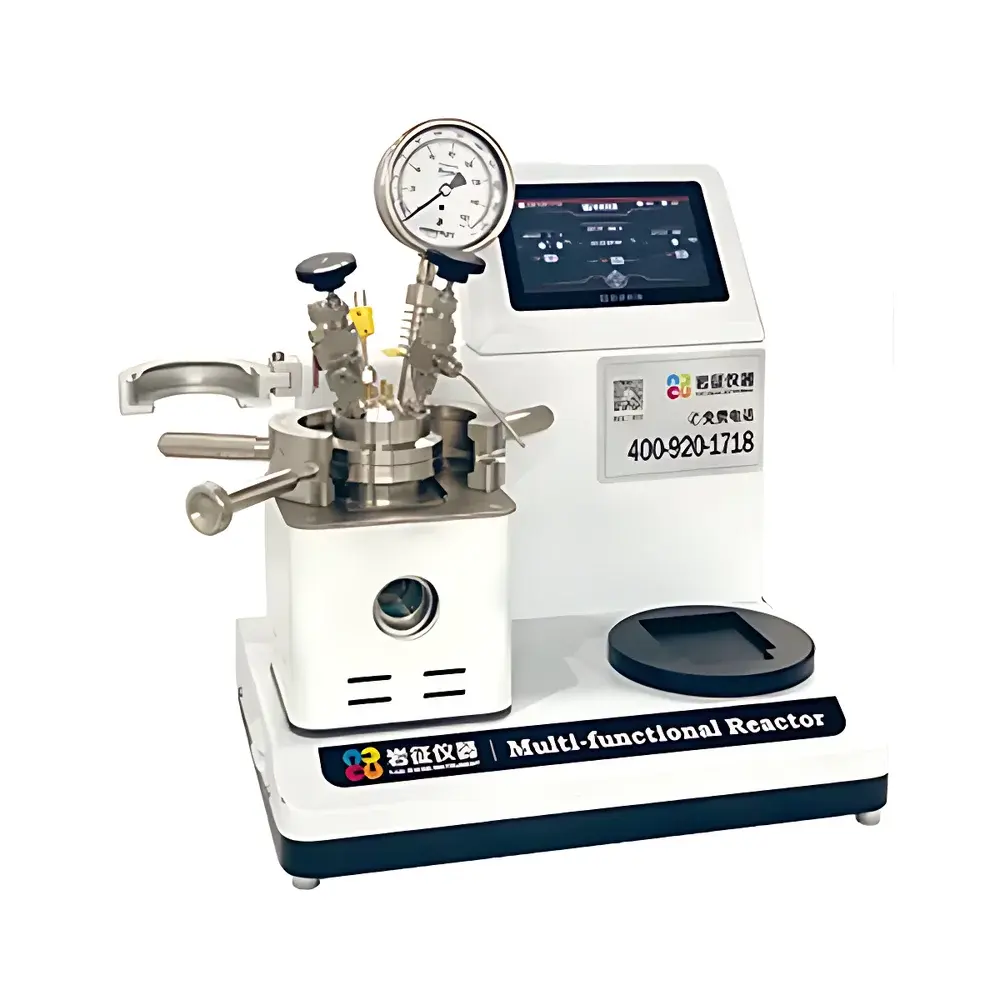
YAN ZHENG INSTRUMENT Electrochemical Corrosion Reactor
| Brand | YAN ZHENG INSTRUMENT |
|---|---|
| Origin | Shanghai, China |
| Manufacturer Type | Direct Manufacturer |
| Country of Origin | China |
| Model | Electrochemical Corrosion Reactor |
| Volume Range | 50–500 mL |
| Vessel Material | ASTM A240 316L Stainless Steel (custom options: Hastelloy C-276, Inconel 625, Titanium Grade 2, Zirconium 702, Monel 400) |
| Maximum Design Pressure | 150 bar |
| Maximum Operating Pressure | 100 bar |
| Vacuum Capability | –1 to 0 bar (gauge), with optional vacuum gauge |
| Maximum Design Temperature | 250 °C |
| Typical Operating Temperature Range | 50–200 °C (electrochemical mode: ≤80 °C) |
| Temperature Control Accuracy | ±1 °C (under non-exothermic/endothermic transient conditions) |
| Heating Power | 500–1500 W (volume-dependent) |
| Agitation System | Magnetic coupling drive |
| Stirring Speed Range | 150–1500 rpm (standard impeller: three-blade propeller) |
| Motor Power | 80 W |
| Control Interface | 7-inch capacitive touchscreen HMI |
Overview
The YAN ZHENG INSTRUMENT Electrochemical Corrosion Reactor is a purpose-engineered high-pressure, temperature-controlled reaction system designed for controlled electrochemical corrosion studies, coupled with simultaneous thermal, pressure, and optical stimuli. It operates on the principle of sealed electrochemical cell integration within a robust autoclave architecture—enabling precise control over electrode potential, electrolyte composition, pressure (up to 100 bar), and temperature (up to 200 °C) in a single experimental platform. Unlike conventional electrochemical cells, this reactor supports true in-situ or operando measurements under realistic process conditions encountered in corrosion science, CO2 electroreduction, NOx abatement, and photoelectrocatalytic degradation of organic pollutants (e.g., formaldehyde). Its modular design accommodates working, reference, and counter electrodes with feedthroughs rated for high-pressure sealing, while maintaining electrical isolation and chemical compatibility with aggressive electrolytes (e.g., acidic chloride media, supercritical CO2-saturated solutions). The reactor is widely deployed in academic corrosion laboratories, industrial R&D centers focused on material durability, and regulatory testing facilities evaluating alloy performance per ASTM G5, G31, G102, and ISO 9223 standards.
Key Features
- High-integrity pressure vessel constructed from ASTM A240 316L stainless steel, with optional upgrades to corrosion-resistant alloys (Hastelloy C-276, Titanium Grade 2, Zirconium 702) for halide-rich or reducing environments
- Integrated magnetic coupling agitation system delivering stable, leak-free mixing at 150–1500 rpm; standard three-blade propeller optimized for uniform current distribution and mass transport near electrode surfaces
- Precision temperature control via PID-regulated heating mantle (500–1500 W), achieving ±1 °C stability under steady-state electrochemical polarization
- Full-range pressure monitoring from –1 to 100 bar (gauge), with calibrated transducers and optional vacuum-rated instrumentation for degassing or inert atmosphere purging
- 7-inch capacitive touchscreen HMI supporting programmable ramp/soak profiles, real-time data logging (T, P, RPM, voltage, current), and user-defined safety interlocks
- Dual-seal electrode feedthroughs with ceramic insulators and metal O-rings compliant with ASME B16.5 Class 150 flange specifications
Sample Compatibility & Compliance
The reactor accommodates liquid-phase, slurry-phase, and gas-saturated electrolytes—including aqueous HCl, NaCl, H2SO4, and non-aqueous LiPF6/EC:DMC systems. Solid samples include metallic coupons (ASTM G1), coated substrates, and porous catalyst electrodes. It meets mechanical integrity requirements per PED 2014/68/EU (Category IV pressure equipment) and incorporates safety features aligned with ISO 4706 for laboratory pressure reactors. For regulated environments, the control system supports audit-trail-enabled operation compatible with GLP-compliant documentation workflows.
Software & Data Management
The embedded HMI firmware records timestamped operational parameters at configurable intervals (100 ms–10 s resolution) and exports CSV-formatted datasets for post-processing in MATLAB, Python (Pandas), or electrochemical analysis suites (e.g., EC-Lab, NOVA). Optional RS-485/Modbus TCP interface enables integration into centralized SCADA or LIMS platforms. All configuration changes, alarm events, and manual overrides are logged with user ID and timestamp—supporting 21 CFR Part 11 readiness when paired with external electronic signature modules.
Applications
- Electrochemical impedance spectroscopy (EIS) and potentiodynamic polarization of alloys under simulated service conditions (e.g., offshore oil & gas, nuclear coolant loops)
- Catalytic CO2 reduction to CH3OH or CH4 using Cu-based cathodes under elevated pCO2 (up to 50 bar)
- Photoelectrocatalytic degradation of formaldehyde and phenolic compounds under UV–vis irradiation with TiO2/WO3 photoanodes
- NOx electrochemical reduction kinetics in molten salt or proton-conducting ceramic electrolytes
- Accelerated corrosion testing of pipeline steels per NACE TM0169 and ASTM G102
FAQ
Can the reactor be used for both electrochemical and photochemical experiments simultaneously?
Yes—the vessel includes quartz viewport options (DN25 or DN40, up to 200 °C/100 bar rating) for in situ irradiation with external light sources (Xe lamps, LED arrays) while maintaining full electrochemical control.
What electrode configurations are supported?
Standard configurations include three-electrode setups (working, reference, counter) with Swagelok-type feedthroughs; custom multi-electrode arrays and rotating disk electrode (RDE) mounts are available upon request.
Is remote monitoring possible?
The reactor supports Modbus TCP communication for integration into Ethernet-based lab networks; real-time parameter streaming and alarm notifications can be configured via external PLC or LabVIEW.
How is calibration traceability maintained?
Pressure transducers are supplied with NIST-traceable calibration certificates; temperature sensors (PT100 Class A) comply with IEC 60751 and are field-verifiable using dry-block calibrators.
What maintenance intervals are recommended?
Magnetic couplings require annual inspection for magnet strength decay; O-rings (Viton/FKM) should be replaced after 500 operating hours or before each new corrosive medium study.



