
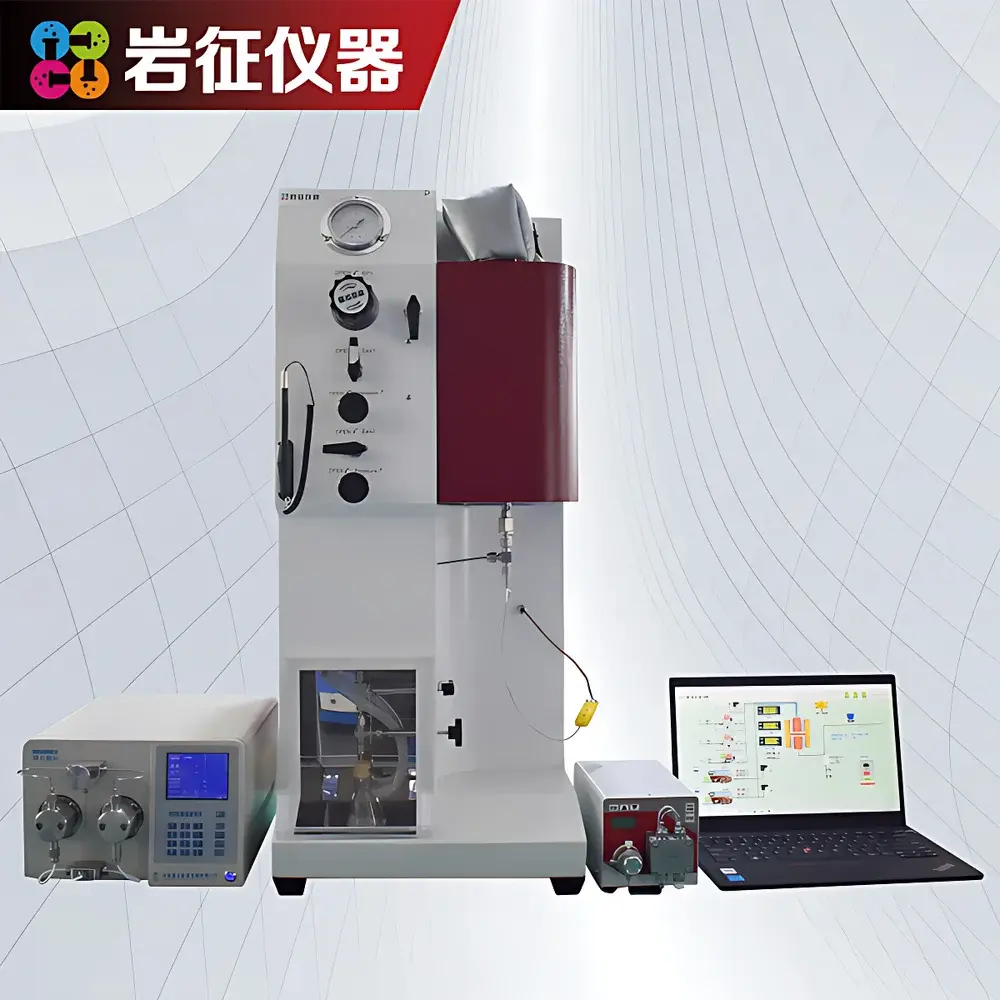
YAN ZHENG INSTRUMENT YZUBPR-G2-L1 226103 Fully Automated Catalyst Evaluation System
| Brand | YAN ZHENG INSTRUMENT |
|---|---|
| Origin | Shanghai, China |
| Manufacturer Type | Original Equipment Manufacturer (OEM) |
| Country of Origin | China |
| Model | YZUBPR-G2-L1 226103 |
| Reaction Pressure | 200 bar |
| Reaction Temperature | 250 °C |
Overview
The YAN ZHENG INSTRUMENT YZUBPR-G2-L1 226103 Fully Automated Catalyst Evaluation System is an integrated, programmable bench-scale reactor platform engineered for high-precision kinetic and stability assessment of heterogeneous catalysts under controlled gas–solid and trickle-bed reaction conditions. Based on fixed-bed flow reactor architecture with modular temperature and pressure regulation, the system implements continuous-flow catalytic testing using precise mass flow controllers (MFCs), back-pressure regulators (BPRs), and multi-zone furnace heating to maintain thermal uniformity across the catalyst bed. Designed for reproducible long-term operation, it supports dynamic parameter sweeps—including temperature ramping, pressure stepping, and feed composition modulation—enabling systematic evaluation of catalyst activity, selectivity, deactivation behavior, and lifetime under industrially relevant process windows.
Key Features
- Fully automated operation with integrated PLC-based control logic and real-time feedback loops for temperature, pressure, and flow rate stabilization
- Stainless-steel 316L fixed-bed reactor tube rated for up to 200 bar operating pressure and sustained at temperatures up to 250 °C with ±1 °C thermal accuracy across the active zone
- Dual independent gas supply lines with digital mass flow controllers (0–100 sccm to 0–5000 sccm range, N₂ equivalent calibration) and optional liquid feed module for co-fed vapor-phase or trickle-bed configurations
- Integrated online gas analysis compatibility via standardized 1/8″ Swagelok ports for coupling with GC, GC-MS, or FTIR systems
- Modular design supporting customizable reactor geometry (e.g., diameter, length, thermocouple placement) and catalyst bed configuration (monolithic, pellet, powder, or coated-wall)
- Fail-safe engineering including overpressure relief valves, redundant temperature monitoring, and emergency shutdown protocols compliant with IEC 61508 SIL 2 functional safety principles
Sample Compatibility & Compliance
The YZUBPR-G2-L1 accommodates a broad spectrum of solid catalyst forms—including extrudates, spheres, washcoated monoliths, and supported nanoparticles—across standard catalyst loading ranges (0.1–10 g). It supports both dry-gas and humidified feed streams, as well as reactive mixtures containing H₂, CO, CO₂, CH₄, NH₃, O₂, NOₓ, SO₂, and hydrocarbons. The system conforms to ISO 17025 requirements for test method validation when operated within documented SOPs, and its hardware architecture permits alignment with GLP-compliant workflows. Data acquisition timestamps, parameter logging intervals, and user access controls can be configured to meet audit readiness criteria for regulatory submissions (e.g., EPA Method 204, ASTM D3226, ISO 10012).
Software & Data Management
The system operates via YAN ZHENG’s proprietary CatalystLab™ control software, running on a Windows-based industrial PC with deterministic real-time scheduling. Software features include recipe-driven experiment sequencing, live PID loop visualization, automatic data export in CSV and HDF5 formats, and built-in calculation modules for turnover frequency (TOF), space-time yield (STY), and Arrhenius-derived activation energy estimation. All operator actions, setpoint changes, and alarm events are recorded with immutable timestamps and user ID tags, satisfying FDA 21 CFR Part 11 requirements for electronic records and signatures when configured with audit trail and electronic signature modules. Raw sensor data is stored locally with optional encrypted cloud backup via TLS 1.2–secured API endpoints.
Applications
- High-throughput screening of transition metal, zeolitic, and metal–organic framework (MOF) catalysts for Fischer–Tropsch synthesis, ammonia decomposition, CO₂ hydrogenation, and selective oxidation reactions
- Multi-variable optimization of catalyst formulation (e.g., promoter ratios, support acidity, metal dispersion) using Design of Experiments (DoE) workflows
- Accelerated aging studies and mechanistic deactivation analysis (e.g., coking, sintering, sulfur poisoning) under realistic feed impurity profiles
- Process intensification studies for microkinetic modeling input generation, including transient response analysis (step-change, pulse-response, TPD/TPR integration)
- Technology transfer support from lab-scale to pilot-plant scale via scalable reactor geometry and identical control logic architecture
FAQ
What types of catalysts can be evaluated using the YZUBPR-G2-L1 system?
The system is optimized for heterogeneous solid catalysts used in gas-phase and trickle-bed reactors, including supported metals, mixed oxides, acidic/basic solids, and structured catalysts such as monoliths and foams.
Is the system compatible with third-party analytical instruments?
Yes—standardized gas sampling ports and synchronization trigger outputs enable seamless integration with GC, GC-MS, FTIR, MS, and micro-reactor calorimeters.
Can the system operate under corrosive or reducing atmospheres?
With appropriate material selection (e.g., Inconel 625 reactor liners, Hastelloy C-276 fittings) and validated sealing solutions, the platform supports H₂S, NH₃, Cl₂, and low-pH vapor environments per user-specified corrosion resistance requirements.
Does the software support automated reporting for regulatory submissions?
CatalystLab™ generates fully traceable, timestamped experiment reports with metadata embedding; when deployed with optional 21 CFR Part 11 modules, it meets documentation standards for pharmaceutical and environmental regulatory filings.
What level of technical support and documentation is provided?
YAN ZHENG delivers comprehensive installation qualification (IQ), operational qualification (OQ), and performance qualification (PQ) documentation packages, along with remote diagnostics, application engineering consultation, and on-site training by certified process engineers.



