
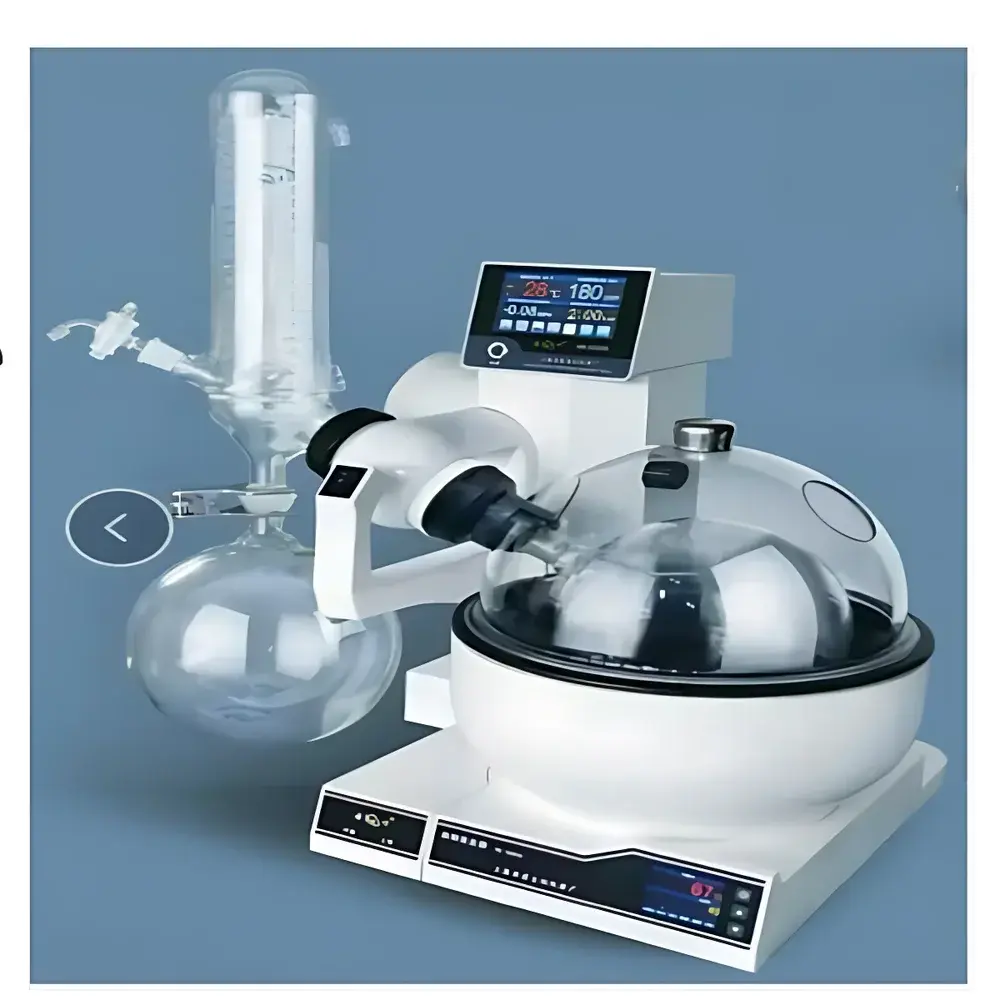
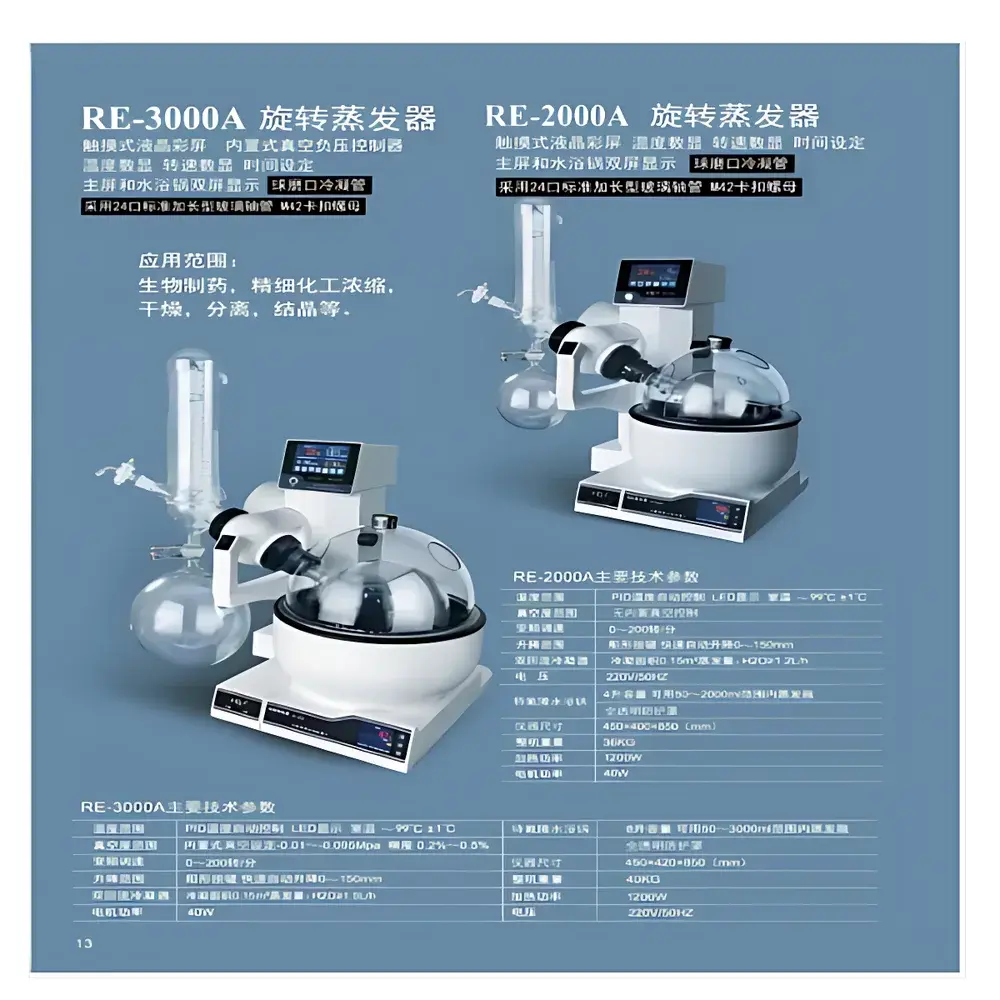
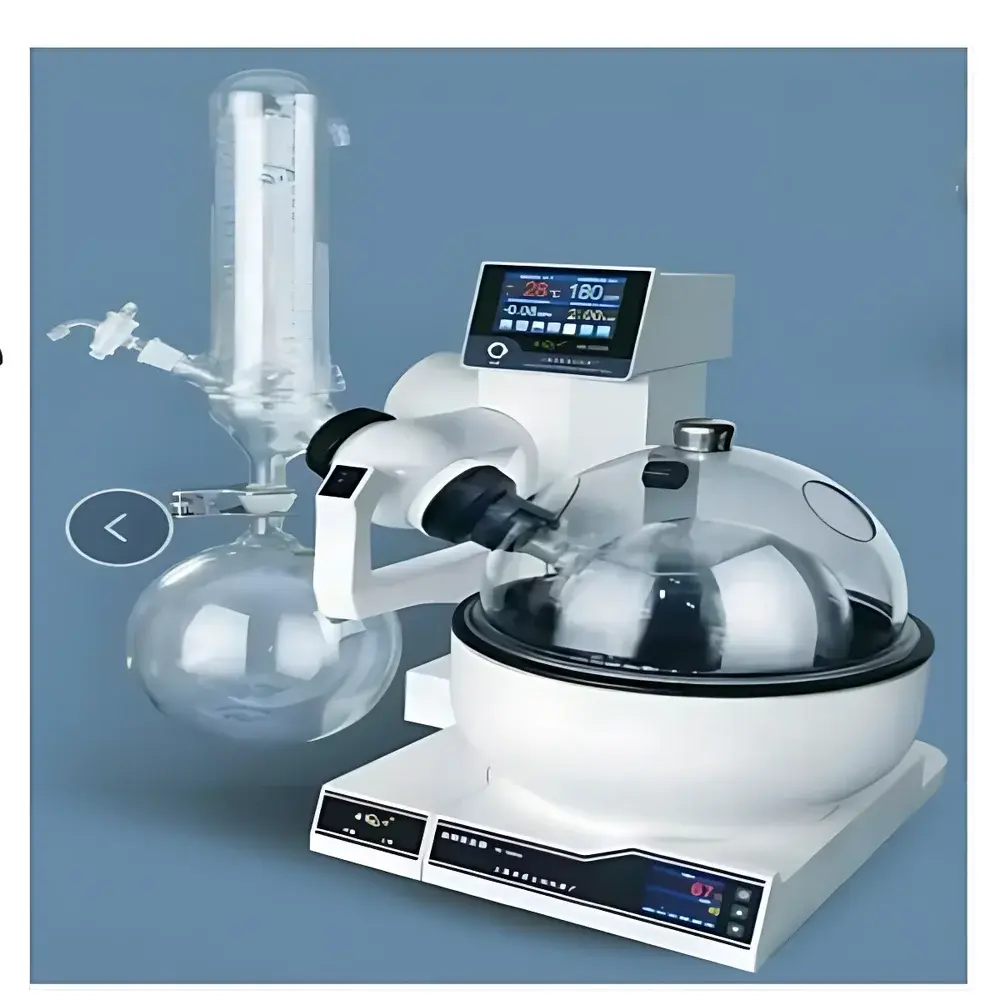
Yarong RE-3000A Rotational Evaporator
| Brand | Yarong |
|---|---|
| Origin | Shanghai, China |
| Model | RE-3000A |
| Temperature Range | Ambient to 99 °C (±1 °C water bath accuracy) |
| Rotational Speed | 0–200 rpm (frequency-controlled) |
| Vacuum Control Range | −0.01 to −0.095 MPa (built-in electromagnetic valve, ±0.2–0.5% accuracy) |
| Condenser Type | Dual-reflux ground-glass condenser with 0.15 m² cooling area |
| Evaporation Rate (H₂O) | ≥1.5 L/h |
| Bath Capacity | 8 L (compatible with 50–3000 mL flasks) |
| Heating Power | 1200 W |
| Motor Power | 40 W |
| Dimensions (W×D×H) | 450×420×850 mm |
| Weight | 40 kg |
| Display | Dual-color LCD screens (main control unit + bath unit) |
| Communication Interface | RS485 for synchronized system control |
| Sealing Material | High-elasticity PTFE |
| Bath Liner | PTFE-coated stainless steel with transparent polycarbonate safety shield |
Overview
The Yarong RE-3000A Rotational Evaporator is a laboratory-grade benchtop system engineered for precise, reproducible solvent removal under reduced pressure. It operates on the fundamental principle of rotary evaporation—rotating a sample flask in a heated water bath while applying controlled vacuum to lower the boiling point of solvents, thereby enabling gentle and efficient concentration or recovery of heat-sensitive compounds. Designed for routine use in synthetic chemistry, natural product isolation, pharmaceutical QC, and academic research labs, the RE-3000A integrates PID temperature regulation, frequency-controlled rotation, and closed-loop vacuum management into a single robust architecture. Its dual-display interface, modular mechanical design, and compliance-ready control logic support traceable, repeatable operation aligned with GLP-aligned workflows.
Key Features
- Two independent color LCD displays—one on the main control panel and one integrated into the water bath unit—enabling simultaneous monitoring of temperature, rotation speed, vacuum level, and timer status.
- Integrated vacuum control system with programmable setpoint targeting (−0.01 to −0.095 MPa), automatic electromagnetic valve actuation, and coordinated vacuum pump start/stop sequencing via RS485 communication.
- PTFE-sealed, ground-glass ball-joint condenser with dual-reflux geometry and 0.15 m² effective cooling surface area, optimized for high recovery efficiency across volatile and semi-volatile solvents.
- Frequency-inverter-driven rotation motor (0–200 rpm) with encoder-based knob input, ensuring smooth torque delivery and minimal mechanical vibration during extended runs.
- PTFE-coated stainless-steel heating bath (8 L capacity) with transparent polycarbonate safety shield, providing thermal insulation, splash protection, and visual process monitoring without compromising energy efficiency.
- Quick-action vertical lift mechanism (0–150 mm travel) with rail-guided, shock-free auto-elevation—designed for consistent flask alignment and operator safety during solvent transfer or flask exchange.
- Conical ground-glass joint locking system with ring-nut retention, ensuring secure flask attachment and rapid, tool-free disengagement—even after prolonged heating cycles.
Sample Compatibility & Compliance
The RE-3000A accommodates standard conical ground-glass flasks ranging from 50 mL to 3000 mL, supporting both small-scale screening and preparative-scale evaporation. All wetted surfaces—including condenser tubing, vapor ducts, and flask joints—are constructed from borosilicate glass and PTFE, ensuring chemical resistance to common organic solvents (e.g., acetone, ethyl acetate, dichloromethane, methanol) and mild aqueous acids/bases. The system’s programmable parameters (temperature, time, vacuum, rotation) are logged with timestamping via RS485 interface, supporting audit trails required under ISO/IEC 17025, USP , and FDA 21 CFR Part 11-compliant data management protocols when paired with validated third-party acquisition software.
Software & Data Management
While the RE-3000A operates as a standalone instrument with local parameter storage, its RS485 port enables integration into centralized lab automation networks. External SCADA or LIMS platforms can poll real-time operational data—including bath temperature, actual vacuum pressure, rotational speed, and elapsed run time—via Modbus RTU protocol. All user-defined setpoints and runtime events are retained in non-volatile memory, facilitating post-run review and deviation analysis. The dual-screen interface supports menu-driven navigation with intuitive iconography and context-sensitive prompts, reducing training overhead and minimizing misconfiguration risk in multi-user environments.
Applications
- Solvent removal from reaction mixtures prior to chromatographic analysis or crystallization.
- Concentration of natural extracts (e.g., plant alkaloids, essential oils) without thermal degradation.
- Recovery and recycling of high-purity solvents in pilot-scale synthesis.
- Preparative drying of thermolabile APIs and intermediates under controlled vacuum profiles.
- Removal of residual solvents from polymer solutions and nanomaterial dispersions.
- Standardized evaporation procedures compliant with ASTM D1296 (volatility of solvents) and ISO 661 (preparation of test samples for fat analysis).
FAQ
What is the maximum recommended operating temperature for the water bath?
The PID-controlled bath is rated for continuous operation up to 99 °C, with typical stability maintained within ±1 °C across the full range.
Can the RE-3000A be used with corrosive solvents such as concentrated HCl or HF?
No. While PTFE and borosilicate glass provide broad chemical compatibility, hydrofluoric acid and fuming sulfuric/nitric acids are not compatible and will compromise seal integrity and condenser longevity.
Is the vacuum controller capable of maintaining a stable setpoint during solvent boiling?
Yes—the built-in electromagnetic valve modulates vacuum flow dynamically in response to vapor load, compensating for pressure fluctuations caused by vigorous boiling or changing solvent composition.
Does the system include a chiller interface or coolant circulation port?
No. The RE-3000A relies on ambient air-cooled condensation; users requiring sub-ambient condensation must connect an external recirculating chiller to the condenser’s inlet/outlet ports (standard 10 mm OD tubing connections).
How is calibration verification performed for temperature and vacuum sensors?
Temperature calibration is conducted using NIST-traceable PT100 reference probes inserted into the bath fluid; vacuum sensor verification requires a calibrated digital manometer connected in parallel to the vacuum line per ISO 5347 guidelines.



