
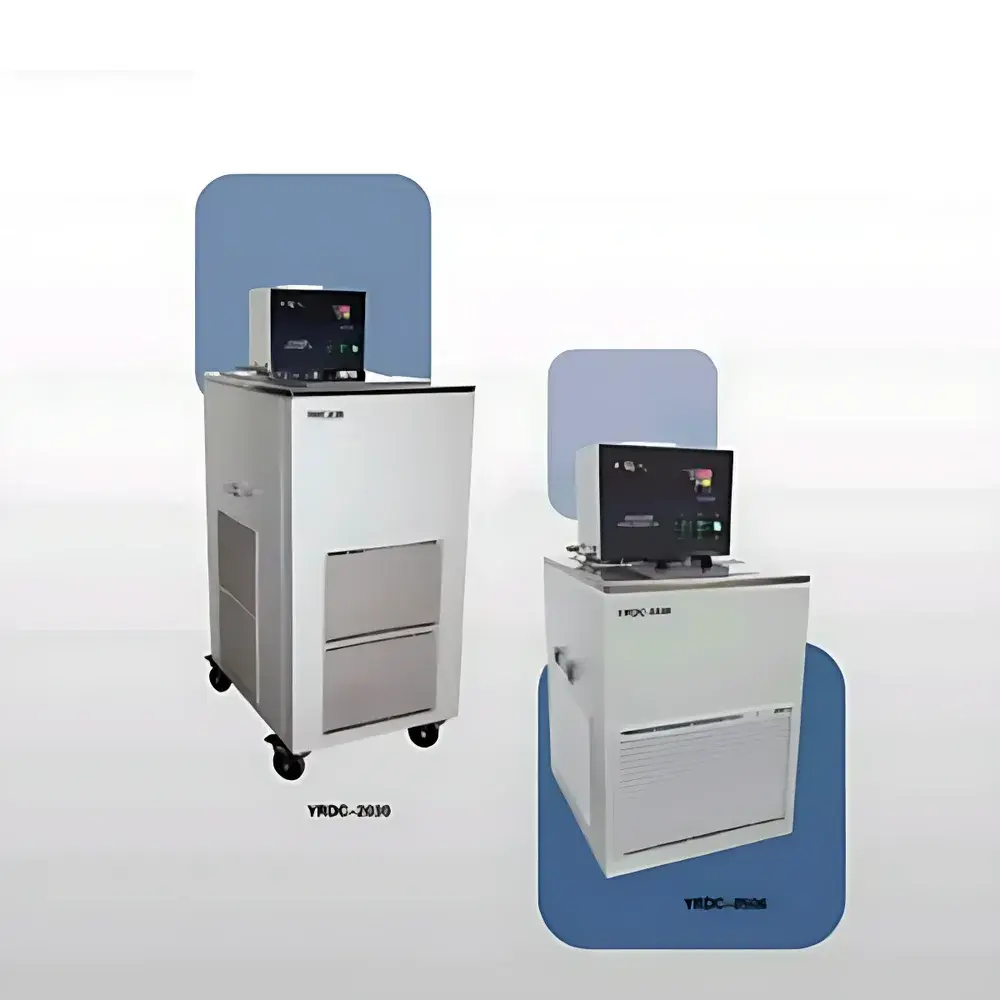
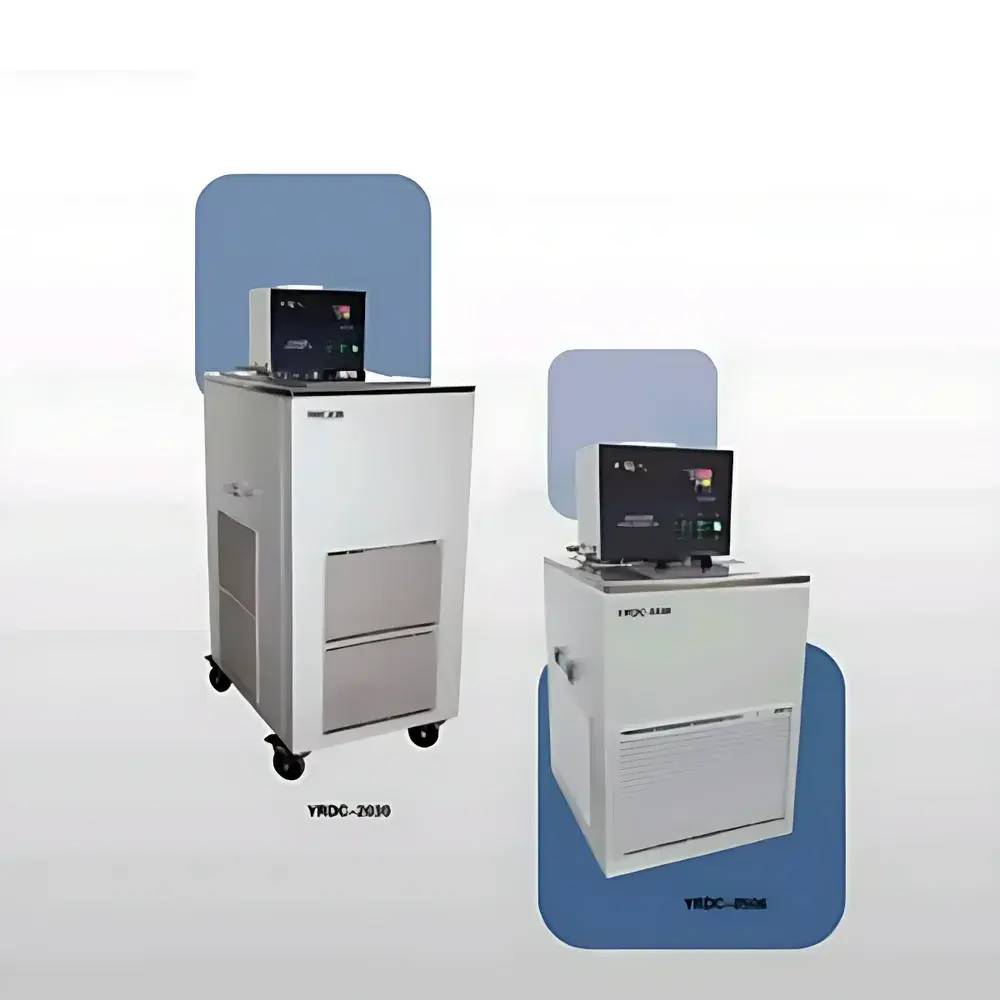
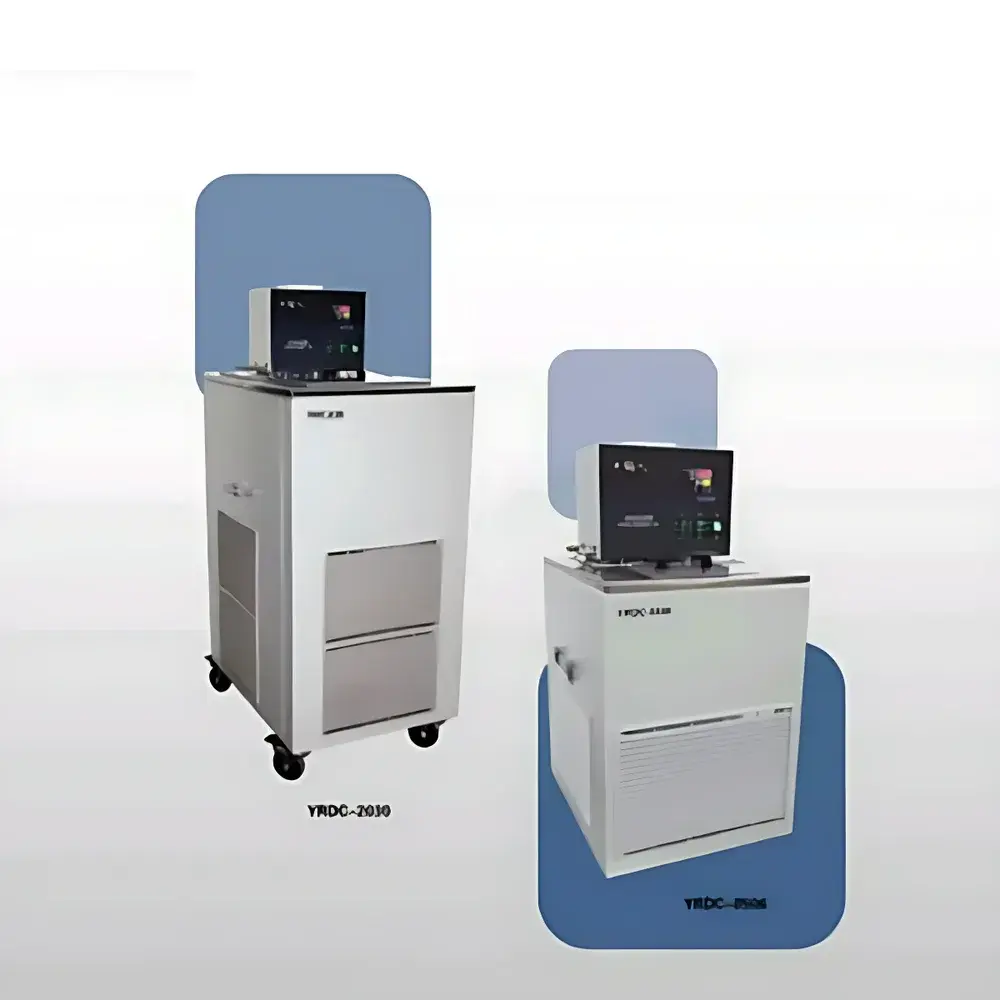
Yarong YRDC-1010 Vertical Cryogenic Circulating Thermostat
| Brand | Yarong |
|---|---|
| Origin | Shanghai, China |
| Model | YRDC-1010 |
| Instrument Type | Vertical |
| Temperature Stability | ≤±0.05 °C |
| Temperature Uniformity | ≤±0.05 °C |
| Setpoint Resolution | 0.1 °C |
| Operating Range | −10 °C to 100 °C |
| Bath Opening | 180 mm × 140 mm |
| Heating Power | 1000 W |
| Bath Volume | 10 L |
| Vibration Stability | Low-vibration, stable operation |
| External Dimensions | 500 mm × 400 mm × 600 mm |
| Net Weight | 30 kg |
| Compatible Heat Transfer Media | Deionized Water or Thermal Oil |
Overview
The Yarong YRDC-1010 Vertical Cryogenic Circulating Thermostat is an engineered precision temperature control system designed for laboratory applications requiring stable, reproducible thermal environments across a broad operational range (−10 °C to 100 °C). Utilizing a dual-mode refrigeration and resistive heating architecture with PID-controlled feedback, the unit maintains exceptional thermal stability (≤±0.05 °C) and spatial uniformity (≤±0.05 °C) within its 10-liter stainless-steel bath. Its vertical configuration optimizes benchtop footprint while supporting external circulation via integrated pump and inlet/outlet ports—enabling precise temperature regulation of external reactors, spectrophotometer cells, viscometers, or material testing fixtures. The system is constructed with corrosion-resistant materials and features insulated double-wall construction to minimize ambient thermal interference and energy consumption.
Key Features
- High-precision digital temperature controller with 0.1 °C setpoint resolution and real-time display of bath temperature, setpoint, and status indicators
- Dual-function thermal management: hermetically sealed compressor-based cooling combined with 1000 W high-efficiency resistive heating for rapid ramping and tight regulation across the full −10 °C to 100 °C range
- Low-vibration pump design ensures minimal mechanical disturbance—critical for optical measurements, interferometry, and sensitive electrochemical setups
- Stainless-steel bath (180 mm × 140 mm opening, 10 L capacity) compatible with deionized water and synthetic thermal oils, supporting both aqueous and non-aqueous experimental protocols
- Robust mechanical architecture: powder-coated steel chassis, reinforced insulation, and shock-absorbing mounting to sustain long-term operational integrity under continuous duty cycles
- Integrated circulation porting (G1/4″ BSP) with adjustable flow rate and pressure relief—designed for seamless integration into closed-loop systems without auxiliary manifolds
Sample Compatibility & Compliance
The YRDC-1010 accommodates standard laboratory vessels—including jacketed glass reactors (up to Ø200 mm), immersion probes, cuvettes, and calibration standards—within its open bath or via external circulation. Its temperature performance meets requirements for ISO/IEC 17025-compliant calibration laboratories when used with traceable reference thermometers. While not certified to UL/CSA or CE for medical device use, the unit complies with IEC 61010-1:2010 safety standards for electrical equipment in laboratory environments. All wetted components are chemically inert to common heat transfer media; compatibility verification with aggressive solvents (e.g., chlorinated hydrocarbons or strong acids) must be conducted prior to use per manufacturer guidelines.
Software & Data Management
The YRDC-1010 operates as a standalone instrument with no embedded software or network interface. Temperature logging requires external data acquisition via its analog 0–5 V or 4–20 mA output (optional configuration). For GLP/GMP-aligned workflows, users may integrate the unit with validated third-party SCADA or LIMS platforms using standard signal conditioning modules. Audit trail functionality, electronic signatures, and 21 CFR Part 11 compliance are achieved only through externally validated software layers—not native firmware. Manual operation includes password-protected parameter locking to prevent unauthorized setpoint changes during unattended runs.
Applications
- Calibration of thermocouples, RTDs, and liquid-in-glass thermometers against NIST-traceable references
- Temperature-dependent viscosity and rheological characterization of polymers, pharmaceutical suspensions, and nanofluids
- Stabilization of optical benches, laser cavities, and interferometric measurement cells requiring sub-0.1 °C drift over multi-hour acquisitions
- Controlled-rate thermal cycling in material science studies—including coefficient of thermal expansion (CTE) determination and phase transition analysis
- Support of enzymatic assays, protein folding experiments, and cell culture incubation accessories where precise thermal gradients impact kinetic reproducibility
- Pre-conditioning of reference standards prior to metrological evaluation in accredited testing laboratories
FAQ
What heat transfer fluids are recommended for operation below 0 °C?
Deionized water with 25–30% propylene glycol (by volume) is suitable down to −15 °C. For extended low-temperature operation (−25 °C and below), synthetic silicone or polyalphaolefin (PAO)-based thermal oils are required.
Can the YRDC-1010 be used for external circulation with a 25 L reactor?
Yes—its rated flow rate (≥12 L/min at 0.2 bar backpressure) supports external loops up to 30 L volume when tubing length and fittings are optimized for minimal pressure drop.
Is the bath depth sufficient to fully submerge a 300 mm immersion probe?
The internal bath depth is approximately 280 mm; full submersion of 300 mm probes requires optional extension kits or external circulation mode.
Does the unit support RS-232 or USB communication for remote control?
No—serial or digital communication interfaces are not included. Remote monitoring and control require analog signal interfacing via external DAQ hardware.
What maintenance intervals are recommended for sustained accuracy?
Compressor oil and refrigerant levels should be verified annually by qualified service personnel; bath fluid should be replaced every 6 months if used continuously above 80 °C or with glycol mixtures.



