
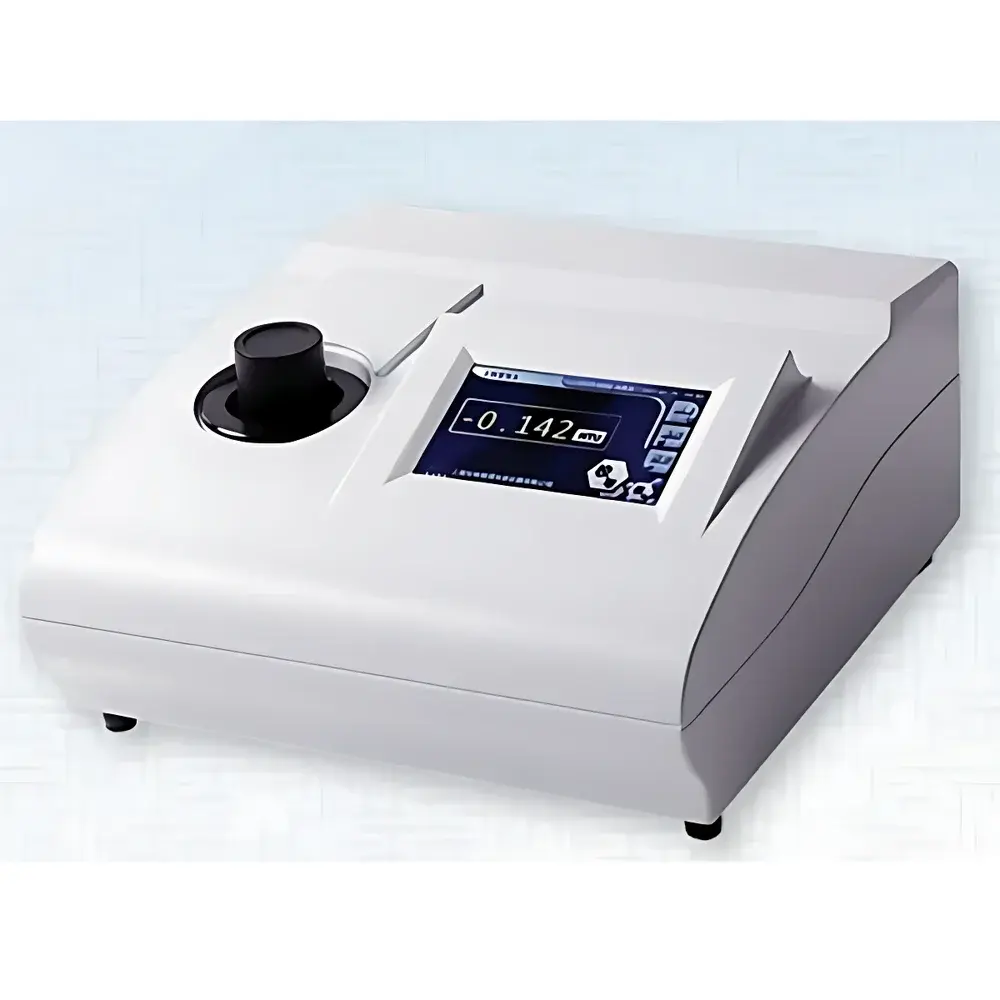
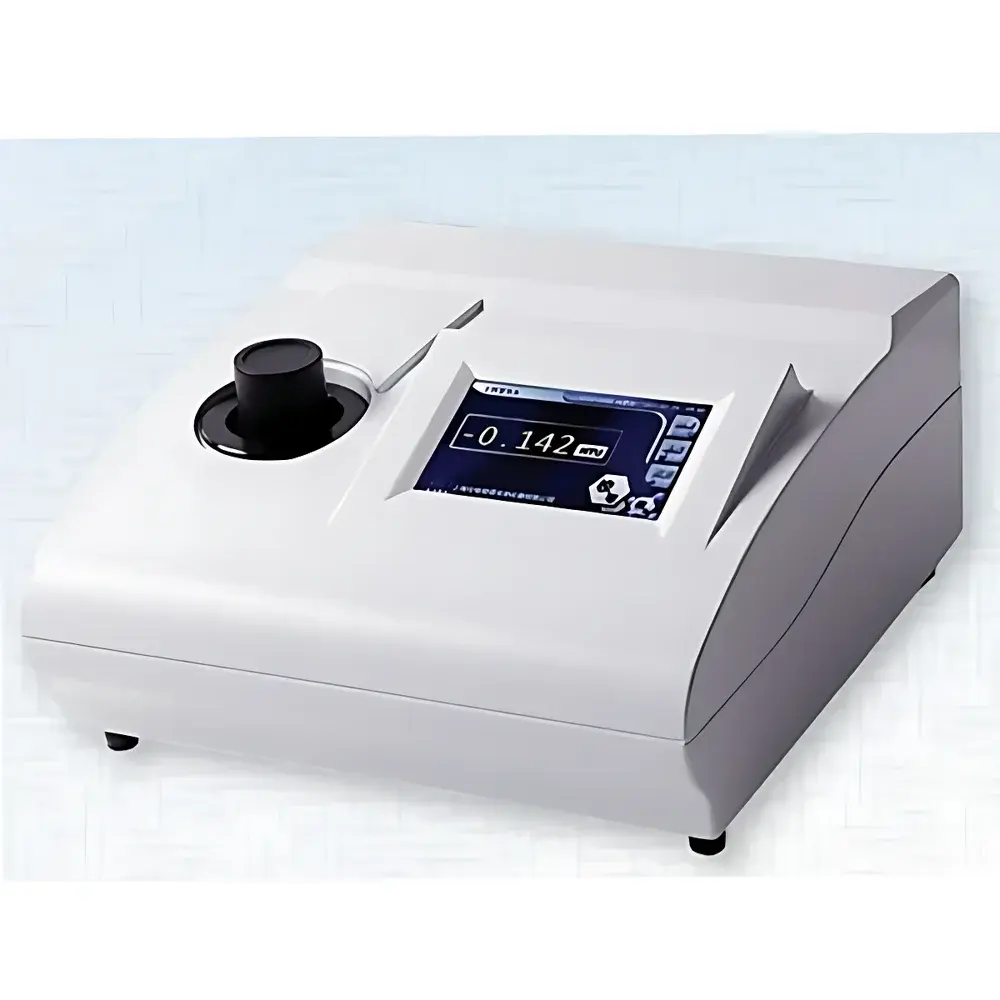
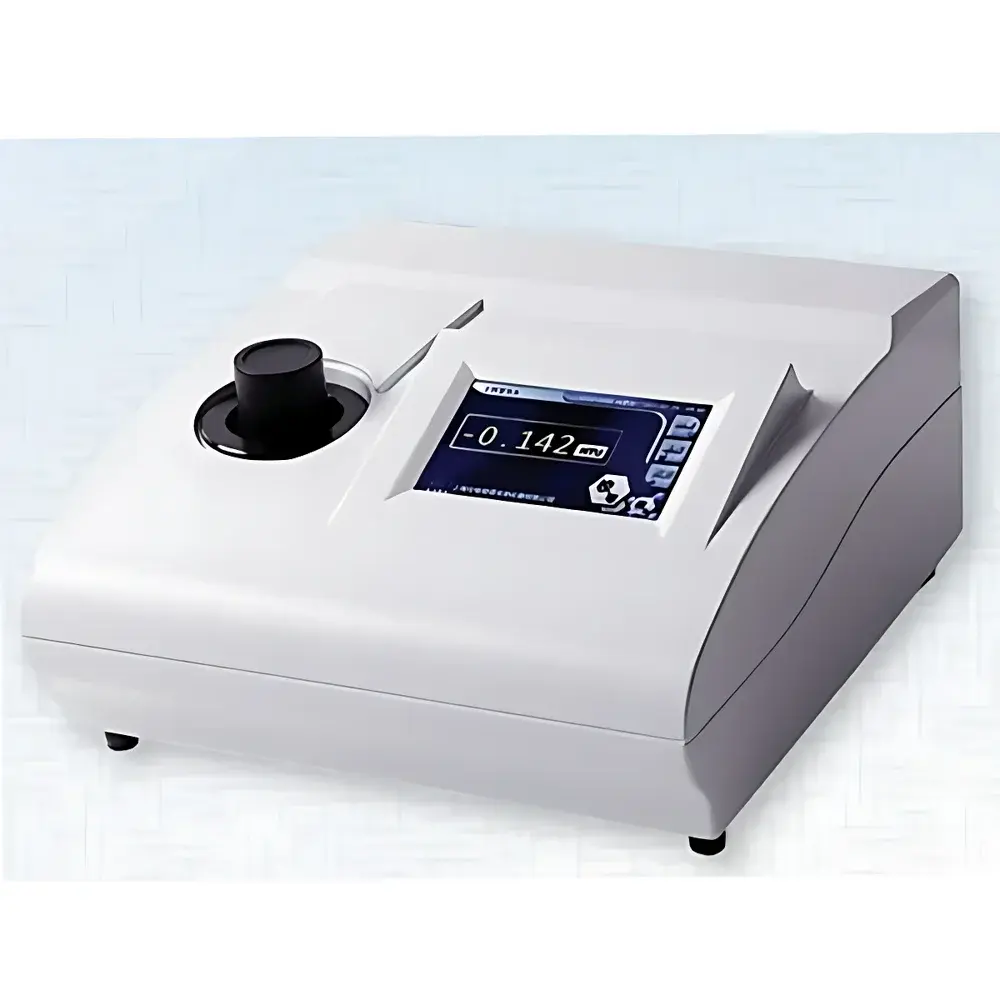
YDWG WGZ-200 Portable Turbidimeter
| Brand | YDWG |
|---|---|
| Origin | Shanghai, China |
| Model | WGZ-200 |
| Type | Portable |
| Measurement Range | 0.000–20.00 NTU |
| Resolution | 0.01 NTU |
| Operating Temperature | 5–40 °C |
| Accuracy | ≤ ±3% |
| Compliance | ISO 7027, HJ 1075–2019, Chinese Pharmacopoeia General Chapter 0902 (Method II) |
Overview
The YDWG WGZ-200 Portable Turbidimeter is a microprocessor-controlled optical instrument engineered for precise, field-deployable and laboratory-based turbidity measurement in clear liquids—primarily aqueous solutions. It operates on the nephelometric principle—measuring the intensity of light scattered at 90° relative to the incident beam—combined with simultaneous transmission detection to implement ratio-based signal compensation. This dual-detector architecture mitigates errors caused by coloration, absorbance, or lamp intensity drift, thereby enhancing measurement robustness across variable sample matrices. Designed in strict accordance with ISO 7027:2016 (Water quality — Determination of turbidity), the WGZ-200 delivers traceable, reproducible results suitable for regulatory reporting and quality control workflows. Its compact form factor, integrated rechargeable power management (AC 220 V ±10%, 50 Hz ±1 Hz with grounding), and ruggedized housing enable reliable operation in diverse environments—from municipal water treatment facilities and pharmaceutical cleanrooms to industrial QC labs and environmental monitoring stations.
Key Features
- Ratio-based nephelometric measurement system compliant with ISO 7027 optical geometry and spectral response requirements
- Full-color capacitive touchscreen interface with intuitive icon-driven navigation and multilingual menu support (English default)
- Auto-ranging measurement from 0.000 to 20.00 NTU with 0.01 NTU resolution and ≤ ±3% full-scale accuracy (certified per HJ 1075–2019 calibration protocol)
- Multi-point calibration capability (up to 5 standard points) using formazin or StablCal® reference suspensions; calibration coefficients stored with timestamp and operator ID
- Onboard data storage for up to 1,000 measurement records, each tagged with date, time, sample ID, calibration status, and operator metadata
- Dual data export pathways: USB 2.0 host port for direct connection to Windows/Linux PCs and USB flash drive read/write support for offline batch transfer
- GLP-compliant audit trail functionality: all critical events—including calibration, zeroing, firmware updates, and user logins—are timestamped and immutable in internal memory
Sample Compatibility & Compliance
The WGZ-200 is validated for use with low-absorbance, optically transparent liquids containing suspended particulates—such as drinking water, filtered process water, pharmaceutical rinse solutions, and clarified bioprocess streams. It meets the instrumental requirements specified in HJ 1075–2019 (“Determination of Turbidity in Water Quality”) issued by China’s Ministry of Ecology and Environment. For pharmaceutical applications, it satisfies the technical criteria outlined in the Chinese Pharmacopoeia (ChP) General Chapter 0902 “Clarity Testing—Method II (Turbidimetric Method)”, including detector linearity, stray light rejection (< 0.1% at 400 nm), and repeatability (RSD ≤ 2.0% for repeated measurements of 1.0 NTU standard). The instrument does not require temperature-controlled cuvette compartments but mandates stable ambient conditions (5–40 °C, RH ≤ 85%, non-condensing) and mechanical isolation from vibration sources per ISO/IEC 17025:2017 Clause 6.3.3.
Software & Data Management
Data acquisition and reporting are managed via embedded firmware supporting CSV-formatted export compatible with LIMS, Excel, and statistical process control (SPC) platforms. All exported files include embedded metadata headers conforming to ASTM E2500-13 Annex A1 for analytical instrument data traceability. The USB interface supports mass-storage-class enumeration, eliminating driver installation requirements on modern operating systems. Audit logs retain ≥12 months of operational history and are exportable separately for internal QA review or regulatory inspection (e.g., FDA 21 CFR Part 11 readiness verified via electronic signature-capable firmware version 2.4+). No cloud connectivity or remote telemetry is implemented—ensuring full data sovereignty and alignment with GxP IT infrastructure policies.
Applications
- Drinking water and wastewater treatment: routine turbidity verification pre- and post-filtration, compliance with WHO/EPA/GB 5749–2022 limits
- Pharmaceutical manufacturing: clarity testing of injectables and APIs per ChP 0902, USP , and EP 2.2.1
- Food & beverage QC: monitoring colloidal stability in juices, dairy filtrates, and brewing wort
- Power generation: boiler feedwater purity assessment and condensate monitoring
- Environmental field studies: rapid screening of surface water turbidity during sediment transport investigations
- Academic research: teaching nephelometry fundamentals and validating particle dispersion models
FAQ
Does the WGZ-200 comply with USP or EP 2.2.1 for injectable clarity testing?
Yes—when operated with NIST-traceable formazin standards and following ChP 0902 Method II procedural controls, its optical performance satisfies the sensitivity, repeatability, and linearity thresholds referenced in both USP and Ph. Eur. 2.2.1.
Can the instrument be used for colored samples such as tea extracts or fruit juice concentrates?
It is not recommended for highly absorbing matrices (>0.1 AU at 860 nm); the ratio algorithm compensates only for moderate color interference. For such samples, consider a dedicated absorbance-corrected turbidimeter or dilution protocols validated per ISO 7027 Annex B.
Is firmware update supported, and how is version control managed?
Firmware updates are delivered via signed .bin files loaded from USB drive; each update generates an immutable log entry with hash verification and rollback capability to previous certified versions.
What is the calibration frequency recommendation under GLP conditions?
Daily system suitability verification using a 0.1 NTU and 5.0 NTU standard is required; full multi-point calibration must be performed at least once per shift or after any maintenance event affecting optical path integrity.
Does the device support 21 CFR Part 11 compliance out-of-the-box?
Yes—user authentication (password + role-based access), electronic signatures for calibration and test records, and tamper-evident audit logs are enabled by default in firmware v2.4 and later.




