
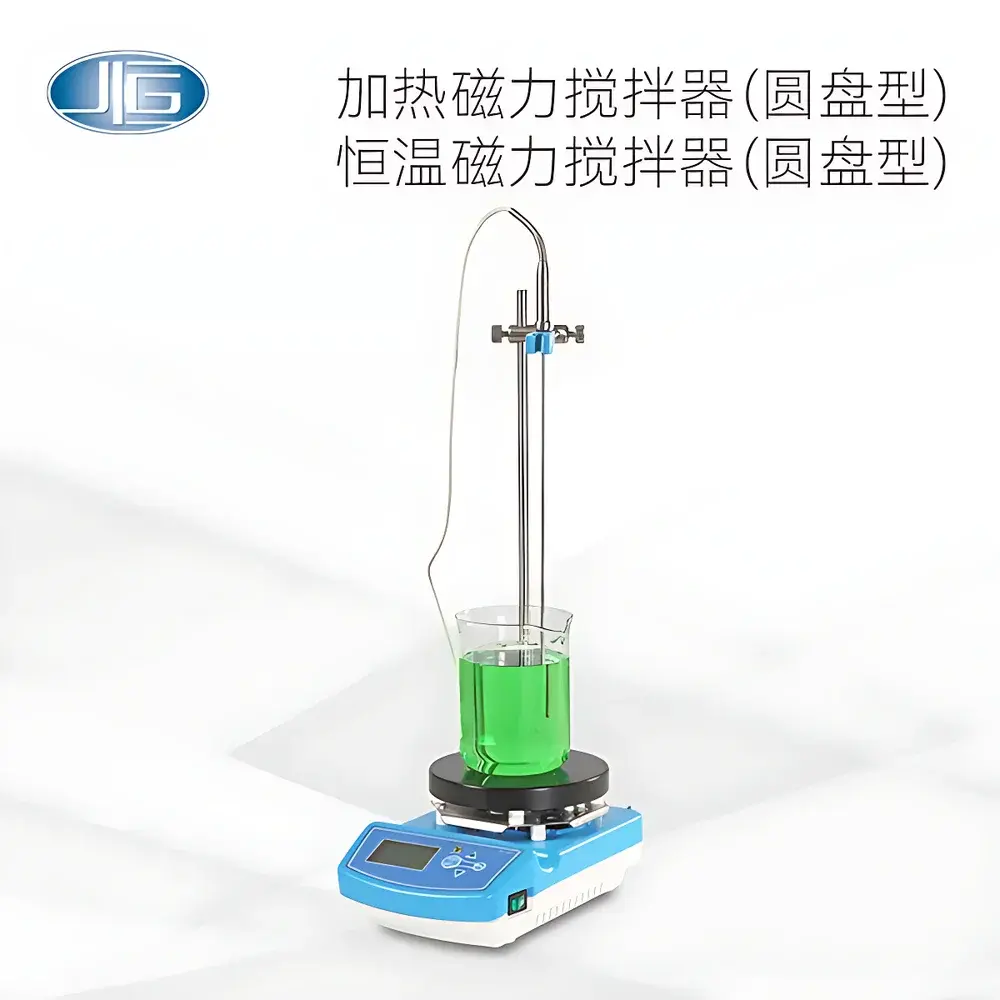
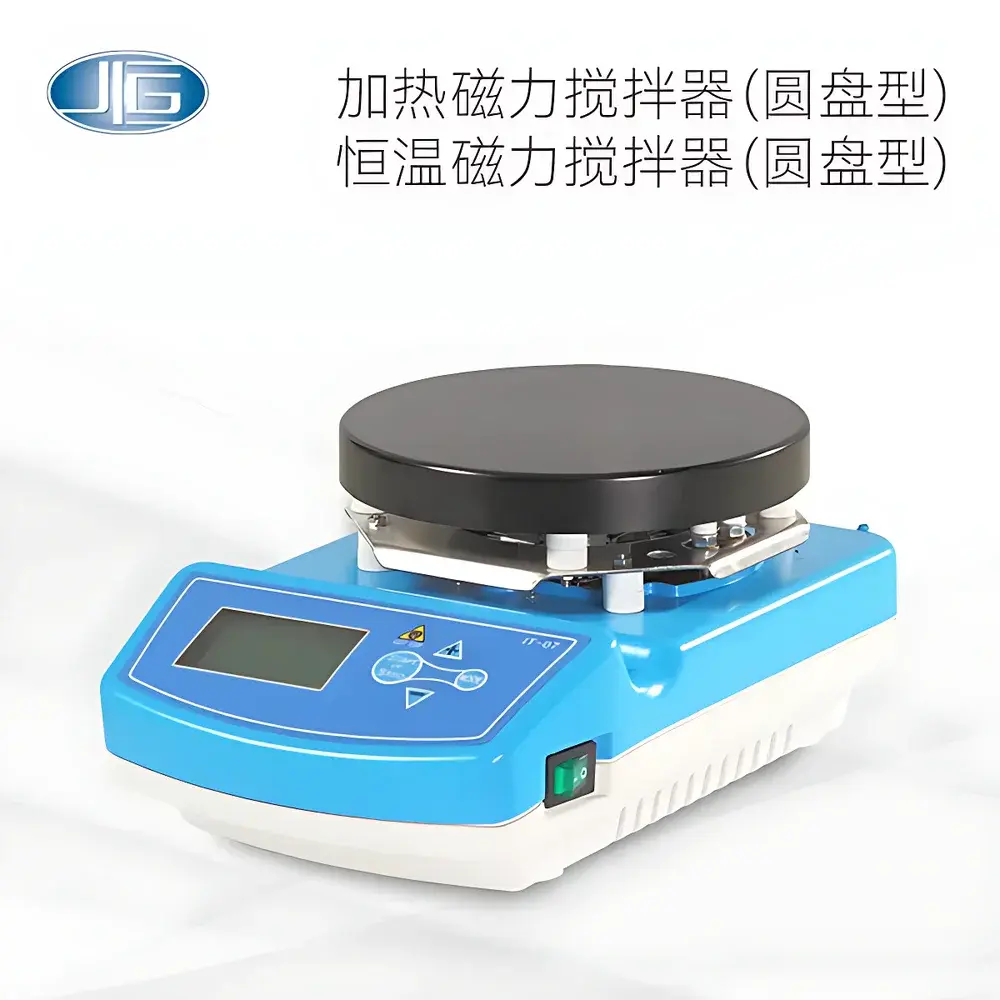
YIHENG IT-08 Advanced Programmable Hotplate Magnetic Stirrer
| Brand | YIHENG |
|---|---|
| Origin | Shanghai, China |
| Manufacturer Type | Direct Manufacturer |
| Product Category | Domestic |
| Model | IT-08 |
| Instrument Type | Hotplate Magnetic Stirrer |
| Max Stirring Volume | 5 L |
| Speed Range | 100–1600 rpm (2000 rpm optional on custom order) |
| Temperature Control Range | RT+5°C to 200°C |
Overview
The YIHENG IT-08 Advanced Programmable Hotplate Magnetic Stirrer is an integrated laboratory instrument engineered for precision temperature-controlled mixing in research, quality control, and teaching laboratories. It operates on the principle of magnetic coupling—where a rotating permanent magnet beneath the heated ceramic-aluminum composite plate induces rotation of a PTFE- or glass-coated stir bar immersed in the sample vessel. Unlike conventional gear-driven stirrers, this system eliminates mechanical wear and enables sealed-vessel operation. The IT-08 combines high-torque brushless DC motor drive with microprocessor-based closed-loop thermal regulation, supporting reproducible heating and stirring protocols across diverse viscosities and volumes up to 5 L. Its design complies with general safety requirements for Class I electrical laboratory equipment per IEC 61010-1 and incorporates multiple independent thermal safeguards aligned with GLP-compliant operational practices.
Key Features
- Large backlit LCD display with intuitive menu-driven interface showing real-time setpoints and actual values for temperature, speed, and timer—all simultaneously visible.
- Microprocessor-controlled speed regulation maintains constant rotational velocity even under dynamic viscosity changes, ensuring consistent shear input during reactions or dissolution processes.
- Die-cast aluminum housing with corrosion-resistant coating provides structural rigidity, thermal stability, and ease of decontamination—critical for multi-user lab environments.
- Heating plate constructed from high-purity aluminum with proprietary composite surface coating ensures uniform heat distribution, rapid thermal response, and resistance to chemical etching from common solvents and reagents.
- High-torque brushless DC motor delivers stable rotation at low speeds (100 rpm) and robust performance at maximum rated speed (1600 rpm), supporting both low-viscosity bulk mixing and high-viscosity small-volume homogenization.
- Integrated anti-spill liquid channel around control panel prevents ingress of accidental overflow into internal electronics—enhancing long-term reliability in routine use.
- Programmable functionality includes delay start, forward/reverse rotation cycling, Fahrenheit/Celsius unit selection, auto-tuning PID parameters, configurable alarm modes, power-on default settings, hold-at-temperature post-timer, and factory reset capability.
Sample Compatibility & Compliance
The IT-08 accommodates standard round-bottom flasks, beakers, and Erlenmeyer flasks (up to 5 L capacity) with diameters compatible with its circular heating zone. It supports stir bars ranging from 10 mm to 60 mm in length and is compatible with PTFE-, glass-, or ceramic-coated magnetic agitators. While not certified to specific ISO/ASTM standards as a standalone analytical device, its thermal accuracy (±1.5°C typical at 100°C), speed stability (<±2% full scale), and safety architecture meet baseline expectations for GLP-aligned method development and routine QC procedures. Optional external Pt100 probe integration (A-series configuration) enables direct solution temperature feedback control per USP and ASTM E2932 guidelines for temperature-sensitive formulations.
Software & Data Management
The IT-08 operates as a standalone instrument without embedded data logging or PC connectivity. All parameter entries, alarms, and operational states are retained in non-volatile memory. For traceability in regulated environments, users may document run conditions manually or integrate the device into validated workflows using external environmental monitoring systems. Alarm events—including temperature deviation, overtemperature cutoff, and sensor fault codes—are displayed numerically and persist until acknowledged, supporting audit-ready recordkeeping per FDA 21 CFR Part 11 when paired with compliant electronic lab notebook (ELN) platforms.
Applications
- Controlled heating and agitation during chemical synthesis, polymerization, and crystallization studies.
- Dissolution testing of pharmaceutical tablets and capsules under pharmacopeial conditions (e.g., USP Apparatus II).
- Buffer preparation, media sterilization support, and enzymatic reaction kinetics where precise thermal and mixing consistency is required.
- Sample conditioning prior to analysis by HPLC, ICP-OES, or titration—ensuring homogeneous composition and thermal equilibration.
- Teaching labs requiring durable, intuitive instrumentation for undergraduate chemistry and biology curricula.
FAQ
What is the difference between A-, B-, and C-series configurations?
The A-series supports external Pt100 probe input for direct solution temperature control; the B-series regulates only the hotplate surface temperature; the C-series provides stirring only, with no heating function.
Can the IT-08 be used with corrosive solvents like concentrated acids or halogenated organics?
Yes—the coated aluminum plate and sealed control electronics resist moderate chemical exposure; however, prolonged contact with strong oxidizers or molten alkalis is not recommended without protective barriers.
Is the 2000 rpm speed option factory-installed or field-upgradable?
The 2000 rpm variant is configured at time of manufacture and requires motor and firmware calibration specific to that specification—field retrofitting is not supported.
Does the unit comply with electromagnetic compatibility (EMC) directives for EU markets?
The IT-08 meets CE marking requirements under the EMC Directive 2014/30/EU and Low Voltage Directive 2014/35/EU when supplied with appropriate regional power adapters and documentation.
How does the self-diagnostic overtemperature protection operate during continuous operation?
Two independent thermal cutoffs activate: one triggers at user-defined deviation above setpoint (default ±6°C); the second engages if plate temperature exceeds 330°C, initiating automatic cooldown before resuming controlled heating—no manual reset required.



