
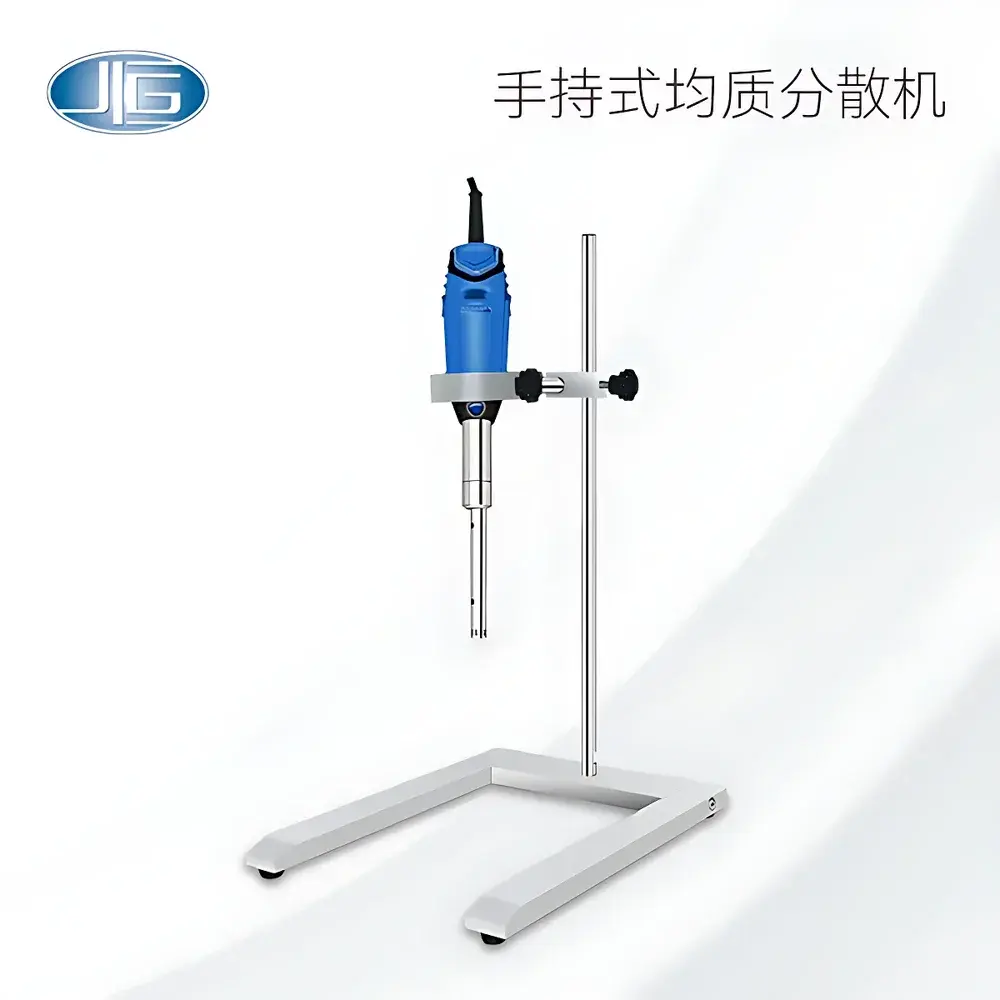
YIHENG B-170-A Handheld Homogenizer
| Brand | YIHENG |
|---|---|
| Origin | Jiangsu, China |
| Manufacturer Type | Direct Manufacturer |
| Country of Origin | China |
| Model | B-170-A |
| Price Range | USD 840–885 (FOB) |
| Instrument Type | Probe-type Rotor-Stator Homogenizer |
| Dimensions (W×D×H) | 55 × 46 × 185 mm |
| Processing Volume | 0.2–50 mL (with B-170/5 dispersing head) |
| Material | 316L Stainless Steel Dispersing Head |
| Safety | Double Insulation Protection |
| Sterilization | Autoclavable (121°C, 20 min) |
| Operation Mode | Manual Handheld |
| Application Scope | Batch Processing of Small-Volume Fluids and Soft Tissues |
Overview
The YIHENG B-170-A Handheld Homogenizer is a compact, high-speed rotor-stator homogenization system engineered for precision disruption and dispersion of small-volume biological and viscous samples in research, quality control, and clinical laboratory environments. Operating on the principle of high-shear mechanical homogenization, it generates intense hydrodynamic forces through rapid rotation of a stainless-steel rotor within a closely fitted stator—creating controlled cavitation, turbulent flow, and laminar shear gradients across the narrow gap (typically <0.5 mm). This mechanism enables efficient cell lysis, tissue homogenization, emulsification of immiscible phases, and particle size reduction in suspensions without significant thermal buildup when operated in short bursts. Its handheld architecture eliminates benchtop footprint constraints and allows direct immersion into conical tubes, microcentrifuge vials, Eppendorf tubes, or small beakers—making it ideal for applications where sample integrity, cross-contamination control, and procedural flexibility are critical.
Key Features
- Lightweight ergonomic design (net weight: ~0.65 kg) supports single-hand operation with minimal operator fatigue during extended use.
- Brushless DC motor delivers consistent rotational speeds up to 28,000 rpm (typical operational range: 10,000–26,000 rpm), ensuring reproducible shear input across batches.
- Interchangeable dispersing heads—B-170/5 (for volumes 0.2–50 mL) and B-170/10 (for 30–150 mL)—are precision-machined from medical-grade 316L stainless steel, offering superior corrosion resistance and compatibility with aggressive solvents, acids, and alkaline buffers.
- Quick-release coupling enables tool-free head removal in under 5 seconds; all wetted parts are fully autoclavable at 121°C for 20 minutes per ISO 17665-1, supporting GLP/GMP-compliant workflows.
- Double-insulated housing meets IEC 61000-6-3 (EMC) and IEC 61010-1 (safety) requirements for Class II laboratory equipment, eliminating grounding dependency and reducing electrical hazard risk.
- No external cooling required for standard protocols; optimized thermal mass and intermittent duty cycle (<30 s ON / 60 s OFF) minimize sample temperature rise—critical for heat-sensitive proteins or nucleic acids.
Sample Compatibility & Compliance
The B-170-A accommodates a broad spectrum of soft-to-moderately viscous materials: mammalian tissues (liver, muscle, spleen), plant leaves, bacterial pellets, yeast cultures, lipid emulsions, polymer dispersions, and colloidal suspensions. It is not intended for fibrous, calcified, or highly abrasive solids. All dispersing heads comply with ASTM F899-22 (Standard Specification for Stainless Steel for Surgical Instruments) and pass USP extractables testing. Device documentation includes full traceability of material certifications and conforms to ISO 9001:2015 manufacturing standards. While not FDA 510(k)-cleared, its design aligns with FDA 21 CFR Part 11 data integrity expectations when paired with validated electronic lab notebook (ELN) systems for parameter logging.
Software & Data Management
As a manually operated analog instrument, the B-170-A does not incorporate embedded firmware or digital interfaces. Speed selection is performed via a calibrated rotary dial with tactile feedback; no software drivers or connectivity protocols are required. For audit-trail compliance, users are advised to record operational parameters—including dispersing head type, speed setting, duration, sample volume, and batch ID—in paper-based or ELN-integrated logbooks. Optional accessories include a digital tachometer (calibrated to ±1% accuracy) and a temperature probe holder for real-time monitoring during sensitive protocols.
Applications
- Routine preparation of lysates for Western blotting, ELISA, and PCR from cultured cells or fresh tissue biopsies.
- Homogenization of food matrices (e.g., meat, dairy, botanical extracts) prior to microbiological or compositional analysis per AOAC 992.02 and ISO 6887-1.
- Dispersion of nanomaterials (e.g., graphene oxide, metal oxides) in aqueous or organic media for DLS or TEM sample prep.
- Emulsification of oil-in-water formulations in pharmaceutical preformulation studies (USP compliant when validated).
- Fragmentation of agarose gels or hydrogels for downstream enzymatic digestion or extraction.
FAQ
Can the B-170-A be used for RNA isolation without significant degradation?
Yes—when operated at ≤15,000 rpm for ≤20 s per sample in chilled conditions (4°C ambient + pre-chilled tubes), it achieves >95% cell lysis efficiency with minimal RNase activation, provided appropriate denaturation buffers (e.g., QIAzol) are used.
Is the B-170/10 dispersing head compatible with 50-mL centrifuge tubes?
Yes—the B-170/10 has an extended shaft length (105 mm) and optimized tip geometry to ensure full submersion and vortex containment in standard polypropylene 50-mL conical tubes.
What maintenance is required beyond routine cleaning?
No scheduled lubrication or calibration is needed; however, visual inspection of rotor/stator alignment and absence of pitting or burrs on the 316L surface is recommended after every 200 autoclave cycles.
Does YIHENG provide validation support for GMP environments?
Yes—upon request, YIHENG supplies IQ/OQ templates, material traceability dossiers, and test reports for mechanical performance verification (speed accuracy, torque stability, noise emission), supporting internal qualification per Annex 15.



