
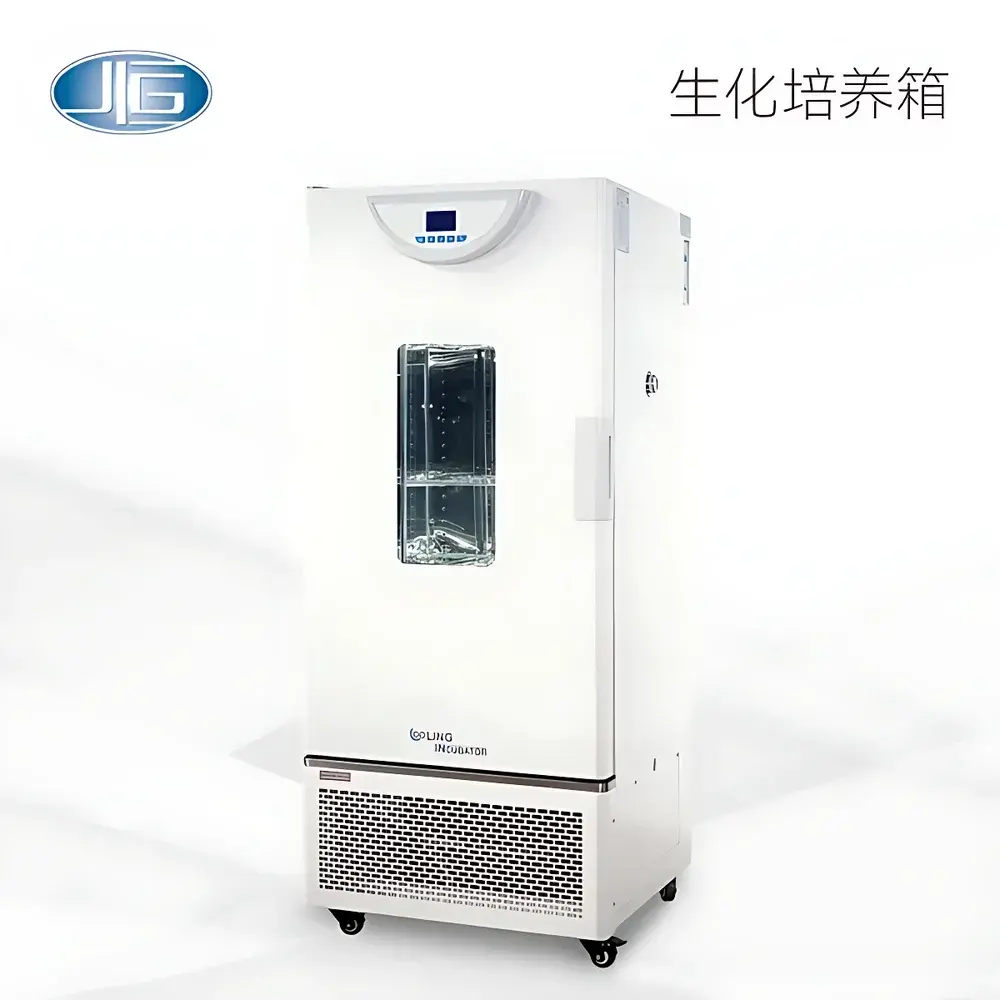
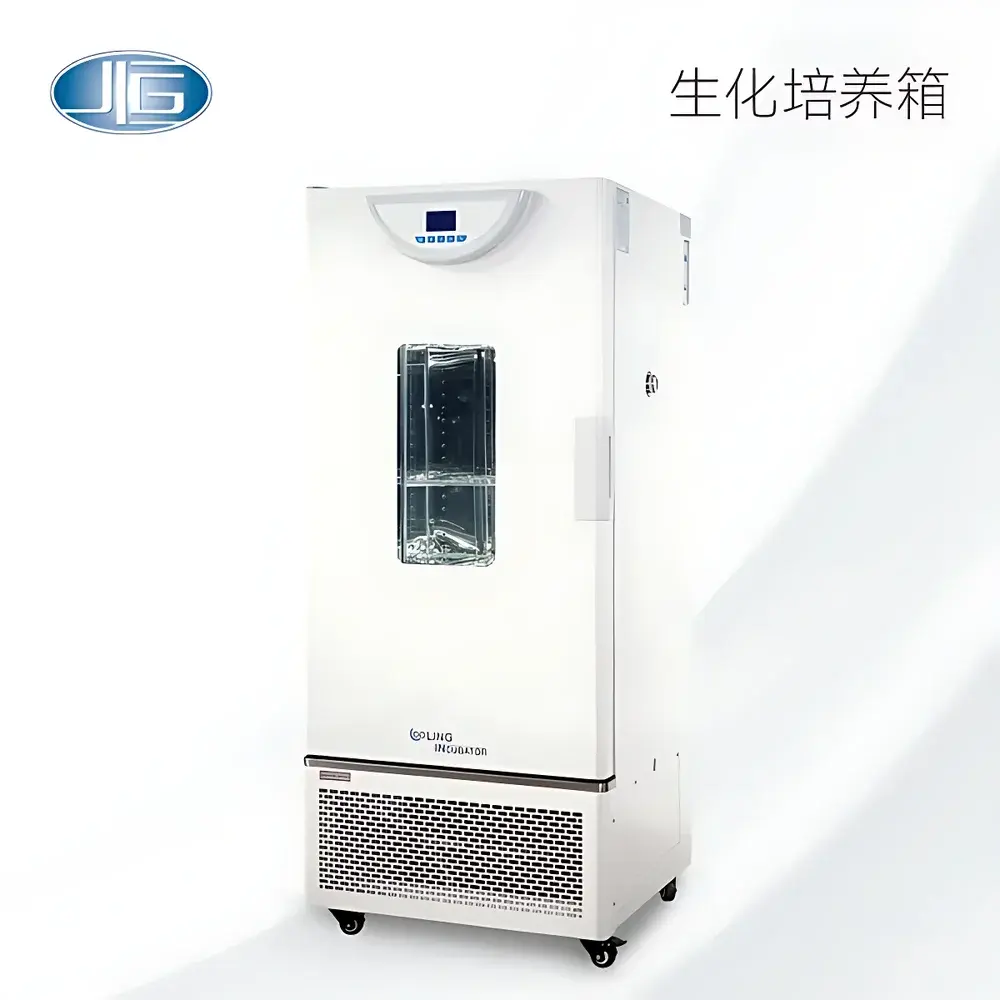
YiHeng BPC-150F Biochemical Incubator
| Brand | YiHeng |
|---|---|
| Origin | Shanghai, China |
| Manufacturer Type | Direct Manufacturer |
| Product Origin | Domestic (China) |
| Model | BPC-150F |
| Heating Method | Air-jacketed |
| Cooling Method | Compressor-based |
| Air Circulation | Natural Convection |
| Temperature Range | −5 °C to 70 °C |
| Temperature Fluctuation | ±0.3 °C (high-temp range), ±0.5 °C (low-temp range) |
| Temperature Uniformity | ±1.5 °C (at 25 °C test point) |
| Capacity | Refer to manufacturer’s catalog |
| External Dimensions | Refer to manufacturer’s catalog |
Overview
The YiHeng BPC-150F Biochemical Incubator is a precision-engineered, air-jacketed temperature-controlled chamber designed for stable, long-term cultivation of microorganisms, mammalian cells, enzymes, and biochemical reagents under tightly regulated thermal conditions. Unlike forced-air incubators, the BPC-150F employs natural convection—eliminating mechanical airflow-induced stress on sensitive biological samples while maintaining consistent thermal distribution across its working volume. Its operational range spans from sub-zero (−5 °C) to elevated (70 °C) temperatures, supporting applications including psychrophilic culture, enzyme kinetics assays, and accelerated stability testing per ICH Q1 guidelines. The unit integrates a high-efficiency hermetic compressor, an internationally certified refrigeration circuit, and an advanced fuzzy PID control algorithm to achieve minimal temperature deviation and high reproducibility—critical for GLP-compliant laboratories and ISO 17025-accredited quality control environments.
Key Features
- Air-jacketed heating architecture with integral polyurethane foam insulation—ensures low thermal loss, rapid temperature recovery after door opening, and enhanced energy efficiency.
- Compressor-based cooling system compliant with international environmental standards; fully CFC- and HCFC-free refrigerant (R134a or equivalent) in accordance with Montreal Protocol requirements.
- Intuitive large-format LCD interface displaying real-time temperature, setpoint, elapsed time, and active alarm status—all within a single screen via menu-driven navigation.
- Polished mirror-finish stainless-steel interior with radius-corner transitions and removable shelf supports—facilitating complete decontamination and meeting USP surface cleanability criteria.
- Adjustable three-speed natural convection fan—enabling user-defined airflow modulation to minimize sample desiccation during extended incubation cycles.
- Independent dual-limit temperature protection: primary controller + hardware-based overtemperature cutoff with audible/visual alarm—fully compliant with IEC 61010-1 safety standards.
- Fuzzy logic PID temperature regulation with programmable ramp rates, soak times, and up to 7 multi-segment programs (63 total steps), each configurable for temperature, duration (0–5999 min), and fan speed.
Sample Compatibility & Compliance
The BPC-150F accommodates standard microbiological vessels—including Petri dishes, flasks (up to 2 L), multi-well plates, and serum bottles—without spatial interference. Its natural convection design prevents shear-induced damage to adherent cell monolayers and delicate suspension cultures. Internal dimensions support stacking of standard ISO 8573-1 Class 5-compatible equipment racks. The incubator meets essential regulatory prerequisites for pharmaceutical QC labs: temperature uniformity and stability performance align with ASTM E145-22 (Standard Specification for Gravity-Convection and Forced-Ventilation Ovens) and ISO 2859-1 sampling plans for routine verification. Optional UV-C germicidal lamp (254 nm) mounted at the chamber ceiling provides periodic air and surface sterilization—validated per ISO 15714 for microbial reduction efficacy.
Software & Data Management
While the BPC-150F operates as a standalone instrument, it supports external data acquisition via RS-485 serial interface (Modbus RTU protocol) and USB host port for direct U-disk logging. Time-stamped temperature records—including setpoint, actual reading, and alarm events—are stored locally and exportable as CSV files for audit trail generation. When interfaced with validated LIMS or ELN platforms, the device satisfies FDA 21 CFR Part 11 requirements for electronic records through optional password-protected user roles and operator-specific login tracking. Optional thermal printer integration enables hard-copy documentation for SOP adherence and internal QA reviews.
Applications
- Long-term maintenance of bacterial, fungal, and yeast cultures under defined thermal regimes (e.g., E. coli at 37 °C, Pseudomonas at 25 °C).
- Enzyme activity profiling across temperature gradients for Arrhenius analysis.
- Stability studies of biologics, vaccines, and diagnostic reagents per ICH Q5C and WHO TRS 1015 Annex 5 protocols.
- Pre-incubation conditioning of agar plates prior to inoculation in clinical microbiology workflows.
- Low-temperature storage of thermolabile reagents such as restriction enzymes and RNA extraction kits (−5 °C to 8 °C range).
- Supporting ISO 11133-compliant media performance testing through controlled growth validation.
FAQ
What is the temperature recovery time after door opening?
Typical recovery to ±0.5 °C of setpoint takes ≤12 minutes at 37 °C, verified per ASTM E145 Annex A4 methodology.
Is the BPC-150F suitable for CO₂-independent cell culture?
Yes—designed exclusively for ambient-air incubation; not equipped for CO₂ or humidity control. For humidified or CO₂-regulated applications, consider YiHeng’s dedicated CO₂ incubator series.
Can the UV lamp be operated while samples are inside?
No—UV sterilization must be performed only when the chamber is empty and unoccupied, in accordance with IEC 62471 photobiological safety classification.
Does the incubator support remote monitoring via Ethernet or Wi-Fi?
No native Ethernet/Wi-Fi module is included; connectivity relies on RS-485-to-Ethernet gateways or USB-hosted data loggers deployed externally.
What calibration standards apply to routine verification?
We recommend annual calibration using NIST-traceable PT100 probes per ISO/IEC 17025 procedures, with verification points at −5 °C, 25 °C, and 65 °C.




