
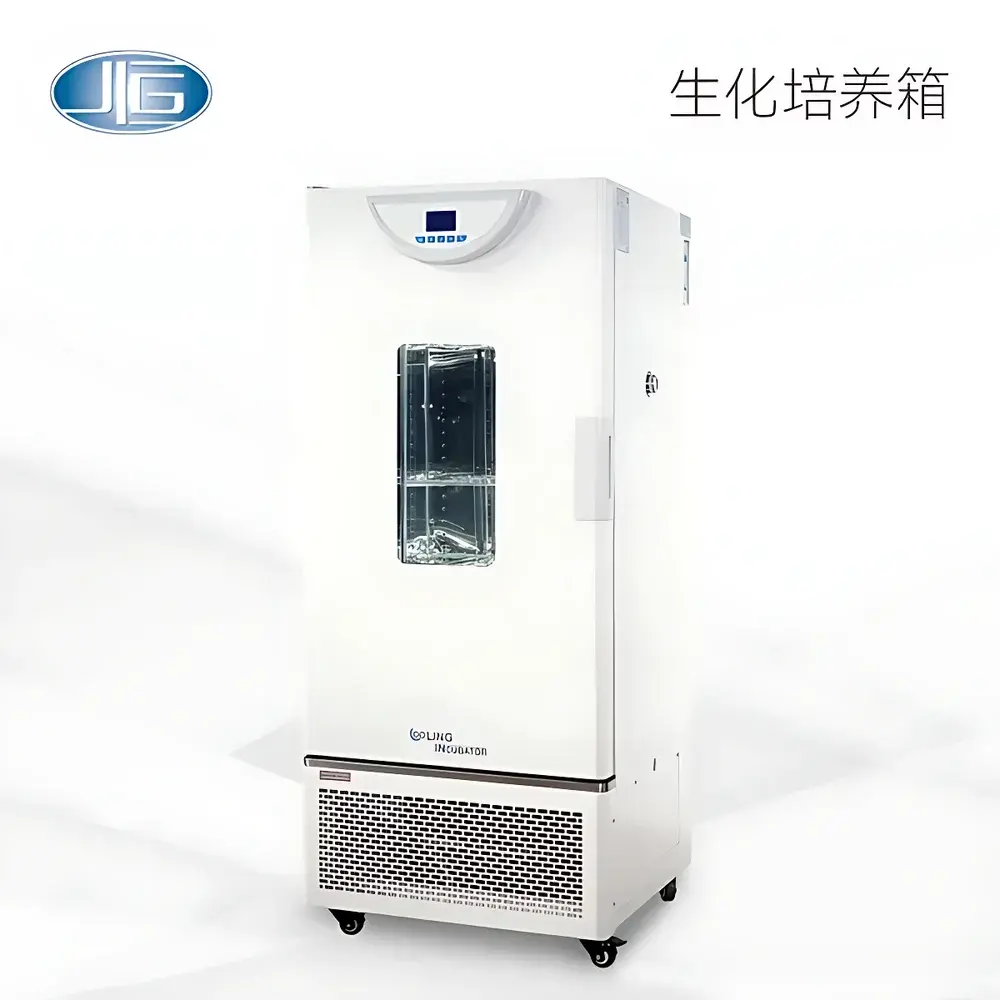
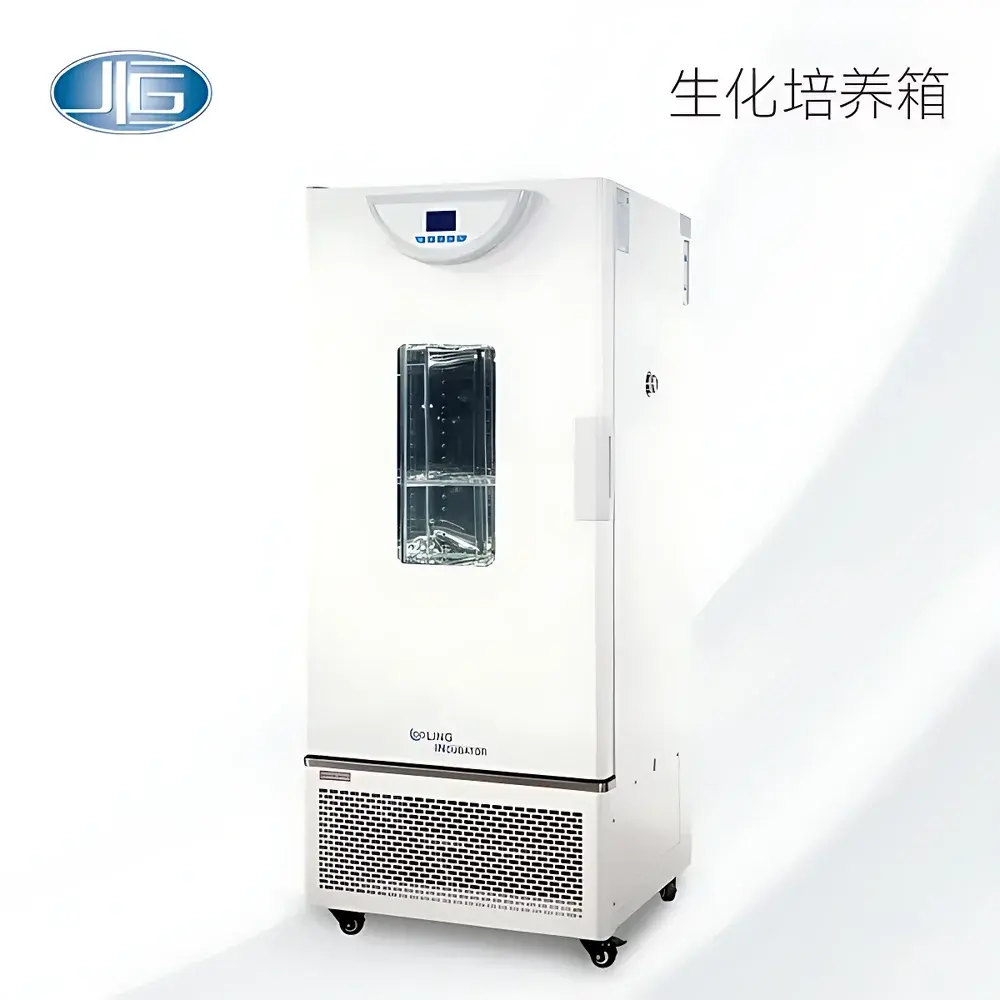
YiHeng BPC-70F Biochemical Incubator (Mycological Incubator)
| Brand | YiHeng |
|---|---|
| Origin | Shanghai, China |
| Manufacturer Type | Direct Manufacturer |
| Product Origin | Domestic (China) |
| Model | BPC-70F |
| Heating Method | Air-Jacketed Heating |
| Cooling Method | Compressor-Based Refrigeration |
| Air Circulation | Natural Convection |
| Temperature Range | −5 °C to 70 °C |
| Temperature Fluctuation | ±0.3 °C (High-Temp Mode), ±0.5 °C (Low-Temp Mode) |
| Temperature Uniformity | ±1.5 °C (at 25 °C test point) |
| Interior Dimensions (W×D×H) | 400 mm × 440 mm × 500 mm |
Overview
The YiHeng BPC-70F Biochemical Incubator is a precision-engineered environmental chamber designed specifically for mycological cultivation, microbial growth studies, enzyme activity assays, and long-term biochemical stability testing. It operates on a dual-mode thermal regulation principle—combining air-jacketed heating with compressor-based refrigeration—to deliver stable, reproducible temperature control across a broad operational range of −5 °C to 70 °C. Unlike forced-air incubators, the BPC-70F employs natural convection, minimizing mechanical disturbance to sensitive biological samples while maintaining uniform thermal distribution (±1.5 °C at 25 °C reference point). Its sealed, fluorine-free refrigerant system complies with international environmental standards (e.g., Montreal Protocol Annexes), supporting sustainable laboratory operations without compromising performance integrity.
Key Features
- Air-jacketed heating architecture: Provides rapid, uniform heat distribution with minimal thermal overshoot; eliminates cold spots common in direct-heating designs.
- Compressor-driven cooling system: Enables sub-ambient operation down to −5 °C—critical for psychrophilic organism studies and cold-chain validation protocols.
- Intelligent fuzzy PID temperature controller: Delivers high-resolution setpoint accuracy with low drift (<±0.3 °C at elevated temperatures); includes programmable timer (up to 99 h 59 min) and auto-restart after power interruption.
- Three-level adjustable natural convection modulation: Optimizes internal airflow without inducing sample desiccation or shear stress—particularly advantageous for fungal colony development and non-agitated suspension cultures.
- Diagnostic LCD interface: Real-time display of setpoint, actual temperature, error codes, and operational status; fault localization supports rapid troubleshooting per GLP-compliant maintenance logs.
- UV-C germicidal irradiation module (optional): Integrated 254 nm ultraviolet lamp mounted in ceiling panel enables periodic decontamination of internal surfaces and recirculated air—reducing airborne microbial load by >99.9% per IEC 62471 photobiological safety guidelines.
Sample Compatibility & Compliance
The BPC-70F accommodates standard microbiological formats including Petri dishes (up to 150 mm diameter), multi-well plates, culture flasks (T-25 to T-175), and glass vials. Its mirror-finish stainless-steel interior (AISI 304) features seamless, radius-rounded corners and removable shelving—facilitating ISO 14644-1 Class 5 cleanroom-compatible cleaning and sterilization via ethanol wipe-down or vaporized hydrogen peroxide (VHP) cycles. The unit meets essential regulatory prerequisites for pharmaceutical QC labs: it supports audit-ready documentation through optional USB data logging (U-disk export of timestamped temperature history), RS-485 Modbus RTU communication for LIMS integration, and conforms to IEC 61010-1 safety standards for laboratory equipment. While not certified for GMP manufacturing environments out-of-box, its design aligns with FDA 21 CFR Part 11 data integrity principles when paired with validated software and access-controlled user accounts.
Software & Data Management
The BPC-70F’s embedded controller supports up to seven independent multi-step programs—each comprising nine segments—with full parameter configurability per segment: target temperature, dwell time (0–5999 minutes), ramp rate (°C/min), and fan speed level. All programs are retained during power loss via non-volatile memory. Optional connectivity modules enable external data acquisition: USB port allows direct export of .CSV-formatted temperature/time logs to portable storage devices; RS-485 interface permits bidirectional communication with SCADA systems or centralized lab monitoring platforms. For traceability-critical applications, the system records event timestamps—including door openings, alarm triggers, and setpoint modifications—enabling reconstruction of environmental conditions throughout experimental duration per ALCOA+ data governance criteria.
Applications
- Mycological isolation and sporulation studies under controlled humidity-agnostic conditions
- Stability testing of diagnostic reagents and biologics per ICH Q1A(R2) guidelines
- Enzyme kinetics profiling requiring precise low-temperature incubation (e.g., restriction digests, ligase reactions)
- Environmental simulation for food spoilage microorganism growth modeling (ISO 21527-1)
- Pre-incubation conditioning of agarose gels and electrophoresis buffers
- Long-term storage of temperature-sensitive reference standards in metrology labs
FAQ
Does the BPC-70F support humidity control?
No—this model is a dry incubator optimized for temperature-only applications. Humidity management requires external humidification accessories or alternative models such as the BPH series.
Can the UV lamp be operated while samples are inside?
No—UV-C irradiation must only occur during empty-chamber decontamination cycles. Automatic interlock prevents lamp activation when door is open or sensors detect presence of personnel.
Is calibration certificate included with shipment?
A factory calibration report (traceable to NIM China) is provided. Full ISO/IEC 17025-accredited calibration requires third-party service and is available upon request.
What is the maximum load capacity per shelf?
Each stainless-steel shelf supports up to 15 kg uniformly distributed load; total internal volume is 88 L (400 × 440 × 500 mm).
How does natural convection affect temperature recovery after door opening?
Recovery to ±0.5 °C of setpoint takes approximately 12–18 minutes following a 30-second door opening at 37 °C ambient—consistent with ASTM E1752-20 recovery benchmark for static-air incubators.



