
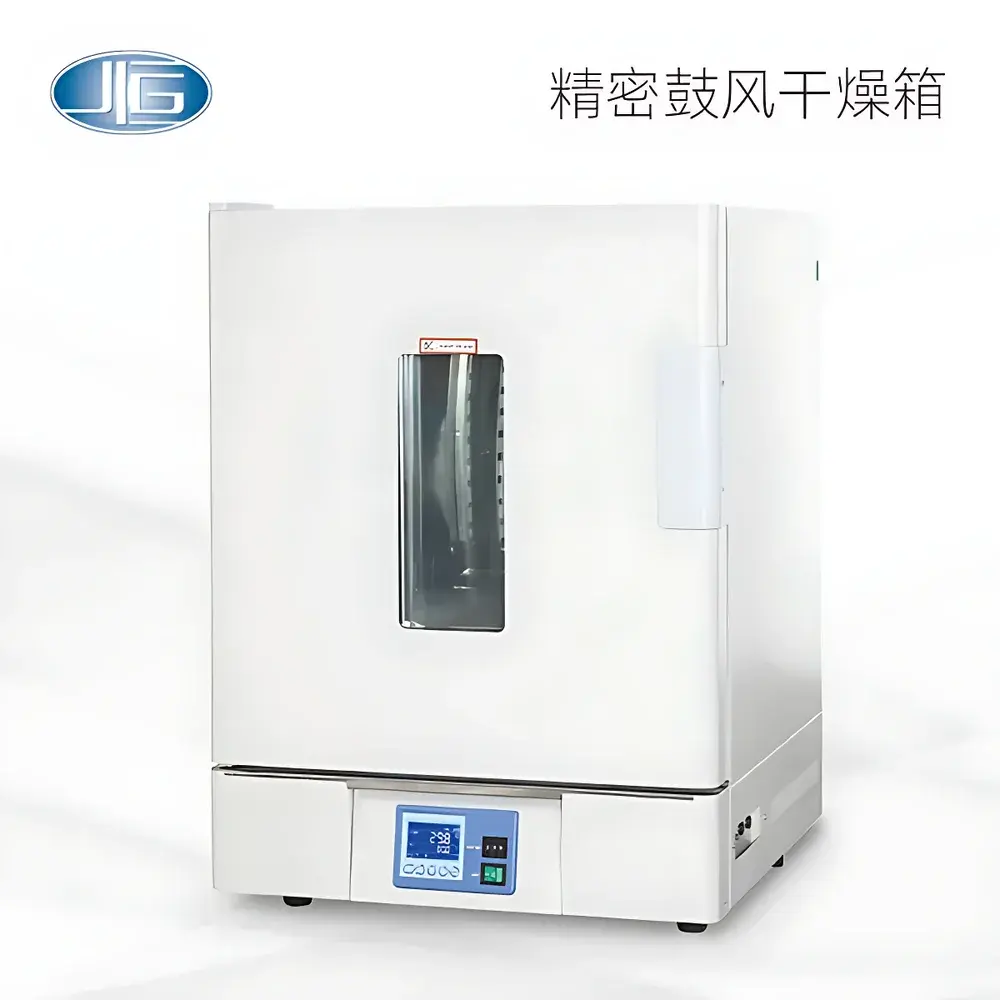
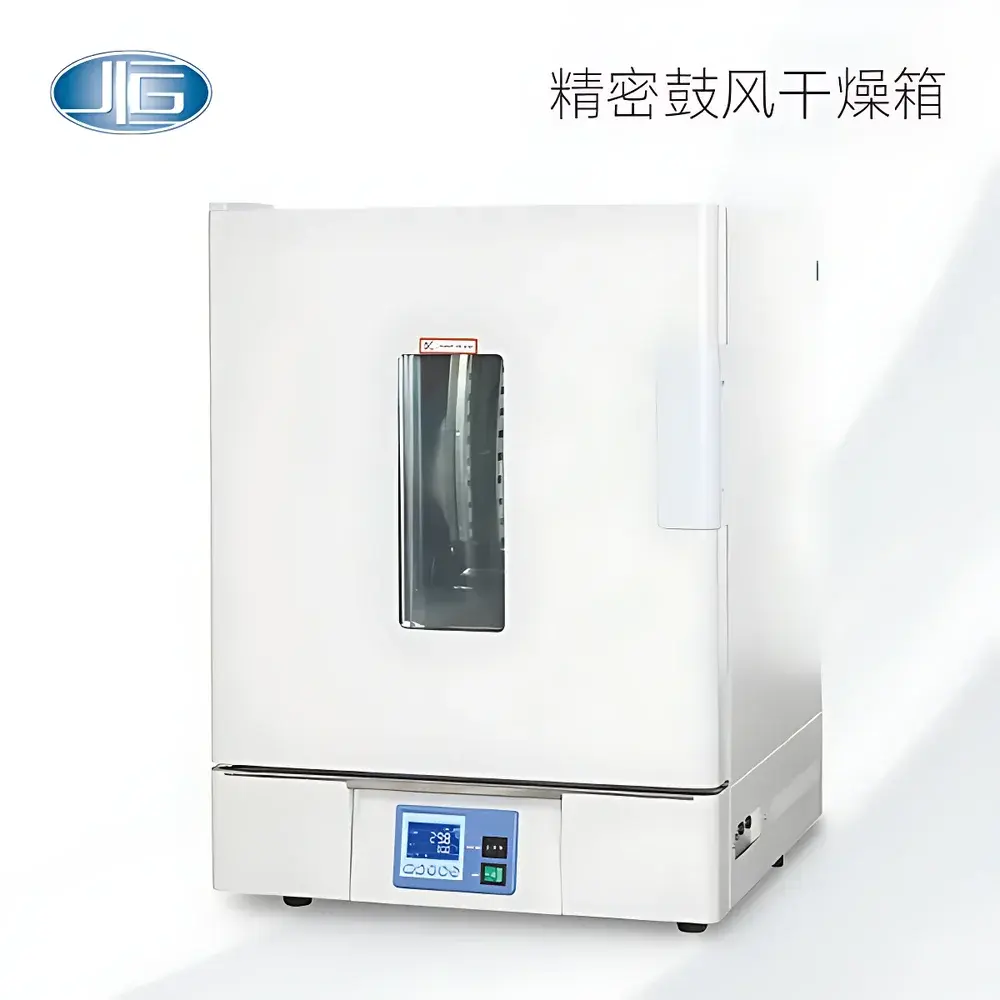
Yiheng BPG-9006A Programmable Precision Forced-Air Drying Oven
| Brand | Yiheng |
|---|---|
| Origin | Shanghai, China |
| Manufacturer Type | Direct Manufacturer |
| Product Category | Domestic (China-Made) |
| Model Series | BPG-9006A |
| Instrument Type | Precision Drying Oven |
| Temperature Range | RT+10°C to 200°C (optional up to 250°C) |
| Temperature Uniformity | ±0.1°C |
| Temperature Resolution | 0.1°C |
| Interior Material | Mirror-Finish Stainless Steel |
| Heating Method | Forced-Air Circulation with Adjustable Airflow Velocity |
| Programmability | 7 programs × 9 segments (63 total steps), time range per segment: 0–5999 minutes |
| Safety Features | Independent Over-Temperature Limit Controller with Audible/Visual Alarm, Dual-Tier Thermal Protection (High-Temp & Deviation Alarms) |
| Energy Efficiency | Silicone Door Seal + Optimized Insulation Reducing Power Consumption by >25% vs. Conventional Designs |
| Data Interface Options | RS-485, USB (U-disk), Optional Printer Output |
Overview
The Yiheng BPG-9006A Programmable Precision Forced-Air Drying Oven is an engineered solution for laboratories requiring high-stability thermal processing of samples under tightly controlled, repeatable conditions. Utilizing forced-air convection with adjustable airflow velocity, the oven ensures uniform temperature distribution across its stainless-steel chamber—critical for applications demanding minimal spatial thermal gradients. Its core design adheres to fundamental principles of convective heat transfer and thermal mass management, enabling precise ramp-hold-soak thermal profiles essential in materials conditioning, moisture content determination, polymer curing validation, and pre-analytical sample preparation. The unit operates within a standard working range of RT+10°C to 200°C, with an optional extended configuration supporting up to 250°C—validated for continuous operation under ISO 17025-aligned environmental test protocols.
Key Features
- Programmable multi-segment thermal control: Supports up to 7 independent programs, each containing 9 definable segments (63 total steps), with individual time settings ranging from 0 to 5999 minutes per step.
- High-resolution digital temperature regulation: 0.1°C resolution and ±0.1°C stability over full operating range, achieved via PID-controlled heating elements and real-time feedback from calibrated PT100 sensors.
- Mirror-finish 304 stainless-steel interior: Seamless, radius-cornered construction eliminates crevices and facilitates ISO-compliant cleaning; removable shelf supports allow full chamber access for decontamination or calibration verification.
- Dual-layer safety architecture: Includes primary microprocessor-based temperature control plus a physically isolated mechanical over-temperature limiter with visual/audible alarm—meeting IEC 61010-1 requirements for laboratory electrical equipment safety.
- Energy-optimized thermal envelope: High-density mineral fiber insulation combined with fluorosilicone door gasketing reduces standby heat loss by >25% compared to legacy ovens, supporting sustainability goals without compromising thermal performance.
Sample Compatibility & Compliance
The BPG-9006A accommodates a broad spectrum of non-volatile, thermally stable samples—including pharmaceutical excipients, ceramic precursors, catalyst substrates, filter membranes, and metallographic specimens. Its chamber geometry (standard internal dimensions: 600 × 500 × 750 mm W×D×H; customizable upon request) supports stacked trays, crucibles, petri dishes, and custom fixtures. The oven complies with key international standards relevant to laboratory thermal equipment: GB/T 5170.2–2017 (Chinese national standard for temperature testing methods), ISO 17025 clause 6.4.3 (environmental condition monitoring), and ASTM E145–22 (Standard Specification for Gravity-Convection and Forced-Ventilation Ovens). While not certified for Class I Division 1 hazardous locations, it is suitable for use in general laboratory environments under GLP/GMP Annex 11 and FDA 21 CFR Part 11 compliant workflows when paired with validated data logging systems.
Software & Data Management
The integrated LCD controller provides local visualization of setpoint, actual temperature, elapsed time, remaining time, and active program status—all displayed simultaneously on a single high-contrast screen. For traceable data capture, optional interfaces include RS-485 (Modbus RTU protocol), USB host port for direct U-disk logging (CSV format), and parallel printer output. When connected to a validated PC-based acquisition system, the oven supports automated generation of electronic records meeting ALCOA+ principles—ensuring attributable, legible, contemporaneous, original, accurate, complete, consistent, enduring, and available data. Audit trail functionality (including user login, parameter changes, and alarm events) is enabled through third-party SCADA or LIMS integration.
Applications
- Moisture loss-on-drying (LOD) analysis per USP & EP monographs for raw material qualification.
- Thermal aging studies of elastomers and composites under defined isothermal or gradient conditions.
- Drying and conditioning of analytical standards prior to gravimetric or chromatographic analysis.
- Curing validation for epoxy-coated substrates and printed circuit board laminates.
- Residual solvent removal from lyophilized biopharmaceutical intermediates in R&D-scale processes.
- Pre-heating and stabilization of reference materials used in calorimetry and TGA calibration.
FAQ
What is the maximum allowable operating temperature for the BPG-9006A?
The standard configuration is rated for continuous operation up to 200°C; an optional high-temp variant extends this to 250°C—subject to verification of internal component ratings and chamber material certification.
Does the oven support remote monitoring via Ethernet or Wi-Fi?
No native Ethernet or Wi-Fi interface is included; however, RS-485 Modbus connectivity enables integration into existing building management or lab automation networks using standard industrial gateways.
Can the programmable controller store historical temperature logs internally?
The embedded controller does not retain long-term logs; persistent data storage requires external connection to a USB drive, printer, or supervisory computer system.
Is the stainless-steel interior electropolished or passivated?
The mirror-finish interior uses mechanically polished 304 stainless steel, conforming to ASTM A480/A480M surface finish specifications; electropolishing is available as a customization option.
How frequently should temperature uniformity mapping be performed?
Per ISO/IEC 17025 and internal quality procedures, quarterly mapping is recommended for routine use; additional mapping is required after major maintenance, relocation, or process-critical validation activities.



