
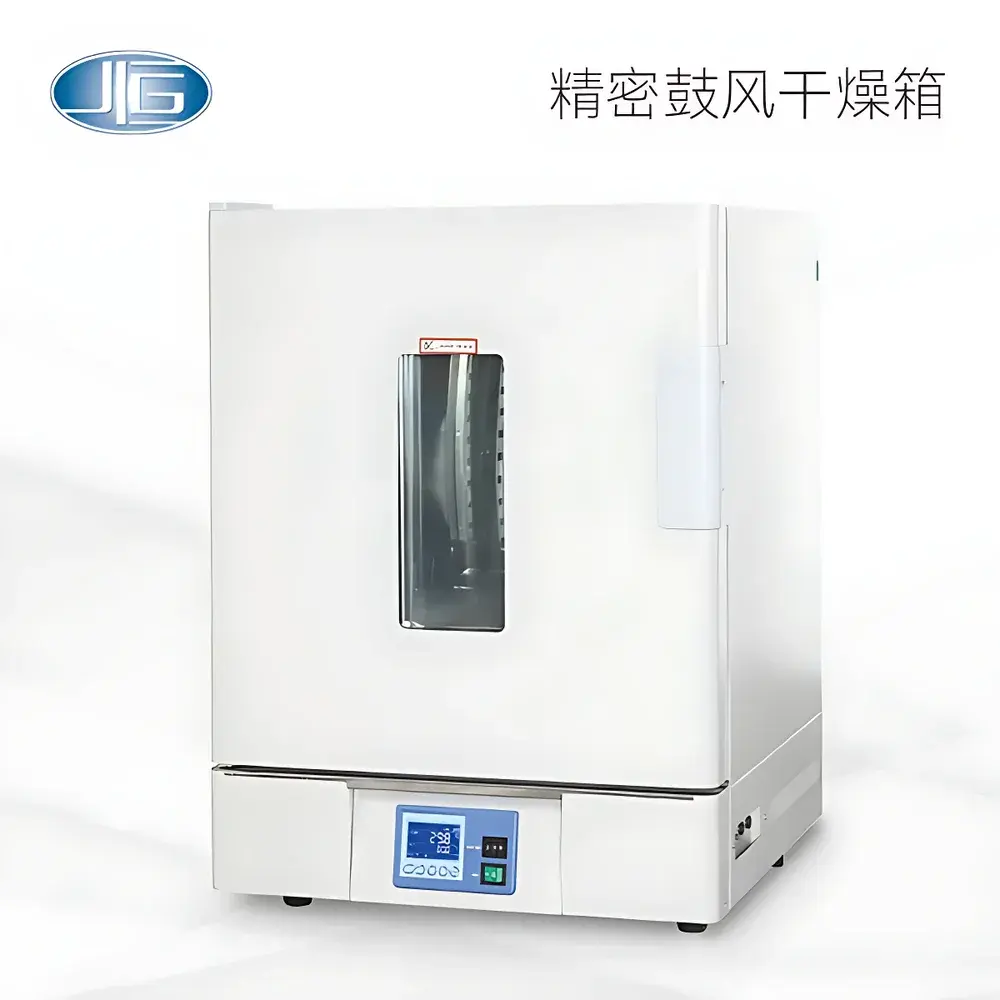
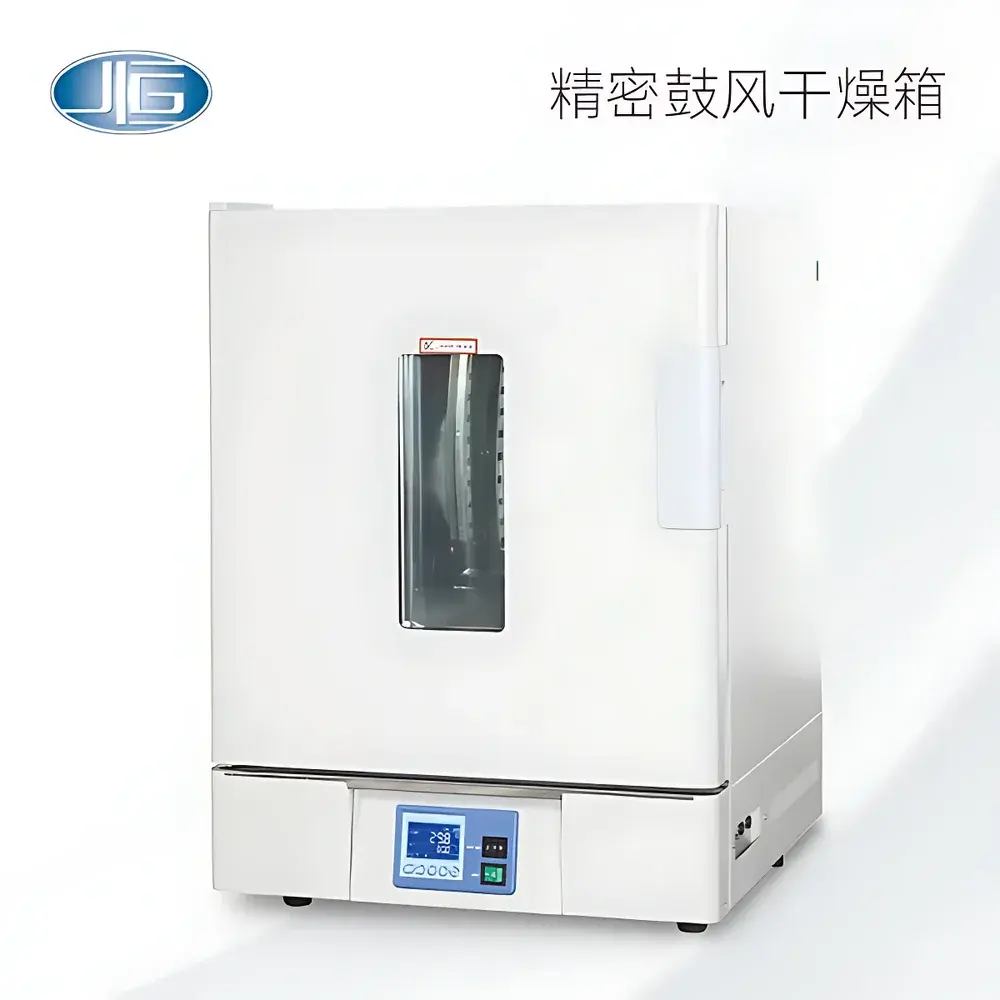
Yiheng BPG-9106A Precision Forced-Air Drying Oven
| Brand | Yiheng |
|---|---|
| Origin | Shanghai, China |
| Manufacturer Type | Direct Manufacturer |
| Product Category | Domestic |
| Model | BPG-9106A |
| Instrument Type | Precision Drying Oven |
| Temperature Range | RT+10°C to 200°C |
| Temperature Fluctuation | ±1°C |
| External Dimensions (W×D×H) | 600 × 642 × 837 mm |
| Internal Dimensions (W×D×H) | 455 × 430 × 510 mm |
| Temperature Resolution | 0.1°C |
| Chamber Material | Mirror-Finish Stainless Steel (SUS304) |
| Temperature Uniformity | ±2.5% at 100°C |
| Programmable Stages | 7 programs × 9 steps each (63 total steps), time range per step: 0–5999 min |
Overview
The Yiheng BPG-9106A Precision Forced-Air Drying Oven is an engineered solution for controlled thermal processing in research laboratories, quality control environments, and industrial R&D settings. Designed around a convection-driven heating architecture, it employs a high-efficiency axial fan and optimized air duct geometry to ensure uniform airflow distribution across the entire chamber volume. This forced-air circulation system—combined with PID-controlled heating elements and real-time feedback from dual platinum resistance thermometers (Pt100)—enables stable thermal regulation within ±1°C fluctuation and ±2.5% uniformity (measured at 100°C per ISO 15502:2016). The oven operates across a usable temperature span from ambient +10°C to 200°C, making it suitable for moisture removal, pre-conditioning of samples, thermal stability testing, and residual solvent evaporation—all under reproducible, traceable conditions.
Key Features
- Mirror-finish SUS304 stainless steel interior with seamless, radius-cornered construction minimizes particle retention and simplifies cleaning—critical for GLP-compliant workflows and repeated use in regulated environments.
- Large backlit LCD display presents simultaneous readouts of setpoint, actual chamber temperature, elapsed time, remaining time, and program status—enabling full operational visibility without menu navigation overhead.
- Multi-segment programmable controller supports up to 7 independent programs, each containing up to 9 customizable steps. Each step allows independent configuration of target temperature, dwell time, ramp rate (linear heating profile), and fan speed—supporting complex thermal protocols such as gradient drying, hold-and-soak sequences, or staged cooling.
- Dual safety architecture includes an independent mechanical overtemperature cut-off (separate from the main PID controller) and configurable digital alarms for high/low temperature deviation, sensor failure, and door-open events—with audible and visual alert outputs compliant with IEC 61000-4-2 ESD immunity standards.
- Energy-optimized design features high-density mineral wool insulation (≥80 mm thickness in side walls), low-conductivity silicone door gasket (operating range: −60°C to +250°C), and intelligent power modulation that reduces average heating power consumption by >25% versus legacy resistive ovens—verified per EN 60068-2-2 test methodology.
Sample Compatibility & Compliance
The BPG-9106A accommodates standard laboratory glassware (e.g., weighing dishes, petri dishes, crucibles), polymer films, metal coupons, pharmaceutical excipients, and ceramic substrates—provided dimensional constraints (max. 455 × 430 × 510 mm internal volume) and thermal stability limits (≤200°C continuous exposure) are observed. Chamber airflow dynamics have been validated using ASTM E2234-22 thermal mapping procedures at three load configurations (empty, 50% loaded with inert aluminum blocks, full shelf loading). It meets essential requirements of IEC 61010-1:2010 for electrical safety in laboratory equipment and complies with CE marking directives (2014/30/EU EMC, 2014/35/EU LVD). Optional data logging configurations support audit readiness for FDA 21 CFR Part 11 when paired with validated third-party software platforms.
Software & Data Management
While the BPG-9106A operates autonomously via its embedded controller, optional connectivity modules enable external data integration: RS-485 interface (Modbus RTU protocol) permits integration into SCADA or LIMS systems; USB host port supports direct export of timestamped temperature/time logs to FAT32-formatted USB drives; optional thermal printer module (model YHP-TP201) provides hard-copy records compliant with ISO/IEC 17025 documentation requirements. All logged data include operator ID field (via keypad entry), program identifier, and UTC-synchronized timestamps—facilitating root-cause analysis during nonconformance investigations.
Applications
- Moisture content determination per AOAC 950.46 and USP <731> loss-on-drying protocols.
- Pre-drying of filter papers, silica gel carriers, and analytical standards prior to gravimetric analysis.
- Thermal aging studies of packaging materials (e.g., laminates, adhesives) under ISO 11341 accelerated weathering conditions.
- Baking and curing of thin-film coatings on semiconductor wafers and optical substrates.
- Stabilization of reference materials and calibration standards in metrology labs.
FAQ
What is the maximum recommended operating temperature for continuous use?
The BPG-9106A is rated for continuous operation up to 200°C. Prolonged exposure above this limit may degrade insulation integrity and compromise temperature uniformity specifications.
Can the oven be validated for GMP environments?
Yes—when equipped with calibrated Pt100 sensors (traceable to NIST standards), used with documented IQ/OQ protocols, and integrated with audit-trail-capable data loggers, it satisfies core validation requirements for Annex 15 and EU GMP Chapter 3.
Is the stainless steel chamber electropolished?
No—the interior uses mechanically polished mirror-finish SUS304 stainless steel (Ra ≤ 0.8 µm), which provides corrosion resistance and cleanability suitable for most non-sterile applications.
Does the unit support ramp-and-soak programming with variable airflow control?
Yes—fan speed is programmable per step, enabling dynamic adjustment of convective heat transfer rates during ramp phases to minimize thermal shock on sensitive samples.
What calibration documentation is supplied with the instrument?
Each unit ships with a factory calibration certificate (temperature accuracy verified at 50°C, 100°C, and 150°C), traceable to national standards via accredited metrology lab ISO/IEC 17025:2017 report.



