
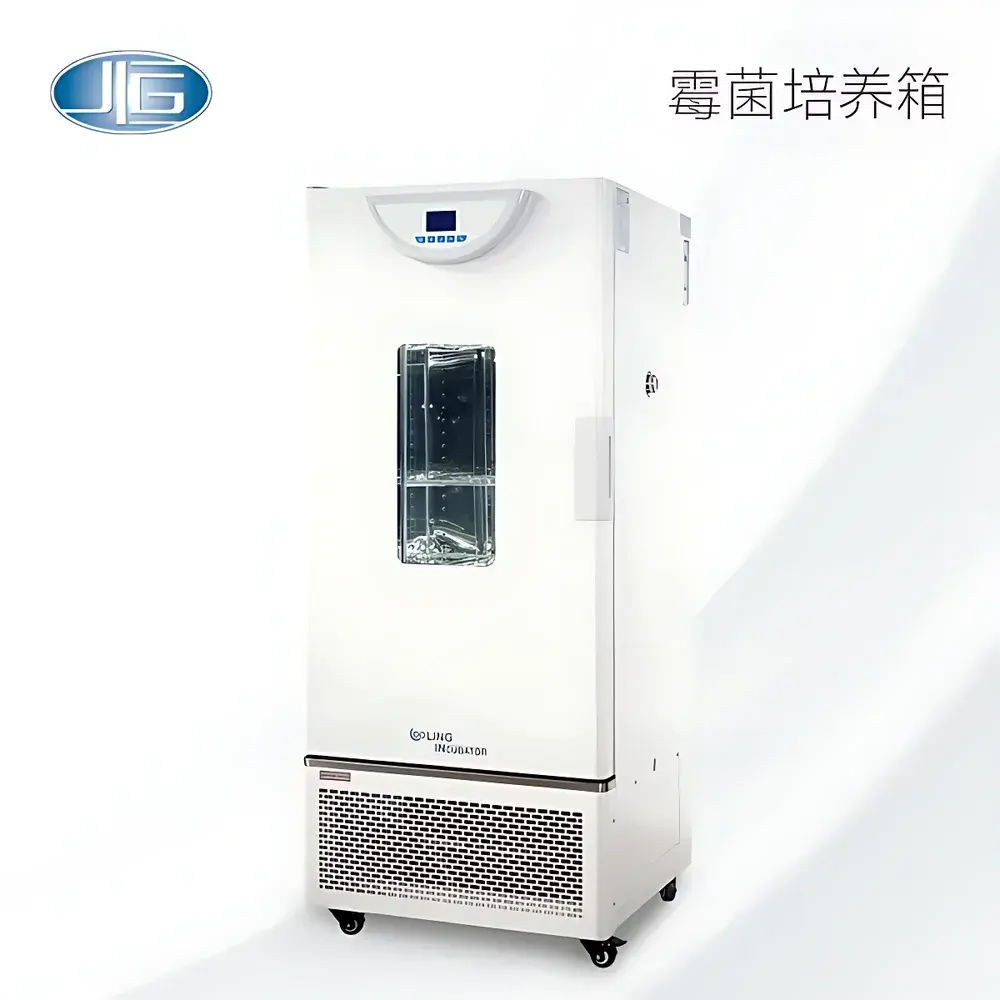
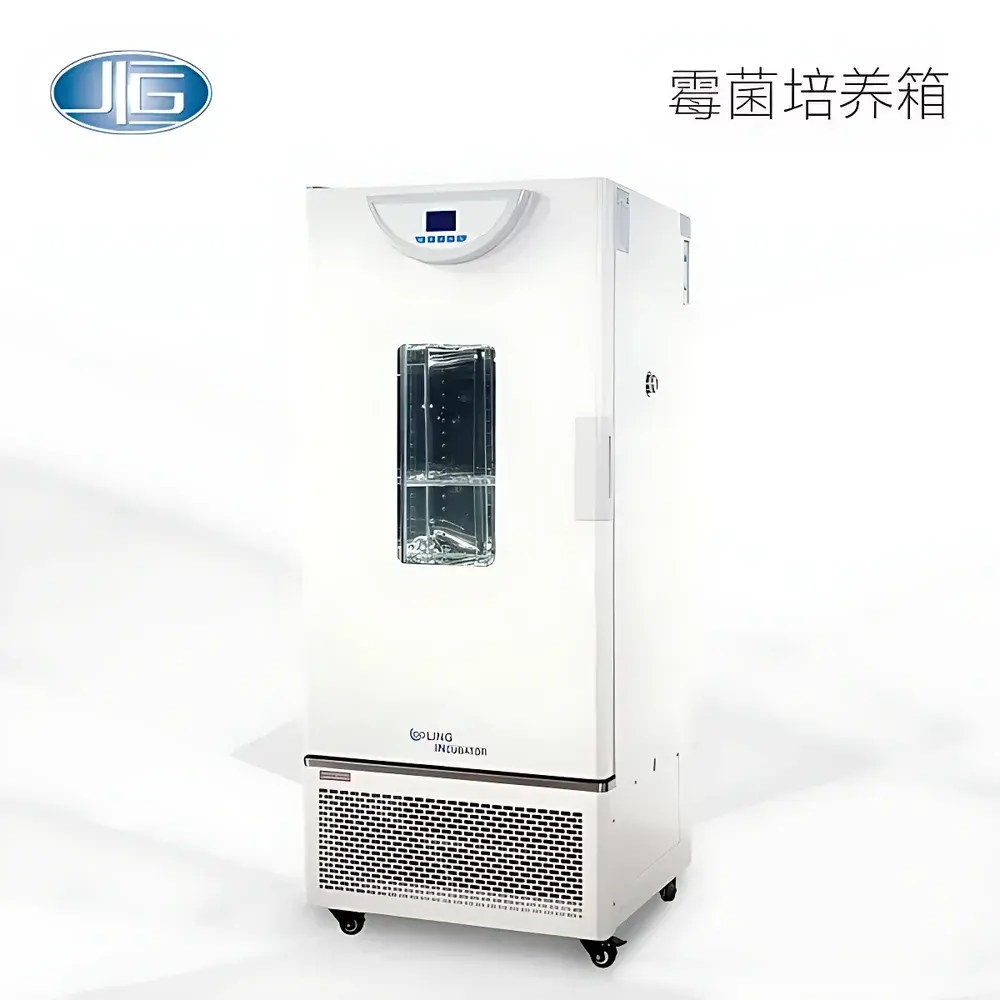
YiHeng BPMJ-150F Mold Incubator
| Brand | YiHeng |
|---|---|
| Origin | Shanghai, China |
| Manufacturer Type | Direct Manufacturer |
| Region Classification | Domestic (China) |
| Model | BPMJ-150F |
| Control Method | Mechanical Button Interface |
| Air Circulation | Natural Convection |
| Temperature Range | −5 °C to 70 °C |
| Temperature Fluctuation | ±0.3 °C (at high temp), ±0.5 °C (at low temp) |
| Temperature Uniformity | ±1.5 °C (measured at 25 °C) |
| Internal Dimensions (W×D×H) | 500 mm × 460 mm × 800 mm |
| Capacity | 184 L |
Overview
The YiHeng BPMJ-150F Mold Incubator is a purpose-engineered environmental chamber designed specifically for controlled fungal culture, mycological research, and long-term stability testing of microbiological samples under defined temperature conditions. Unlike general-purpose incubators, this unit integrates structural and thermal features optimized for mold propagation—particularly Aspergillus, Penicillium, and Cladosporium species—where precise low-temperature maintenance (down to −5 °C), stable humidity retention (when used with optional humidification accessories), and contamination mitigation are critical. Its natural convection architecture eliminates forced airflow-induced desiccation of agar plates or liquid cultures, preserving sample integrity during extended incubation cycles. The chamber’s insulation employs seamless polyurethane foam injection, minimizing thermal bridging and ensuring consistent energy distribution across the entire working volume. All internal surfaces are fabricated from electropolished mirror-finish stainless steel (AISI 304), with fully radiused corners (R ≥ 15 mm) to prevent microbial entrapment and facilitate validated cleaning protocols per ISO 14644-1 Class 7 cleanroom maintenance standards.
Key Features
- Natural convection thermal management system—eliminates air turbulence that may disrupt hyphal growth morphology or cause surface dehydration in solid media.
- Fuzzy PID temperature controller with dual-stage regulation (cooling/heating), delivering ±0.3 °C stability at elevated setpoints and ±0.5 °C at sub-zero conditions; timer function supports up to 99 h 59 min operation.
- Multi-segment programmable controller capable of storing up to 7 programs, each comprising 9 steps (63 total steps), enabling gradient temperature profiles—for example: ramp from 4 °C → 25 °C → 30 °C over defined intervals to simulate seasonal mycelial activation.
- Integrated UV-C germicidal lamp (254 nm, 15 W) mounted on ceiling panel; automatically interlocked with door switch to prevent operator exposure; validated for >3-log reduction of airborne Aspergillus niger spores after 30 min exposure (per ASTM E1053).
- Self-diagnostic display interface showing real-time error codes (e.g., E01 = sensor fault, E03 = compressor overload), streamlining preventive maintenance and GLP-compliant incident documentation.
- Dedicated 25 mm Ø access port on left side wall—compatible with external probes (RTDs, CO₂ sensors) and sterile tubing for gas exchange modulation without compromising chamber integrity.
Sample Compatibility & Compliance
The BPMJ-150F accommodates standard microbiological formats including Petri dishes (up to 150 mm Ø), slant tubes, broth flasks (≤1 L), and multi-well plates (6–96-well). Its interior geometry supports stacking of up to four adjustable stainless-steel shelves (load capacity: 15 kg/shelf), with vertical clearance optimized for inverted plate handling. The unit complies with IEC 61010-1:2010 safety requirements for laboratory equipment and meets GB/T 13993.1–2014 (Chinese national standard for incubators). When operated with optional data logging modules, it supports audit trails aligned with FDA 21 CFR Part 11 Annex 11 principles—including electronic signature capability, user-level access control, and immutable event logs for temperature excursions.
Software & Data Management
While the base model operates via embedded mechanical controls, optional RS-485 Modbus RTU and USB host interfaces enable integration into centralized lab monitoring systems (e.g., LabVantage, Thermo Fisher SampleManager). The USB port accepts FAT32-formatted flash drives for direct export of time-stamped temperature records (CSV format), supporting retrospective analysis and regulatory submission packages. Optional thermal printer support provides hard-copy output compliant with ISO/IEC 17025 clause 7.7 (result reporting). All firmware revisions include timestamped calibration history storage, traceable to NIST-traceable reference thermometers (±0.1 °C accuracy).
Applications
- Pharmaceutical stability testing of APIs and finished dosage forms per ICH Q1A(R2) guidelines—particularly for moisture-sensitive compounds requiring controlled mold challenge environments.
- Environmental monitoring in cleanrooms and isolators: periodic recovery of Paecilomyces variotii and Scopulariopsis brevicaulis from settle plates using standardized incubation durations (e.g., 5–7 days at 25 °C).
- Agricultural mycology: screening of antifungal biocontrol agents against Fusarium graminearum on wheat kernels under replicated temperature gradients.
- Food safety validation: AOAC 997.01-compliant enumeration of Penicillium citrinum in dairy matrices following ISO 21527-2 protocols.
- Academic research on thermotolerant fungi: sustained incubation at 45–55 °C for Thermomyces lanuginosus enzyme expression studies.
FAQ
Does the BPMJ-150F support humidity control?
No—this is a temperature-only incubator. Humidity regulation requires external humidification modules or separate RH-controlled chambers.
Can the UV lamp be operated while samples are inside?
No—the UV-C system is interlocked with the door switch and deactivates automatically upon opening; UV exposure is intended only during empty-chamber sanitization cycles.
What is the maximum load weight per shelf?
Each stainless-steel shelf supports up to 15 kg when evenly distributed; total chamber load must not exceed 60 kg to maintain thermal uniformity specifications.
Is the temperature sensor calibrated traceable to international standards?
Yes—factory calibration uses NIST-traceable platinum resistance thermometers (PRTs) with uncertainty ≤±0.05 °C at 25 °C; calibration certificate included with shipment.
How often should the UV lamp be replaced?
Lamp output degrades after ~8,000 hours of cumulative use; replacement is recommended annually under typical weekly 30-minute sanitation cycles.



