
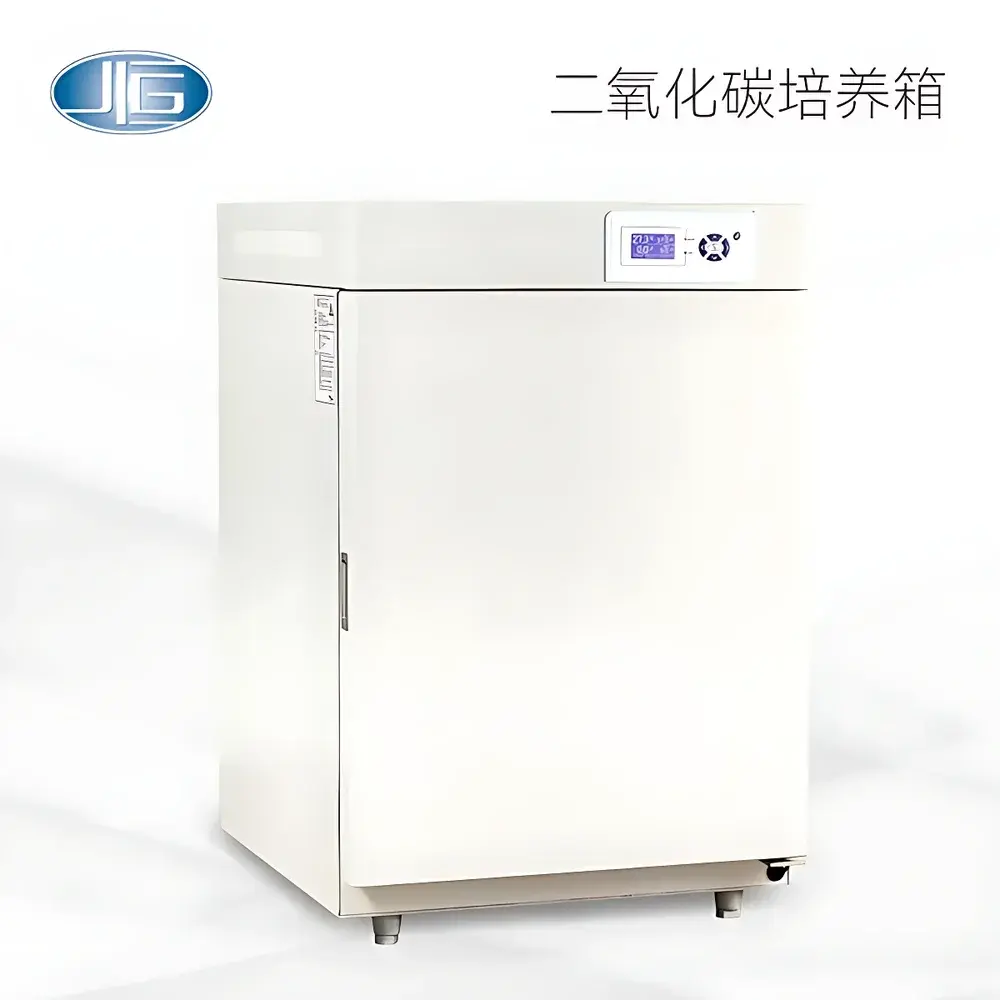
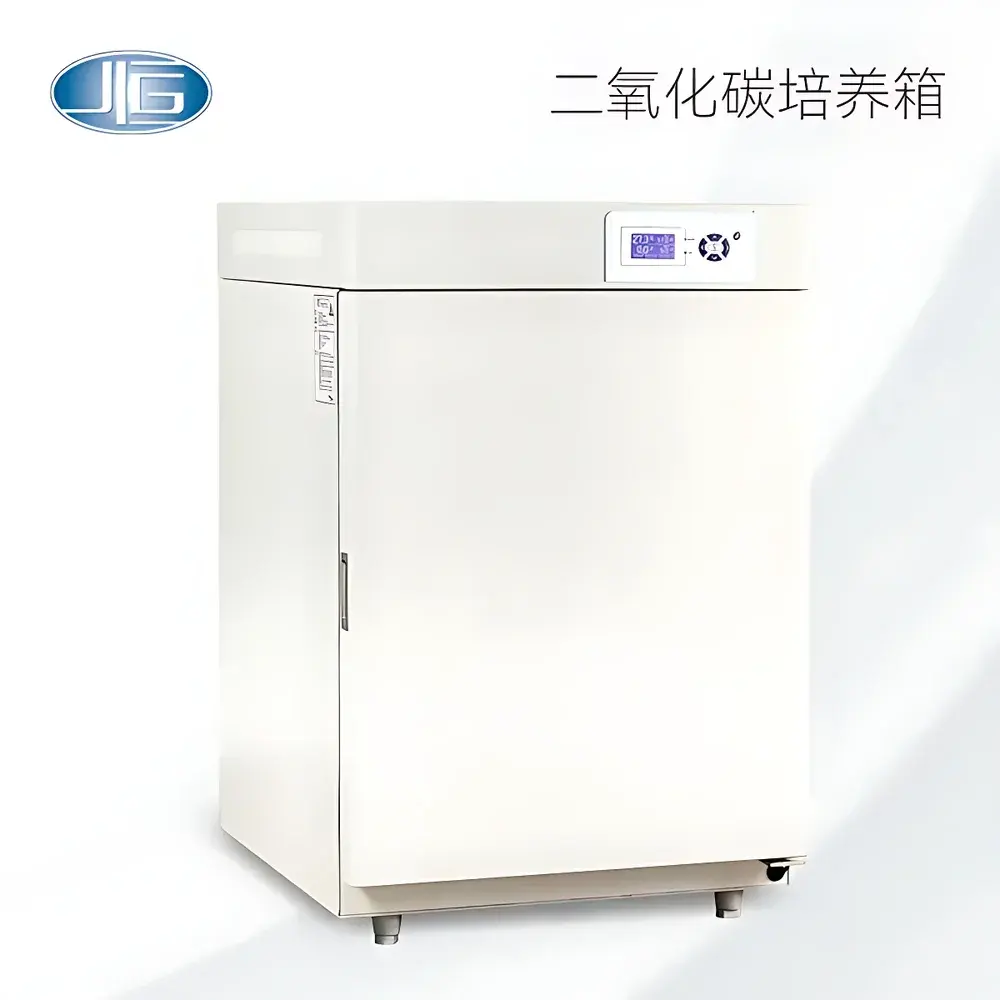
Yiheng BPN-150CH Gas-Jacketed CO₂ Incubator
| Brand | Yiheng |
|---|---|
| Origin | Shanghai, China |
| Manufacturer Type | Direct Manufacturer |
| Instrument Type | Gas-Jacketed CO₂ Incubator |
| CO₂ Sensing | Infrared (IR) Sensor |
| Temperature Range & Accuracy | RT+5°C to 55°C |
| CO₂ Concentration Range & Accuracy | 0–20% |
| Chamber Capacity | 150 L |
| External Dimensions (W×D×H) | 480 × 530 × 610 mm |
| Standard Configuration | As per manufacturer’s specification sheet |
| Microbial Filtration | ≥0.3 µm particles, 99.99% efficiency |
| UV Sterilization | Top-mounted germicidal UV lamp |
| Door Heating | Heated inner glass door to prevent condensation |
| Safety Features | Independent over-temperature alarm (optional), low/high/over-temperature alarms, door-open duration alarm |
| Fan Control | Automatic variable-speed circulation fan |
Overview
The Yiheng BPN-150CH is a gas-jacketed carbon dioxide incubator engineered for precision cell culture applications in academic research laboratories, biopharmaceutical quality control environments, and clinical diagnostic facilities. It operates on the principle of maintaining a tightly regulated triad of environmental parameters—temperature, CO₂ concentration, and relative humidity—to emulate physiological conditions required for mammalian cell proliferation, hybridoma maintenance, and stem cell expansion. Unlike water-jacketed models, its gas-jacketed architecture enables rapid thermal recovery after door openings and uniform chamber temperature distribution via convective air circulation through an insulated outer chamber filled with ambient air. The system employs non-dispersive infrared (NDIR) CO₂ sensing technology, delivering real-time, drift-free concentration monitoring independent of ambient humidity or temperature fluctuations—a critical advantage in high-traffic lab settings where frequent access compromises stability.
Key Features
- Gas-Jacketed Thermal Architecture: Provides superior temperature uniformity (±0.3°C typical) and faster recovery (<15 min to re-stabilize after 30-sec door opening), minimizing thermal stress on sensitive cultures.
- Infrared CO₂ Sensor: NDIR-based detection ensures long-term calibration stability, sub-1% full-scale accuracy, and immunity to cross-sensitivity from water vapor or ethanol vapors—eliminating routine recalibration requirements common with thermal conductivity (TC) sensors.
- Heated Inner Glass Door: Integrated resistive heating element prevents condensation on the inner door surface, reducing microbial adhesion risk and eliminating moisture-mediated contamination pathways during observation.
- Automated Variable-Speed Circulation Fan: Dynamically modulates airflow velocity based on thermal load and setpoint proximity; reduces shear stress on adherent monolayers while sustaining homogeneous CO₂ distribution and humidity retention.
- High-Efficiency Particulate Air (HEPA)-Grade Microbial Filter: Installed inline at the CO₂ inlet, this 0.3 µm-rated filter achieves ≥99.99% removal efficiency for airborne bacteria, spores, and particulates—ensuring feed gas integrity without introducing exogenous contaminants.
- Germicidal UV Lamp: Positioned at the rear upper chamber wall, the 254 nm UV-C source irradiates both recirculated air and evaporative surface of the humidity pan, achieving log₄ reduction of common airborne microbes (e.g., E. coli, S. aureus) during scheduled sterilization cycles.
Sample Compatibility & Compliance
The BPN-150CH supports standard tissue culture formats including T-flasks (up to T225), multi-well plates (6–96-well), Petri dishes, and roller bottles. Its stainless-steel interior (304 grade), radius-cornered chamber, and removable adjustable shelving facilitate complete decontamination and comply with ISO 13485 cleanroom-compatible design principles. While not certified to IEC 61010-1 or UL 61010B out-of-the-box, the unit meets fundamental electrical safety and mechanical integrity benchmarks expected for Class II laboratory equipment. When operated with documented SOPs—including daily CO₂ verification using traceable NIST-calibrated reference gas—the system supports GLP-compliant cell banking and QC release testing under FDA 21 CFR Part 11–aligned data governance frameworks.
Software & Data Management
The microprocessor-based LCD controller logs time-stamped temperature and CO₂ readings at user-defined intervals (1–60 min). Data export is supported via USB interface (CSV format), enabling integration into LIMS or ELN platforms. Audit trail functionality includes operator ID tagging (via optional password protection), parameter change history, alarm event timestamps, and door-open duration records—facilitating compliance with ALCOA+ data integrity principles. Firmware updates are delivered via secure manufacturer portal; no cloud connectivity or remote telemetry is embedded, preserving network isolation per institutional IT security policies.
Applications
This incubator is routinely deployed in applications requiring stringent atmospheric control: primary human keratinocyte expansion for dermatological studies; CHO-K1 suspension culture in early-stage bioprocess development; neuronal differentiation assays where pH-sensitive signaling pathways demand stable 5% CO₂; and microbiology co-culture experiments involving aerobic eukaryotes and anaerobic bacterial strains. Its 150 L capacity accommodates medium-throughput workflows—ideal for core facilities serving 5–12 concurrent users without compromising individual experiment reproducibility.
FAQ
What CO₂ supply purity is recommended for optimal sensor performance?
Use medical-grade CO₂ (≥99.998% purity, ISO 8573-1 Class 1 compressed air standard) to prevent IR sensor fouling and ensure longevity.
Is the UV lamp cycle programmable?
No—UV operation is manual activation only; exposure duration must be determined empirically based on chamber bioburden assessment.
Can the incubator operate without CO₂ supplementation?
Yes; it functions as a standard heated incubator (RT+5°C to 55°C) with ambient air circulation when CO₂ supply is disconnected.
Does the unit support external humidity monitoring?
Humidity is maintained passively via stainless-steel water pan; no integrated RH sensor or feedback control is provided.
What validation documentation is supplied?
Factory-installed IQ/OQ protocols, calibration certificates for IR sensor and PT100 temperature probe, and material traceability reports for chamber steel are included in the shipment dossier.



