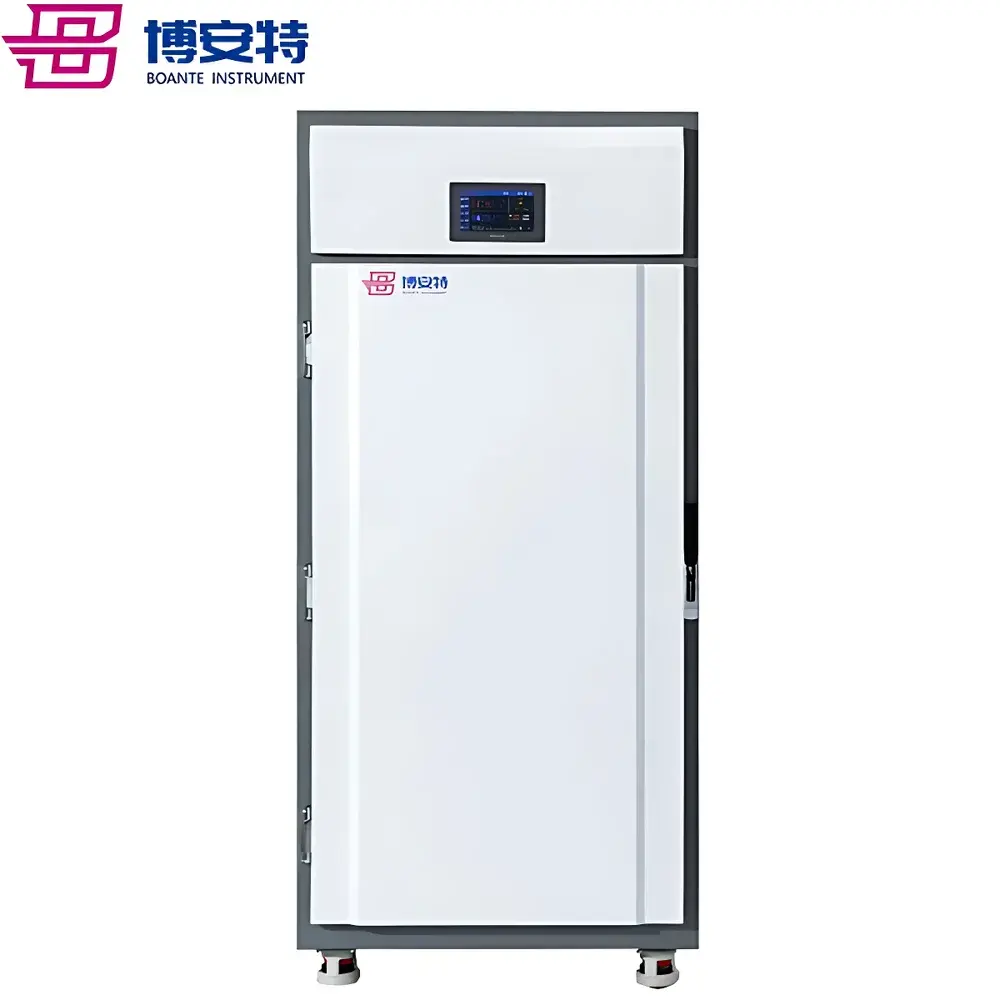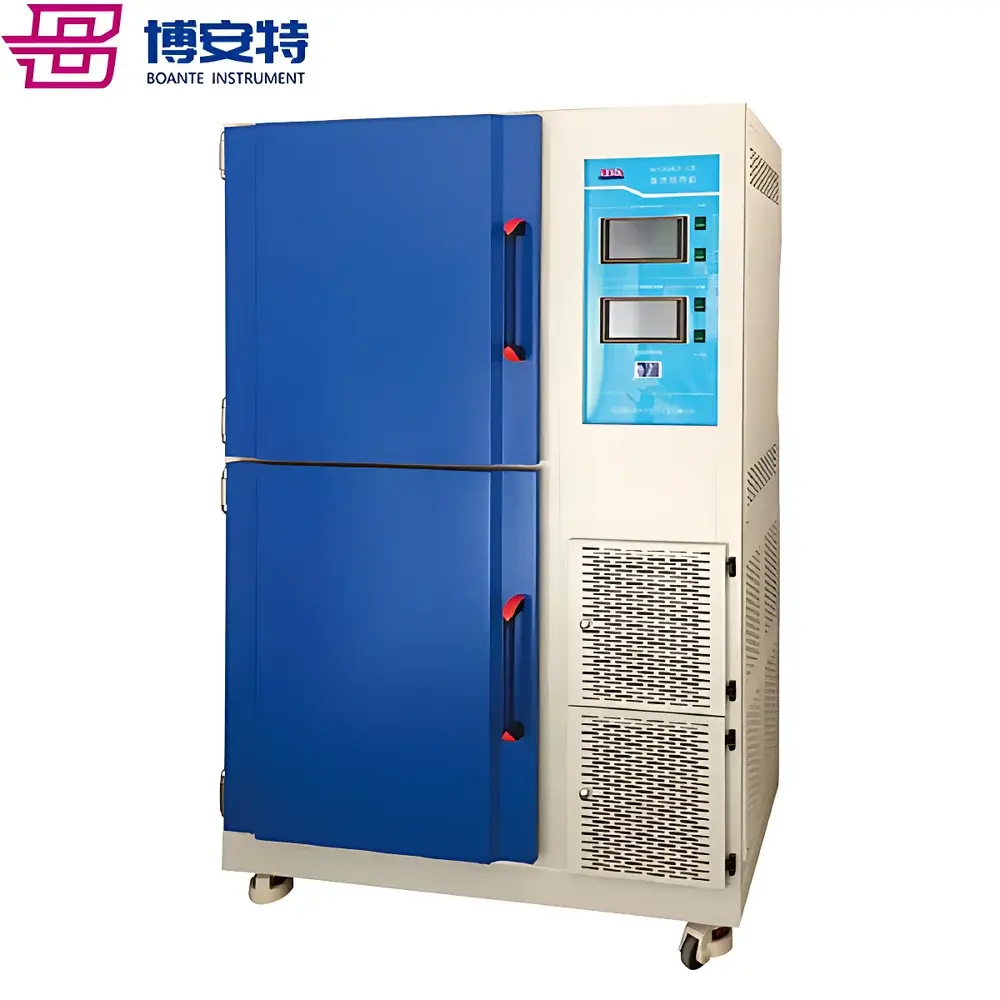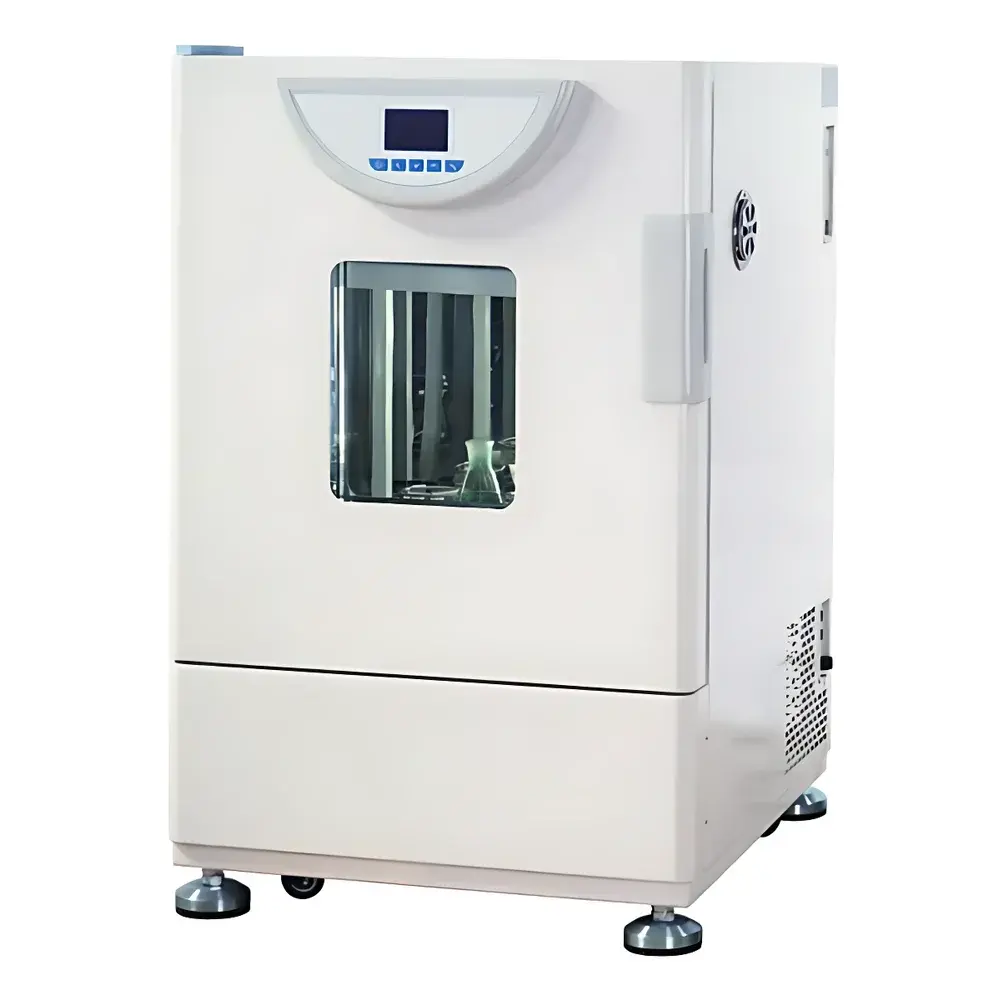
Yiheng BPNZ Series Large Vertical CO₂ Orbital Shaker Incubator with LCD Display
| Brand | Yiheng |
|---|---|
| Origin | Shanghai, China |
| Manufacturer Type | Direct Manufacturer |
| Country of Origin | China |
| Model | BPNZ Series |
| Price Range | USD 1,400 – 2,800 (FOB Shanghai) |
| Temperature Control Range & Accuracy | RT+5°C to 50°C ±0.1°C |
| Humidity Control | Not equipped |
| Chamber Capacity | 49–155 L |
| CO₂ Control Range | 0–20% (v/v) |
| CO₂ Control Accuracy | ±0.1% |
| CO₂ Sensor Type | Imported NDIR Infrared Sensor |
| CO₂ Recovery Time (after 30-sec door opening) | ≤3 min to 5% setpoint |
| Temperature Recovery Time (after 30-sec door opening) | ≤8 min to 37°C |
| Oscillation Frequency Range | 40–300 rpm |
| Oscillation Accuracy | ±1 rpm |
| Orbit Diameter | 20 mm (standard), 26 mm (optional) |
| Chamber Interior | Electropolished 304 Stainless Steel with Rounded Corners |
| Door | Heated Double-Layer Tempered Glass View Window |
| Safety Features | Independent Over-Temperature Cut-Off, CO₂ High/Low Alarm, Door-Open Interlock (stops heating, shaking, and fan), UV Sterilization Lamp (rear-mounted), Optional HEPA Filter (Class 100 air recovery within 5 min post-door closure) |
| Compliance | Designed for GLP-compliant cell culture workflows |
Overview
The Yiheng BPNZ Series Large Vertical CO₂ Orbital Shaker Incubator integrates precise CO₂-controlled humidified incubation with programmable orbital shaking—engineered specifically for suspension cell culture, microbial fermentation, hybridization assays, and biochemical reaction kinetics under controlled physiological conditions. Unlike conventional static CO₂ incubators or standalone shakers, this system maintains uniform CO₂ concentration (0–20% v/v), temperature (RT+5°C to 50°C), and mechanical agitation simultaneously within a single chamber—eliminating cross-contamination risks associated with sample transfer between separate devices. Its core architecture employs a dual-loop control strategy: an NDIR infrared CO₂ sensor provides real-time gas-phase monitoring independent of ambient humidity fluctuations, while a microprocessor-driven PID algorithm governs both thermal regulation and oscillation dynamics. The chamber’s electropolished 304 stainless-steel interior, electrochemically passivated surfaces, and heated observation window collectively mitigate condensation-induced microbial ingress—ensuring long-term sterility integrity essential for sensitive mammalian and primary cell lines.
Key Features
- Integrated CO₂ + Shaking Functionality: Combines ISO 13485-aligned incubation stability with reproducible orbital motion (40–300 rpm, ±1 rpm accuracy) in one compact vertical footprint.
- NDIR CO₂ Sensing & Delivery: Imported non-dispersive infrared sensor ensures rapid response (<3 min CO₂ recovery after 30-sec door opening) and immunity to water vapor interference—critical for high-throughput labs with frequent access cycles.
- Triple-Safety Thermal Management: Microcomputer PID temperature control (±0.1°C accuracy), independent over-temperature cut-off circuitry, and adaptive fan-speed modulation prevent thermal overshoot and minimize media evaporation during extended runs.
- Contamination-Resistant Chamber Design: Seamless 304 stainless-steel interior with radius-corner geometry, rear-mounted UV-C germicidal lamp (254 nm), and optional HEPA filtration (≥99.99% @ 0.3 µm) enable Class 100 clean-air recovery within 5 minutes post-door closure.
- User-Centric Interface: Backlit LCD display presents all operational parameters—including CO₂ %, setpoint vs. actual temperature, rpm, timer status, and alarm history—in a single view; password-protected menu prevents unauthorized parameter changes.
- Durable Mechanical Drive: Brushless DC motor with three-eccentric-axis balancing delivers consistent orbital motion across full load capacity (up to 116 × 50 mL flasks per single layer), eliminating vibration coupling and enabling uninterrupted 7×24 operation.
Sample Compatibility & Compliance
The BPNZ series accommodates standard laboratory vessels—including Erlenmeyer flasks (50–2000 mL), culture bottles, and multi-well plates—via interchangeable stainless-steel clamps and platform inserts. Its chamber dimensions (up to 920 × 500 mm tray size) support scalable bioprocessing from research-scale suspension cultures to early-stage process development. All models comply with IEC 61010-1 safety standards for laboratory equipment and are engineered to meet fundamental requirements of Good Laboratory Practice (GLP) and current Good Manufacturing Practice (cGMP) environments. When configured with RS-485 or USB data export options, the system supports traceable parameter logging aligned with FDA 21 CFR Part 11 expectations—including electronic signatures, audit trails, and immutable time-stamped records. Optional HEPA filtration and UV sterilization facilitate adherence to USP and ISO 14644-1 cleanroom classifications for aseptic technique validation.
Software & Data Management
While the base unit operates via embedded firmware with local LCD control, optional digital interfaces significantly extend its data governance capability. An RS-485 port enables connection to centralized lab information management systems (LIMS) or SCADA platforms for remote monitoring and alarm notification. A USB interface permits direct export of time-series logs (temperature, CO₂ %, rpm, elapsed time) to encrypted U-drive storage—supporting retrospective analysis without proprietary software dependency. For regulated environments, the optional embedded printer (thermal or dot-matrix) generates hard-copy run records compliant with ALCOA+ principles (Attributable, Legible, Contemporaneous, Original, Accurate). Firmware updates are delivered via secure USB transfer, maintaining version control and change documentation per ISO/IEC 17025 clause 5.9.
Applications
This incubator-shaker is routinely deployed in academic, pharmaceutical, and contract research laboratories for applications demanding simultaneous environmental control and mechanical stimulation: suspension-based monoclonal antibody production in CHO cells; aerobic bacterial fermentation (e.g., E. coli protein expression); hybridoma expansion under 5% CO₂; yeast two-hybrid interaction screening; enzymatic kinetic assays requiring continuous mixing; and stem cell aggregate formation in stirred suspension bioreactors. Its stable CO₂ delivery and low-vibration orbital profile make it particularly suitable for delicate primary neuron cultures and organoid differentiation protocols where pH drift or shear stress must be minimized. The absence of internal humidity control does not impair performance for most adherent or suspension cultures relying on sealed vessel headspace equilibration—a design choice that enhances long-term reliability and reduces maintenance intervals.
FAQ
Does the BPNZ series include built-in humidity control?
No. Humidity is maintained passively via natural evaporation from stainless-steel water pans; relative humidity remains ≥90% at 37°C in sealed vessels. Active humidification is omitted to improve CO₂ sensor longevity and reduce condensation-related contamination pathways.
Can the system operate continuously for >72 hours without intervention?
Yes. The brushless DC drive, sealed refrigeration circuit (R134a-free), and thermal overload protection enable unattended operation across multi-day experiments—validated under ISO 13485 production testing protocols.
Is the CO₂ sensor calibrated at the factory, and can users recalibrate it?
Each NDIR sensor undergoes two-point calibration (0% and 10% CO₂ in N₂ balance) prior to shipment. Field recalibration requires certified gas standards and is supported via service-mode access using the front-panel interface.
What certifications apply to the electrical and safety architecture?
The unit conforms to IEC 61010-1:2010 (Safety Requirements for Electrical Equipment for Measurement, Control, and Laboratory Use) and meets CE marking requirements for EMC Directive 2014/30/EU and Low Voltage Directive 2014/35/EU.
How is data integrity ensured during power interruption?
All user-defined parameters—including temperature setpoints, CO₂ targets, rpm profiles, and timer values—are retained in non-volatile memory. Upon power restoration, the system resumes operation at the pre-interruption state without manual reconfiguration.