
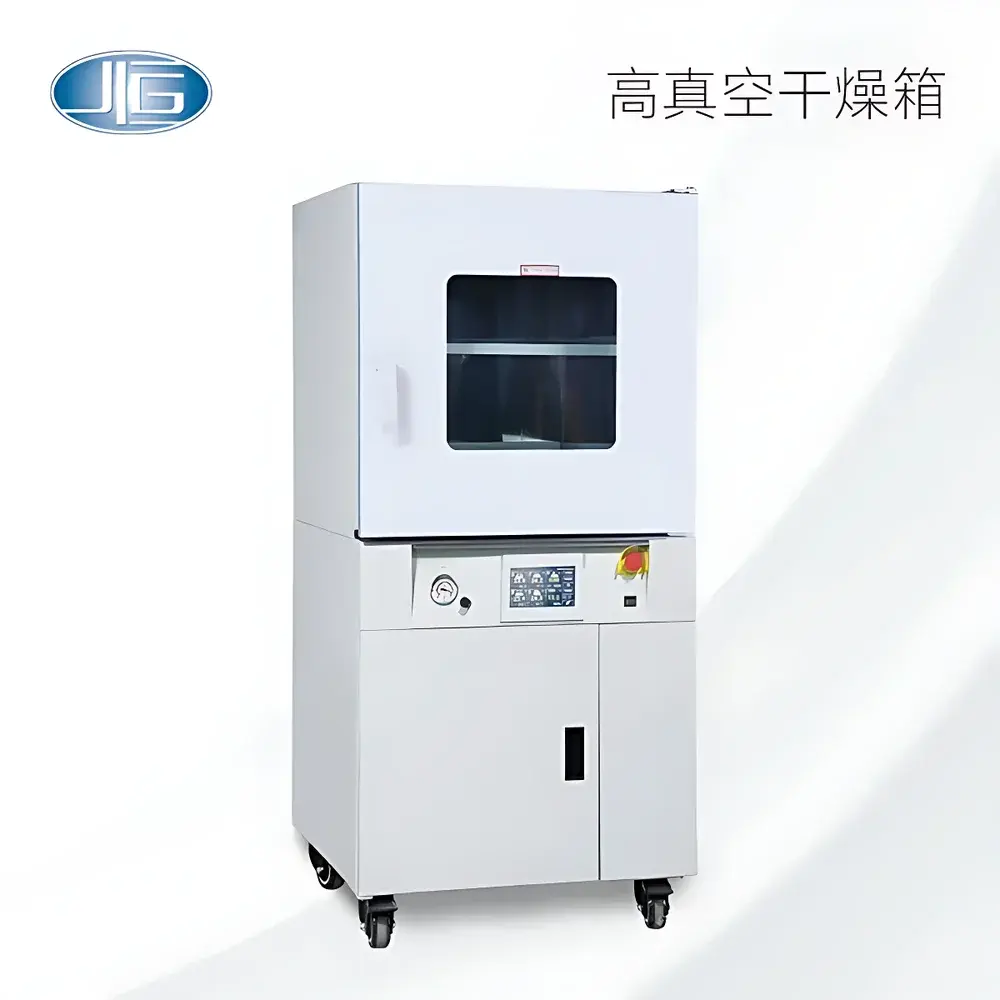
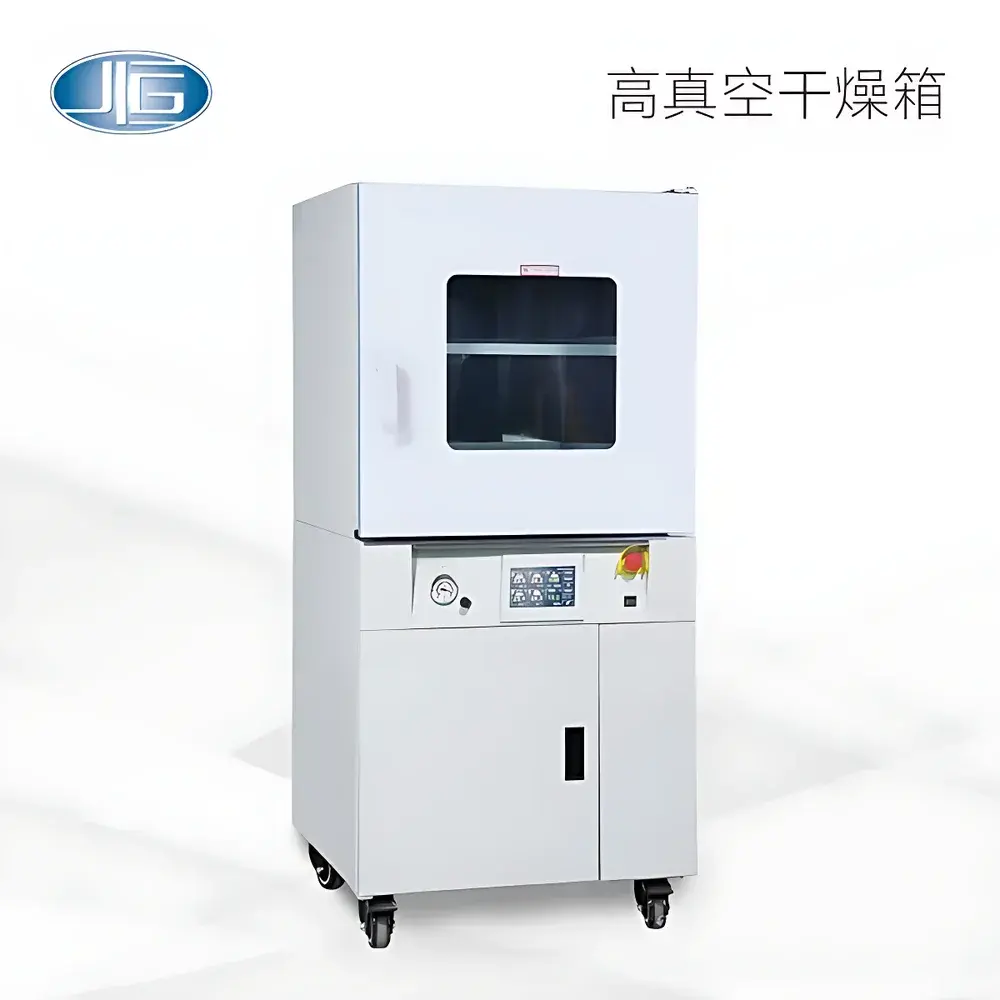
Yiheng BPZ-6060HV / BPZ-6090HV High-Vacuum Drying Oven
| Brand | Yiheng |
|---|---|
| Origin | Jiangsu, China |
| Manufacturer Type | Direct Manufacturer |
| Product Category | Domestic |
| Model | BPZ-6060HV, BPZ-6090HV |
| Instrument Type | Vacuum Oven |
| Temperature Range | RT+10°C to 200°C |
| Temperature Uniformity | ±1°C |
| Chamber Dimensions (W×D×H) | 400×400×400 mm |
| External Dimensions (W×D×H) | 600×570×1390 mm |
| Temperature Resolution | 0.1°C |
| Operating Ambient Temperature | +5°C to +40°C |
| Chamber Material | 316 Stainless Steel |
| Heating Method | Internal Chamber Heating |
| Ultimate Vacuum | 1.0×10⁻⁴ Pa |
| Interface | RS-485 Communication Port |
| Compliance | Designed for ISO Class 5–7 cleanroom integration |
| Optional | HMDS Process Automation Module, Low-Noise Vacuum Pump Assembly |
Overview
The Yiheng BPZ-6060HV and BPZ-6090HV High-Vacuum Drying Ovens are precision-engineered thermal processing systems designed for oxygen-sensitive, contamination-critical drying applications in semiconductor fabrication, microelectronics packaging, medical device manufacturing, and analytical sample preparation. These ovens operate on the principle of vacuum-assisted thermal desorption—removing volatile residues, solvents, and adsorbed moisture under controlled low-pressure conditions while suppressing oxidation and surface degradation. With an ultimate vacuum capability of 1.0×10⁻⁴ Pa and a temperature control range from ambient +10°C to 200°C, they meet stringent requirements for HMDS (hexamethyldisilazane) pre-bake processes prior to photolithography, as well as for moisture-free annealing of MEMS components, calibration standards, and hygroscopic reference materials. The ovens are constructed for integration into ISO 14644-compliant cleanrooms and support GMP-aligned process validation through traceable parameter logging and programmable sequence execution.
Key Features
- 316 stainless steel vacuum chamber with electropolished interior surface—resistant to halogenated and acidic vapors encountered in semiconductor wafer processing;
- Internal chamber heating architecture—eliminates external heating elements inside the vacuum space, preventing outgassing, particulate shedding, and electrical interference;
- Intelligent touchscreen HMI with menu-driven interface—enables direct setting of temperature setpoint, vacuum ramp rate, hold time, nitrogen purge cycles, and multi-step program sequencing;
- Ergonomic double-layer tempered glass observation door with adjustable silicone gasket compression—ensures visual monitoring without compromising vacuum integrity or thermal stability;
- Dual-stage vacuum system architecture—compatible with optional high-efficiency turbomolecular pump assemblies to achieve and maintain ≤1.0×10⁻⁴ Pa;
- RS-485 serial interface compliant with Modbus RTU protocol—enables remote monitoring, real-time data acquisition, and integration into centralized SCADA or MES platforms;
- Dedicated overtemperature protection circuit with independent thermal cutoff sensor—meets IEC 61000-6-2 immunity and IEC 61000-6-4 emission standards;
- Modular HMDS process kit option—includes mass flow-controlled nitrogen inlet, vapor delivery manifold, and automated vacuum/nitrogen cycling logic for repeatable priming of silicon wafers.
Sample Compatibility & Compliance
These ovens accommodate standard 100 mm, 150 mm, and 200 mm semiconductor wafers on quartz or ceramic carriers, as well as PCB substrates, thin-film sensors, optical filters, and pharmaceutical excipient batches. Chamber geometry supports uniform thermal distribution across full-load configurations per ASTM E2207 and ISO 17025 thermal mapping guidelines. All models conform to CE marking requirements (2014/30/EU EMC Directive, 2014/35/EU LVD Directive), and their control firmware architecture supports audit-ready operation under FDA 21 CFR Part 11 when paired with validated third-party data logging software. Vacuum integrity is verified per ISO 2859-1 sampling plans; chamber leak rate is ≤5×10⁻⁷ Pa·m³/s when tested with helium mass spectrometry.
Software & Data Management
The embedded controller logs timestamped records of chamber pressure, internal temperature, program step status, and alarm events—retained for ≥30 days onboard. Via RS-485, users can export CSV-formatted logs or stream live parameters to host systems using open-protocol drivers. Optional Yiheng LabLink™ software provides graphical trend analysis, SPC charting (X-bar/R), and electronic signature-enabled batch reports compliant with ALCOA+ principles. All configuration changes and manual interventions are recorded with user ID, timestamp, and reason-for-change fields—supporting GLP/GMP documentation workflows.
Applications
- HMDS vapor priming of silicon wafers prior to photoresist spin-coating;
- Oxidation-free drying of GaN, SiC, and compound semiconductor substrates;
- Residual solvent removal from MEMS packaging adhesives and underfill materials;
- Moisture stabilization of reference standards for gravimetric calibration;
- Pre-conditioning of optical coatings and IR-transmissive windows;
- Low-outgassing bakeout of vacuum chamber components and UHV feedthroughs;
- Controlled dehydration of biopolymer scaffolds and lyophilized diagnostics reagents.
FAQ
What vacuum level is achievable with the standard configuration?
The BPZ-6060HV/BPZ-6090HV achieves ≤1.0×10⁻⁴ Pa when equipped with the optional turbomolecular pumping station. Base configuration includes a two-stage rotary vane pump capable of ≤5×10⁻² Pa.
Can the oven be validated for GMP production environments?
Yes—when operated with documented IQ/OQ protocols, calibrated traceable sensors, and audit-trail-enabled software, it meets Annex 11 and ISO 13485 requirements for equipment qualification in regulated manufacturing.
Is nitrogen purging integrated into the standard control logic?
Standard firmware includes programmable N₂ purge cycles (vacuum → N₂ fill → vacuum); HMDS-specific sequencing requires the optional process module.
How is temperature uniformity verified across the chamber volume?
Per IEC 60068-3-5, uniformity is characterized using nine-point thermocouple mapping at 100°C and 150°C—data available in factory acceptance test reports.
What maintenance intervals are recommended for vacuum system components?
Rotary vane pump oil replacement every 500 operating hours; turbomolecular pump bearing inspection every 12,000 hours; silicone gasket replacement every 24 months or after 500 vacuum cycles—whichever occurs first.



