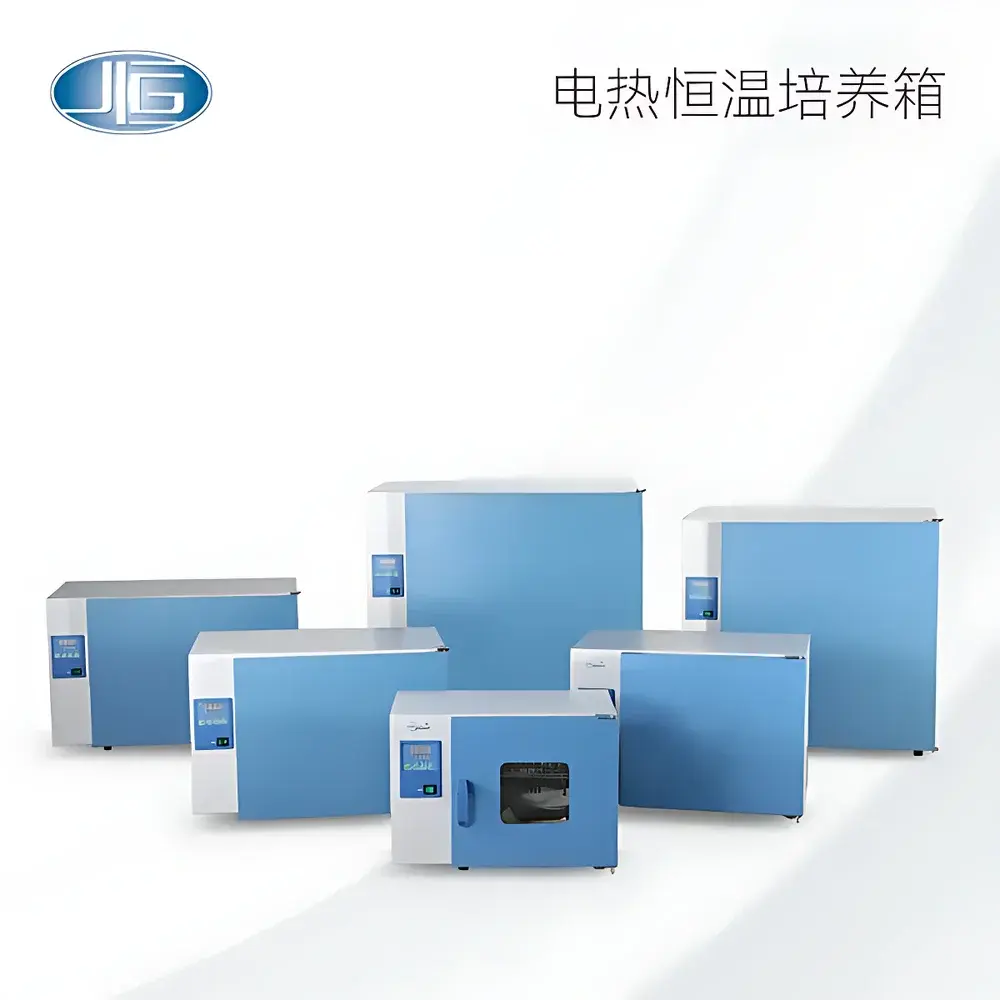
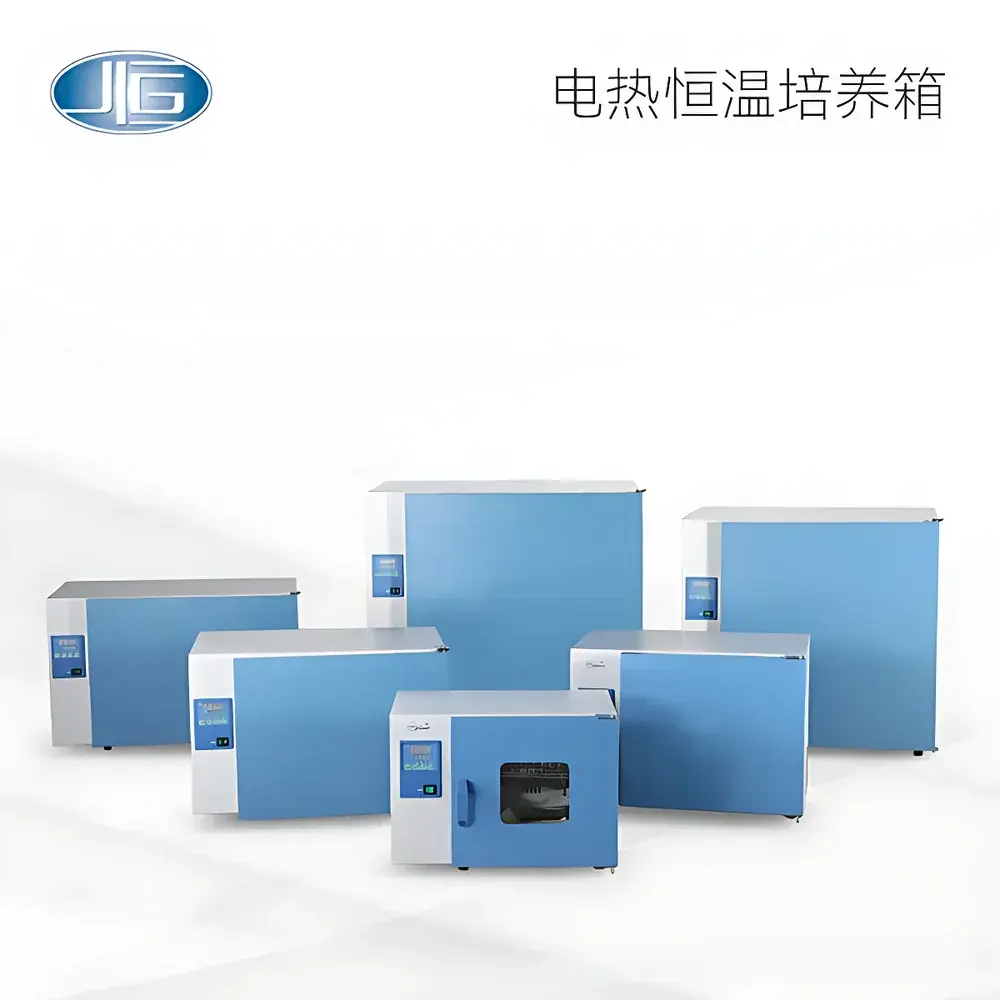
YiHeng DHP-9082 Forced-Air CO₂-Free Benchtop Incubator
| Brand | YiHeng |
|---|---|
| Origin | Shanghai, China |
| Manufacturer | YiHeng Instruments Co., Ltd. |
| Model | DHP-9082 |
| Temperature Range | RT+5°C to 65°C |
| Temperature Uniformity | ±1.5°C at 37°C |
| Chamber Capacity | 80 L |
| Control System | Fuzzy PID with Timer (up to 99 h 59 min) |
| Heating Method | Embedded Stainless Steel Sheathed Heater |
| Interior Material | Mirror-Finish Stainless Steel |
| Air Circulation | Motorized Adjustable-Speed Fan with Auto-Modulation |
| Optional Features | Independent Over-Temperature Cut-Off Alarm, UV Sterilization Module, RS485 Communication Port, Thermal Printer Interface, Multi-Stage Programmable Controller (7 programs × 9 steps each, max step duration 5999 min) |
Overview
The YiHeng DHP-9082 is a precision-engineered, forced-air benchtop incubator designed for routine cell culture, microbiological growth, enzyme activity assays, and other temperature-sensitive life science applications requiring stable thermal environments without CO₂ control. Unlike CO₂-dependent systems, the DHP-9082 operates as a dry-heat, ambient-air incubator—making it ideal for non-CO₂-requiring organisms (e.g., bacteria, fungi, insect cells), reagent storage, BOD testing, and stability studies where atmospheric composition must remain unaltered. Its core architecture employs a fuzzy logic PID temperature controller coupled with an optimized laminar airflow duct system, enabling rapid thermal equilibration, minimized overshoot, and high reproducibility across the entire working range (RT+5°C to 65°C). The chamber’s mirror-finish stainless steel interior ensures corrosion resistance, ease of decontamination, and optical clarity for visual monitoring through the double-glazed observation window.
Key Features
- Fuzzy PID digital temperature controller with ±0.1°C setpoint resolution and programmable timer (0–99 h 59 min), delivering low-oscillation thermal stability (±0.3°C typical fluctuation at 37°C).
- Intelligent variable-speed fan system: automatically reduces air velocity during steady-state operation to minimize evaporative loss from culture vessels while maintaining uniform heat distribution (±1.5°C uniformity verified at 37°C per ISO 13843:2021 Annex C).
- Double-layer tempered glass door with magnetic seal—interlocks fan and heater circuits upon opening to prevent thermal shock and eliminate temperature overshoot.
- Embedded tubular heating elements behind rear wall panels ensure rapid warm-up (<25 min to reach 37°C from ambient) and homogeneous chamber heating without hotspots.
- Optional independent over-temperature safety cut-off (adjustable up to 70°C) with audible/visual alarm—compliant with IEC 61010-1:2010 Class II requirements for laboratory equipment protection.
- Optional UV-C germicidal lamp (254 nm) integrated into ceiling assembly for periodic sterilization of internal air and surfaces—validated for ≥3-log reduction of E. coli, S. aureus, and airborne spores per ISO 15714:2019.
Sample Compatibility & Compliance
The DHP-9082 accommodates standard tissue culture flasks (T25–T225), Petri dishes (up to 150 mm), multi-well plates, and glassware stacks within its 80 L usable volume (W×D×H: 450 × 400 × 450 mm). Its fan-modulated airflow avoids desiccation of low-volume samples (e.g., 96-well plates with ≤200 µL/well) while supporting simultaneous incubation of heterogeneous sample types. The unit meets key regulatory expectations for non-GMP environments: temperature mapping validation support per ASTM E2297-18, documentation-ready calibration traceability (NIST-traceable reference probe optional), and compatibility with GLP-compliant data logging when equipped with RS485 interface and compliant software (e.g., YiHeng DataMaster v3.2, supporting 21 CFR Part 11 audit trails with user-level access control).
Software & Data Management
When configured with the RS485 serial interface, the DHP-9082 integrates seamlessly with PC-based monitoring platforms. The optional DataMaster software provides real-time graphing, configurable alarm thresholds, automated CSV export, and timestamped event logs (door openings, temperature excursions, alarm triggers). All communication adheres to Modbus RTU protocol, enabling integration into centralized lab infrastructure via SCADA or LIMS. For standalone recordkeeping, the thermal printer option produces tamper-evident strip-chart outputs compliant with ISO/IEC 17025:2017 clause 7.7 on result reporting integrity.
Applications
- Bacterial and fungal cultivation (e.g., E. coli, S. cerevisiae, A. niger) under standardized ISO 8573-1 or CLSI M22-A2 protocols.
- Enzyme kinetics and protein stability assays requiring precise isothermal conditions (e.g., lysozyme activity at 37°C, thermostability profiling up to 65°C).
- Seed germination and plant tissue culture in phytochambers where CO₂ supplementation is unnecessary.
- Pharmaceutical stability testing per ICH Q1A(R2) guidelines for intermediate storage (30°C/65% RH simulated via external humidifier).
- Quality control incubation for food microbiology (APHA 18th ed.) and water safety testing (EPA 1603).
FAQ
Does the DHP-9082 support CO₂ concentration control?
No. It is a CO₂-free, ambient-air incubator. For CO₂-regulated applications, consider YiHeng’s HH.CP series CO₂ incubators.
Is the UV sterilization module validated for ISO 14644-1 Class 5 cleanroom equivalency?
The UV module achieves ≥99.9% airborne microbial reduction within 30 min exposure; however, full cleanroom classification requires additional HEPA filtration and pressure cascade—beyond the scope of this device.
Can the multi-stage programming function execute ramp-and-soak temperature profiles?
Yes. Up to 7 independent programs, each with 9 definable segments, support linear ramps (°C/min), dwell times (0–5999 min), and fan speed modulation per segment.
What calibration standards are supported for IQ/OQ/PQ validation?
NIST-traceable PT100 probes (Class A, ±0.15°C at 37°C) and documented thermal mapping templates aligned with EU GMP Annex 15 and FDA Process Validation Guidance are available upon request.
Is the RS485 interface compatible with LabVIEW or Python-based acquisition scripts?
Yes. Modbus RTU register map and Python driver libraries (PyModbus-compatible) are provided in the technical documentation package.