
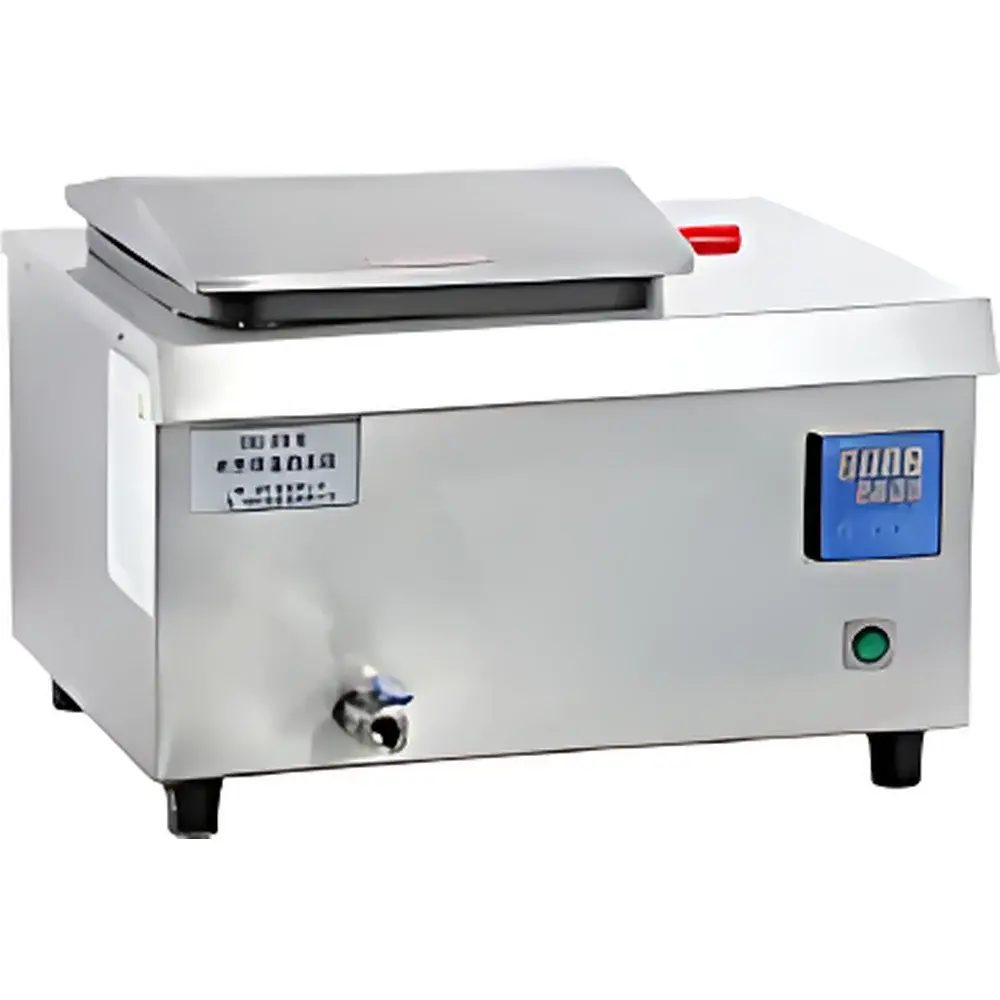
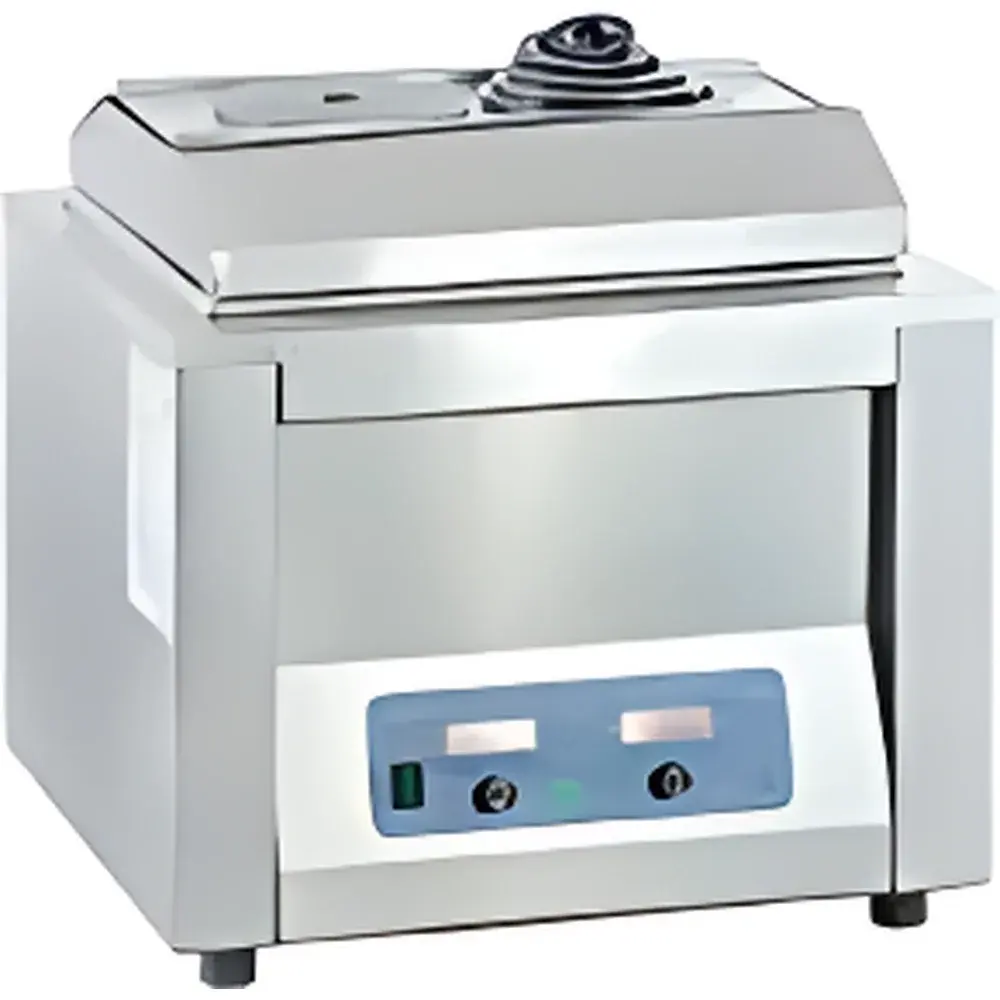
YiHeng HWS Series Digital Oil Bath Circulator with Magnetic Stirring
| Brand | YiHeng |
|---|---|
| Origin | Shanghai, China |
| Model | HWS (DU-20 / DU-20G / DU-30 / DU-30G) |
| Power Supply | AC 220 V, 50 Hz |
| Heating Power | 1000 W / 2000 W |
| Temperature Range | RT + 20 °C to 200 °C |
| Temperature Stability | ±0.5 °C |
| Over-Temperature Alarm Threshold | +2 °C |
| Bath Capacity | 12 L / 20 L |
| Inner Chamber Dimensions (W×D×H) | 250 × 250 × 200 mm / 400 × 250 × 200 mm |
| Timer Range | 1–9999 min |
| Stirring Function | Integrated magnetic stirrer (DU-30G only) |
| Stirring Torque | High-output, servo-controlled |
| Construction | 304 stainless steel inner tank and outer housing |
Overview
The YiHeng HWS Series Digital Oil Bath Circulator is a precision-engineered thermal management system designed for laboratory applications requiring stable, uniform, and controllable heating environments above the boiling point of water. Unlike water baths, oil baths enable operation up to 200 °C—making them essential for high-temperature reactions, viscosity measurements, polymer curing, sample preheating, and controlled solvent evaporation. This unit employs a dual-mode architecture: a PID-regulated resistive heating system coupled with forced convection via integrated oil circulation (passive in standard models; enhanced by magnetic stirring in DU-30G). The microprocessor-based controller continuously monitors bath temperature using a calibrated PT100 sensor and dynamically adjusts power output to maintain setpoint stability within ±0.5 °C under steady-state conditions. All models feature a robust 304 stainless steel tank resistant to thermal degradation and chemical exposure from common organic solvents and heat-transfer oils (e.g., silicone oil, mineral oil, or glycerol-based media).
Key Features
- PID digital temperature controller with real-time display, programmable timer (1–9999 minutes), and auto-start functionality after power recovery.
- Double-walled stainless steel construction ensures mechanical durability, thermal insulation, and corrosion resistance—critical for long-term use with aggressive heat-transfer media.
- Over-temperature safety cut-off with audible and visual alarm (triggered at +2 °C above setpoint), compliant with IEC 61010-1 requirements for laboratory electrical equipment.
- For DU-30G models: Integrated high-torque magnetic stirrer with closed-loop speed regulation—maintains consistent rotational velocity (RPM) across varying oil viscosities and temperatures, minimizing thermal stratification and enhancing temperature homogeneity.
- Intuitive front-panel interface with tactile buttons and LED backlighting enables glove-compatible operation in fume hoods or controlled environments.
Sample Compatibility & Compliance
The HWS series accommodates a wide range of vessel types—including round-bottom flasks, beakers, test tubes, and jacketed reactors—provided external dimensions fit within the specified inner chamber. Its open-bath design supports direct immersion of reaction vessels and facilitates easy access for sampling or probe insertion. The unit is suitable for use with silicone oils (up to 200 °C), mineral oils (up to 180 °C), and low-volatility glycols. It conforms to general laboratory safety standards including CE marking (per EN 61010-1:2010), RoHS Directive 2011/65/EU, and GB/T 25915.1–2010 (Chinese national standard for cleanroom equipment). While not certified for hazardous area use (ATEX/IECEx), it includes grounding terminals and thermal fuses to mitigate fire and electrical risks during extended unattended operation.
Software & Data Management
The HWS operates as a standalone instrument with no proprietary software dependency. All operational parameters—including setpoint, actual temperature, timer status, and alarm history—are displayed locally. For integration into GLP/GMP-compliant workflows, optional RS-485 or analog 4–20 mA output modules (sold separately) enable connection to SCADA systems or data loggers. When paired with third-party acquisition software (e.g., LabVIEW, MATLAB, or custom Python scripts), users can implement audit-trail-capable temperature logging aligned with FDA 21 CFR Part 11 requirements—provided external validation of the communication interface and timestamping mechanism is performed per organizational SOPs.
Applications
- Controlled-temperature synthesis of metal-organic frameworks (MOFs) and nanomaterials requiring prolonged heating at 150–180 °C.
- Calibration of thermocouples, RTDs, and infrared sensors against NIST-traceable reference standards.
- Accelerated stability testing of pharmaceutical intermediates under ICH Q1A(R2) guidelines (e.g., 40 °C/75% RH equivalent thermal stress).
- Preheating of GC inlet liners, HPLC columns, or rheometer sample holders prior to analysis.
- Viscosity benchmarking of lubricants and polymer melts using rotational viscometers mounted directly in the bath.
FAQ
What types of heat-transfer fluids are compatible with the HWS oil bath?
Silicone oils (e.g., Dow Corning 200 Fluid), white mineral oils, and polyethylene glycols (PEG-400) are commonly used. Avoid halogenated or low-flash-point solvents due to fire hazard and material compatibility concerns.
Can the magnetic stirrer operate independently of the heating function?
Yes—the stirring motor and heating circuit are electrically isolated and can be controlled separately via dedicated front-panel keys.
Is the temperature sensor user-replaceable or field-calibratable?
The PT100 sensor is factory-calibrated and sealed within the tank wall. Field calibration requires a certified dry-block calibrator and documented traceability; replacement must be performed by authorized service personnel to preserve IP rating and thermal response integrity.
Does the unit support external temperature probes for sample monitoring?
No native input exists for external probes; however, the bath’s high thermal mass and stirring uniformity ensure that immersed sample vessels achieve equilibrium within ±0.3 °C of the displayed bath temperature under typical loading conditions.
What maintenance is recommended for long-term reliability?
Monthly inspection of oil level and clarity; annual cleaning of the stainless steel tank with non-abrasive detergent; biannual verification of over-temperature cutoff function using a calibrated thermometer and adjustable setpoint test.



