
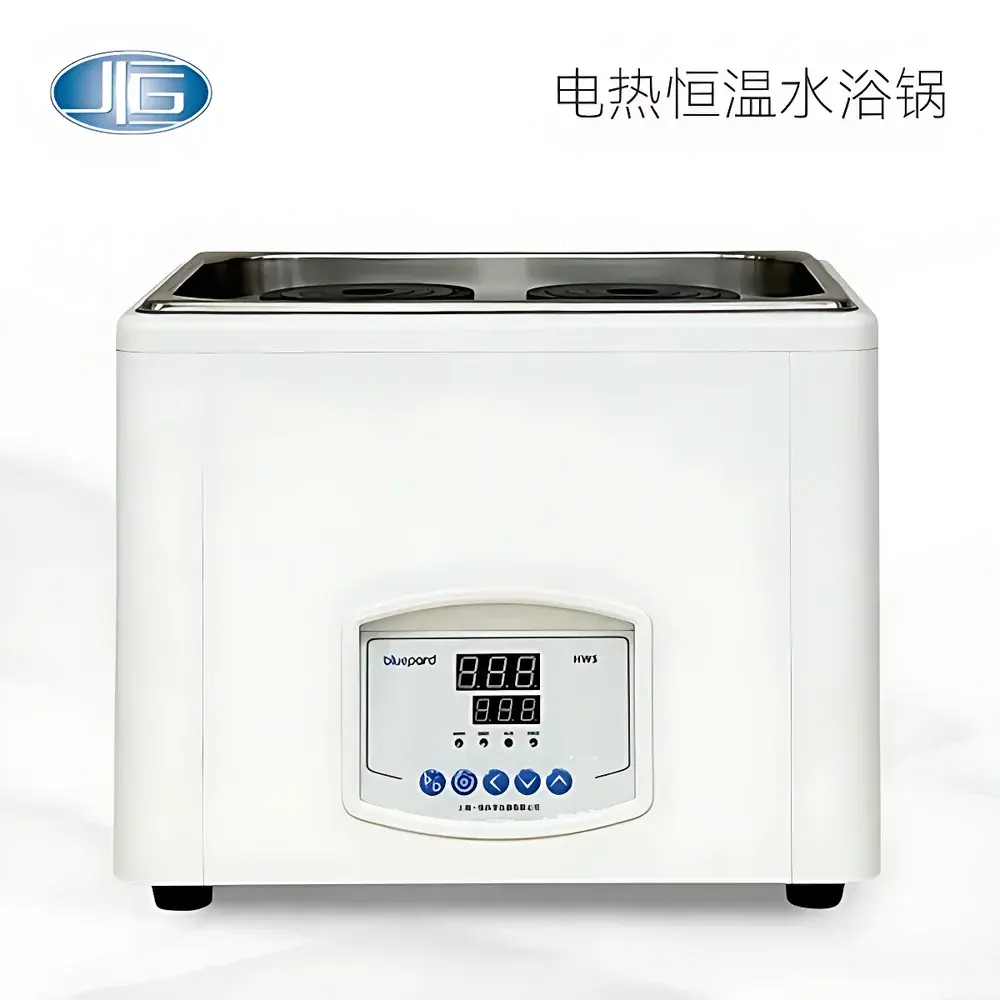
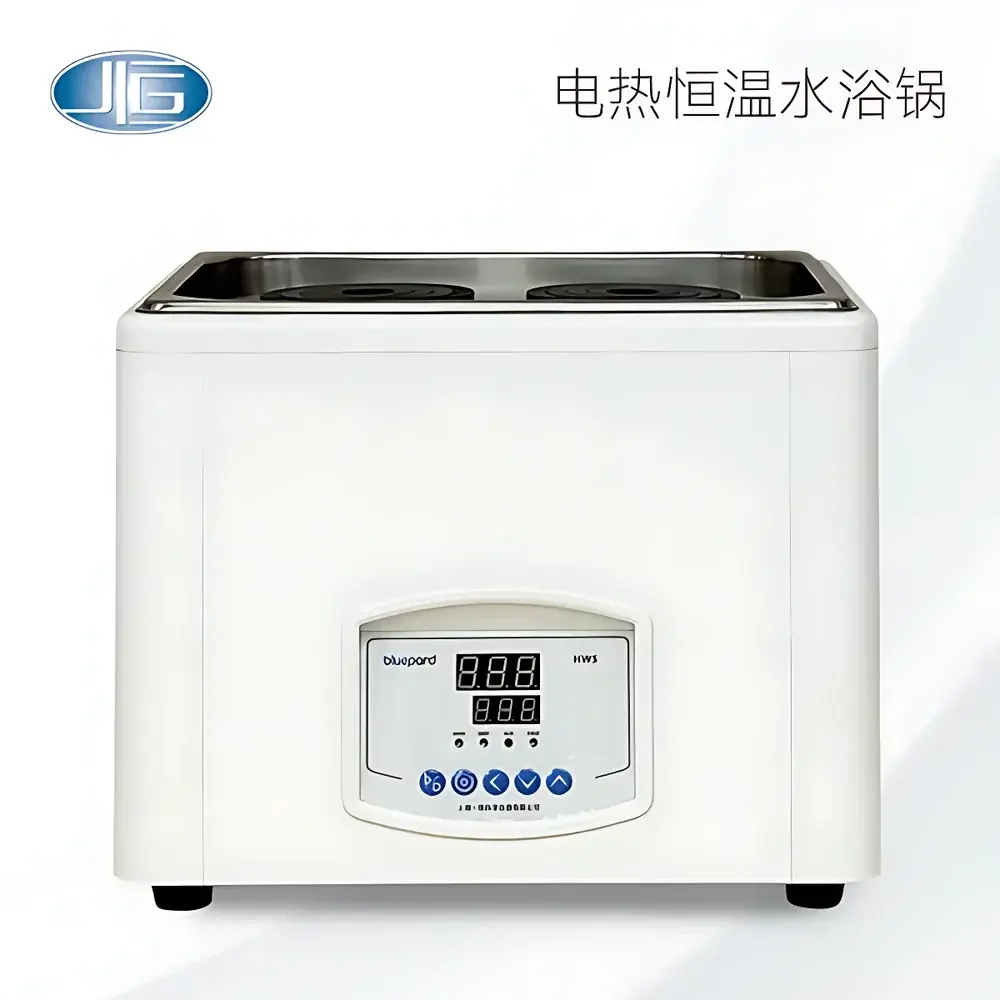
YIHENG HWS Series Water Bath Incubator
| Brand | YIHENG |
|---|---|
| Origin | Shanghai, China |
| Manufacturer Type | Direct Manufacturer |
| Product Category | Domestic |
| Model | HWS |
| Price Range | USD 220–330 (FOB Shanghai) |
| Instrument Type | Water Bath / Oil Bath |
| Circulation | Non-circulating |
| Temperature Control Mode | Heating-Only |
| Bath Chamber Volume | 5 L |
| Temperature Range | Ambient +5°C to 99°C |
| Input Power | 500 W |
| Power Supply | AC 220 V, 50 Hz |
| Chamber Material | Stainless Steel (AISI 304) |
| Housing Material | Flame-Retardant ABS |
| Safety Features | Dry-run Protection (Manual Reset Required), Optional Independent Over-Temperature Cut-off |
| Controller | Microprocessor-Based PID Temperature Controller with ±0.3°C Stability (at 37°C, steady-state) |
| Display | LED, 4-digit |
| Control Interface | 5-Key Membrane Panel |
Overview
The YIHENG HWS Series Water Bath Incubator is a precision-engineered, benchtop thermostatic bath designed for stable, uniform heating of samples in glassware or containers immersed in water or compatible heat-transfer fluids (e.g., silicone oil up to 99°C). It operates on the principle of conductive and convective thermal transfer within a sealed, insulated stainless steel chamber, delivering consistent temperature distribution across the bath volume without forced circulation. Engineered for reliability in routine laboratory workflows, the HWS series serves as a foundational tool in life science, analytical chemistry, and quality control laboratories—supporting applications such as enzyme incubation, sample thawing, reagent pre-warming, dissolution testing preparation, and controlled-accelerated stability studies under non-agitated conditions.
Key Features
- Stainless steel (AISI 304) inner tank ensures corrosion resistance, ease of cleaning, and long-term dimensional stability under repeated thermal cycling.
- Microprocessor-based PID temperature controller delivers ±0.3°C temperature stability at setpoints between 37°C and 60°C (per internal validation per ISO/IEC 17025-compliant calibration protocol), with adjustable proportional band and integral time for optimized response across operating range.
- Dry-run protection circuit automatically deactivates heating elements when liquid level falls below minimum operational threshold; system requires manual reset via front-panel key sequence to prevent unattended restart—aligning with IEC 61010-1 safety requirements for laboratory equipment.
- Flame-retardant ABS housing provides chemical resistance against common laboratory solvents, acids, and alkalis while maintaining structural rigidity and ergonomic handling.
- Modular perforated tray design allows flexible placement and sizing of beaker openings—compatible with standard borosilicate glassware (Ø50–150 mm) without adapter accessories.
- Acoustic-optical over-temperature alarm triggers at user-defined threshold (default: +5°C above setpoint); alarm latching ensures visibility during unattended operation.
Sample Compatibility & Compliance
The HWS bath accommodates standard laboratory vessels—including Erlenmeyer flasks, volumetric flasks, centrifuge tubes (in racks), and immersion probes—within its 5 L working volume. Its non-circulating architecture minimizes mechanical disturbance, making it suitable for sedimentation-sensitive protocols or low-shear thermal conditioning. The unit complies with GB/T 28850–2012 (Chinese national standard for laboratory water baths) and meets essential safety requirements of IEC 61010-1:2010 (Edition 3.1) for electrical safety in measurement, control, and laboratory use. While not certified to UL or CE for export markets, its design basis aligns with risk-mitigation principles referenced in ISO/IEC 17025:2017 Clause 6.4 (Equipment) and supports GLP documentation through traceable calibration records and configurable alarm logging.
Software & Data Management
The HWS operates as a standalone analog-digital hybrid instrument with no embedded data logging or PC connectivity. All operational parameters—including setpoint, real-time bath temperature (displayed continuously), and alarm status—are accessible via the front-panel LED interface. For regulated environments requiring audit trails, external validation-grade temperature recorders (e.g., calibrated thermistors connected to a validated data logger per FDA 21 CFR Part 11 Annex 11 guidelines) are recommended. Calibration certificates (traceable to NIM, China) are available upon request and include as-found/as-left data at three points (37°C, 60°C, 90°C) per ISO/IEC 17025 procedures.
Applications
- Pre-incubation of microbial culture media prior to pour plating (ASTM D5763–22)
- Controlled warming of cryopreserved cell suspensions before centrifugation (ISO 20387:2018 biobanking guidelines)
- Standardization of viscosity reference oils in QC labs (ASTM D445)
- Thermal equilibration of pH electrodes and conductivity cells
- Supporting USP <797> compounding pharmacy workflows for sterile product temperature conditioning
- Accelerated aging trials for packaging material compatibility (ISO 11607-1)
FAQ
Does the HWS bath support external temperature probe input for chamber monitoring?
No—temperature sensing is internal only, using a hermetically sealed PT100 sensor embedded in the stainless steel tank wall.
Can this unit be used with silicone oil as heat-transfer medium?
Yes, provided the oil’s flash point exceeds 120°C and viscosity remains ≤500 cSt at 99°C; users must verify chemical compatibility with AISI 304 and ABS components prior to deployment.
Is the dry-run protection resettable remotely or via software?
No—manual reset via the front-panel keys is mandatory per safety design; no remote or automatic recovery logic is implemented.
What is the typical warm-up time from ambient to 37°C?
Approximately 18–22 minutes under standard load conditions (5 L deionized water, uncovered bath), measured per ASTM E2209–21 Annex A1 test method.
Are calibration services available outside mainland China?
Calibration is performed at YIHENG’s Shanghai facility; international customers may arrange third-party accredited calibration using shipped units or on-site service via authorized regional partners (subject to local metrology accreditation scope).



