
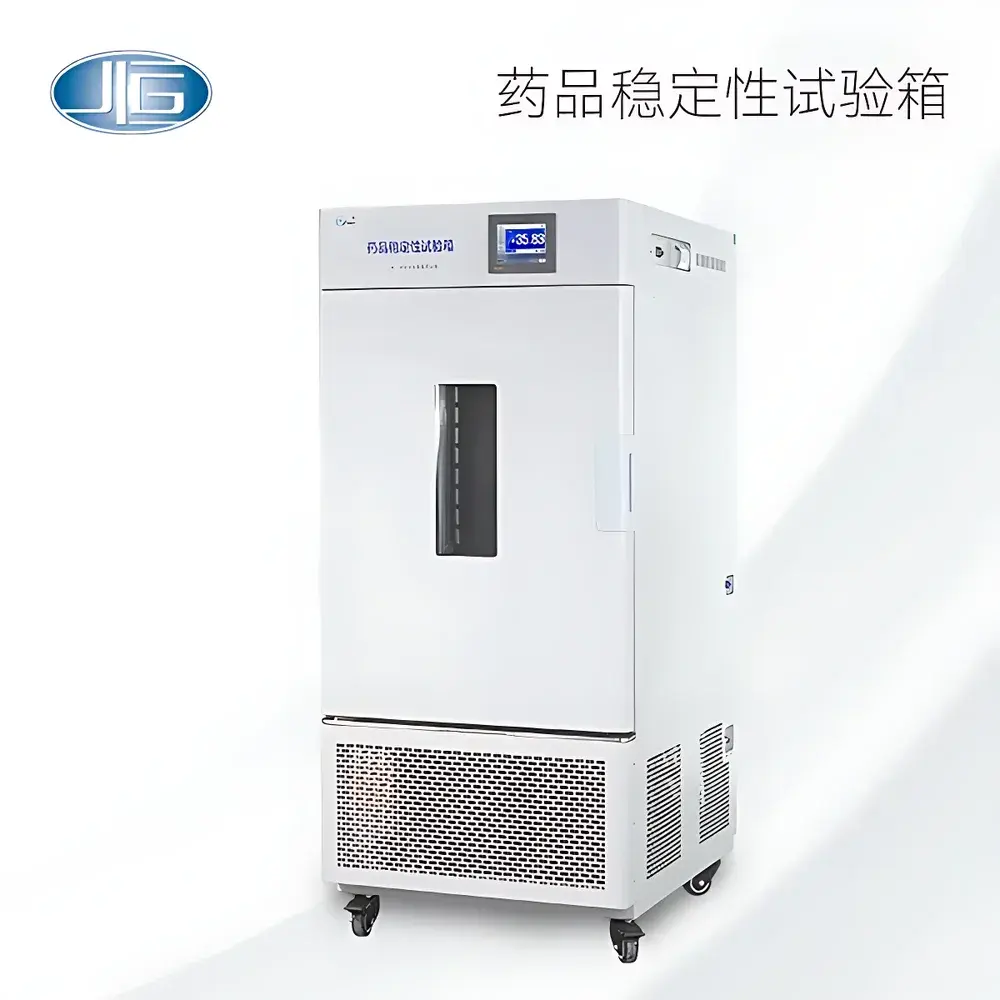
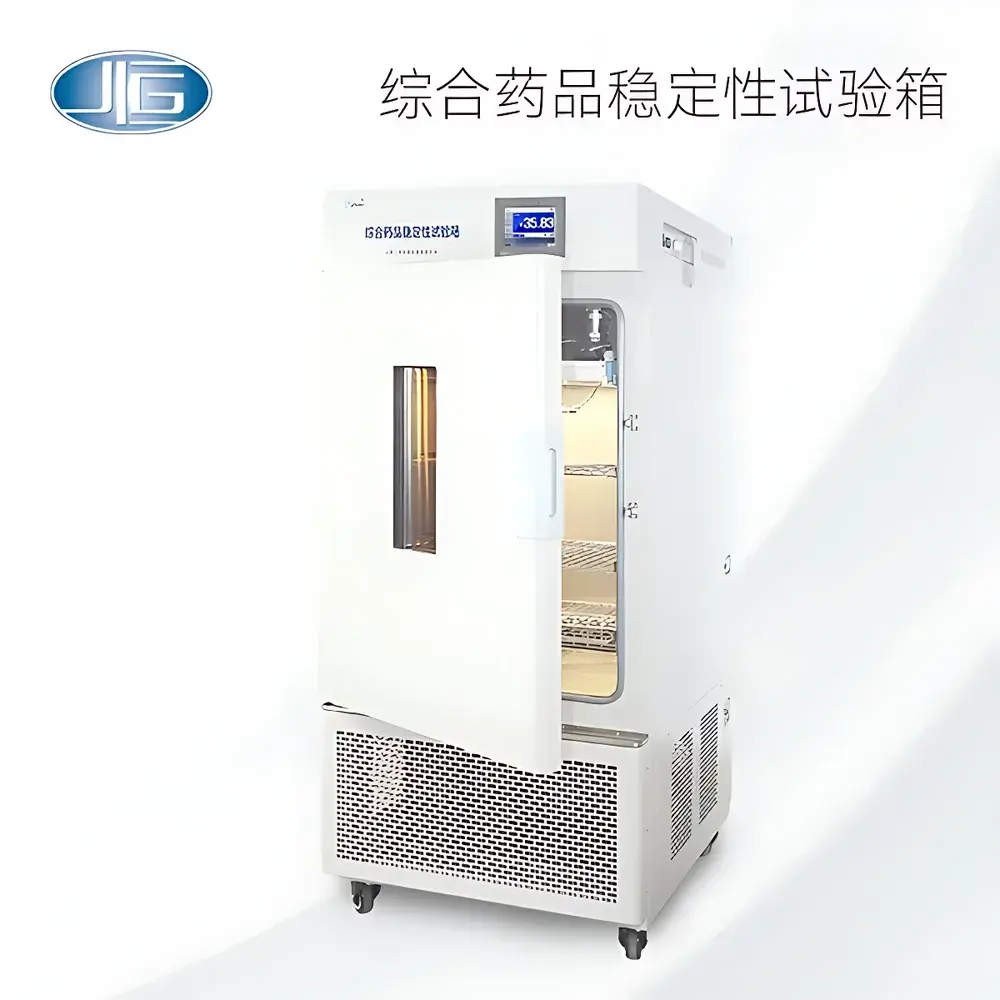
YiHeng LHH-400GP Photostability Testing Chamber for Pharmaceutical Stability Studies
| Brand | YiHeng |
|---|---|
| Origin | Shanghai, China |
| Manufacturer Type | Direct Manufacturer |
| Model | LHH-400GP |
| Temperature Range | 0–70°C |
| Humidity Range | 20–98% RH (at 25°C) |
| Illumination Control | 0–6000 lx (adjustable, ±500 lx accuracy at 4500 lx setpoint) |
| Light Source | LED or Fluorescent (UV-A compliant, 320–400 nm) |
| Compliance | Chinese Pharmacopoeia 2020, GB/T 10586–2006, ICH Q1A(R2), Q1B, Q5C |
| Control System | Programmable Touchscreen Controller (100 programs × 1000 segments × 999 cycles) |
| Data Logging | Built-in memory + RS-485/RS-232 interface + optional thermal printer support |
| Safety | Dual independent temperature limit alarms, humidity deviation alarms, password-protected operation, UV sterilization option (optional), real-time fault diagnostics |
Overview
The YiHeng LHH-400GP Photostability Testing Chamber is an engineered environmental simulation system designed specifically for compliance-driven pharmaceutical stability testing in accordance with ICH Q1A(R2), Q1B, and Q5C guidelines. It integrates precise temperature, humidity, and controlled illumination—particularly critical for photostability assessment under ICH Q1B’s “forced degradation” protocol requiring exposure to ≥4500 lx (±500 lx) white light for 10 days. The chamber employs a dual-compressor refrigeration architecture with automatic switchover logic, eliminating downtime during extended validation runs (e.g., 365-day long-term studies at 25°C ±2°C / 60% RH ±5%). Its microprocessor-based controller supports full traceability, including real-time deviation logging, alarm history, and audit-ready event timestamps—essential for GLP/GMP-regulated environments.
Key Features
- Dual imported compressors with intelligent auto-switching: Ensures uninterrupted operation for >365 days without manual defrost intervention—addressing a known reliability gap in legacy domestic chambers.
- High-stability climate control: 304 stainless steel interior with radius-corner construction; uniform airflow via rear-mounted centrifugal fan and optimized duct design (±0.5°C temperature uniformity, ±3% RH uniformity across working volume).
- Calibration-traceable illumination system: Optional broadband white-light source (320–400 nm UV-A + visible spectrum) with integrated silicon photodiode sensor enabling closed-loop, stepless intensity regulation (0–6000 lx, ±500 lx tolerance at 4500 lx setpoint).
- Advanced programmable controller: 7-inch capacitive touchscreen interface supporting bilingual (English/Chinese) operation; stores up to 100 multi-step programs (1000 segments total); features PID auto-tuning, screen lock, and password protection (three-tier access levels).
- Comprehensive safety architecture: Independent over-temperature cut-off (mechanical + electronic), dual-point humidity deviation alerts, audible/visual alarm outputs, and fail-safe door interlock circuitry.
- Integrated diagnostics & connectivity: Real-time fault code display (e.g., E01 = compressor overload, E07 = sensor open-circuit); RS-485 Modbus RTU and RS-232 interfaces for SCADA integration; optional thermal printer module for CFR Part 11–compliant hardcopy records.
Sample Compatibility & Compliance
The LHH-400GP accommodates standard pharmaceutical packaging formats—including blister packs, HDPE bottles, glass vials, and semi-permeable containers (e.g., LDPE IV bags)—within its 400 L working volume. Its environmental profiles directly map to regulatory requirements: long-term storage (25°C ±2°C / 60% RH ±5%, 12 months), accelerated testing (40°C ±2°C / 75% RH ±5%, 6 months), and photostability (4500 ±500 lx, 10 days, dark controls included). Humidity generation uses stainless steel steam humidifier with anti-scale design; low-humidity conditions (25% RH) are achieved via deep-cooling dehumidification—validated per GB/T 10586–2006. All control algorithms and sensor calibrations align with ISO/IEC 17025–traceable metrology practices.
Software & Data Management
The embedded controller logs all operational parameters (temperature, humidity, irradiance, alarm status, program step) with millisecond timestamp resolution. Data export is supported via USB flash drive (CSV format) or serial interface using standard Modbus RTU protocol. When connected to a validated PC-based monitoring system (e.g., LabVIEW or custom LIMS), the chamber satisfies FDA 21 CFR Part 11 requirements for electronic records—including user authentication, audit trail generation, and electronic signature capability. Firmware updates preserve historical calibration coefficients and retain all logged data through power cycles.
Applications
- ICH Q1B photostability screening of active pharmaceutical ingredients (APIs) and finished dosage forms under controlled white light and near-UV exposure.
- Accelerated stability studies per Q1A(R2) to predict shelf life and establish retest dates.
- Long-term real-time stability monitoring for registration batches under GMP Annex 11–compliant conditions.
- Excipient compatibility testing under variable humidity gradients (e.g., hygroscopicity assessment of lactose or microcrystalline cellulose).
- Package integrity evaluation for semi-permeable containers exposed to 40°C / 25% RH (Q1A(R2) Section II.C.2).
- Environmental stress testing of biologics and cold-chain intermediates during formulation development.
FAQ
Does the LHH-400GP comply with ICH Q1B photostability requirements for irradiance uniformity and spectral distribution?
Yes—the chamber’s optional light system delivers ≥4500 lx (±500 lx) across 90% of the test area, with spectral output conforming to CIE Publication No. 85 (1989) for daylight simulators.
Can humidity be maintained stably at 25% RH for semi-permeable container testing?
Yes—via precision dew-point control using the dual-stage refrigeration system, validated down to 20% RH at 40°C.
Is the controller validated for 21 CFR Part 11 compliance?
The base controller meets technical prerequisites (audit trail, electronic signatures, role-based access); full Part 11 validation requires site-specific IQ/OQ/PQ protocols executed by the end user or qualified third party.
What is the calibration interval recommendation for temperature, humidity, and light sensors?
Annual calibration is recommended against NIST-traceable standards; internal sensor diagnostics continuously monitor drift and trigger maintenance alerts.
Is UV-C sterilization available as a factory-installed option?
No—only UV-A (320–400 nm) lamps are offered to avoid polymer degradation; UV-C would compromise chamber materials and violate ICH photostability spectral guidelines.



