
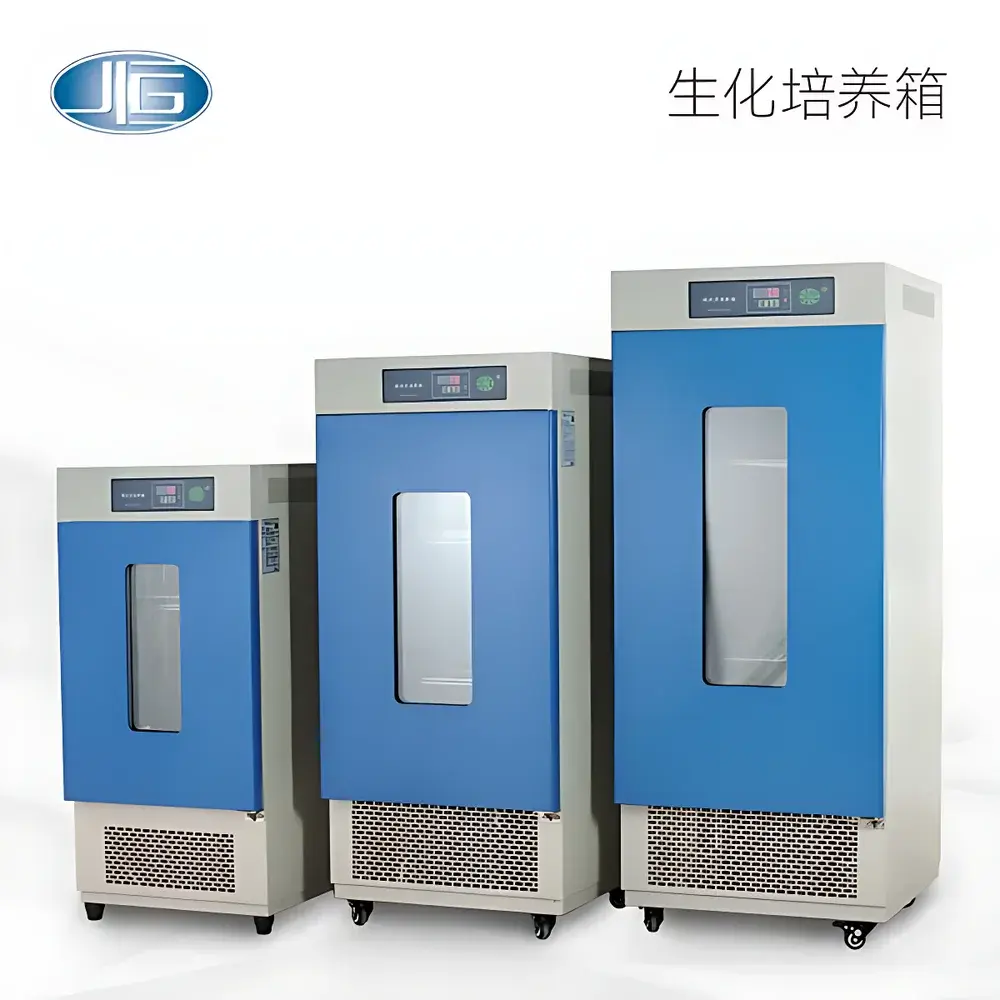
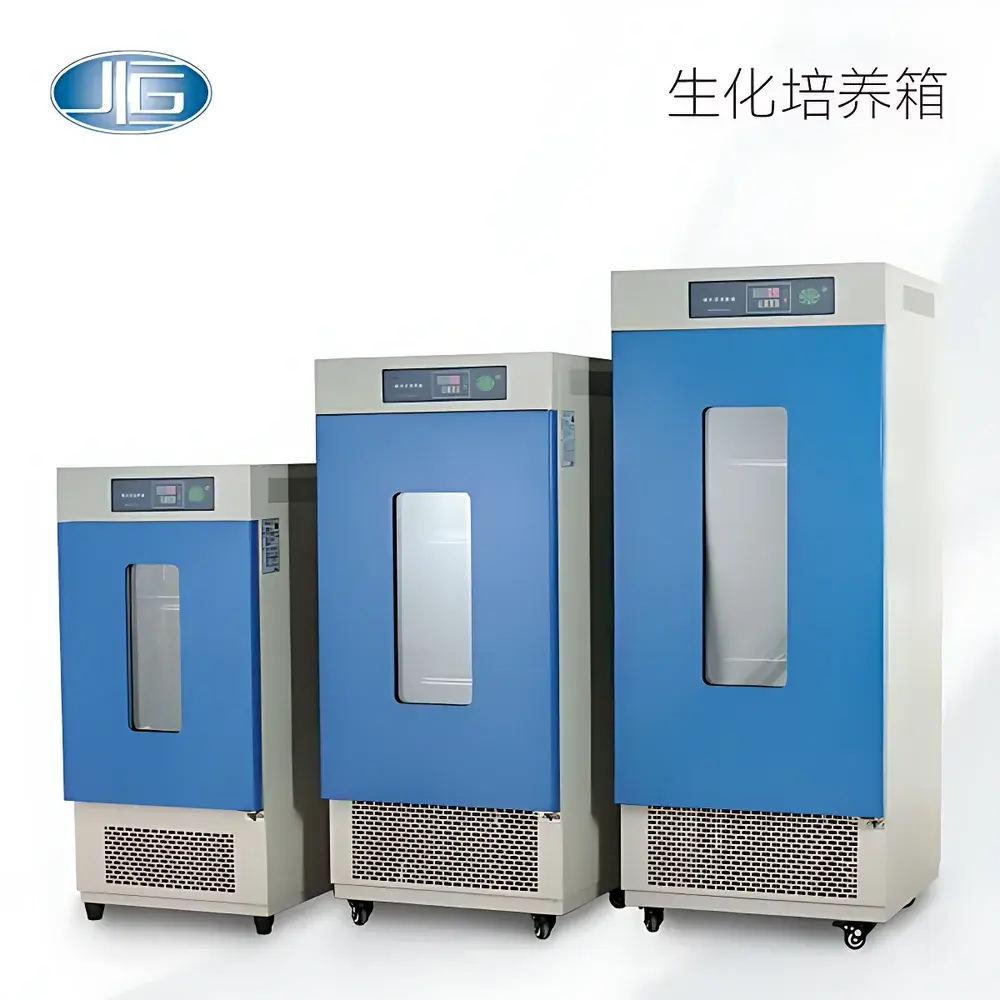
YiHeng LRH-Series Biochemical Incubator – Standard Model
| Brand | YiHeng |
|---|---|
| Origin | Jiangsu, China |
| Manufacturer Type | Direct Manufacturer |
| Product Origin | Domestic (China) |
| Model | LRH-Series |
| Price Range | USD 1,400–2,800 |
| Heating Method | Air-Jacketed |
| Temperature Range | 0–60 °C |
| Temperature Fluctuation | ±0.5 °C (at high setpoints), ±1.0 °C (at low setpoints) |
| Temperature Uniformity | ±1.5 °C (measured at 25 °C reference point) |
| Interior Dimensions (W×D×H) | 400 × 350 × 500 mm |
| External Dimensions (W×D×H) | 530 × 560 × 1080 mm |
Overview
The YiHeng LRH-Series Biochemical Incubator is an air-jacketed, microprocessor-controlled environmental chamber engineered for stable, repeatable temperature maintenance across a broad operational range of 0–60 °C. Designed in accordance with fundamental principles of convective thermal equilibrium and passive insulation physics, the unit employs an air-jacket heating system—distinct from water-jacketed or direct-heating configurations—to minimize thermal inertia and improve response time during setpoint transitions. Its primary engineering objective is to deliver consistent thermal environments for non-CO₂-dependent biological processes, including microbial cultivation, BOD incubation, seed germination, mycological preservation, and short-term sample storage in academic, pharmaceutical quality control (QC), and environmental testing laboratories. The chamber’s structural integrity, thermal stability, and operational safety are validated against ISO 13485-aligned manufacturing protocols and meet baseline requirements for GLP-compliant routine use in regulated life science workflows.
Key Features
- Mirror-finish stainless steel interior chamber with fully rounded corners (R ≥ 15 mm) to eliminate crevices, reduce microbial retention, and facilitate cleaning validation per ISO 14644-1 Class 8 cleanroom-compatible procedures.
- Air-jacketed thermal architecture with high-density polyurethane foam insulation (≥35 kg/m³ density, CFC-free formulation), achieving >25% improvement in thermal resistance (R-value) versus legacy mineral wool designs—verified by ASTM C518 steady-state heat flow testing.
- PID-based digital temperature controller with 0.1 °C resolution, programmable ramp/soak profiles, and user-defined timer function (up to 999 hours); supports auto-tuning for load-dependent thermal compensation.
- Three-speed adjustable axial circulation fan (low/medium/high airflow modes) to balance uniformity and sample integrity—critical for volatile media (e.g., antibiotic-containing agar, low-viscosity broth cultures) where excessive air velocity may induce evaporation or surface desiccation.
- Independent mechanical over-temperature cut-off circuit (non-software dependent), activated at user-configurable threshold (default: +5 °C above setpoint), compliant with IEC 61010-1 Clause 6.3.2 for laboratory equipment safety.
- Optional RS485 serial interface (Modbus RTU protocol) and thermal printer module enable integration into centralized lab data logging systems; supports timestamped CSV export of real-time temperature history with ±0.3 °C calibrated accuracy traceable to NIST-traceable reference standards.
Sample Compatibility & Compliance
The LRH-Series accommodates standard microbiological and botanical sample formats—including Petri dishes (90 mm and 150 mm), test tubes (13 × 100 mm to 18 × 150 mm), Erlenmeyer flasks (up to 2 L), and multi-well plates—without obstruction. Adjustable stainless steel shelving (3–5 positions, 40 mm pitch) permits flexible vertical configuration. The unit complies with key regulatory frameworks applicable to non-sterile incubation environments: USP environmental monitoring guidance, ISO 20387:2018 biobanking infrastructure requirements (Annex A.3), and EN 61000-6-3 electromagnetic compatibility standards. While not certified for ISO 14644-1 cleanroom installation, its sealed construction and smooth surfaces support periodic disinfection using 70% ethanol or 0.5% sodium hypochlorite solutions per CLSI M22-A3 recommendations.
Software & Data Management
The built-in LCD interface provides intuitive menu navigation (English-language firmware) with real-time display of setpoint, actual chamber temperature, elapsed time, and fan speed status. Optional RS485 connectivity enables bidirectional communication with third-party SCADA or LIMS platforms (e.g., LabWare, Thermo Fisher SampleManager). Data logging functionality records temperature at user-selectable intervals (1–60 minutes), storing up to 30 days of continuous readings internally. Exported logs include audit trail metadata (operator ID, calibration event timestamps, alarm triggers), satisfying FDA 21 CFR Part 11 requirements for electronic records when paired with appropriate system-level access controls and electronic signatures.
Applications
- Biochemical Oxygen Demand (BOD5) incubation per APHA Standard Methods 5210B and ISO 5815-1.
- Cultivation of mesophilic bacteria (e.g., Escherichia coli, Bacillus subtilis), yeasts (Saccharomyces cerevisiae), and filamentous fungi (Aspergillus niger) under aerobic conditions.
- Plant tissue culture initiation and callus propagation at controlled ambient temperatures (22–28 °C).
- Stability testing of reagents, vaccines, and diagnostic kits per ICH Q1A(R2) guidelines (long-term storage at 25 °C/60% RH simulated via dry incubation).
- Environmental monitoring sample holding prior to enumeration (e.g., water, soil, food homogenates) in compliance with ISO 6222 and EN ISO 16266.
FAQ
Is this incubator suitable for CO₂-dependent cell culture?
No—the LRH-Series lacks CO₂ regulation, humidity control, and HEPA filtration; it is designed exclusively for ambient-air biochemical applications.
What is the maximum allowable load volume without compromising temperature uniformity?
For optimal performance, total sample volume should not exceed 60% of internal chamber capacity (i.e., ≤70 L for the 400×350×500 mm variant) to maintain ±1.5 °C uniformity across all zones.
Does the unit support calibration verification with external probes?
Yes—dual PT100 sensor inputs (chamber and reference probe) allow simultaneous comparison; users may perform in-situ verification using NIST-traceable thermistors per ISO/IEC 17025 clause 6.5.2.
Can the incubator be installed in a fume hood or ventilated enclosure?
Not recommended—air-jacketed operation requires unrestricted ambient airflow around the cabinet exterior; enclosure reduces heat dissipation and risks thermal runaway.
What maintenance intervals are recommended for long-term reliability?
Compressor oil level and condenser coil cleaning every 6 months; annual verification of PID tuning parameters and over-temperature cutoff activation; biannual validation of temperature uniformity per ISO 14644-3 Annex B.
Related Products



