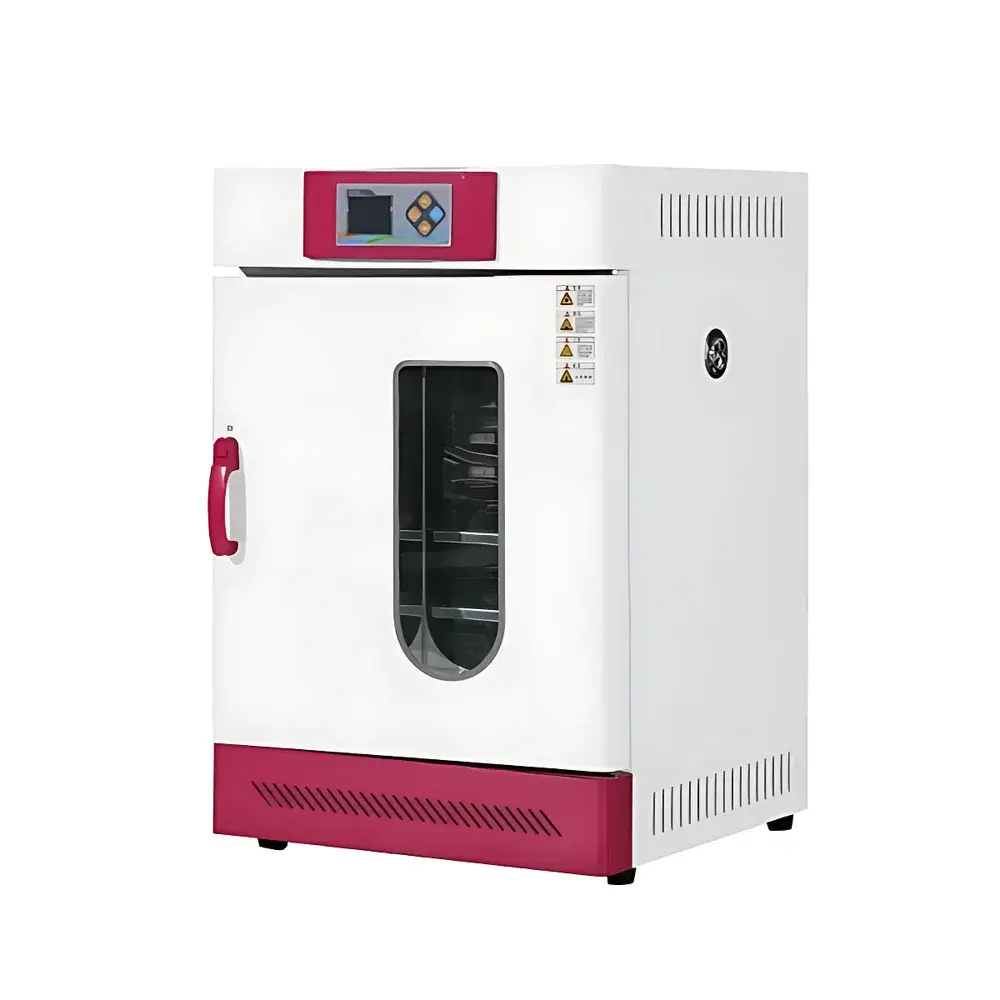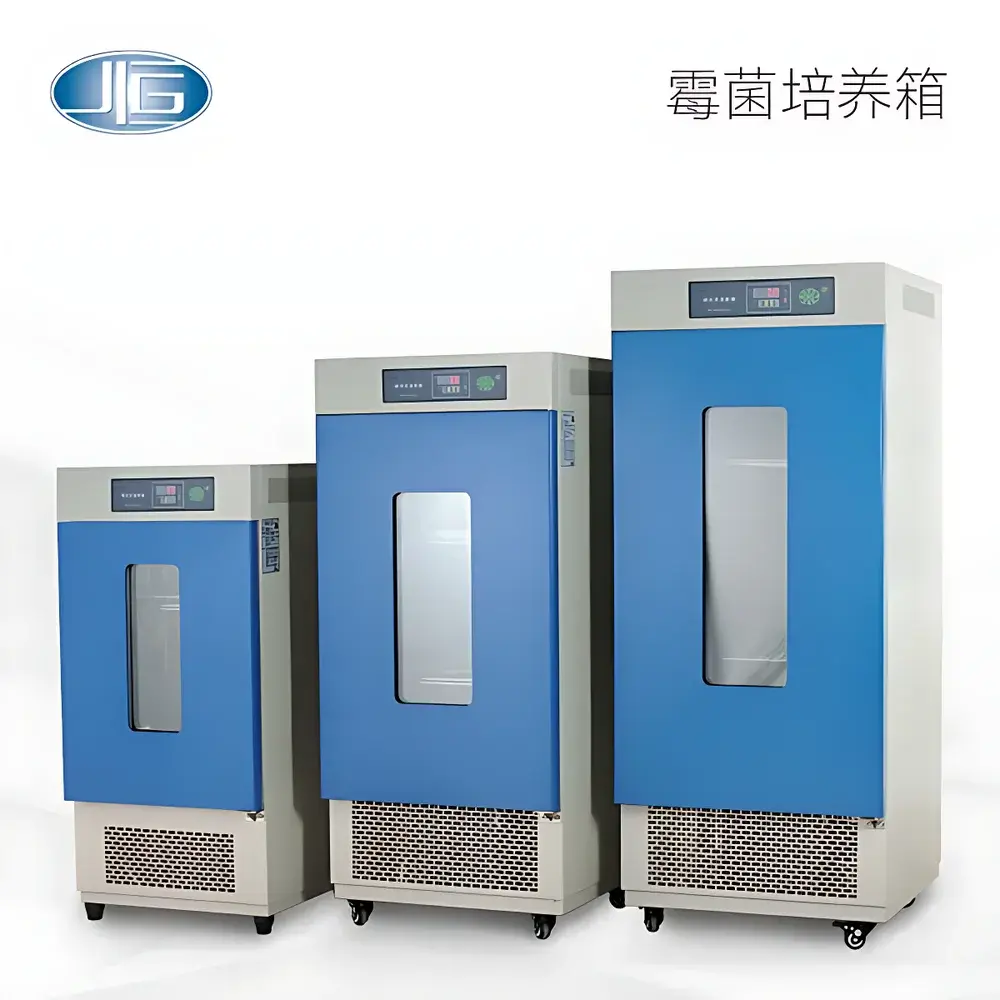
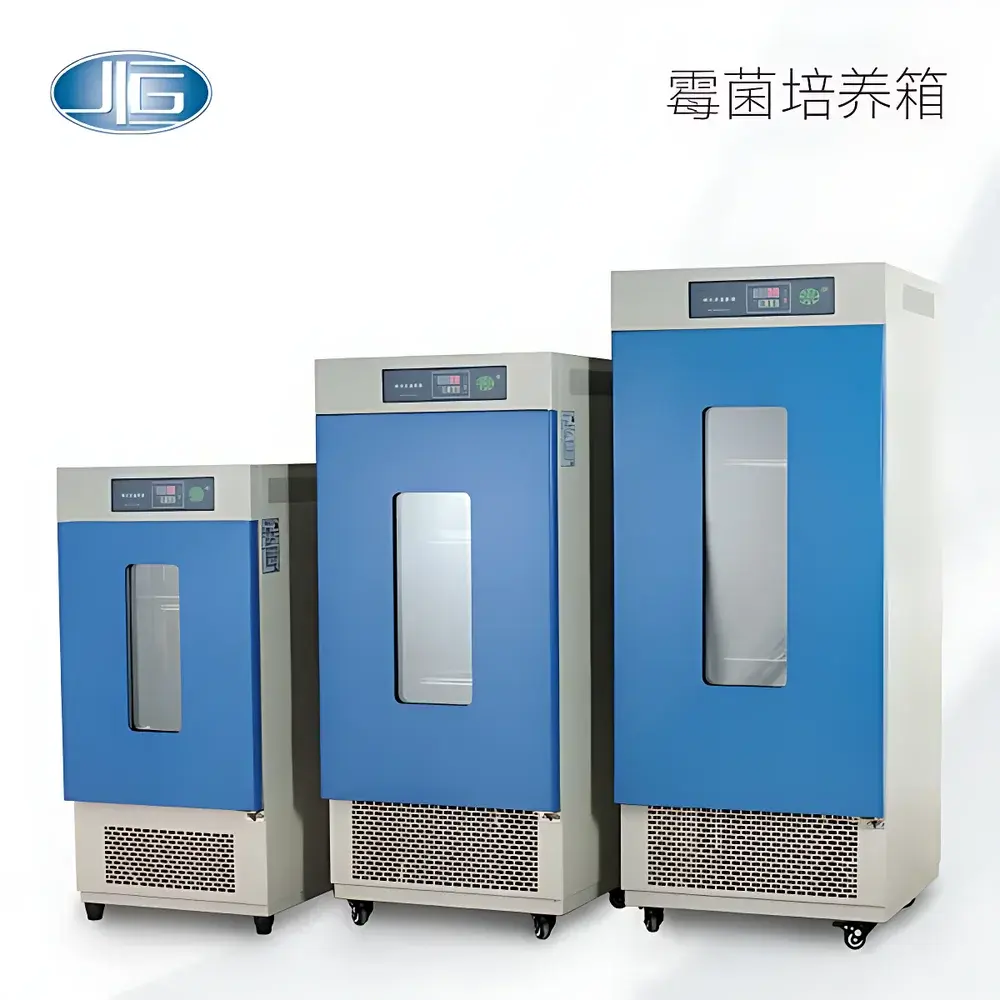
YiHeng MJ-250-II Mold Incubator
| Brand | YiHeng |
|---|---|
| Origin | Shanghai, China |
| Manufacturer Type | Direct Manufacturer |
| Region of Origin | Domestic (China) |
| Model | MJ-250-II |
| Control Interface | Digital Touchscreen |
| Air Circulation | Natural Convection |
| Temperature Range | 10–45°C (dry), 15–45°C (with humidification) |
| Temperature Fluctuation | ±0.5°C (high-temp setpoints), ±1.0°C (low-temp setpoints) |
| Temperature Uniformity | ±1.5°C to ±2.5°C (measured at 25°C reference point) |
| Humidity Range | 60–85% RH |
| Chamber Capacity | 250 L |
| Internal Construction | Mirror-finish stainless steel chamber with radius-corner design |
| PID Temperature Controller | Microprocessor-based, with timer function |
| Safety System | Independent over-temperature cut-off alarm (optional) |
| Data Output | RS485 interface or thermal printer port (optional) |
| Display | LCD screen with menu-driven navigation |
Overview
The YiHeng MJ-250-II Mold Incubator is a purpose-engineered environmental chamber designed for controlled fungal growth, microbial culture maintenance, and long-term biological sample incubation under stable temperature and humidity conditions. Built upon a foundation of precision thermal management and regulatory-aware design, this incubator operates on the principle of passive thermal equilibrium—leveraging natural convection and high-efficiency insulation to minimize spatial gradients and energy consumption. Unlike forced-air units, its natural convection architecture eliminates mechanical turbulence that may desiccate sensitive cultures or disturb colony morphology during extended incubation periods (e.g., filamentous fungi, yeast isolates, or spore germination assays). The unit meets foundational requirements for ISO/IEC 17025-compliant laboratories conducting microbiological testing in accordance with USP , EP 2.6.12, and CLSI M22-A3 standards for mold enumeration and environmental monitoring.
Key Features
- Mirror-polished 304 stainless steel interior chamber with seamless radius-corner construction—resists corrosion, facilitates decontamination via ethanol or sporicidal agents, and complies with cleanroom-compatible surface roughness standards (Ra ≤ 0.8 µm).
- High-density polyurethane foam insulation applied via one-shot foaming process—improves thermal retention by ≥25% versus conventional panel-laminated designs, reducing ambient heat exchange and stabilizing setpoint fidelity across diurnal load variations.
- Microprocessor-controlled PID temperature regulation with real-time deviation compensation—delivers repeatable setpoint accuracy within ±0.5°C at 30°C, validated per ASTM E2234-22 Annex A1 protocols for incubator performance verification.
- Three-stage fan speed selector (off / low / medium)—enables selective airflow modulation to prevent evaporative stress on agar plates, liquid broth cultures, or hyphal growth substrates without introducing forced convection artifacts.
- Dual independent safety circuits: primary controller-based limit cutoff and optional hardware-redundant thermal fuse—ensures automatic power interruption if chamber temperature exceeds user-defined threshold by >2°C, satisfying IEC 61010-1 Clause 7.3.2 for laboratory equipment safety.
- RS485 serial interface compliant with Modbus RTU protocol—supports integration into centralized Lab Information Management Systems (LIMS) or SCADA networks for audit-trail-capable data logging, aligned with FDA 21 CFR Part 11 electronic record requirements when paired with validated software.
Sample Compatibility & Compliance
The MJ-250-II accommodates standard microbiological consumables including Petri dishes (90 mm and 150 mm), slant tubes, multi-well plates (up to 6-well format), and sterile glass jars—compatible with both aerobic and microaerophilic mold isolation workflows. Its humidity control system maintains 60–85% RH via integrated water reservoir and capillary evaporation, suitable for Aspergillus spp., Penicillium spp., and Cladosporium spp. cultivation per ISO 11133:2014 Annex D guidelines. The unit’s non-condensing humidification method avoids direct water contact with samples, minimizing cross-contamination risk during BOD5 or mycotoxin screening applications. All electrical components conform to GB/T 14710-2009 (Chinese national standard equivalent to IEC 61010-1), and factory calibration certificates include traceability to NIM (National Institute of Metrology, China) reference standards.
Software & Data Management
Equipped with an embedded 4.3-inch TFT-LCD interface featuring intuitive icon-based navigation, the MJ-250-II supports multilingual menu operation (English, Chinese, Spanish) and stores up to 10 user-defined incubation profiles. Optional RS485 connectivity enables bidirectional communication with third-party data acquisition platforms such as LabVIEW™ or custom Python-based monitoring scripts using PySerial libraries. When configured with a certified thermal printer (e.g., Epson TM-T20II), it generates time-stamped hardcopy logs compliant with GLP documentation practices—including date/time stamps, setpoint values, actual chamber readings, and alarm event flags. Audit trail metadata (user ID, parameter changes, session start/end) is retained in non-volatile memory for ≥30 days, supporting internal quality audits and external accreditation reviews.
Applications
- Fungal identification and sporulation studies in clinical and food microbiology laboratories
- BOD5 incubation per Standard Methods 5210B and ISO 5815-1:2019
- Pharmaceutical environmental monitoring (EM) programs for Grade C/D cleanrooms
- Agricultural mycology research—including plant pathogen virulence assays and biocontrol strain propagation
- Regulatory stability testing of probiotic formulations under ICH Q5C conditions
- Long-term preservation of fungal stock cultures at sub-optimal growth temperatures (e.g., 15°C for dermatophyte maintenance)
FAQ
Does the MJ-250-II support programmable ramp-and-soak temperature profiles?
No—this model implements static setpoint control only. For multi-stage thermal protocols, consider the YiHeng MJ-250F series with programmable controller upgrade.
Is humidity control validated across the full 60–85% RH range?
Yes—factory validation includes gravimetric RH verification at three points (60%, 75%, 85%) per ISO 12780-1:2021 Annex C, with uncertainty ≤±3.5% RH (k=2).
Can the unit be installed in a temperature-controlled room without additional HVAC support?
Yes—its low-power compressor (≤280 W nominal) and optimized insulation allow stable operation in ambient environments of 15–30°C; however, sustained operation above 32°C ambient may reduce humidity consistency.
What calibration documentation is provided with shipment?
Each unit ships with a Certificate of Conformance, factory temperature uniformity report (16-point grid at 25°C), and NIST-traceable thermometer calibration certificate for the internal sensor.